
Photos courtesy Rosa Chavez.
There are moments in small towns when change becomes visible not through policy reports or mission statements, but through ordinary human scenes.
A rainbow flag moving beside the riverwalk.
Teenagers laughing in the summer sun.
Volunteers setting up tables in Town Park before the crowds arrive.
A quiet hug between neighbors who spent years wondering whether they would ever feel safe being fully seen here.
In rural communities across the Southwest, belonging has always shaped health more than we sometimes acknowledge.
Isolation affects the nervous system. Silence affects mental health. Shame affects the body.
And community — real community — can help people survive.
In Pagosa Springs, Pride has slowly become part of that evolving story.
In 2024, 2025, and again in 2026, the Town of Pagosa Springs recognized Pride Month through annual proclamations affirming the dignity and humanity of LGBTQ+ residents and visitors. These proclamations matter more than some people realize.
For young people growing up quietly in rural towns, visibility matters. For older adults who spent decades hiding parts of themselves, visibility matters. For families wondering whether they belong here, visibility matters.
Pride Day in Pagosa will be celebrated in Town Park on Saturday, June 13, from 11am – 4pm.
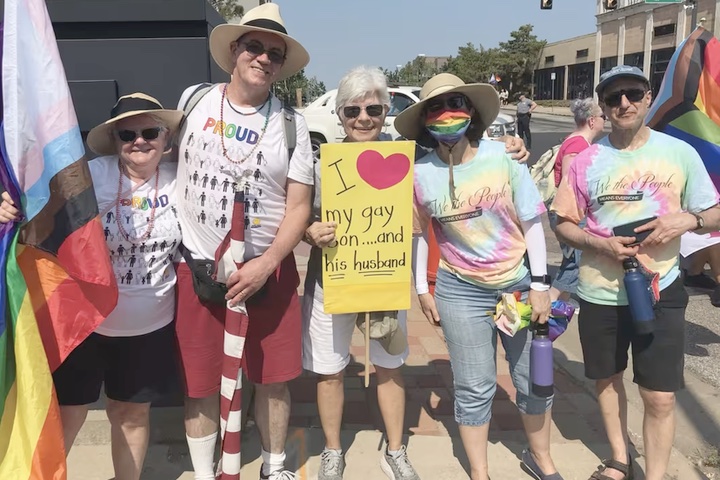
Long before Pride festivals became publicly embraced, queer community members were already quietly helping shape Pagosa’s social fabric.
Queer business owners, ranchers, teachers, coaches, artists, workers, caretakers, students, and organizers helped create spaces of possibility here as far back as the 1980s. Even when they were not openly celebrated, their visibility mattered. For many of us growing up in Archuleta County, simply seeing someone live honestly offered a kind of hope difficult to explain unless you have needed it yourself.
These stories are part of our community history too.
The recent growth of Pride events in Pagosa also reflects years of grassroots organizing, emotional labor, coalition-building, and community risk-taking carried by local queer leaders, organizations, volunteers, allies, advocates, and community members — including efforts led or supported by people such as Carmen Lewis, Amy Nitchman, Rosa Chávez, Kathy Keyes, and others who helped create spaces for deeper conversations around belonging, visibility, public health, and rural community care.
Early organizers and volunteers — including queer community leaders, allies, faith leaders, artists, and local residents — helped create the foundation that allowed these gatherings to become possible in a rural community where visibility once carried much greater personal and social risk.
In 2025, organizers worked intentionally to deepen the event beyond symbolism by incorporating an Indigenous land acknowledgment, broader community partnerships, local artists, resource-sharing, and conversations around inclusion and belonging.
The vision was not simply celebration for its own sake, but an effort to create a gathering that reflected the fuller complexity of the region and the people who live here.
As with many grassroots efforts, some of the people who helped carry the earliest stages of that work are no longer centrally involved.
But the larger invitation remains: to continue building a rural culture of belonging that is relational, honest, and wide enough to hold complexity without erasing the people who helped make change possible.
That work is still unfinished.
And perhaps that is where rural communities now find themselves: learning that inclusion and equity are not branding strategies. They are infrastructure.
Public health research consistently shows LGBTQ+ populations experience disproportionately higher rates of depression, anxiety, suicide risk, substance use, discrimination, housing instability, social isolation, and barriers to healthcare access — especially in rural areas where affirming services may be limited or nonexistent.
These disparities do not emerge from identity itself. They emerge from stigma, exclusion, economic precarity, institutional distrust, invisibility, and chronic stress carried by the body over time. Which means communities also have the power to change them.
That work can begin practically and incrementally.
It can look like connecting LGBTQ+ residents to affirming healthcare, behavioral health support, food access programs, aging services, veteran services, and social resources.
It can mean recognizing that some queer and transgender veterans in rural communities are navigating layers of isolation, trauma, disability, housing instability, discrimination, and untreated behavioral health needs while also trying to reconnect with community after military service.
It can mean building partnerships between local nonprofits, healthcare systems, schools, faith communities, veteran organizations, and LGBTQ+ organizations working across Colorado and New Mexico.
It can mean creating health messaging and public education efforts that actually reflect the realities of queer and transgender lives in rural communities.
It can mean supporting LGBTQ+ youth without forcing them to leave home in order to feel safe.
It can mean making sure queer elders are not aging in silence and isolation.
It can mean reducing the disproportionate burden of tobacco use, substance use, and untreated behavioral health conditions that continue affecting LGBTQ+ populations nationwide.
And it can mean moving beyond sanitized language about “equity” and “inclusion” toward more honest conversations about how systems still fail many people across lines of class, disability, race, gender identity, sexuality, geography, and age.
Real inclusion requires more than symbolic gestures. It requires operational care. As local communities continue shaping community health improvement priorities across Colorado and New Mexico, issues affecting LGBTQ+ residents — including behavioral health access, social isolation, affirming care, housing and community belonging — are increasingly becoming part of broader public health conversations as well.
Across the Southwest, organizations and advocates are continuing to build practical pathways of support for LGBTQ+ individuals, families, and rural communities.
Efforts such as Caravan of Hope, led by queer attorney Angela Giampolo and regional LGBTQ+ legal and health advocacy networks are creating opportunities for communities like Pagosa Springs, Bayfield, Ignacio, Cortez, Durango and the San Luis Valley to engage more deeply with issues of rural LGBTQ+ wellbeing, legal protection, healthcare access, and public health equity moving forward.
Regional efforts including Four Corners Alliance for Diversity, Four Corners Rainbow Youth Center, Rocky Mountain Equality, Rocky Mountain Planned Parenthood and New Mexico’s HEAL (Health Equity Alliance for LGBTQ+ New Mexicans), alongside affirming behavioral health and legal advocacy networks across Colorado and New Mexico, are helping expand access to care, safety, community connection, and public health support for people who too often remain underserved in rural areas.
But beyond the institutional language and public policy frameworks, there is also something simpler underneath all of this.
The human need to belong somewhere.
To walk through your own town without shrinking yourself.
To grow older without disappearing.
To gather beside a river beneath mountain skies and feel, even briefly: safe, welcomed, seen, and part of the community around you.
That, too, is public health.
Not perfection.
Not performance.
Not ideology.
Not purity.
Just this:
We are here. We belong here.
And rural communities can learn to care for one another more fully than they have before.
Pagosa is trying. Pagosa has grown.
But it can still do better.
As Colorado navigates its 150th anniversary and the nation its 250th year, communities across the country are continuing to wrestle with larger questions about belonging, memory, freedom, and who gets fully included in the evolving story of America itself.
Perhaps rural communities like ours still have something meaningful to contribute to that conversation: not by pretending we have everything figured out, but by continuing the imperfect work of widening the circle of care, dignity, and community belonging.
Cuando el sistema falla, la comunidad sostiene la salud.
Rosa Chavez
Rosa D, Chavez MPH, is a public health & systems leader rooted in the borderlands of Pagosa Springs and Albuquerque, working at the intersections of culture, care, land, food and community infrastructure.