
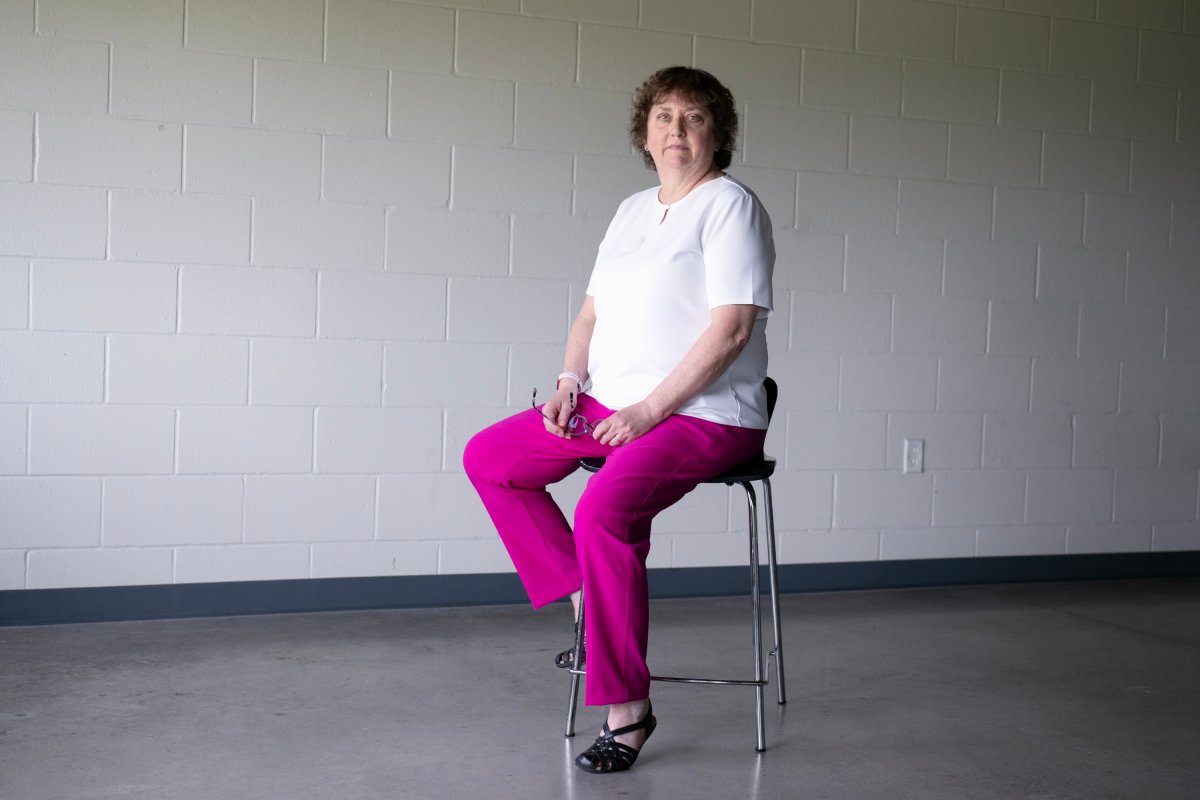
 Lori Manson, of ADEPT Maine, an Augusta nonprofit that administers problem gambling services in the state, says gambling is seen as more acceptable these days, which makes it dangerous for people growing up now. (Daryn Slover/Staff Photographer)
For Atticus Smith, the money wasn’t real. But the rush was.
He was a freshman at the University of Maine when he was introduced by his roommate to Fliff, a sports prediction app. He used it to follow and place bets on Ultimate Fighting Championship bouts using in-app currency, as opposed to putting his own, real money on the line.
“It’s that risk and reward feeling,” said Smith, now 24. “It makes me feel like I can actually play along with the guys who are actually putting down bets. … I genuinely have fun doing it, even though I know what I’m doing doesn’t have any real currency to it.”
Fliff had an option to put in real cash. Smith was tempted, but never took it. He knows many who have, and he understands the pull.
“We do have a friend we had to sit down and talk with to be like, ‘Don’t get into this,’ because he has had a history of gambling issues,” he said. “With Apple wallet and your cards being right on your phone, the temptation is definitely there. You can just press a couple of buttons.”
As more and more states legalize sports betting — 38 states, including Maine, allow mobile betting, the most popular form — the potential for problem gambling has drawn the alarm of the support and recovery community, with people calling attention to sports gambling’s addictive nature, its unrelenting advertising and its prevalence in society.
Most of their concern has become centered on young adults, the teenagers and 20-somethings growing up with it all being way more accessible, marketed and popular than it’s ever been before.
“It’s the next epidemic that most people are unaware of. I think it’s going to dwarf the opioid epidemic,” said Jay P., a New Hampshire resident who attends and hosts anonymous gambling support meetings in Maine and Massachusetts. He asked not to use his full name out of privacy concerns. He said a police officer came to a meeting recently warning of a coming “tsunami.”
“Back in the day when I used to bet with a sportsbook, it was something you didn’t talk about, you know? That was a dirty thing,” Jay P. said. “Now you can go on DraftKings, you can go on FanDuel, you can go on BetMGM, all these different sites, Fanatics and Wager. It’s literally glamorized.”
Up in Maine, Smith said he’s seen the same thing.
“It comes up in really basic conversation, too. ‘Oh, did you watch the game last night?’ ‘Yeah, I missed my parlay,’” he said. “You don’t really find a sports-based conversation that doesn’t involve some comment on winning or losing a bet.”
TRENDING YOUNG
It’s difficult to get a definitive sense of how widespread and prevalent sports betting is among young adults in Maine.
Data breaking down the ages of bettors is not available, said Lori Manson of ADEPT Maine, an Augusta nonprofit that administers problem gambling services in the state, including free counseling, no-cost financial counseling and self-exclusion services.
The Department of Public Safety, which oversees the Gambling Control Unit, also said it doesn’t track gambling activity by age.
Some national data, however, has emerged indicating sports gambling’s increasing influence on young adults. In September 2024, Fairleigh Dickinson University released a survey in which 26% of men under age 45 said they bet on sports.
This March, a survey from The Harris Poll found that 33% of respondents between ages 21 and 44 had placed a bet before turning 21, which is the legal gambling age in most states.
“Youth are at significantly greater risk for developing gambling problems,” National Council on Problem Gambling Executive Director Heather Maurer said in a news release announcing the results, “and as gambling becomes increasingly normalized in media, sports, and online spaces, the risks grow.”
That normalization has seen sports gambling become welcomed by the industry. ESPN frequently includes gambling breakdowns and advice in its broadcasting. Sportsbook apps dominate TV and radio commercial advertising, and their branding is included on the floors of basketball arenas, the walls of baseball parks and the boards of hockey rinks.
Colin Campbell, who just finished his senior season with the Bowdoin men’s lacrosse team, said he didn’t hear much gambling chatter on campus, but hears it more among his friends from home in Cape Elizabeth.
“They’re big into sports betting. They talk about it frequently,” he said, adding that they place bets about once a week.
Madison Weeks, a senior at Bonny Eagle High School, said she hears classmates talk about betting as well. The state’s two mobile sportsbooks, DraftKings and Caesars, require bettors to be 21. Prediction markets like Polymarket and Kalshi, however, and less-regulated apps only require the user to be 18. Most sportsbooks verify ages through an automated system that requires users to provide Social Security numbers or upload a photo ID.
“Mostly just classmates within the school that are turning 18, they’re getting that freedom, and I do hear them talking about that,” she said. “They’re just talking about the games that are upcoming, and they’re like, ‘What can I put into this?’”
‘THEY LOOK AT IT AS INVESTING’
For young adults, Manson, from ADEPT Maine, said gambling can carry a dangerous appeal.
“When I was growing up, a lot of people considered gambling to be a moral failing,” she said. “With this generation, there are social media influencers and people that are really proud of their gambling. They look at it as investing.”
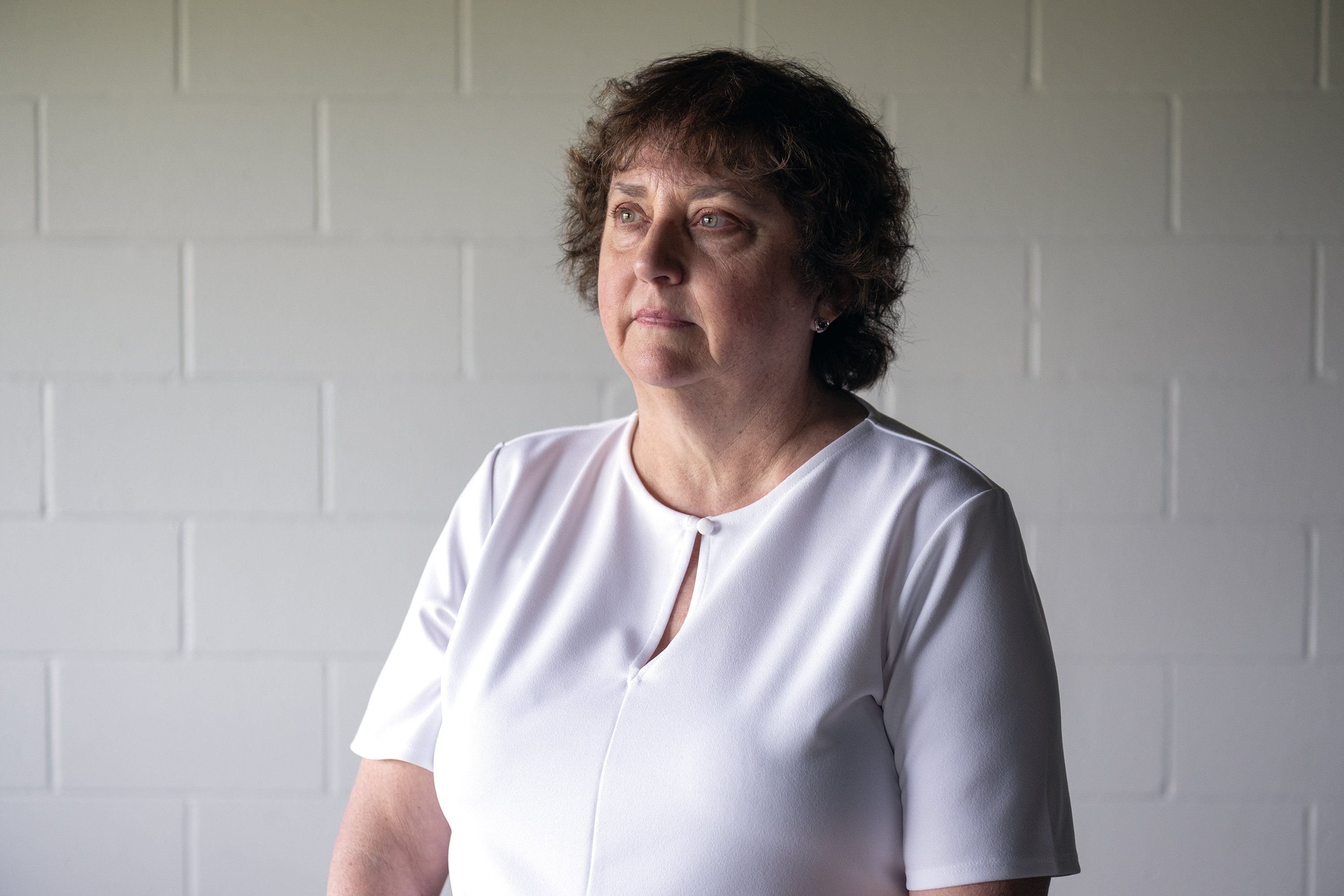 Lori Manson of ADEPT Maine says, “When I was growing up, a lot of people considered gambling to be a moral failing,” she said. “With this generation, there are social media influencers and people that are really proud of their gambling. They look at it as investing.” (Daryn Slover/Staff Photographer)
Purchase this image
Liz Thielen, the senior director of substance abuse treatment services at Nicasa Behavioral Health Services, said she’s seen a shift in the typical person who comes to the organization for help.
“It was typically 40-, 50-, 60-year-olds reaching out for help with casino gambling, video slot poker, the lottery,” she said. “It’s trended younger and younger. … Most calls are related to young adults, emerging adults, males doing online sports betting and sometimes day trading.”
Sports gambling, in particular, can give them the idea that they have an edge. They watch and follow sports, so they figure their acumen makes them more likely to pick the winners and top performers.
That, combined with being at an age in life where there’s a focus on acquiring wealth, can provide a risky mix.
“They’re becoming parents, they’ve got a stable job. … They kind of see this as a way to make quick money,” Thielen said. “Many of them have spreadsheets and very sophisticated systems for organizing all the knowledge that they have. And there’s a serious misconception about how much value that has for a sports bettor.”
While gambling addiction can affect any age, Thielen said younger people tend to be more impulsive, which can make them more susceptible to getting into trouble.
“Just like you wouldn’t give your 12-, 15-year-old, 16-year-old liquor, early access to gambling does predispose young brains to the addictive properties,” she said. “There’s just that understanding like there is for alcohol and substances.”
OFFERING HELP
Sports gambling scandals have started seeping into collegiate athletics. Since the start of 2024, three Fresno State basketball players, an Abilene Christian basketball player and a former Indiana quarterback were found to have placed bets on games their teams played.
It’s part of what prompted Michelle Simpson, UMaine’s associate athletic director for student success and a former field hockey player, to take preventive action. She brought in Thielen in late March to speak to Black Bear athletes about the risk of getting involved in sports gambling, both the potential for problem gambling and the punishment that awaits if they mixed betting with their sports.
“We saw those national news stories about … it growing in popularity, and we’re bombarded with it every single day now on our phones and TV,” she said. “We just felt as though it was good timing to try to get ahead of it and provide some education.”
John Sutyak, the athletic director at the University of Southern Maine, said his staff have increasingly emphasized sports gambling when talking to student athletes.
“If you had asked me what I was doing five, 10 years ago when we had mentioned it, it would just be a quick, 20-second ‘Hey, don’t do this,’” he said. “And back then, it was illegal. Now it’s legal.”
In 2023, the NCAA conducted a survey of over 3,500 18- to 22-year-olds, with 58% saying they participated in at least one sports bet.
Manson at ADEPT Maine, though, said Maine colleges haven’t jumped on the topic, and that she offered webinars related to gambling among college students but got little attendance from staff.
She said younger adults can also be reluctant to seek help for problems. Manson oversees the state’s self-exclusion list — gamblers who call and request to be restricted from betting — and of the 48 people on it for sports betting, only 13 were under age 30 when they joined, according to an anonymized list provided by the Department of Public Safety.
“Perhaps it’s because that’s something that’s less appealing to that demographic than it is to the older people … who start to feel like ‘I’m going to lose my kids if I don’t get this under control,’” she said. “That’s something that usually a younger person doesn’t need to worry about.”
Thielen said that as sports betting’s popularity continues to grow, helpful services need to adapt to find ways to reach any younger people struggling.
“It can’t be all about addiction and problem and recovery,” she said. “If I just started sports betting seven months ago, and you’re coming at me with language that doesn’t resonate with me, I’m not even going to hear it.”
IF YOU NEED HELP
IF YOU or someone you know is struggling with a gambling addiction, call 211 or 1-800-MYRESET.
TO LEARN MORE about services for those seeking help, visit adeptme.org/problem-gambling.