
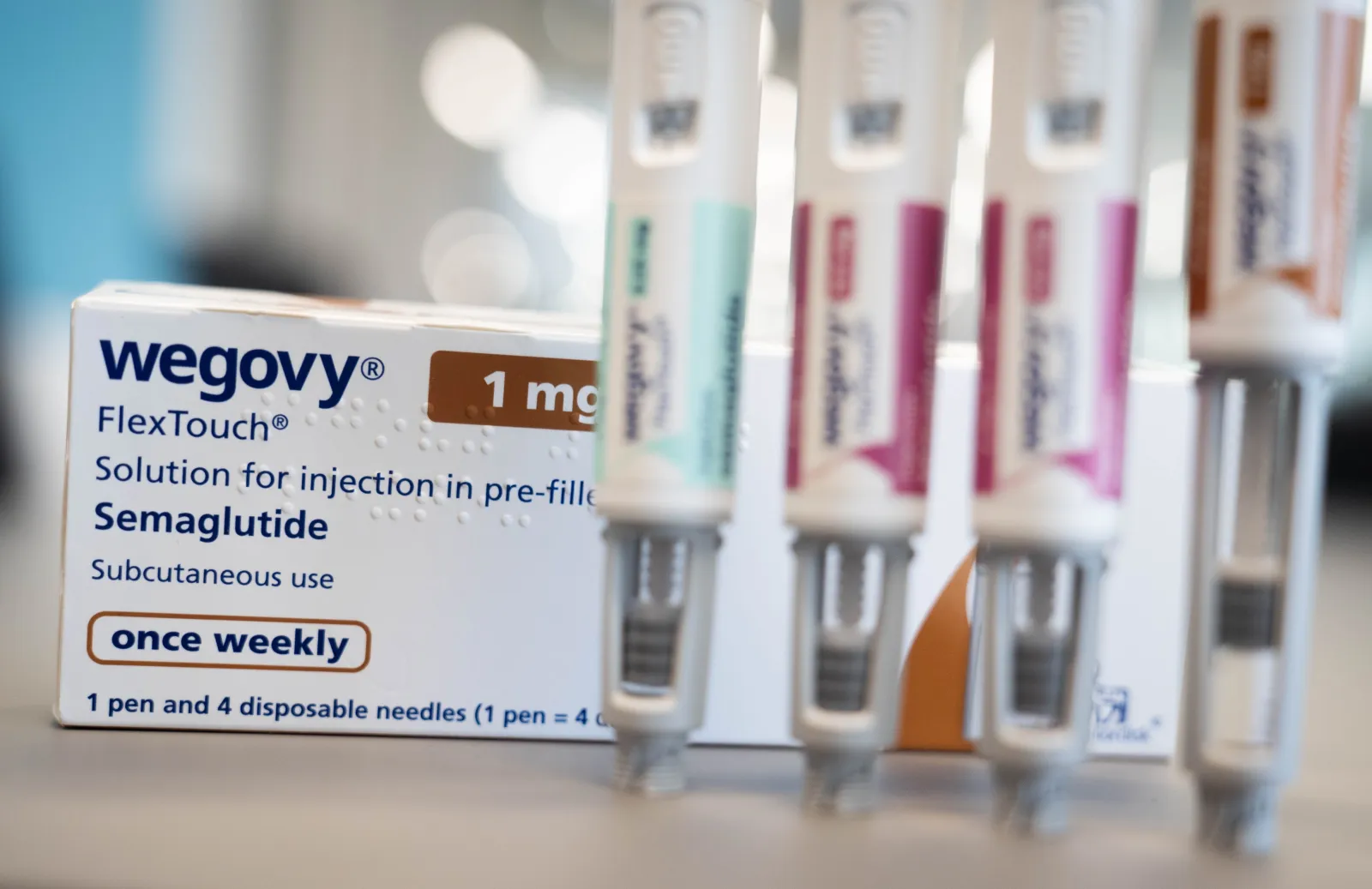
Drugs like Ozempic and Wegovy have been celebrated as a medical miracle for helping users shed pounds. But as they also influence key parts of the brain, experts warn they could pose risks for some patients.
These drugs, also known as GLP-1 receptor agonists, work by quietening what some researchers call “food noise“—persistent thoughts about eating—while also mimicking a hormone that promotes fullness and slows digestion. That means they directly affect brain systems linked to reward, impulse and mood.
Scott Kanoski, co-director of the University of Southern California Diabetes and Obesity Research Institute, told Newsweek that some GLP-1 drugs have the “capacity to access the brain,” with receptors in regions tied to emotion, reward and memory.
Read More on Health
He added that the effects are “poorly understood,” and may vary depending on the patient and the drug used.
Weight loss drugs may therefore be a double-edged sword for mental health. In May, a randomized, double-blind, placebo-controlled study was also published and found semaglutide (Ozempic, Wegovy) use was associated with a 40 percent reduction in alcohol intake. However, other research suggests these drugs could fuel eating disorders or harm mental well-being.
More research is needed to understand the full scope of their effects—and, until then, some experts say they should be used with caution and close clinical supervision.
 Emerging Mental Health Concerns
The American Psychological Association warned in a July 2025 report that while GLP-1s have shown promise in blunting addictive behaviors, they could deplete dopamine responses to more things than just food, such as enjoyable activities or time with loved ones.
Meanwhile, guidance on the National Eating Disorders Association website warns it is not yet clear whether these drugs are safe for people with eating disorders, citing potential risks like misuse of the drug, worsening of eating disorders, and several others.
As the drugs’ key functions are to help the user eat fewer calories in a day, enabling them to lose weight quickly—with only a weekly injection—some researchers are finding they are causing a kind of “drug-induced” anorexia.
Researchers at the Chung Shan Medical University Hospital also found in a 2024 study that users of the drugs may face elevated risks of anxiety, depression and even suicidal tendencies.
Experts from universities across the U.S. and overseas found in a 2025 analysis that GLP-1s may “represent a double-edged sword, potentially triggering both antiaddictive effects and [suicidal ideation] by exacerbating depressive phenotypes.”
GLP-1 Misuse and Access Risks
Dr. Sarah Boss, clinical director of the BALANCE Rehab Clinic—a private clinic with four locations across Europe and the U.K. that provides care for affluent individuals with complex mental health conditions—told Newsweek that, in the clinic, 1 in 3 of their patients are using GLP-1s and they said all of them are “doing so without clinical indication.”
In their clinic, Boss said that “none meet the threshold of a [Body Mass Index (BMI)] of 30 or a co-occurring metabolic condition,” adding this was “misuse” of the drug.
GLP-1s are prescription-only drugs, but Boss said she’s found their patients are finding ways of getting hold of them “through the internet or pharmacies with no medical supervision, no blood checks, no structured follow-up.”

Other experts say similar patterns are emerging. Andrew Hardaway, a professor of psychiatry and behavioral neurobiology at the University of Alabama at Birmingham, told Newsweek that case reports of “cosmetic abuse” of GLP-1s are already being recorded and are only just “catching up” with the issue.
He also said that some individuals who cannot afford branded products are also “seeking out untested and potentially damaging medication from predatory suppliers,” posing serious risks.
Pamela Keel, a professor of psychology at Florida State University, told Newsweek that one of her main concerns was that the American “systematic research process will be unable to catch up to their widespread use,” but that more research was needed to understand the risk/benefit profile of the drugs.
Boss said that, while many patients came to the clinic for other reasons, such as addiction or trauma, their GLP-1 use emerged as part of their mental health picture.
“They describe feeling significantly worse in the first two to three days after each injection: heightened anxiety, depressive episodes, in some cases prepsychotic symptoms,” she said. “Despite that, they keep using it because the fear of weight gain outweighs everything else.”
However, as these patients have not had any clinical supervision while using the drug, they have no way of getting support “when the psychological side effects hit,” Boss said.
“Coming off them triggers significant anxiety and distress—not just about weight, but because the medication has been suppressing emotional regulation that was never addressed in the first place,” she said, adding that as a result, patients may become “psychologically dependent” on GLP-1s.
Boss said that, because of the pattern they are noticing in their clinic, she feels patients should only have access to these drugs with clinical supervision, and that they should “undergo a psychological assessment first.”
Mixed Evidence and Ongoing Research
Paul Kenny, director of the Friedman Brain Institute at the Icahn School of Medicine at Mount Sinai, New York, told Newsweek that he believed GLP-1s have “the potential to produce both positive and negative effects on mental well-being, depending on the individual, the dose, and the brain systems being engaged.”
He pointed to emerging research on the ability of these drugs to reduce craving and compulsive behaviors relating to food, nicotine, alcohol, and potentially other substances. “So far, the benefits are outweighing their risks for most patients using them for weight loss,” he said.
However, Kenny added that “it would be premature to assume that their effects on mental health are uniformly positive or uniformly negative,” as GLP-1s, may “improve well-being in some individuals while producing negative effects in others.”
“Understanding why people respond differently, whether because of genetics, preexisting mental health issues or vulnerabilities to these conditions, metabolic state, or other factors, will be an important focus of future research,” he said.
Ali Güler, a professor of biology at the University of Virginia, told Newsweek that while he believed these drugs have “real potential to improve well-being for many patients, especially when excess weight, metabolic disease, binge-like eating, or compulsive reward-seeking around food are causing distress,” he also thought they should not be “viewed as psychologically neutral.”
“The same ability to reduce appetite and reward-driven eating could be beneficial in one patient and risky in another, especially someone with current or prior restrictive eating, body-image distress, or vulnerability to disordered eating,” he said. “So the answer depends very much on the patient, their clinical history, and the context in which the drug is prescribed.”
A Call For ‘Personalized’ Care
Hardaway told Newsweek that, as GLP-1s could have mixed effects on different patients, he “would like to see GLP-1s enter into a zone of personalized medicine.”
He said it is important to consider whether it is possible to “titrate dosage” to each patient to “achieve the clear medical benefits of these drugs without side effects or potential abuse,” and whether it is possible to “produce weight loss and medical benefits that are more lasting and durable.”
He said that titrating dosage and potential personalization is “experiential at the moment, and physicians are doing all of this off-label.” He added: “That’s fine over the short term, but one physician prescribing a low-dose GLP-1 analog because they think it will contribute to ‘longevity’ and pushing that recommendation on Instagram is just informed guesswork.”
“We need more science and rigorous clinical trials to sort this out,” he said.
Update, 06/17/26 05:25 a.m. ET: this article was updated to make clear how many of the BALANCE Rehab Clinic’s patients use GLP-1s.