
LAFAYETTE, La. — June is Men’s Mental Health Month, and for men in Acadiana, that observance carries more weight than most people realize. Louisiana men face some of the most serious mental health challenges in the country, and a statewide study from earlier this year found that men here are struggling at levels that go well beyond what any awareness campaign alone can fix.
The numbers tend to get buried under the cultural pressure to stay quiet and push through. A 2023 Tulane Newcomb Institute survey found that roughly one in nine Louisiana adults — close to 400,000 people statewide — lives with severe depression or anxiety. Suicidal ideation is higher among men than women in Louisiana, reported by 11 percent of men compared to 7 percent of women. Among urban men ages 30 to 44, the numbers are even more troubling: men in that group were twice as likely as women the same age to report suicidal thoughts in the previous year.
 Why Men Don’t Ask for Help
The barrier is not ignorance. It’s stigma, and it runs deep in communities like ours.
Cultural expectations that men should be stoic, self-reliant, and emotionally contained don’t disappear just because a calendar says June. According to the National Institute of Mental Health, men are far less likely than women to receive mental health treatment, and much of that gap comes from underreporting and the social cost men perceive in acknowledging struggle. Research shows that men are less likely than women to turn to friends or family for emotional support — 38 percent versus 54 percent — when they need it most.
 Photo by Marcel Strauß on Unsplashtext
In Louisiana, the Tulane researchers identified stigma as a specific obstacle for men, noting that men in our state face greater social barriers to seeking care. That stigma carries a real cost. Men nationally die by suicide at nearly four times the rate of women, according to the American Foundation for Suicide Prevention, with firearms accounting for the majority of those deaths. Louisiana recorded 654 suicide deaths in 2024, an age-adjusted rate of 14.1 per 100,000 — a figure that has climbed nearly 19 percent over the past two decades.
What Men’s Mental Health Month Actually Is
Men’s Mental Health Month was established in 1994 and is observed every June, with Men’s Health Week falling the week leading up to Father’s Day. The goal is to shift culture over time, not generate a single conversation — to normalize the idea that asking for help is not weakness but a practical response to a health condition.
Mental health disorders affect roughly one in eight men globally, and depression alone affects more than 6 million men in the United States. The conditions most common in men — depression, anxiety, PTSD, substance use disorders — are also among the most treatable when caught early. Getting men to the door is where it breaks down.
For men who are not in crisis but notice something feels off, the signs are worth knowing. Low energy, irritability, difficulty concentrating, withdrawing from people they care about, drinking more than usual — those can all be indicators. Depression in men often does not look the way it does in health campaign materials. It shows up as anger, restlessness, and physical symptoms like chronic pain or disrupted sleep far more often than it shows up as sadness.
Where Lafayette Men Can Go for Help
Acadiana has real resources, and several of them are free or low-cost.
Acadiana Area Human Services District (AAHSD) is the primary public behavioral health provider for Lafayette and six surrounding parishes. Their Dr. Joseph Henry Tyler Jr. Behavioral Health Clinic, at 302 Dulles Drive in Lafayette, offers outpatient mental health services including counseling, therapy, and psychiatric care. They accept Medicaid, private insurance, and self-pay. Office hours are Monday through Friday, 8 a.m. to 4:30 p.m., with some after-hours and telehealth options. Phone: (337) 262-4100. Website: aahsd.org.
NAMI Acadiana is the local chapter of the National Alliance on Mental Illness, serving a seven-parish area that includes Lafayette. They offer peer support groups, education programs, and connection to community resources. They hold a support group the first Sunday of each month at First Lutheran Church, 301 West Farrel Road in Lafayette. Helpline: 337-654-2138. Main phone: (337) 504-4752. Website: namiacadiana.org.
Ochsner Behavioral Health Acadiana opened in June 2026 as a joint venture between Ochsner Lafayette General and Oceans Healthcare, and is now the largest behavioral health facility in the region. The 100-bed hospital at 310 Youngsville Highway offers inpatient services for adolescents, adults, and geriatric patients, along with outpatient treatment options for mental health challenges and co-occurring substance use disorders. More information is available at Ochsner Lafayette General’s behavioral health page.
UL Lafayette Counseling and Testing Center offers free, unlimited counseling sessions for students, faculty, and staff at the university. Located in the Saucier Wellness Center in O.K. Allen Hall, the center handles personal counseling, crisis intervention, and short-term psychotherapy. A mental health crisis support line is available at 833-646-1526. Contact: counseling@louisiana.edu or (337) 482-6480.
KDH Counseling is a private practice in Lafayette offering therapy, psychiatric medication management, and evaluations for ADHD and autism for adults and children. In-person and telehealth appointments are available, and they accept select insurance plans. More at kdholmeslpc.com.
Aucoin & Associates has served the Lafayette area for more than 20 years with psychological counseling, therapy, psychiatric care, and evaluations for individuals, couples, families, and children. Telehealth appointments are available. Website: aucoin-assoc.com.
Resources for Veterans in Acadiana
Veterans face an elevated risk for mental health crisis. The Acadiana Veteran Alliance is a Lafayette-based nonprofit with programs focused on employment, healing, and community support for veterans across the region. AVA works with physicians and psychiatric providers to connect veterans with mental health and PTSD treatment. Lafayette’s Veterans Affairs Commission maintains a list of local resources at lafayettela.gov.
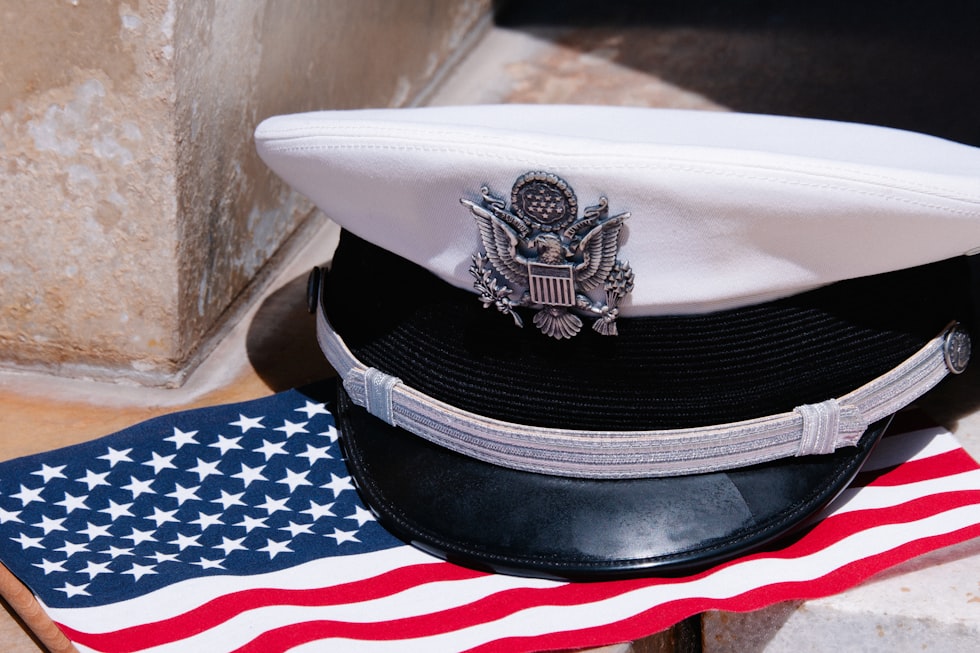 Photo by Wesley Tingey on Unsplasha hat sitting on top of an american flag
Veterans in crisis can call 988 and press 1 to reach the Veterans Crisis Line directly, or text 838255.
The 988 Lifeline — Louisiana’s Direct Line for Crisis
If you or someone you know is in crisis right now, the number to call or text is 988.
Louisiana’s 988 line, managed through louisiana988.org, connects callers to trained crisis specialists around the clock. Call, text, or chat — all options are available. Specialists can help with stress, depression, suicidal thoughts, substance use concerns, and more, and the line is there for people calling on behalf of someone else, not just those in personal crisis. For Spanish speakers, press 2 or dial 888-628-9454. For veterans, press 1 after dialing.
Research consistently shows that people who contact the 988 line feel less depressed, less overwhelmed, and more hopeful after speaking with a specialist.
You May Also Like…
The Most Cajun Things to Throw on the Grill This Summer
We like to do things differently in Louisiana, and when it comes to cooking we’re no exception. Some folks even like to toss these non-conventional foods on the grill every now and then.
Gallery Credit: Joe Cunningham