
Many Kennedys say they’re mortified by Robert F. Kennedy Jr., their wayward relative running the nation’s health agency under President Donald Trump.
His siblings say he has betrayed the family’s values. Jack Schlossberg, his cousin running for Congress, called him a “rabid dog.” Schlossberg’s late sister, Tatiana, attacked his policies in a scathing essay about her terminal leukemia.
But if Patrick Kennedy shares any of their scorn about his cousin, he’s not admitting it.
“I love Bobby,” the former Rhode Island congressman said in an interview with NOTUS. “I’m not going to sit and try to just make a laundry list of things that I disagree with.”
Patrick Kennedy has spent decades working to improve Americans’ access to mental health care. And he says that, in this moment, the best path to achieving that is by bridging the chasm between the health secretary — who traced an addiction and recovery path two decades before he did — and the medical mainstream.
“[Bobby will] be the first to tell you, Patrick’s on my ass,” he said, laughing.
The relationship between the pair represents the promise and tension of an RFK Jr. approach to mental health in a nation where 1 in 6 is on antidepressants, yet many seriously mentally ill people struggle to access antipsychotic medications that could help keep them off the streets.
The secretary is vividly candid about his own struggles — recently describing having previously snorted cocaine off toilet seats — and he’s coleading a White House initiative aimed at responding to the nation’s substance abuse crisis.
Yet his Department of Health and Human Services is overseeing changes to Medicaid, the nation’s largest payer of mental health services, that could cause millions to lose their coverage. Trump’s DOGE made deep staff cuts to the agency’s mental health office. And RFK Jr.’s rhetoric on antidepressant drugs has raised ire among leading medical associations that say they’re worried he might deter patients who need such medications from using them.
Patrick Kennedy acknowledged he has “sharp disagreements on a lot of stuff” coming from the administration. He’s deeply bothered by the Medicaid cuts. When asked about RFK Jr.’s suggestion last year that SSRIs and psychiatric drugs could contribute to violent behavior, Patrick Kennedy said he wants to “change how [Bobby] communicates that.”
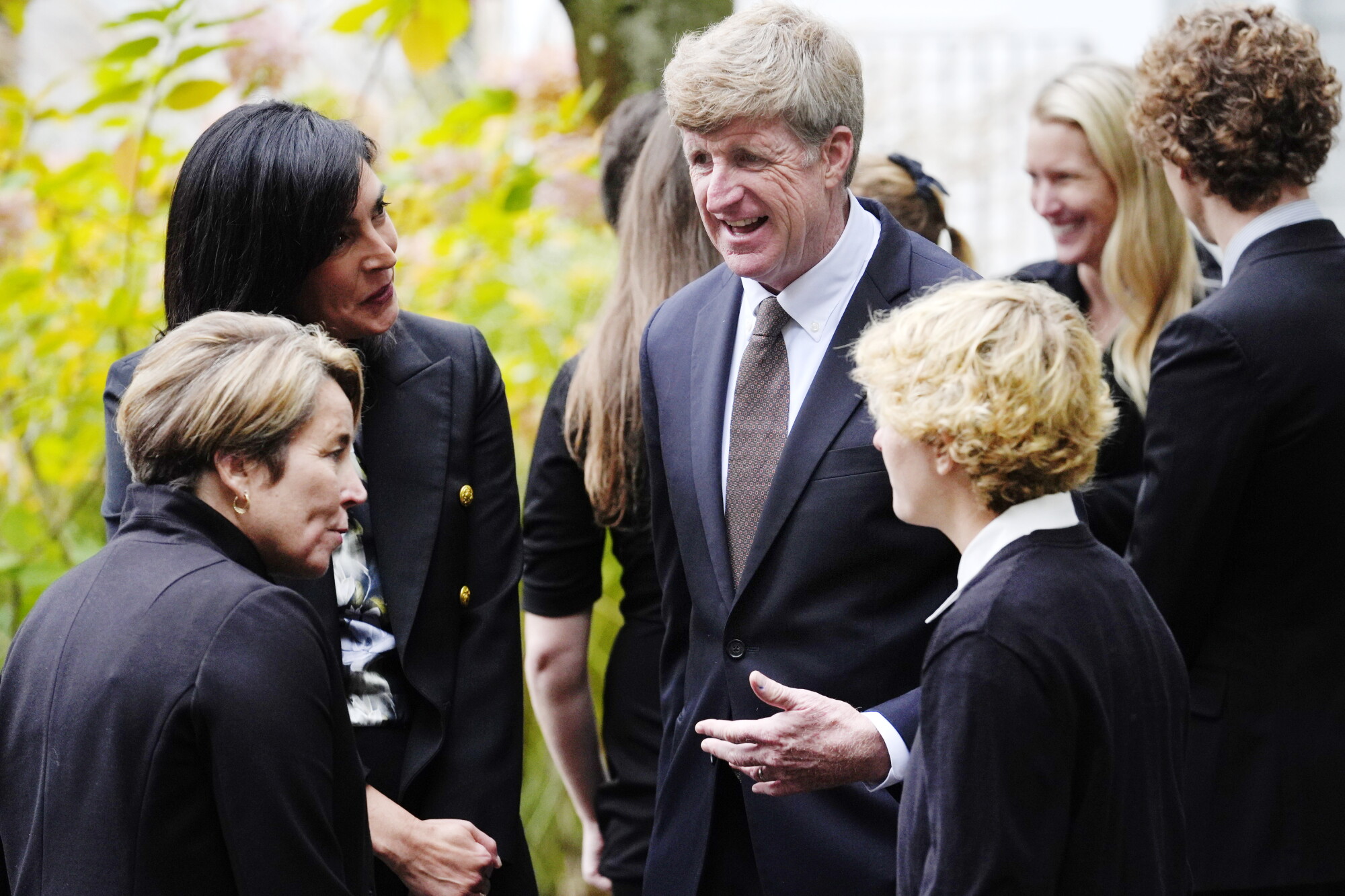
Patrick Kennedy says he has “sharp disagreements on a lot of stuff” with the Trump administration.
Steven Senne/AP
Yet the cousins who are 13 years apart in age have walked similar paths in life. Both started using alcohol and illicit drugs as young teenagers. Both suffered mishaps that catalyzed their eventual recoveries — RFK Jr.’s 1983 arrest and Patrick Kennedy’s 2006 car crash into a security barrier near the U.S. Capitol.
They both attended 12-step programs. Patrick Kennedy said they have occasionally found themselves at the same recovery meeting without planning it ahead of time. Their summer homes in Cape Cod, Massachusetts, share a property line.
Robert was the only family member to publicly praise his 2016 book on his addiction and bipolar disorder, Patrick Kennedy recalled.
When RFK Jr. asked Patrick Kennedy to endorse him for president in 2024, he declined. But Patrick Kennedy says he has warm personal feelings for his cousin, describing him as a huge support as he tried to get into recovery, and a listening ear who wouldn’t take offense at the former lawmaker’s candid thoughts.
“It was hard to say much to anybody that didn’t sound like it was being judgmental and mean and negative,” Patrick Kennedy recalled. “I could say it to him. It wasn’t going to go anywhere.”
He wouldn’t say how often the two talk, only that the cadence “varies.” He said he “got a very nice message” from the secretary after speaking at an HHS mental health roundtable in April.
Chuck Ingoglia, president of the National Council for Mental Wellbeing, said Patrick Kennedy is “trying to do the right thing” but knows little about the Kennedys’ interactions.
“I don’t know how much access he really has to his cousin,” Ingoglia said.
Another cousin, Joe Kennedy III, also advocated for mental health while serving in Congress. Yet he has taken a different tack than Patrick, calling the secretary a “threat to the health and well-being of every American” in Senate testimony last year. Joe Kennedy didn’t return repeated phone calls. RFK Jr. also did not respond to requests for comment.
Patrick Kennedy is choosing to peer at his cousin through a different lens.
He insists he’s filling a “vacuum” created by what he describes as a reluctance of the mental health community — largely acknowledged to be dominated by liberals — to engage with a health secretary in the Trump administration. He said he doesn’t know who else has “that kind of access to a guy that’s going to end up directing a lot of policies.”
To be sure, Patrick Kennedy didn’t need a family member for access to an administration. He’s widely recognized as a leading champion of mental health and was appointed to a presidential commission on opioid addiction during Trump’s first term. He has routed his advocacy through the Kennedy Forum, which he founded in 2013, two years after leaving Congress.
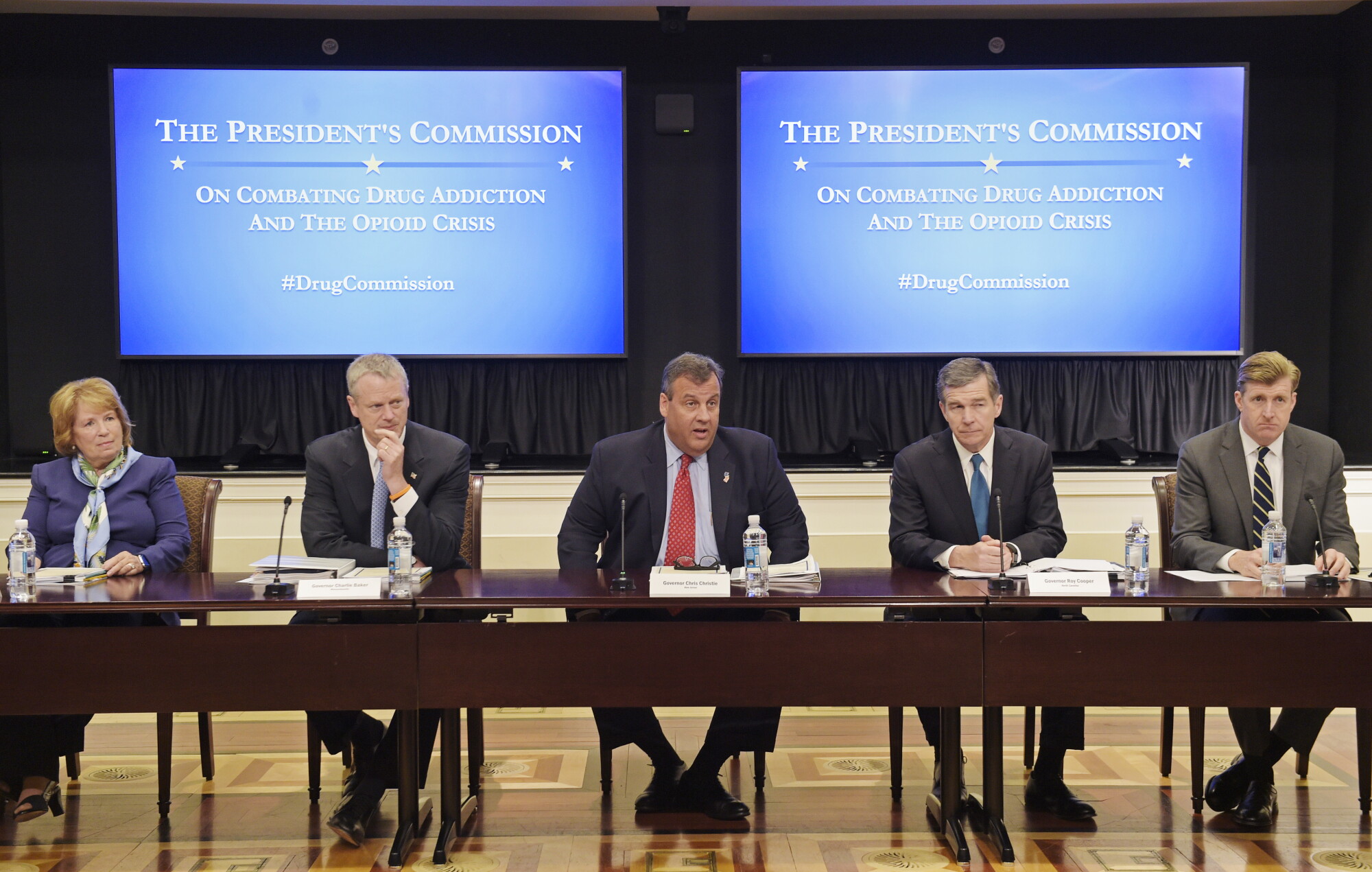
Patrick Kennedy served on a commission about opioid addiction during the first Trump presidency with, among others, Chris Christie, who was the New Jersey governor at the time.
Susan Walsh/AP
“He has a long track record of being able to gain access with both parties,” said Tim Clement, vice president of federal government affairs at Mental Health America, who used to work for the Kennedy Forum.
That approach is apparent when Patrick talks about his cousin’s Make America Healthy Again movement — which he jokes should include “MAMHA” — Make America Mentally Healthy Again. The MAHA movement is consistent with what a good progressive should stand for, Patrick Kennedy said, and added that his cousin deserves credit for starting a national conversation about nutrition and the food industry.
“I don’t think we would be having that conversation if it weren’t for the kind of provocative nature of this administration, and particularly the secretary’s comments,” he said.
Yet the degree to which Patrick Kennedy is giving the benefit of the doubt to his cousin has surprised some mental health advocates.
The Trump administration scrapped a Biden administration rule he’d heavily advocated for. That rule compelled insurance companies to comply with a 2006 law he’d spearheaded known as mental health parity, which requires insurers to cover mental health services the same as medical health services. Insurers had sued over the Biden rule, saying it was too opaque.
“It’s confounding because, rightfully so, Patrick will say he’s the father of parity,” said one mental health advocate who spoke on the condition of anonymity to speak candidly. “This kind of about-face of ‘It’s okay’ is really kind of shocking.”
Patrick Kennedy said during two meetings last year with Trump adviser Theo Merkel — the first facilitated by his cousin — he was convinced that many of the now-dead regulation’s goals would be accomplished by Trump’s executive order on health care transparency.
He lends a similarly sympathetic tone to the administration on two other flashpoints: the question of whether antidepressants are overprescribed and addictive, and whether the most severely mentally ill people should be involuntarily committed for treatment.
RFK Jr. described stopping antidepressants as harder than quitting heroin — a recovery road he’s traveled multiple times. He made the comparison at a May 4 forum where he announced regulatory changes to encourage doctors to prescribe antidepressants less often and give patients more instruction on how to taper off them. Before he spoke, a panel of patients told horrifying stories of severe struggles to get off SSRIs and benzodiazepines that left them reeling from harsh side effects for years.
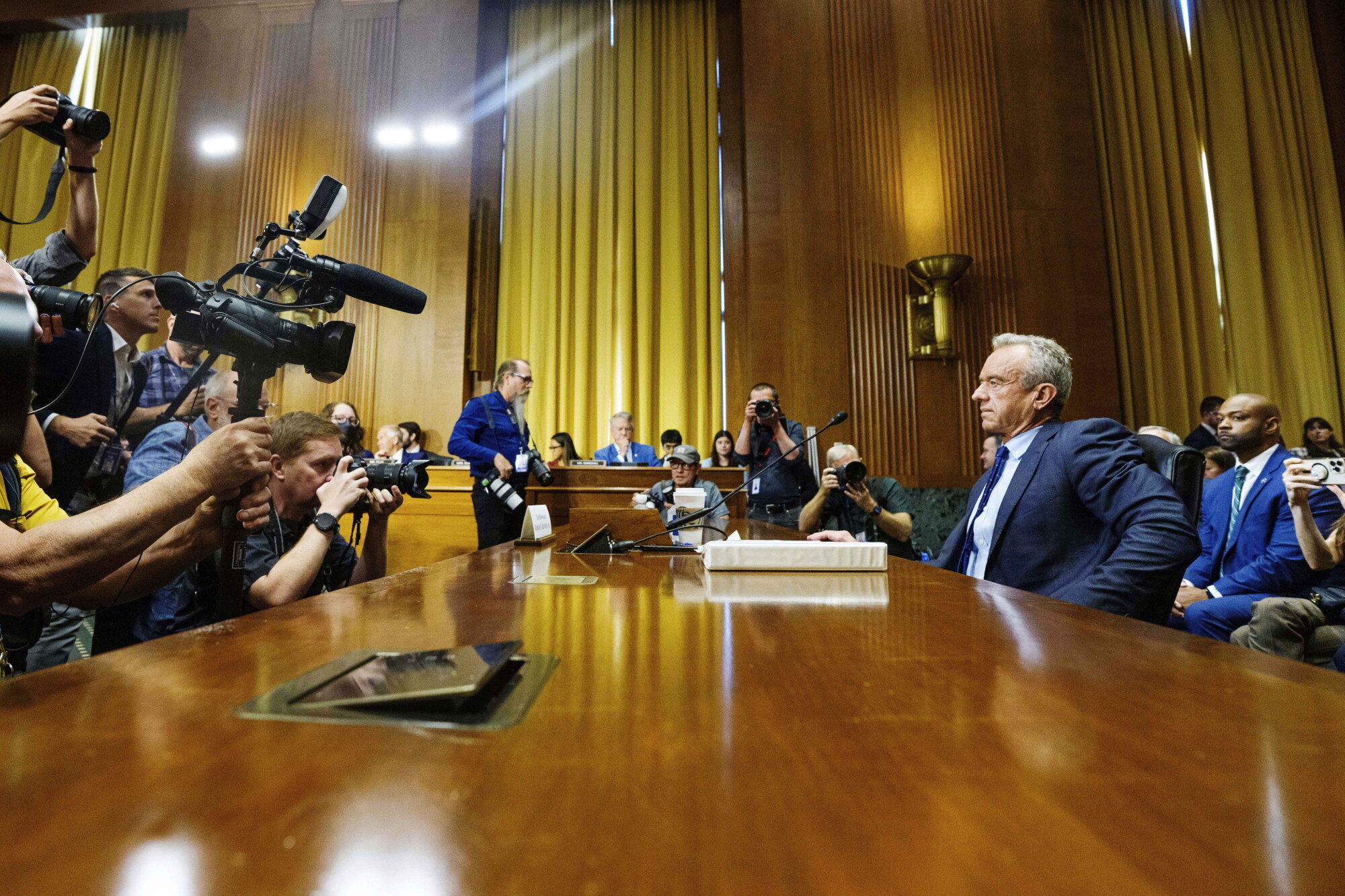
Robert F. Kennedy Jr. described stopping antidepressants as harder than quitting heroin.
Aaron Schwartz/Sipa USA via AP
The secretary stressed he wasn’t telling people to stop taking medications they’d already been prescribed — but the changes alarmed some mental health groups who worried aloud that such guidance could scare people who need medications from taking them. Hannah Wesolowski, chief advocacy officer for the National Alliance on Mental Illness, noted the panel didn’t include anyone speaking about how an SSRI saved their life.
“The big fear for us is it causes more fear around the use of medication,” she said.
Patrick Kennedy insists his cousin recognizes the value of medications in treatment — but uses rhetoric to make his points stick.
“I think that in politics you make sweeping statements … in order to have the message penetrate,” he said. “Which is: We have overmedicalized, overprescribed.”
He’s also sympathetic to the idea of involuntary treatment for the severely mentally ill — an anathema to liberals but something the Trump administration is pushing as a salve to the nation’s homelessness problem.
He stressed he’s for harm-reduction policies — needle exchanges, for example — but thinks Democrats have gone too far in pushing supervised consumption sites, which he compared to an “open air shooting gallery.”
“I default to being out in the country in a ‘recovery farm,’ as Bobby has been raked over the coals for,” he said, referring to the healing farms RFK Jr. has touted, where people seek recovery from addiction.
Patrick Kennedy insists the health secretary hasn’t affected the Kennedy family’s reputation “one iota.” But engaging with RFK Jr. has “pretty much killed” his political bonafides, Patrick Kennedy noted.
“I would not be able to run for office and probably survive a Democratic primary,” he said, “with all the work that I’ve done with the secretary.”