
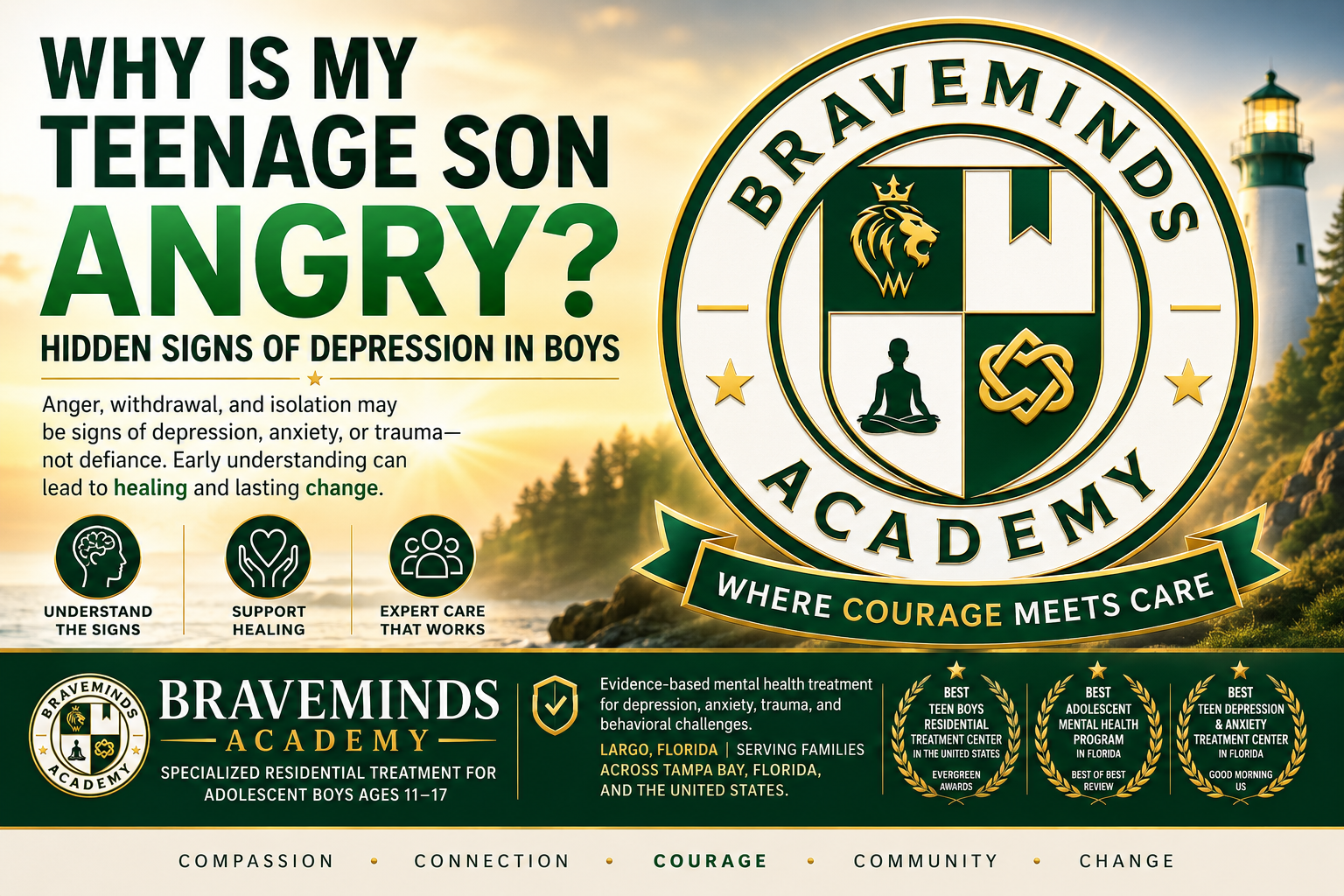
Why is my teenage son angry? For many families, anger, withdrawal, isolation, and emotional distance are not signs of defiance. They may be signs of depression, anxiety, trauma, or emotional pain that has not yet found a voice.

Braveminds Academy: Where Adolescent Boys Find Support, Structure, and Healing
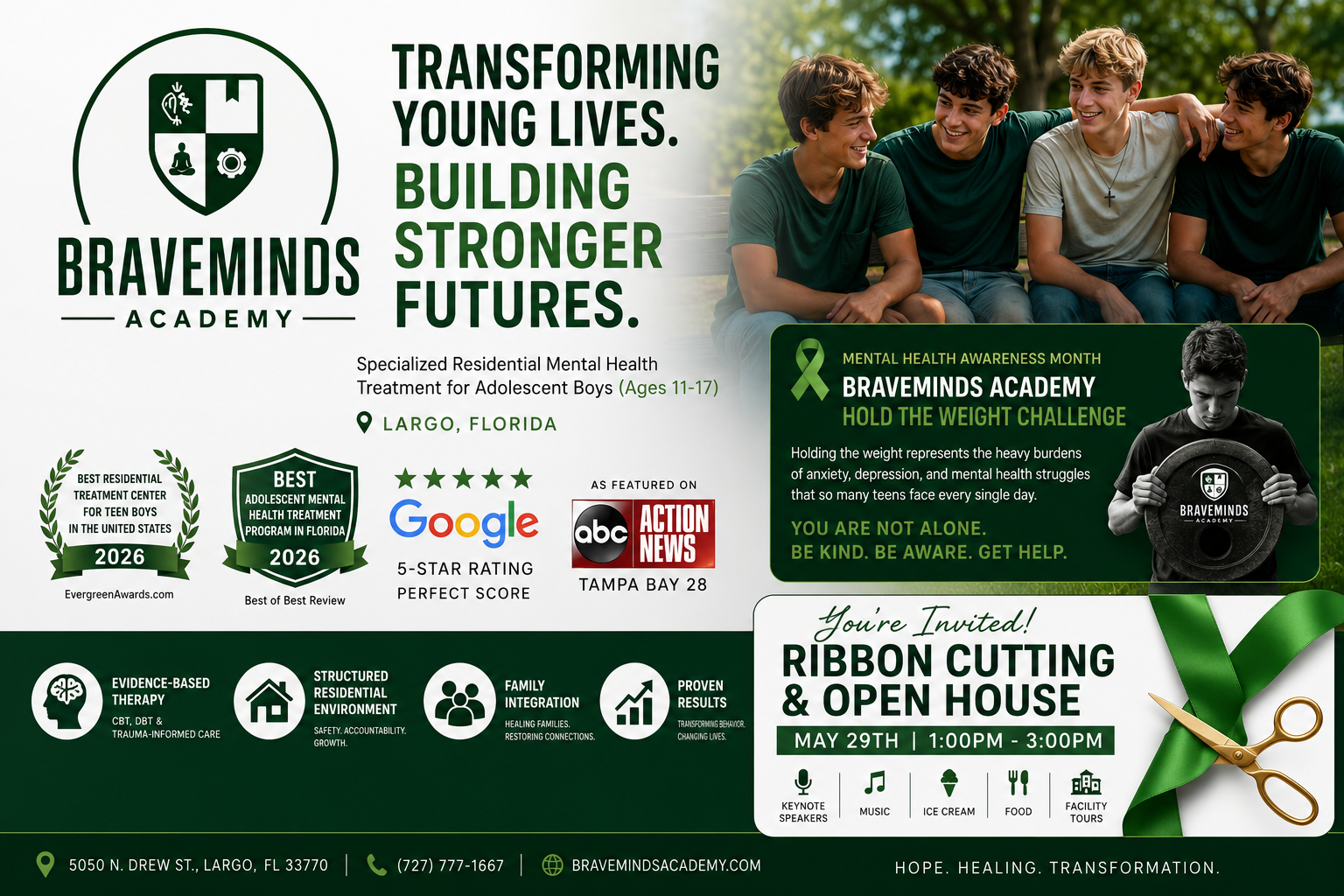
Recognized as one of the nation’s leading residential mental health programs for adolescent boys, Braveminds Academy continues advancing healing, hope, and transformation for families across Florida and the United States.
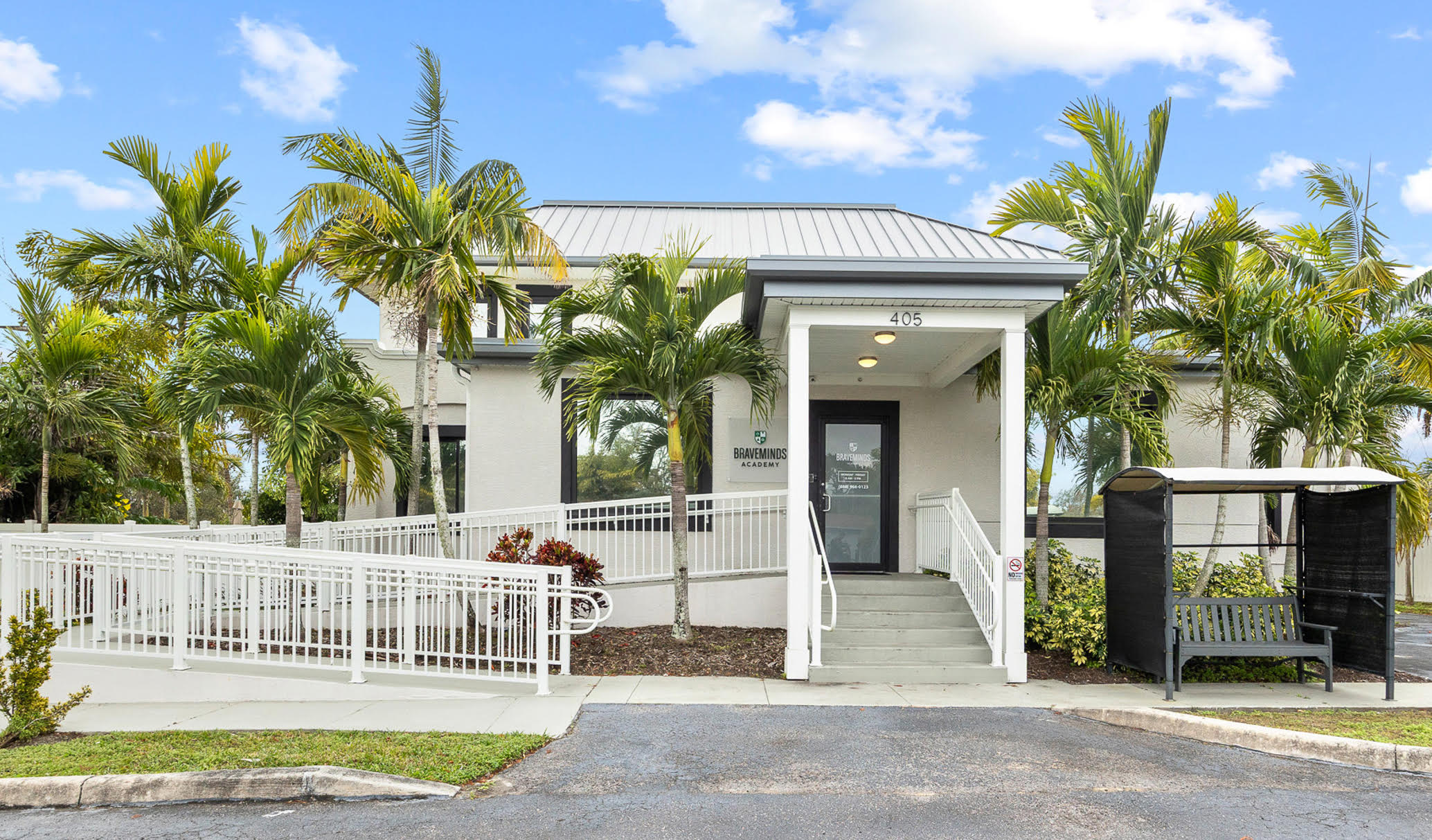
Braveminds Academy: Where Adolescent Boys Find Support, Structure, and Healing
Award-winning Braveminds Academy helps parents recognize when anger, withdrawal, and isolation may signal depression, anxiety, or trauma in teen boys.
Many parents mistake anger, withdrawal, or defiance for bad behavior. Often, these are signs of depression, anxiety, trauma, or emotional pain.”
— Travis Atchison, PhD, LCSW-QS, MCAP
LARGO, FL, UNITED STATES, June 23, 2026 /EINPresswire.com/ — When a teenage boy goes quiet, retreats to his room for hours, snaps at the people closest to him, or seems to stop caring about his family altogether, many parents quietly arrive at the same painful conclusion: “Why doesn’t he care about us anymore?”
According to Braveminds Academy, an award-winning residential treatment program for adolescent boys ages 11 to 17 in Largo, Florida, that conclusion is often wrong. In many cases, a boy’s emotional distance is not disrespect or indifference. It is a sign that he is struggling and does not yet have the words to say so.
Braveminds Academy has recently been recognized as the Best Teen Boys Residential Treatment Center in the United States by the Evergreen Awards, the Best Adolescent Mental Health Program in Florida by Best of Best Review, and the Best Teen Depression and Anxiety Treatment Center in Florida by Good Morning US. These recognitions reflect the organization’s commitment to clinical excellence, individualized treatment, family engagement, and positive outcomes for adolescent boys struggling with depression, anxiety, trauma, emotional dysregulation, and behavioral health challenges.
WHY “HE DOESN’T CARE” IS OFTEN THE WRONG CONCLUSION
Braveminds Academy works with families throughout Tampa Bay, Florida, and across the United States who are searching for answers about their son’s behavior. One of the first lessons parents learn is that behavior is communication.
Emotional withdrawal, irritability, loss of motivation, sleep changes, declining academic performance, social isolation, and excessive gaming are often outward signs of an internal struggle. Rather than asking, “Why doesn’t he care?” clinicians encourage families to ask a more productive question: “What is he struggling with that he cannot yet put into words?”
QUESTIONS PARENTS ASK MOST OFTEN ABOUT THEIR TEENAGE SONS
Why is my teenage son always angry?
Why won’t my teenage son talk to me?
Why does my teenage son stay in his room all day?
Why is my teenage son so distant?
Why does my son seem to hate me?
How can I tell if my son is depressed?
What are the signs of anxiety in teenage boys?
Many of these behaviors may be signs of underlying emotional struggles rather than intentional defiance.
WHAT THE RESEARCH SAYS ABOUT DEPRESSION IN BOYS
National data support this perspective. The Substance Abuse and Mental Health Services Administration reports that roughly 18% of U.S. adolescents ages 12 to 17 experienced a major depressive episode during the past year. The Centers for Disease Control and Prevention reports that approximately four in ten high school students experience persistent feelings of sadness or hopelessness.
One reason depression is often missed in boys is that it frequently presents differently than it does in girls. While girls may display sadness more openly, boys often express emotional distress through irritability, anger, risk-taking behaviors, emotional shutdown, or withdrawal.
The DSM-5 recognizes that depression in children and adolescents may present primarily as irritability rather than sadness. Because parents, teachers, coaches, and even screening tools frequently look for sadness, many boys who are struggling are overlooked.
The consequences can be significant. Research consistently shows that while girls report more suicide attempts, boys die by suicide at substantially higher rates. Mental health experts emphasize that early intervention and treatment can dramatically improve outcomes.
WHEN ANGER IS ACTUALLY DEPRESSION
“When a boy stops talking, slams his door, or seems angry all the time, families often interpret it as disrespect,” said Travis Atchison, PhD, LCSW-QS, MCAP, Clinical Director at Braveminds Academy. “In our clinical experience, those behaviors are often symptoms of depression, anxiety, or unresolved trauma. Boys are much more likely to externalize emotional pain than verbalize it. The earlier families understand that behavior is communication, the sooner meaningful healing can begin.”
Atchison, a licensed clinical social worker, qualified supervisor, and master’s-level certified addiction professional, oversees clinical programming and adolescent behavioral health treatment at Braveminds Academy.
THE HIDDEN ROLE OF TRAUMA
Trauma frequently contributes to emotional withdrawal and disconnection. When young people experience chronic stress, bullying, loss, instability, family conflict, or other adverse experiences, the nervous system can become focused on survival rather than connection.
As a result, many boys become emotionally distant, avoid vulnerability, struggle to trust others, or isolate themselves from the people who care about them most.
According to Braveminds Academy, what parents perceive as rejection is often protection.
THE FLORIDA AND TAMPA BAY PERSPECTIVE
For families throughout Tampa Bay and Florida, these challenges are closer to home than many realize.
State surveys indicate that nearly one in five Florida high school students reports multiple adverse childhood experiences, including parental separation, emotional neglect, household mental illness, or other forms of chronic stress.
At the same time, excessive gaming and screen time can sometimes mask deeper emotional struggles. While gaming itself is not the problem, clinicians often find that boys use gaming as a coping strategy for anxiety, depression, loneliness, stress, or low self-esteem.
TEEN MENTAL HEALTH BY THE NUMBERS
Approximately 1 in 5 adolescents experiences a mental health disorder each year.
Nearly 40% of high school students report persistent feelings of sadness or hopelessness.
Boys are significantly less likely to seek help for emotional struggles.
Suicide remains one of the leading causes of death among adolescents in the United States.
Early intervention significantly improves long-term outcomes.
WHAT PARENTS CAN DO RIGHT NOW
Braveminds Academy encourages parents to prioritize connection over control.
That means listening more than lecturing, remaining calm during conflict, staying curious rather than judgmental, and creating opportunities for open conversation.
Simple changes in language can make a significant difference.
Replacing “What’s wrong with you?” with “I’ve noticed you’ve seemed different lately. How are you doing?” often creates a safer pathway to communication.
Most importantly, parents should pay attention to patterns. When withdrawal, irritability, hopelessness, or isolation persist for several weeks and begin affecting school, sleep, relationships, or daily functioning, professional support may be necessary.
WHY FAMILIES ACROSS FLORIDA AND THE UNITED STATES CHOOSE BRAVEMINDS ACADEMY
Families choose Braveminds Academy because it provides specialized residential treatment for adolescent boys ages 11–17 in a highly supportive, structured environment designed specifically for young men. Located in Largo, Florida, in the heart of Tampa Bay, Braveminds Academy serves families throughout Florida and across the United States seeking comprehensive mental health treatment for depression, anxiety, trauma, emotional dysregulation, and behavioral health challenges.
Families choose Braveminds Academy because it offers a boys-only residential treatment environment specifically designed for adolescent males ages 11 to 17.
Located in Largo, Florida, within the Tampa Bay region, the program serves families from Clearwater, St. Petersburg, Tampa, Sarasota, Orlando, Miami, and Jacksonville throughout Florida and across the United States.
The program utilizes the Braveminds Method, a comprehensive treatment approach that combines evidence-based therapy, family engagement, academic continuity, psychiatric services, emotional regulation skill development, and structured residential care.
Treatment includes Cognitive Behavioral Therapy (CBT), Dialectical Behavior Therapy (DBT), trauma-informed care, family therapy, psychiatric support, and academic services tailored specifically to adolescent boys.
“Too many families mistake the signs of emotional pain in boys for laziness, defiance, or indifference,” said Matthew B. Schultz, Founder of Braveminds Academy. “Our mission is to help parents recognize what is really happening beneath the surface and provide a path toward healing, connection, and lasting change. Every young man deserves to know that asking for help is a sign of strength, not weakness.”
“Parents tell us all the time, ‘I know he loves us, but he keeps pushing us away,’” said Alex Williams, MSW, Executive Director of Braveminds Academy. “That is one of the most common concerns we hear. When we provide structure, safety, accountability, and support, young men often begin reconnecting with themselves and their families in powerful ways.”
The organization serves families throughout the greater Tampa Bay region, the state of Florida, and across the country under a guiding philosophy summarized in four words:
“Where Courage Meets Care.”
ABOUT BRAVEMINDS ACADEMY
Braveminds Academy is a boys-only residential mental health treatment program located in Largo, Florida, serving adolescent boys ages 11 to 17 throughout Tampa Bay, Florida, and the United States. The program provides evidence-based mental health treatment, trauma-informed care, psychiatric services, family therapy, emotional regulation skill development, and academic support in a structured residential setting designed specifically for teenage boys.
Braveminds Academy was founded by Matthew B. Schultz and John D’Onofrio, entrepreneurs, business leaders, and mental health advocates committed to addressing the growing mental health crisis affecting adolescent boys. They founded Braveminds Academy to provide evidence-based care, family support, academic continuity, and a path toward lasting healing for families throughout Florida and across the United States.
WHAT MAKES BRAVEMINDS ACADEMY DIFFERENT
Families often choose Braveminds Academy because of its:
Boys-only residential environment
Small, personalized treatment setting
Individualized treatment plans
Weekly family involvement and therapy
Academic support and continuity
Trauma-informed care
Psychiatric services
Award-winning clinical excellence
Location in Largo, Florida, serving Tampa Bay and families nationwide
Specialized exclusively for adolescent boys ages 11–17
Structured residential environment
Small client-to-staff ratio
Focus on emotional regulation and healthy masculinity
Comprehensive discharge planning and aftercare support
FREQUENTLY ASKED QUESTIONS
What are the signs of depression in teenage boys?
Depression in teenage boys often looks different from what many parents expect. Common signs include anger, irritability, emotional withdrawal, isolation, declining grades, loss of motivation, excessive gaming, sleep changes, low self-esteem, hopelessness, and loss of interest in activities they once enjoyed. Many boys express emotional pain through behavior rather than openly discussing their feelings.
Why is my teenage son always angry?
Persistent anger in teenage boys can sometimes be a symptom of depression, anxiety, trauma, chronic stress, low self-esteem, or emotional overwhelm. While occasional frustration is a normal part of adolescence, ongoing irritability, emotional outbursts, or hostility may indicate a deeper mental health concern that deserves attention and support.
Why won’t my teenage son talk to me?
Many adolescent boys struggle to communicate difficult emotions. When boys experience depression, anxiety, trauma, or emotional distress, they often withdraw rather than seek support. Emotional shutdown is frequently a coping mechanism rather than a sign that a teenager no longer cares about his family.
Why does my teenage son stay in his room all day?
While some privacy is normal during adolescence, prolonged isolation can sometimes signal depression, anxiety, social difficulties, trauma, or emotional distress. If isolation begins affecting school performance, relationships, sleep, hygiene, or daily functioning, parents may want to consider seeking professional support.
Can trauma make a teenage boy emotionally distant?
Yes. Trauma can significantly impact a young person’s ability to trust, connect, and express emotions. Boys who have experienced trauma may become withdrawn, emotionally numb, defensive, angry, or disconnected from family and friends as a way of protecting themselves from emotional pain.
When should parents seek professional help for a teenage son?
Parents should consider professional support when symptoms such as withdrawal, anger, anxiety, hopelessness, depression, school refusal, self-harm, substance use, or social isolation persist for several weeks or interfere with daily functioning. Early intervention often leads to better long-term outcomes.
What is residential treatment for teen boys?
Residential treatment for teen boys is a structured mental health treatment program that provides 24-hour support, therapy, psychiatric care, academic services, and emotional skill development in a supervised environment. Residential treatment is often recommended when outpatient therapy alone is not providing enough support or when a teen’s safety, stability, or emotional well-being has significantly declined.
How do I know if my teenage son needs residential treatment?
Residential treatment may be appropriate when a teen experiences persistent depression, anxiety, trauma symptoms, emotional dysregulation, self-harm behaviors, suicidal thoughts, school refusal, severe isolation, substance use concerns, or behavioral challenges that continue despite outpatient care. A comprehensive assessment by a mental health professional can help determine the appropriate level of care.
Why do parents choose Braveminds Academy?
Families choose Braveminds Academy because it provides specialized residential mental health treatment for adolescent boys ages 11 to 17 in a supportive, structured environment. The program combines evidence-based therapy, family involvement, academic support, psychiatric services, and trauma-informed care while serving families throughout Tampa Bay, Florida, and across the United States.
Where is Braveminds Academy located?
Braveminds Academy is located in Largo, Florida, in the heart of the Tampa Bay region. The program serves families from Clearwater, St. Petersburg, Tampa, throughout Florida, and across the United States who are seeking residential mental health treatment for adolescent boys.
For more information, visit www.bravemindsacademy.com or call (888) 680-1807.
Medically Reviewed By
Dr. W. Nate Upshaw, MD
Board-Certified Psychiatrist & Medical Director, Braveminds Academy
Dr. Upshaw is a board-certified psychiatrist with more than 20 years of experience in inpatient psychiatry, academic medicine, VA hospitals, and private practice. He specializes in depression, anxiety, PTSD, substance use disorders, and advanced psychiatric treatments, including TMS, ECT, and Spravato®. Dr. Upshaw reviews Braveminds Academy educational content for medical accuracy and clinical relevance.
Tony Martino
Braveminds Academy
email us here
Visit us on social media:
LinkedIn
Instagram
Facebook
YouTube
TikTok
X
Other
Legal Disclaimer:
EIN Presswire provides this news content “as is” without warranty of any kind. We do not accept any responsibility or liability
for the accuracy, content, images, videos, licenses, completeness, legality, or reliability of the information contained in this
article. If you have any complaints or copyright issues related to this article, kindly contact the author above.
