
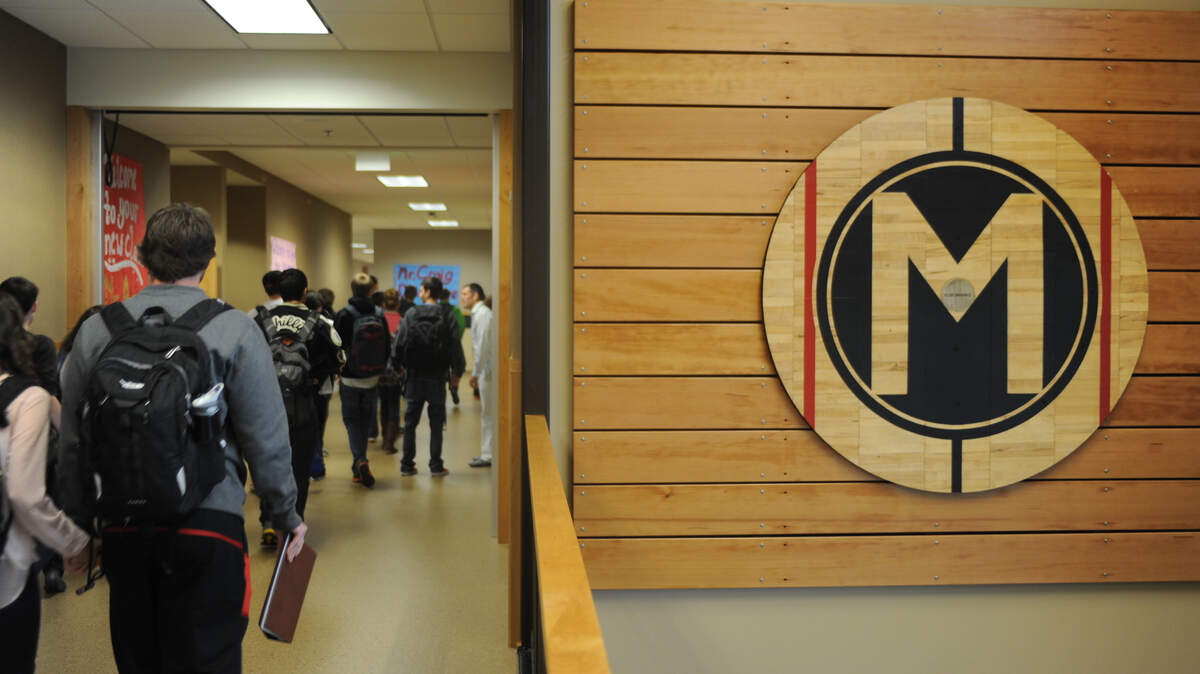
Students walk to class at Meridian High School in 2013.
Staff
The Bellingham Herald
Despite improvements to youth mental health in recent years, Whatcom County school districts are reducing their mental health services positions after district leaders were unable to find funding to fully replace temporary funding secured for such services.
“Our community should be, and is, immensely proud of these gains, and we know it reflects a systemic commitment to student well-being and mental health supports. Unfortunately, the reality of funding means that districts are left with the difficult decision to cut critical mental health positions and contracts for school year 2026-27,” Bellingham Public Schools Mental Health Services Administrative Assistant Clover Martin wrote in an email to community members in June.
In response to a significant decline in youth mental health in the last decade, local school districts have been receiving about $1.65 million annually over the last several years to hire staff who focus specifically on social-emotional learning, belonging and mental health.
The funding, which came from a federal grant and excess county sales tax revenue, has historically supported 12 mental health support staff and nine school clinicians, along with telehealth and contracted mental health services across the county.
But with an unstable federal funding environment and a continued reduction in projected local sales tax driven by slowing border traffic, the schools can no longer expect the funding to continue.
“In Bellingham, we have ended two formerly-grant-funded positions through attrition and have adjusted another position to be less than full time. We continue to actively seek funding that would replace or continue positions and services,” Bellingham Public Schools Communications Director Jacqueline Brawley told The Herald.
Local elected officials, school leaders and community health care representatives met in February to discuss the issue and explore possible solutions to help maintain services.
Since then, some supplementary funding has been identified or created, including:
A $20,000 grant awarded to the Nooksack Valley School District through the Chuckanut Health Foundation for social emotional learning at the high school level.Participation by some districts in the Medicaid Administrative Claiming (MAC) program, which allows government agencies, public school districts and healthcare providers to recoup partial costs for performing administrative activities that facilitate client access to Medicaid services. Bellingham Public Schools began participating in 2025 and is now receiving about $7,000 per quarter.The establishment of the Whatcom Community Foundation’s Whatcom Youth Wellbeing Fund to solicit donations to bridge the funding gap.
Although a funding source could not be identified to fully supplement school-based mental health services for the upcoming school year, Martin told community members that previous investments in youth mental health have been making a significant impact on student wellbeing.
The 2025 Healthy Youth Survey results for 10th graders, released in April, shows:
The percentage of students who reported receiving suicide prevention instruction rose from 30% in 2010 to 70% in 2025.The percentage of students who met the threshold for “highly hopeful” rose from 45% in 2023 to 52% in 2025.Students feeling anxious or on edge reduced from 72% in 2021 to 58% in 2025.The percentage of students who indicated they have no adults to turn to decreased from 16% in 2018 to 8.8% in 2025.The number of students who indicated they had previously made a plan to attempt suicide dropped from 18% in 2018 to 9.5% in 2025.
The Bellingham Herald
Rachel Showalter graduated Cal Poly, San Luis Obispo in 2019 with a degree in journalism. She spent nearly four years working in radio, TV and broadcast on the West Coast of California before joining The Bellingham Herald in August 2022. She lives in Bellingham.