
Izzy Fairclough was just 15 when she began experiencing seizures that doctors dismissed as anxiety, despite her insisting she didn’t feel anxious in the slightest.
Fairclough, now 20 and studying sports psychology at university, recently shared her experience on TikTok (@izzy.tryjuno), posting a clip with the text: “chronic illness girlies, tell me what you were diagnosed with AFTER being told ‘it’s just anxiety.’”
The video struck a nerve, echoing research showing clinicians tend to respond more slowly to women in medical settings, with women waiting longer to be seen and less likely to receive pain relief for the same symptoms.
Fairclough, from London, told Newsweek her own experience reflects that pattern: her seizures were attributed to stress, hormones or anxiety, even though she knew deep down it was far from mental health related.

She suffered from a seizure for the first time in the summer of 2021. She was at home with her mother when she suddenly felt “pins and needles” in her left leg.
When she stood up, the leg went numb. She told Newsweek: “I went dizzy and my vision started to go.”
She tried to shout for her mother and when she responded, Fairclough recalls: “I couldn’t reply. I felt myself going unconscious then my muscles tensed up.”
Her mother later told her she had collapsed and was “on the floor shaking a lot.” When paramedics arrived, the seizure had stopped.
Fairclough remembers waking up “having no idea what was going on. I was so confused, I had no idea what my name was. It was scary.”
At the hospital, she was sent for a magnetic resonance imaging (MRI) but nothing was found.
Doctors told her the episode was likely caused by “stress, hormones, anxiety.” Fairclough and her parents pushed back, stating that the schoolgirl didn’t feel anxious at all, but the explanation left her doubting herself.
At one point, she was told it might be functional neurological disorder (FND)—a problem with the functioning of the nervous system and how the brain and body send and receive signals.
For six months, she had no further symptoms. Then, at Christmas, another seizure struck—followed by weekly episodes. A second brain scan also showed nothing.
Doctors continued to suggest a stress response, but Fairclough said she couldn’t identify anything in her life that would explain it.
“I was certain there was something else wrong,” she told Newsweek.
As the seizures increased, her daily life became harder to manage.
“When you are having seizures weekly, it fries your brain,” she said. “I couldn’t go to school, and at 16 years old, I needed a babysitter, if my parents ever went out.”
The family pushed for doctors to re‑examine the two MRI scans she’d already had, and that’s when they discovered a brain tumor.
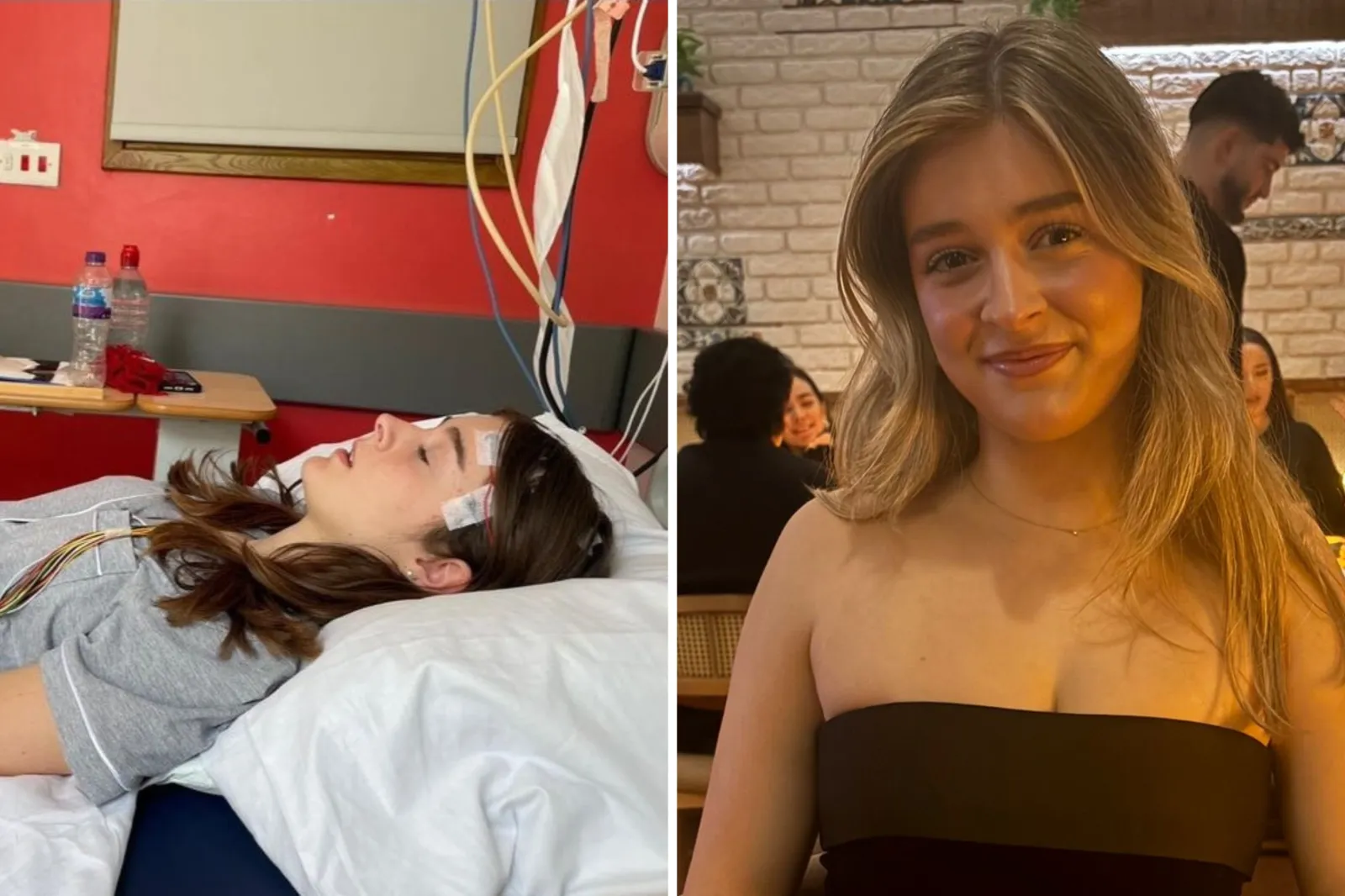
In March 2022, she was diagnosed with ganglioglioma, which Brain Tumour Research describes as a rare brain tumor made from a mixture of two types of brain cells—the ones that send messages and the ones that support them.
The U.K.-based organization explains that this tumor type can cause any of the usual brain‑tumor symptoms depending on its location, but seizures are especially common. Anti‑seizure medication is typically prescribed, and surgery to reduce or remove the tumor often helps to reduce or eliminate seizures.
“It was scary but a relief to get a diagnosis,” she said, adding that she was “out of it” most of the time.
Fairclough underwent surgery in July 2022, and the tumor was successfully removed.
Today, she regularly shares her story online to raise awareness of the tumor that can “happen to anyone.”
Fairclough said the experience left her feeling isolated. “It’s a rare condition, I didn’t know anyone who had ever had a seizure. I felt lonely at the time,” she said.
She was surprised by how many people related to her April 18 clip, saying she has been inundated with comments from others who were also misdiagnosed with anxiety despite later being found to have conditions such as endometriosis, coeliac disease and autism.
“It’s annoying that so many are going through the same thing,” she told Newsweek. “I feel like anxiety is an excuse… I think doctors should believe that something is not right.”