
 From sedaily.com
Won Buddhism has used this year’s Founding Day observances to emphasize a public role for religion in responding to some of South Korea’s most pressing social concerns, including mental health, social isolation, and suicide prevention.
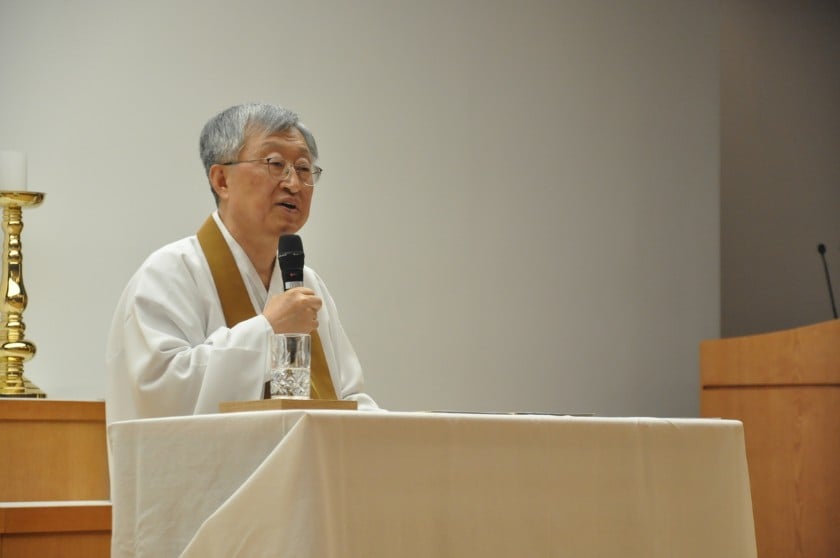
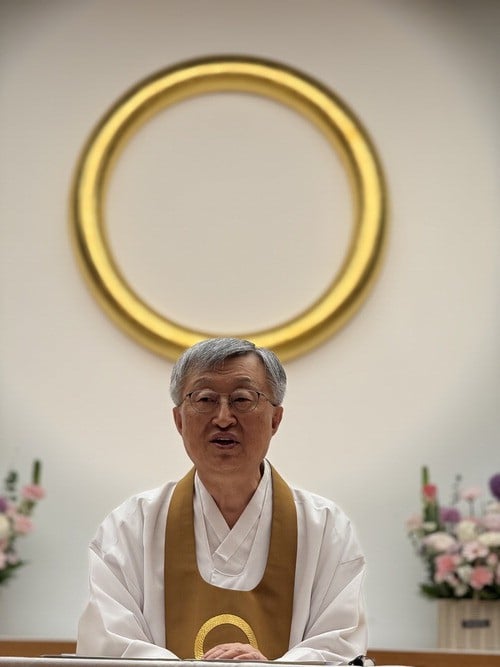
Speaking at a press briefing in Seoul ahead of the Won order’s 28 April commemoration, the director of the Administrative Headquarters of Won Buddhism, Na Sang-ho, said the movement would focus on helping society use modern material and technological advances in ethically constructive ways.
Na framed the anniversary around the continuing relevance of Sotaesan’s founding vision, arguing that the order’s early concern with balancing material progress and spiritual cultivation had new urgency in an age shaped by artificial intelligence and war. He warned that technologies developed for convenience and social advancement could also deepen violence and exclusion when used without moral restraint.
In that context, Na said he hoped that Sotaesan’s enlightenment could serve as a “light of the mind” for a world facing widespread suffering, and he called for AI to be directed toward coexistence and care for the marginalized rather than conflict. (Maeil Business Newspaper) He added: “In the age of artificial intelligence, we will fulfill our religious duty by cultivating the spiritual power to wisely use material civilization.” (The Chosun Daily)
A central part of the order’s response this year is a broader mental-health initiative under the integrated brand “Mind On,” which Na described as an effort to meet people where they live rather than confining religious practice to retreat settings.
“Unlike Buddhism, which is based in the mountains, all of Won Buddhism’s temples are located within urban living areas,” Na stated. “Through our 600 temples and regional training centers, we will actively devote ourselves to restoring the mental health of the public.” (Seoul Economic Daily)
Local reports said these efforts would include tailored offerings for office workers dealing with burnout, teenagers seeking better concentration, and older adults at risk of isolation, together with an expanded “Mind Stay” program that resembles a Buddhist temple-stay format adapted to Won Buddhism’s own institutional setting.
Na also outlined Won Buddhism’s understanding of mind cultivation in terms of maintaining mental balance, deep reflection, and the practice of grace. That framework reflects a broader pattern in Won Buddhist teaching, which has long presented itself as a modern Korean Buddhist movement seeking to apply Buddhist principles to daily life.
 From mk.co.kr
Official Won Buddhist materials describe the tradition as one that emerged in response to rapid material development and the need to cultivate spirituality accordingly. In that sense, this year’s Founding Day message continued a long-standing effort to present religious practice not as withdrawal from society, but as a disciplined engagement with the moral conditions of contemporary life.
Na said Won Buddhism planned to fully launch its “Reviving Life” initiative once certification from the Ministry of Health and Welfare was completed, and to expand work already being carried out among older adults, North Korean defectors, and military service members.
“When someone collapses from cardiac arrest, they can be saved if someone trained in cardiopulmonary resuscitation (CPR) is present,” Na noted. “The same applies to suicide risk. Won Buddhism will train individuals capable of providing emergency measures and lead suicide prevention efforts.” (The Chosun Daily)
The emphasis comes as South Korea faces one of the highest suicide rates in the OECD, which has reported a rate of 23 deaths per 100,000 population in South Korea, compared with an OECD average of 11.
Won Buddhism traces its origins to the enlightenment of Sotaesan in 1916, and the movement later established its central headquarters in Iksan in 1924 before formally adopting the name Won Buddhism in 1947. According to Na, the core principles of Won Buddhism are, “to maintain a sound mind, think deeply, and practice grace.” (Maeil Business Newspaper)
See more
Won Buddhism administrative chief Na Sang-ho says he will lead efforts to ease anxiety and anger through spiritual renewal (Maeil Business Newspaper)
Won Buddhism to Train Mental CPR Experts for Suicide Prevention (The Chosun Daily)
Won-Buddhism Vows to Expand Suicide Prevention Programs Nationwide (Seoul Economic Daily)
Related news reports from BDG
Gen Z Predominates as a Record 250,000 Visitors Flock to 2026 Seoul International Buddhism Expo
AI: South Korea Debuts Robot Monk to Explore Role of Technology in Buddhism
Buddhists and Other Religious Leaders in South Korea to Combat Rising Suicides and Isolation Among Older Adults
Ven. Pomnyun Sunim Inaugurates Memorial Hall For Korean Buddhist Activist, Scholar, and Zen Master Baek Yongseong