
“I didn’t know what sex trafficking meant,” she said. “No one talked about it back then.”
He put her on a plane to San Francisco, where she peddled her body and his drugs. In time, she was jailed for selling drugs to an undercover cop. She got out, had a brief relationship, got pregnant, then moved to Los Angeles and was jailed again.
“I wanted my daughter,” Poon said softly, “so I had her.”
At 20 years old, Poon gave birth on May 8, 1980, just before Mother’s Day, in the jail ward of the county hospital. Her little girl, who she named Sabrina, was premature and drug addicted, and went straight to an incubator. Soon after, Poon lost her child to the foster care system.
This is a trauma, Poon said she revisits every Mother’s Day, every Christmas — practically every day. A few years after her daughter was taken from her, she said she called the county to try to get her back.
“They said, ‘Oh, she’s been adopted,’” Poon said. “That screwed me up. I was depressed and didn’t even know I was depressed. Didn’t take no medication.”
She didn’t know it, but in addition to depression, she was experiencing cycles of mania and psychosis. Early each morning, as years turned to decades, she’d start drinking. She’d argue with shelter roommates and neighbors, she said, disputes she called “misunderstandings.”
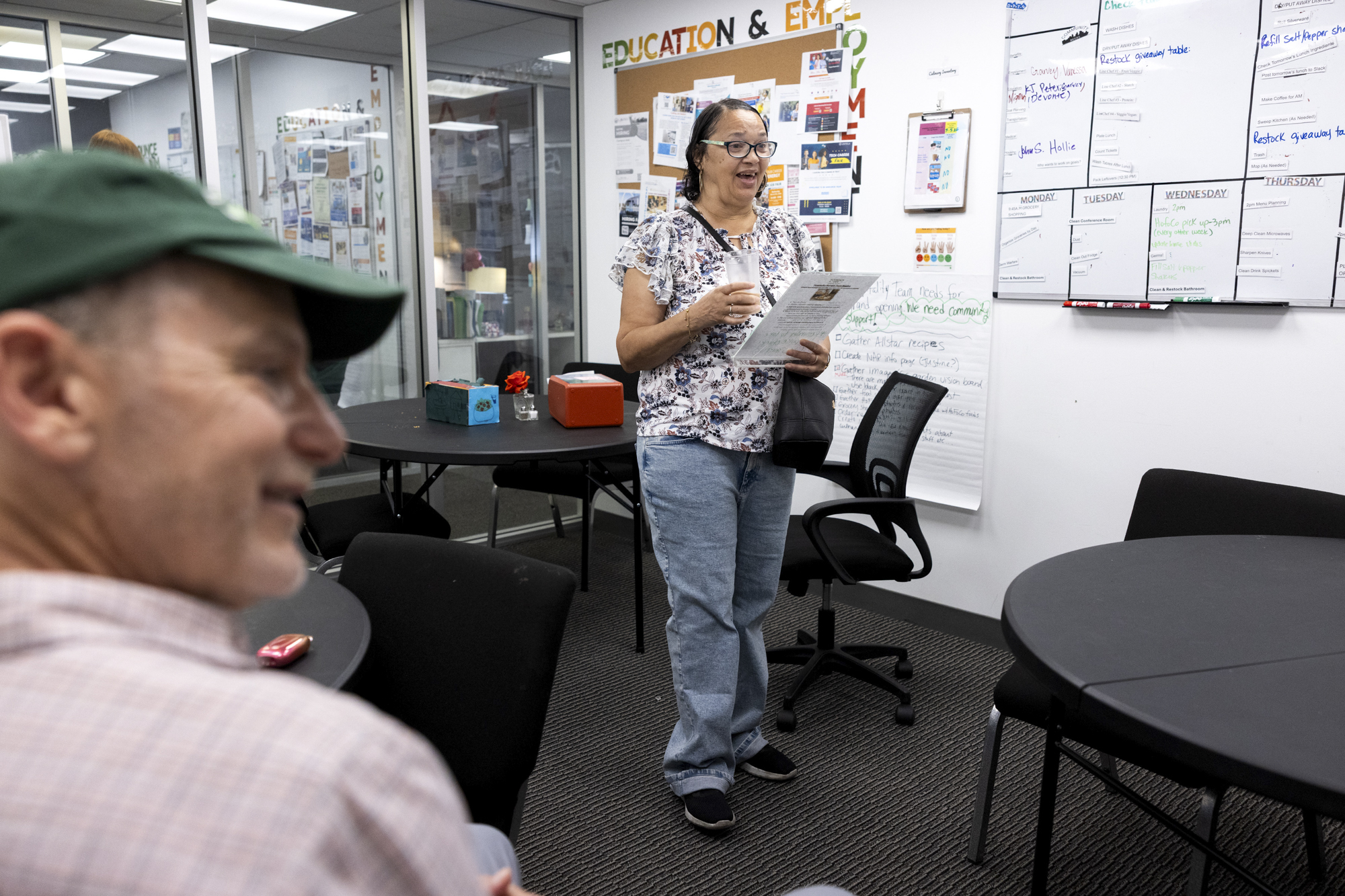 Mignon Annette Poon leads a morning meeting with the hospitality team at Fountain House Hollywood, also known as “the clubhouse” in Los Angeles, on March 9, 2026. (Alisha Jucevic/KQED)
“I would get places and lose them,” said Poon. “I was homeless.”
Her eldest sister, Rosemary Swan, 69, kept track of Poon’s journey whenever she could: a decade or more in Washington D.C., a long stint on the streets of Atlanta, and through Poon’s travels in the Midwest.
“For a long time she was like a dual-diagnosis case,” said Swan, who noted that mental illness, like alcoholism, also runs in the family. “It just went unmanaged.”
Every time she spoke to her younger sister, that core trauma came up: the loss of her daughter. So, Swan tried to help Poon find Sabrina.
“For over 25 years, she worried me about it,” Swan said. “I kept telling her, I’m trying, I’m trying. It hurt me that I couldn’t find the child. It’s probably why she went back to California. She never gave up.”
A reunion
In 2016, Poon returned to the streets of Los Angeles. Then, in 2018, while staying at a shelter in South Los Angeles, she picked up her cell phone and went down a rabbit hole.
She knew her daughter’s first name and birthdate. A Google search yielded gold, because Sabrina Bradley — her adoptive father’s last name — had a booming skin care business and big online presence.
 Sabrina Bradley and her birth mother, Mignon Poon, embrace after reuniting in October 2018. Today, with Poon in recovery, they’re bonding. (Courtesy of Sabrina Bradley)
As a child, Bradley said, she’d tell her dad, “The angels are around me, my mom is near me. And everyone would be, like, ‘there she goes in her fantasy world.”
By age 29, while living in Portland, she made a vow.
“I told myself, I’m going to move [back] to Los Angeles, and I’m going to do two things,” said Bradley, now 45. “Find my mother and create a name for myself in the beauty business.”
She achieved her second goal, and on a Sunday in 2018, was praying on the first.
“I said God, if you’re real, just give me a sign, just show me that my mom is near me,” Bradley recalled. “I won’t ask for anything else. But if you’re real, please show me. Please show me.”
That evening, after a schedule packed with clients, her phone rang. The woman on the line asked for “Sabrina, the esthetician.” Bradley assumed she wanted to book a facial. “No,’ the caller responded. “My name’s Mignon Poon. I’m your mom.”
Bradley went straight to the shelter and brought Poon into her home. But her mother was still using drugs, Bradley said, and her mental illness remained untreated. Police showed up at the house more than once when Poon was having what appeared to be a manic episode, banging on the doors of random neighbors.
They’d been together for just three weeks. Then, Bradley put her mom in a cab, and communications between them went dark.
“Me and her had a misunderstanding,” said Poon. “I had to go back to the shelter.”
As Poon returned to her old life, something was happening in LA County mental health offices and nonprofit community meeting spaces. The project that would come to be known as Hollywood 2.0 was taking shape.
The right to a whole life
The seed was planted more than a dozen years ago. The Hollywood neighborhood was benefiting from a burst of investment — hotels, housing and retail. But homelessness was also on the rise. Kerry Morrison, who then ran Hollywood’s business improvement district, said she came face to face daily with people “that stayed for months if not years in the same alley or the same bus bench.”
Morrison was not a mental health expert, but she was a community leader. She had helped pull together a coalition of Hollywood homeless service providers and nonprofits, and in 2013, they identified the people outside “most likely to die unless we intervened.” All were living with serious mental illness.
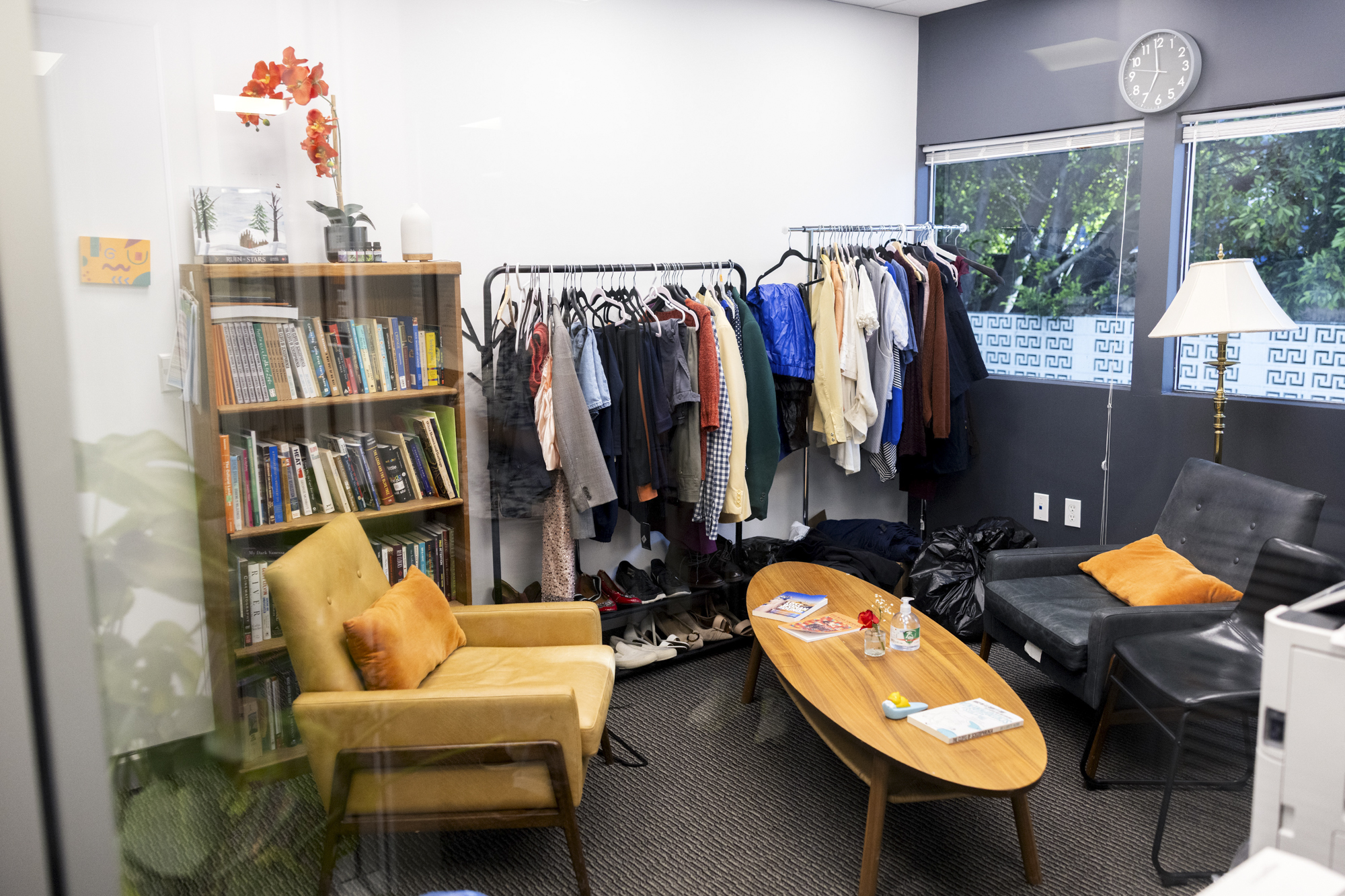 The meditation room and library at Fountain House Hollywood, also known as “the clubhouse” in Los Angeles, on March 9, 2026. (Alisha Jucevic/KQED)
In 2015, she applied for a fellowship to study one question: “Why is it so hard to help people with serious mental illness move from the streets into a safe place, and who is doing it better?”
Her research took her all the way to Trieste, Italy, a port city on the Adriatic coast. Trieste had emptied its psychiatric hospital system decades earlier, just like California did starting in the late 1960s. But Trieste shifted instead towards something more holistic.
Rather than the U.S. top-down approach of “experts” dictating treatment, Morrison said, she witnessed respectful collaboration in Trieste.
“They talk more about life plans and life aspirations than diagnoses or symptoms,” she said, “and when you operate with that kind of cultural predisposition, all the edges get softened, trust begins to emerge.”
Social collectives provide paid jobs and community connections to those living with serious mental illness. The hospital’s small psychiatric ward was unlocked, not even full, and Morrison saw no one living on the streets with untreated psychosis. The community clinics, where staff and clients share meals, she said, felt “incredibly warm and open and free. You can come anytime to talk to anyone, without an appointment.”
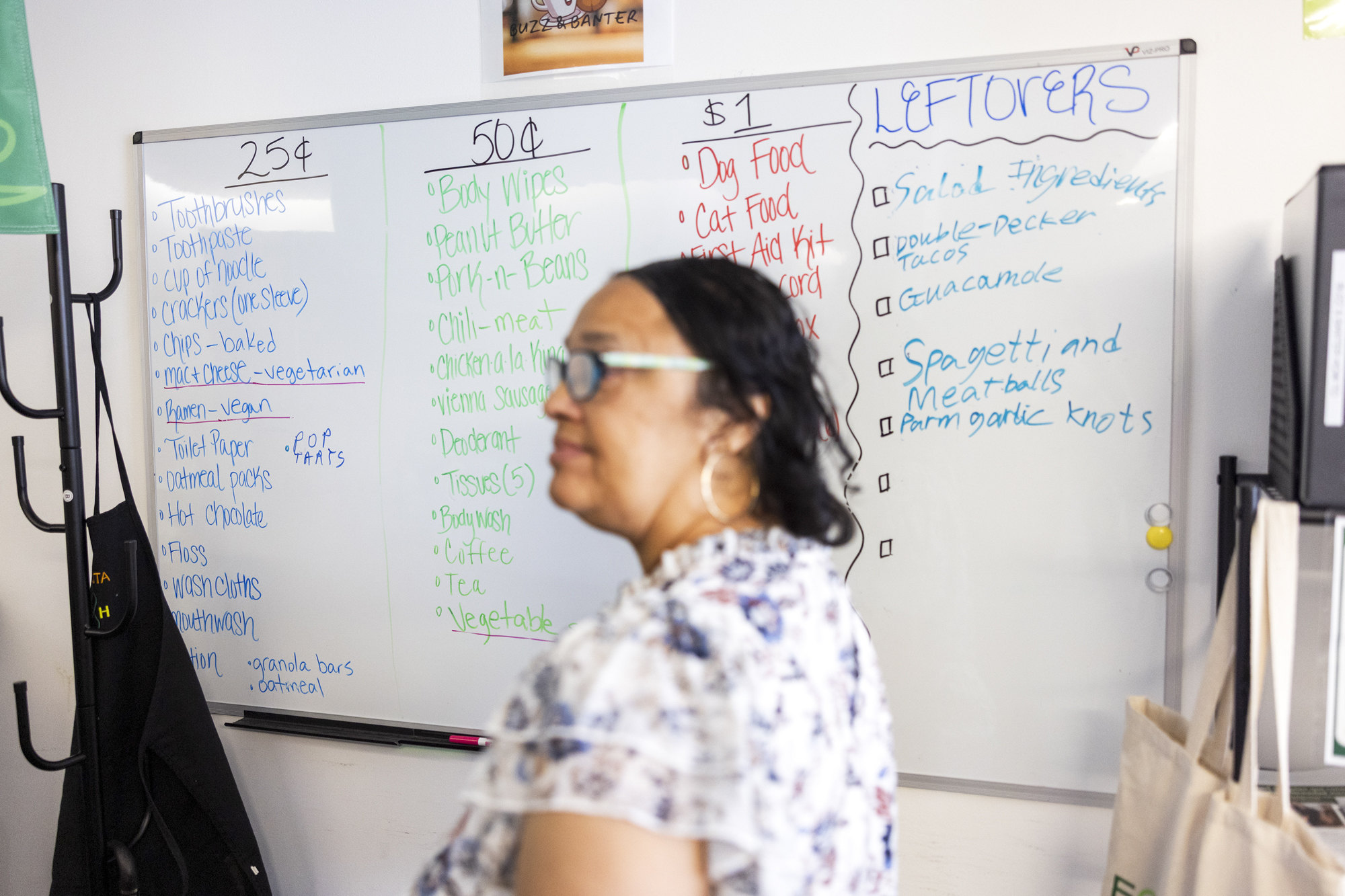 Mignon Annette Poon shows off the small store area at Fountain House Hollywood, also known as “the clubhouse” in Los Angeles, on March 9, 2026. (Alisha Jucevic/KQED)
Morrison said she wept as her first visit came to an end.
“I don’t know what to do with this,” she told her guide. “I run a business improvement district. No one is ever gonna believe me that you guys are so kind and compassionate.”
She was wrong. She cold-called Jonathan Sherin, the then-head of the Los Angeles County Department of Mental Health, and he went all in. In 2017, he and Morrison traveled back to Italy for a tour and a conference focused on the importance of nurturing aspirations, relationships and personal fulfillment in those living with mental illness. Joining them was a small group of Los Angeles County leaders, mental health advocates, law enforcement representatives and a judge.
“Everybody was gobsmacked,” Morrison said. “And that’s how it started.”
The region served by Trieste’s mental health system is home to fewer than 300,000 people, compared to Los Angeles County’s population of nearly 10 million. Italy has socialized medicine. The U.S. does not. And here, with a crisis on the streets, so many public health officials stress that getting people inside is paramount.
The small group of travelers knew they had to adapt their approach to those realities, and for a true community solution, they had to concentrate the effort. They settled on Hollywood.
In 2022, the California Mental Health Oversight and Accountability Commission awarded the county a grant of nearly $117 million for a five-year pilot. The goal: to seed a new culture of recovery in the community.
A crossroads
That summer, another “misunderstanding.”
Poon was arrested for assaulting a drinking buddy, an elderly neighbor at an East Los Angeles apartment building where she’d finally found herself a place. She was facing felony charges and possible state prison time. From jail, she called Swan, who tapped her life savings to get her sister out on bond.
But once Mignon walked free, she refused contact with the family, Swan said, so she wrote the public defender.
“Drug testing, mental health treatment, anything but prison,” she pleaded in a letter, and she begged him to get her sister a diagnosis. “She [has] been needing one for about fifty years, if not sixty,” she said. “I told him!”
Meanwhile, Poon was back on Skid Row. She was feeling the weight of her age, so she made a choice to head to Hollywood, where neighborhood homeless outreach teams regularly “wake you up and ask you, ‘Why you not housed?’” she said. “Then you explain your situation, and they try to help you get into a shelter.”
This was her big break. Poon landed at a Hollywood women’s shelter where staff reached out to the Los Angeles County Mental Health Department on her behalf — just as they were layering key pieces of the Hollywood 2.0 pilot into place.
“That’s when I got my social worker, therapist and my psychiatrist,” said Poon.
Today, as two of her Hollywood 2.0 clinicians put it, Poon’s inner spirit shines through. Dr. Jonathan Gomez, her first psychiatrist under the program, and Eleanor Bray, her current social worker, described her as charismatic, sweet, welcoming and warm, with a dose of sass and a sense of humor.
But when Gomez first visited Poon in August of 2023 at the shelter, she struck him as “one of the most symptomatically-distressed people I’ve seen.”
Poon believed the neighbor she’d assaulted was part of a conspiracy to electronically monitor her and had implanted a device in her foot, he said. She was so focused on this violation that she could hardly finish a sentence.
“I was like, yeah, let’s look at your foot,” he said. “Let’s also talk about how much of this comes and goes with your sleep pattern and with the substance use.”
Poon has a diagnosis now: schizoaffective disorder, bipolar type. Mania from bipolar disorder can cause psychosis. Poon’s diagnosis is schizoaffective because she sometimes experiences psychosis when she isn’t manic. But what matters more than that diagnostic label is alleviating distress.
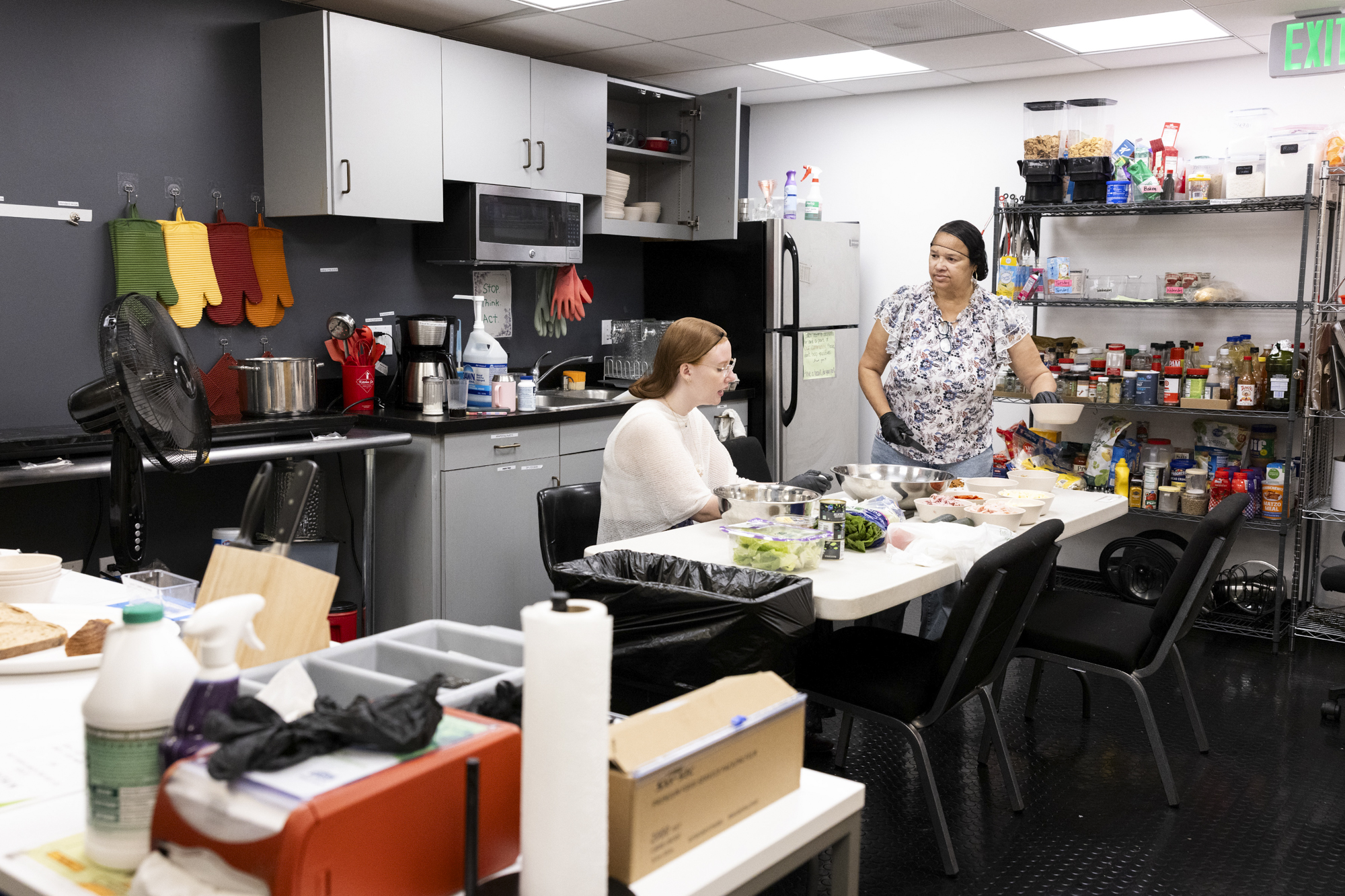 Program director McKenzie Dowdle, left, helps Mignon Annette Poon prepare lunch for members and staff in the kitchen at Fountain House Hollywood, also known as “the clubhouse” in Los Angeles, on March 9, 2026. (Alisha Jucevic/KQED)
The Hollywood 2.0 approach had him visiting her at the shelter once a week. It allowed them to work together to fine-tune her medication regimen.
“I think they help me stay focused, stay positive, stay uplifted,” Poon said of the meds, “helping my thoughts to be clear.”
Soon, Poon was ready to move to transitional housing. But she was feeling paranoid about her shelter roommate, Gomez said, and told him she might head back to the streets. With his input, her care team got her into The Mark Twain Hotel, which had just been repurposed as Hollywood 2.0 transitional housing with intensive onsite support — and single rooms.
It was there, more than two and a half years ago, that Poon took her last sip of alcohol. Five months later, to her sister’s delight, a judge granted her mental health diversion. If she stayed on course, the felony charges against her would be dismissed. And in September 2024, Mignon’s team helped her move into her very own subsidized apartment.
“Community will heal us all”
Getting a client medicated, sober and permanently housed is often considered the pinnacle of success. But after years in survival mode, said Bray, Poon’s social worker, finding oneself alone without all the support of transitional housing programs “can be quite shocking.”
The Fountain House Hollywood clubhouse had opened its doors on Sunset Boulevard in July of 2024, joining more than 300 others worldwide that hew to the same philosophy: empowering members to take ownership of their own recovery.