
It has been six years since the world stopped spinning. Six years since the COVID-19 pandemic changed the way Americans do seemingly everything — from grocery shopping to sneezing into elbows.
“Things haven’t been the same since,” nurse Trinity Walker told Straight Arrow. “I do sometimes wonder where I would be in my life if it weren’t for the trauma I went through during that time.”

Download the SAN app today to stay up-to-date with Unbiased. Straight Facts™.
Point phone camera here
For Walker and many others, something fundamental broke during those years. And it never quite reassembled. Millions of Americans continue to live in “survival mode,” a state in which a person’s nervous system remains activated, awaiting the next crisis. According to a recent report, 43% of adults say they feel more anxious than they did the year before — a steady climb from 37% in 2023 and 32% in 2022.
“I’m still struggling to put myself back to where I was,” said Jessina Allen, an Atlanta-based personal trainer. During lockdown, the 39-year-old faced the inability to work since gyms were closed.
“It’s hard to explain, but sometimes I grieve who I might’ve been if all this hadn’t happened,” Allen said.
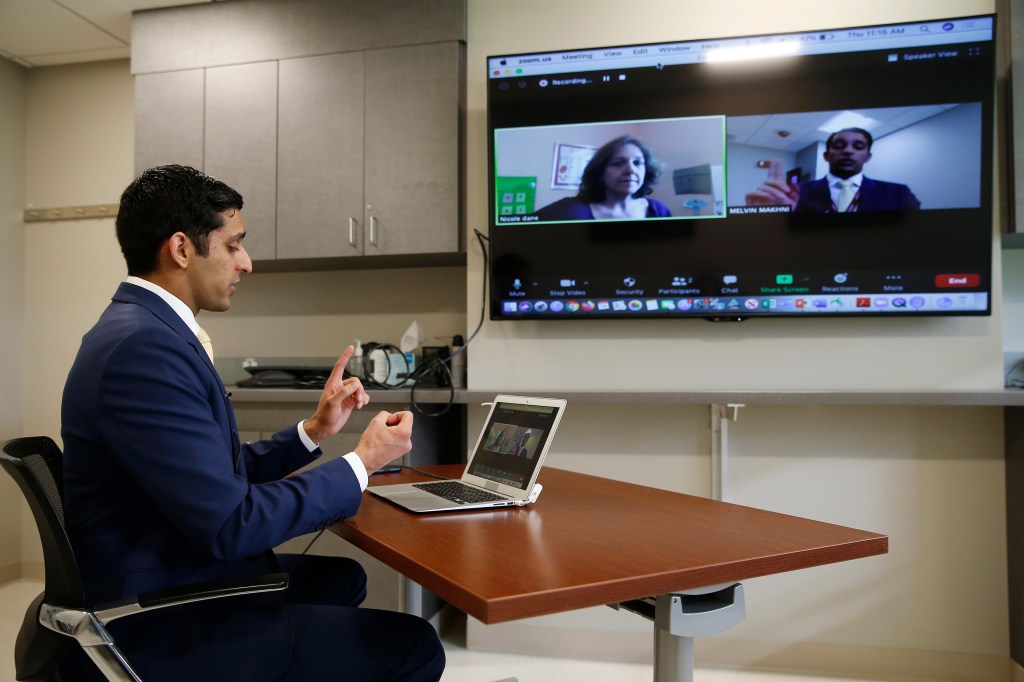 (Photo by Jessica Rinaldi/The Boston Globe via Getty Images)
The shift from crisis to chronic survival mode
“Stress feels more chronic now and less episodic,” said Chloë Bean, a licensed marriage and family therapist. “Before the pandemic, people often came in around one acute stress issue. Now, many clients describe feeling constantly ‘on,’ mentally overloaded, emotionally depleted and unable to ever recover from this state.”
Dr. Ash Bhatt, chief medical director at Legacy Healing Center, described it as “less about one acute crisis and more about chronic overload.” Bhatt said his patients claim they feel as though their nervous system never fully powers down.
“I can’t sleep,” they tell him. “I can’t focus. I’m snapping at people. I feel exhausted, but I can’t relax.”
That “ongoing hypervigilance,” as Bhatt described it to Straight Arrow, is a key, post-pandemic shift.
And now another major crisis looms, affecting a large swath of the population in ways that echo COVID-19.
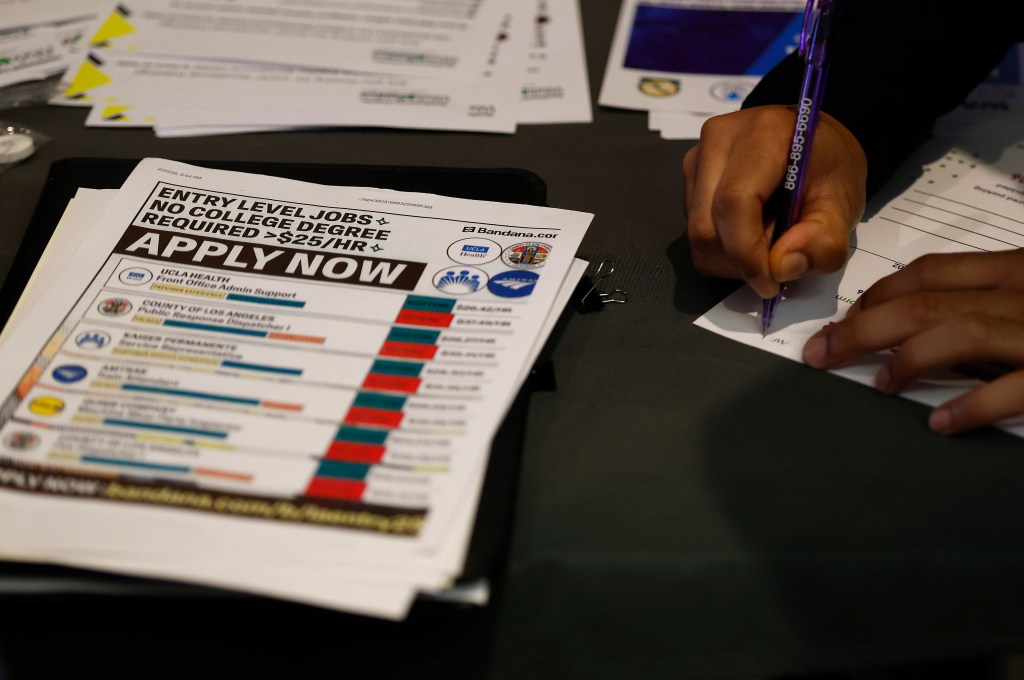 (Photo by Justin Sullivan/Getty Images)
The financial toll of survival mode
For the first time since COVID, there are reportedly more unemployed workers than available jobs. As of April, in the tech industry alone, layoffs average roughly 889 job losses per day.
And that’s stressful.
“Patients are dealing with financial pressure, job uncertainty, family responsibilities and a constant stream of information all at once,” Bhatt said. “When people feel like there’s no clear endpoint to the stress, their system stays in a kind of survival mode, and that’s when burnout starts to build.”
After being laid off two years ago, tech account executive Ralph Reid has submitted over 400 job applications. He said his life savings are now depleted.
“I don’t know how I’m going to do it,” he said. “I’m basically being forced out of the job market, and the mental health toll is absolutely ridiculous.”
For many, the instability is disorienting.
“I’m so tired of all these mass layoffs happening almost every week now,” said Reid, who is 46. “Every week, it’s another corporation letting hundreds of hard-working people go. The search for a permanent role in this climate just feels impossible.”
And the job market doesn’t seem to be improving. Job openings fell to 6.5 million in December 2025, the lowest outside the pandemic since 2017.
“Nobody talks about the stress of trying to rebuild financially after being underemployed or unemployed for an extensive amount of time,” Reid told SAN.
But in fact, more people are talking about their mental health. Mental health experts who spoke with Straight Arrow said the pandemic did bring about (at least) one positive cultural change: Seeking professional help has lost a lot of its stigma. And many are finding relief through telehealth.
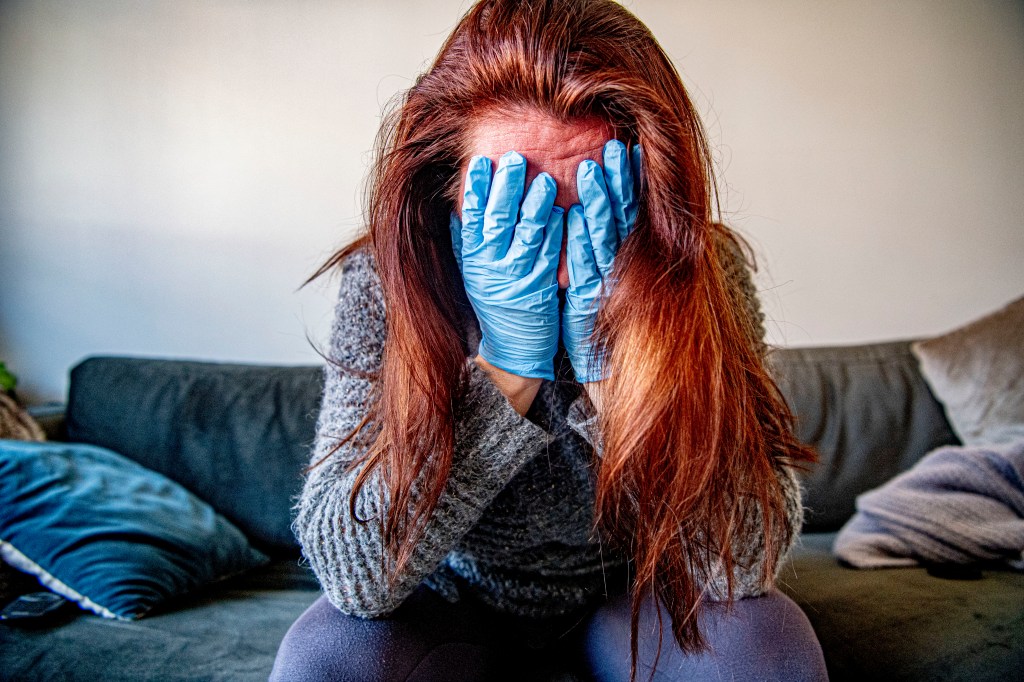 (Photo by Robin Utrecht/SOPA Images/LightRocket via Getty Images)
Remnant of COVID: mental health became accessible
What started as an emergency solution has become a sustained pathway to mental health care — one that’s breaking down barriers for people living in survival mode.
By December 2025, mental health held the highest telehealth utilization rate of any medical specialty, according to data from the American Hospital Association. Studies show 62.3% of patients with a telehealth claim had a diagnosis of mental health conditions last year. The digital mental health market, valued at $7.46 billion in 2025, is projected to reach nearly $47 billion by 2035.
“Telehealth is very effective for structured work around stress and anxiety,” said Dr. Darren O’Reilly, a psychologist and clinical director of AuDHD Psychiatry. “The main advantage is reduced friction. People are more likely to attend consistently.”
It has worked for Walker, who still feels she is carrying considerable stress from her time working at a hospital during COVID-19.
Start your day with fact-based news.
“I’ve only done therapy online, but I had such a positive experience,” she said. “Once you build the rapport, it feels more natural; it got to where I was even crying at the screen.”
Still, it’s not for everyone.
“I tried it once and felt uncomfortable like I was on a Zoom call at work,” Reid said. “I need that person to feel my energy, and I need to feel theirs. Especially after all I’ve experienced, that’s a little too cold for me,” he adds.
With the growing accessibility of help, it means people aren’t facing it alone.
“There has been a clear increase in people seeking support,” said O’Reilly. “People are accessing help earlier, without needing to reach a crisis point.”