
Tamara Patzer didn’t mean to call the police on her son.
On April 11, she realized he was having a delusional episode while visiting him at his home in Port Charlotte. She called a mental health service provider, hoping to find him support.
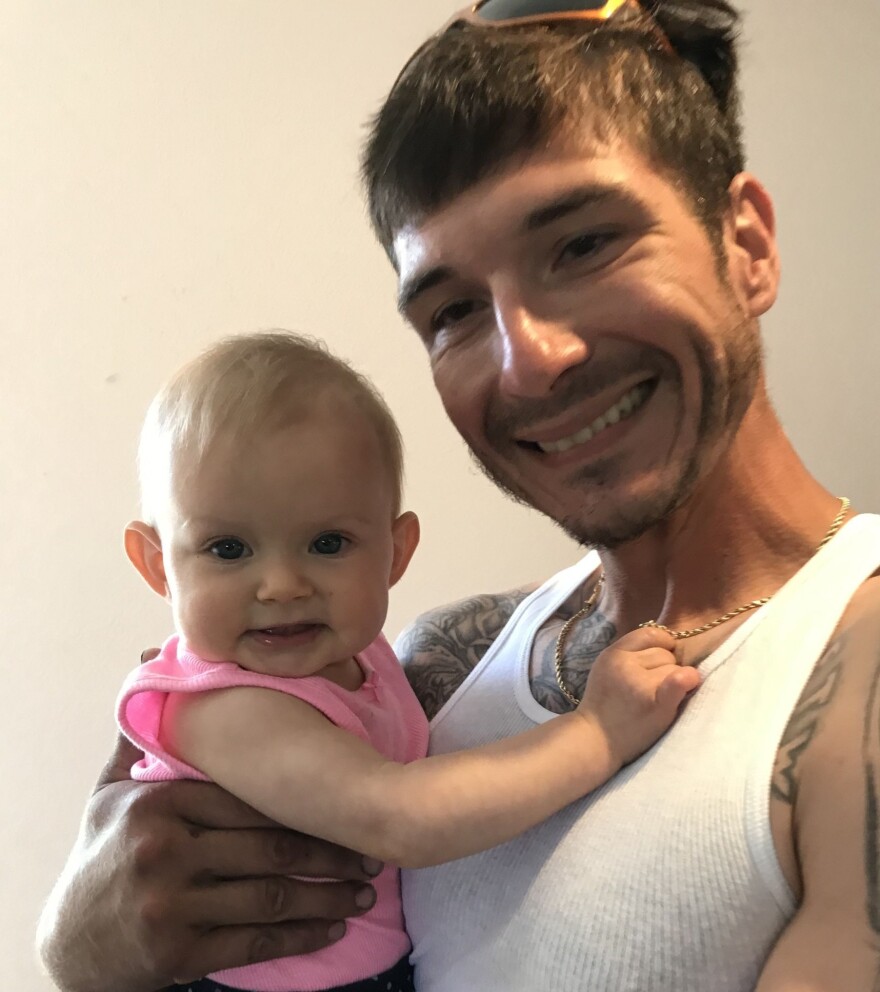
Photo courtesy of Tamara Patzer/Suncoast Searchlight
Richard Freshwater, 36, with his daughter. His daughter stays with his mother, and he visits her weekly when not in custody. Despite his struggles, Freshwater prioritizes being a father and has completed more than 100 hours of parenting classes while incarcerated.
Instead, he was arrested on an out-of-county warrant, and is now being held in the Sarasota County Jail — where, as of Tuesday, he has yet to be given any of the prescribed medications that could help with his mental condition, he told a reporter during a video call from inside the jail.
It was far from the first time Richard Freshwater’s mental health struggles landed him in handcuffs.
Online court records show Freshwater, 36, has been involved in more than two dozen criminal cases and civil infractions in Sarasota and Charlotte counties, including felonies, misdemeanors and smaller infractions. According to Patzer, almost all stemmed from his mental health issues that she has spent years trying unsuccessfully to get properly treated.
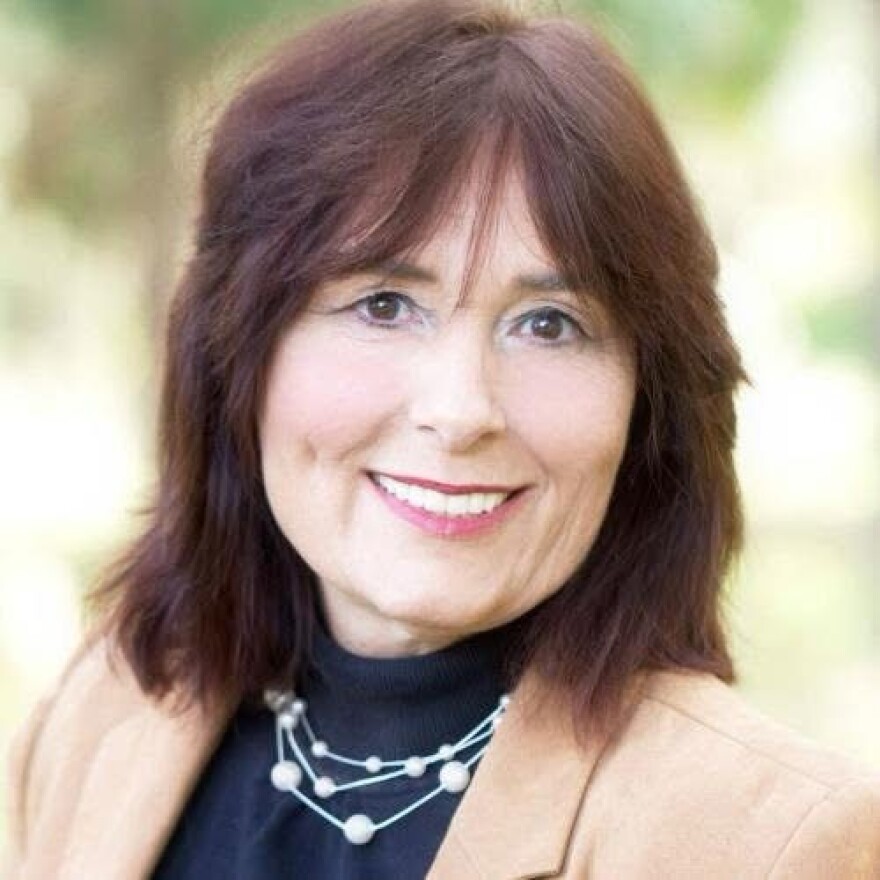
Photo courtesy of Tamara Patzer/Suncoast Searchlight
Tamara Patzer has spent the last couple decades seeking mental healthcare for her son, Richard Freshwater. In April, she realized he was having a delusional episode and called a mental health service line in Charlotte County. But instead of receiving help, Freshwater was arrested.
“I’m focusing on Charlotte County’s failure to get him mental health help, and Sarasota County’s failure to help me get him mental health help,” Patzer said in a phone interview. “It’s not just one failure.”
Despite a new state law focused on mental health that passed last year, cases like Freshwater’s are still common in Florida. Those who work in criminal justice on a daily basis say the system is clogged with people like him who have unaddressed mental health needs, causing an increased caseload that criminalizes mental illness more than it protects public safety.
The problems can snowball under programs meant to keep defendants with mental illness out of jail. When authorities respond under the Baker Act — a Florida law that allows someone who may be a danger to be involuntarily detained and evaluated for mental health treatment — it often leads to more arrests on serious charges like resisting an officer.
“The system is overwhelmed with mental health cases,” 12th Judicial Circuit Public Defender Larry Eger said. “You protect public safety by extending assistance to people like this.”
Patzer has been trying for years to get her son the mental health treatment that he needs.
Freshwater was diagnosed last year with bipolar disorder, but Patzer said he’d been having mental health struggles long before being diagnosed. He often enters delusional episodes in which he believes things that aren’t true, like that he’s suddenly come into a large sum of money, that his loved ones are trying to steal from him, or that the people around him have died and been replaced with artificial intelligence.
These delusions have landed him in and out of the justice system in Charlotte and Sarasota counties for more than two decades, often with charges that start as mental health scenarios and then continue to build on each other.
“It’s kind of hard to believe that I’m just now being diagnosed with bipolar, since I’ve been in and out,” Freshwater said in the virtual interview. “I’ve been self-medicating with marijuana and other substances since like 13, 12, maybe even a little bit younger than that.”
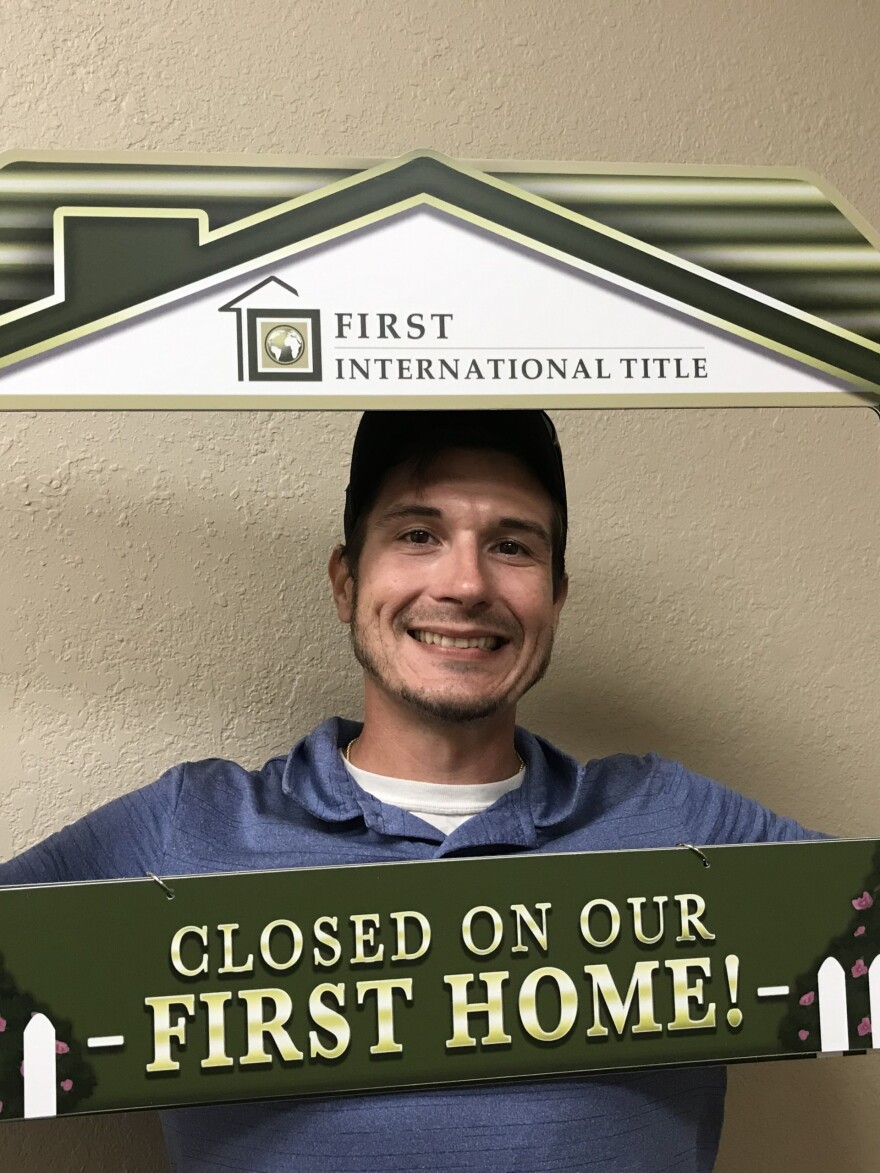
Photo courtesy of Tamara Patzer/Suncoast Searchlight
Richard Freshwater celebrates purchasing his first home in Port Charlotte, Florida, in December 2021.
Last year, Sarasota County authorities charged Freshwater with possessing a firearm as a felon and possessing a firearm with an active domestic violence injunction. He said he was under the delusion he had a new identity after getting a new driver’s license, so he didn’t understand that previous convictions still prevented him from owning a weapon.
“For some reason, in my head, I was like, ‘Oh, they gave me a new driver’s license number, and I’ve got a fresh start,’” Freshwater said. “I got my life back, I’m an American citizen, and the first thing in my mind was, ‘Oh, I’m American, I have the right to bear arms.’”
He was arrested on the firearm charge on March 20, 2025, when Sarasota sheriff’s deputies went to pick him up from his father’s house on a Baker Act injunction and found that he had a gun.
“I was having a mental health crisis, and I was having suicidal thoughts,” Freshwater said. “So they came, and they arrested me.”
Baker Act often results in additional charges
What happened to Freshwater reflects a broader pattern attorneys say they see frequently in Florida — mental health crises that eventually become criminal cases.
Although the Baker Act is designed as a mental health intervention, encounters can escalate into criminal charges when law enforcement responds to people in crisis who are frightened, confused or resistant.
Josef Mitkevicius, a Pensacola-based private defense lawyer, said it’s common for people in crisis to become afraid of the officers who respond to Baker Act situations, and that fear can sometimes lead to felony charges, including battery on an officer.
“They don’t back off on those charges because the family member was just calling for help,” Mitkevicius said. “That’s probably a daily occurrence.”
Across the Suncoast, 29,125 people were involuntarily examined under the Baker Act between July 1, 2024 and June 30, 2025, according to data published online by the Florida Department of Children and Families.
Now, a year after his Baker Act injunction and arrest, Freshwater’s firearm possession charges are still in the process of being adjudicated, meaning he hasn’t yet been found innocent or guilty, but he has returned to the jail on a warrant for violating the terms of his bonded release.
The warrant was issued at the beginning of April 2026, when two additional criminal charges were filed against him in Charlotte County.
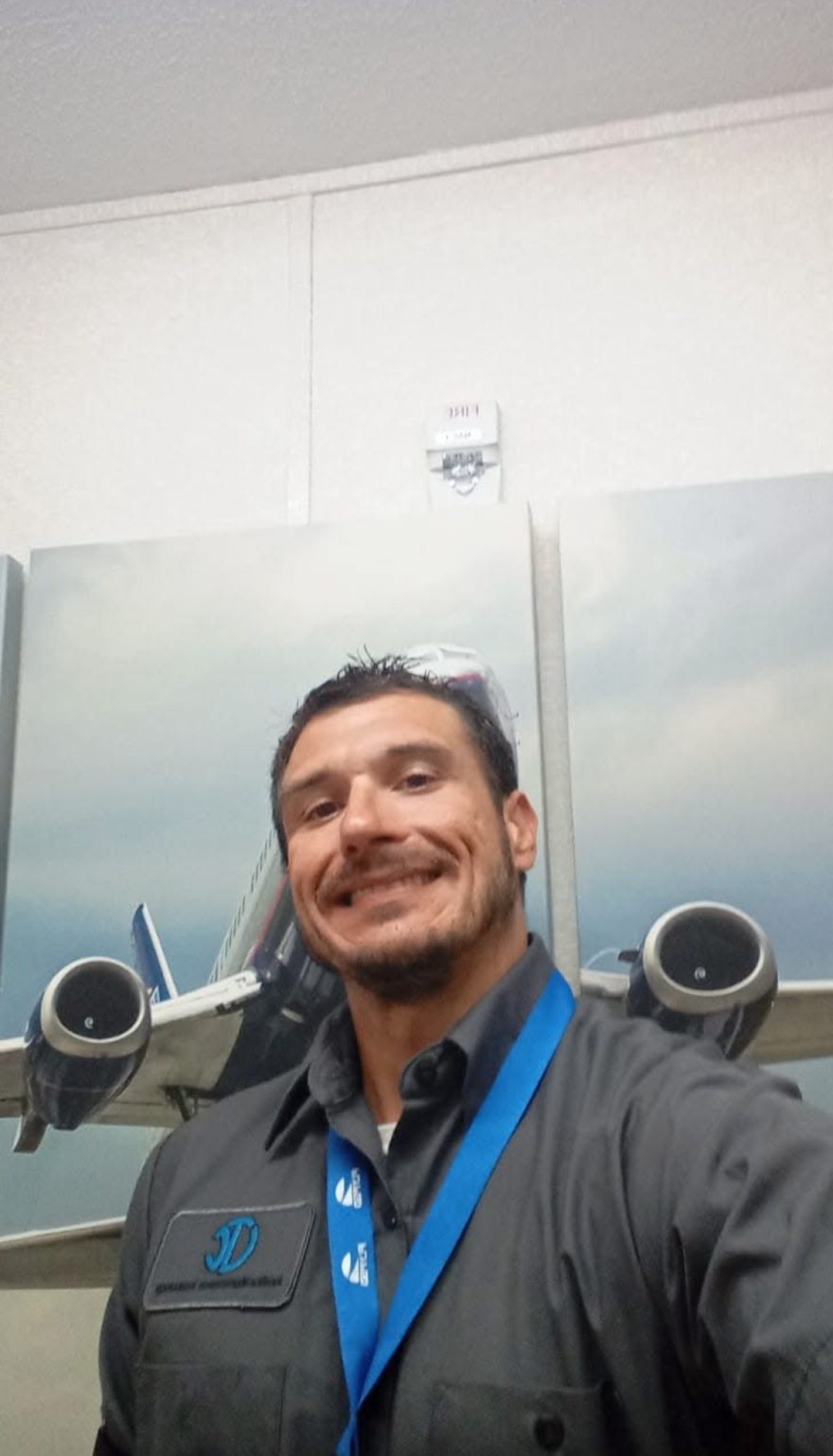
Photo courtesy of Tamara Patzer/Suncoast Searchlight
Richard Freshwater, 36, wants to be an airplane mechanic. He previously enrolled in a mechanical program at Charlotte Technical College, but was dropped from the program after a bipolar episode caused him to miss several days, according to his mother, Tamara Patzer.
Those charges stem from what his mother said was a delusional incident at a Port Charlotte marijuana dispensary. Court documents say that on April 2, Freshwater stole three THC cartridge vapes, or batteries, — worth $35 each — after telling the salesperson he thought they were a gift. He brought the batteries out to his car, but later returned them. They couldn’t be resold after leaving the store, however, because of the medical restrictions on cannabis in Florida.
The dispensary owner called law enforcement and asked to press charges. Two days later, Charlotte County sheriff’s deputies arrested Freshwater on a charge of petty theft, a second-degree misdemeanor. Authorities also charged him with resisting an officer without violence. When deputies came to arrest him, he backed away onto his bed and stiffened his arms to avoid being handcuffed, according to an arrest report.
Freshwater was released on bond on April 5, but a warrant was issued for his arrest in Sarasota County shortly after, because the new arrest voided his previous bond agreement on the firearm charges.
A few days later, Patzer realized her son was having a delusion. That’s when she called IRIS — the Integrated Response for Intervention and Support — a Charlotte County team meant “to help redirect individuals with mental illness from the judicial system and other high-cost health care systems to lower cost health care interventions,” according to the Charlotte County website.
“I explained exactly what the delusion was, what was going on, what the medical emergency was, and that he needed mental health help, and that he needed to be taken to Charlotte Behavioral because he was off his bipolar medication,” Patzer said.
But instead, Freshwater was arrested — again.
An arrest report that Charlotte County deputies filed after serving the warrant doesn’t mention the mental health concerns reported by Patzer, only listing the warrant as a reason for going to Freshwater’s house.
Tristan Murphy Act provides options, but gaps remain
After this most recent arrest, Patzer has dedicated herself again to researching legal options for her son.
She was excited to hear about a new law that passed last year in Florida called the Tristin Murphy Act, meant to create more pathways for people with mental health issues to be diverted out of the criminal justice system, even possibly having their cases dismissed.
The act is named after Tristin Murphy, a man who died by suicide in 2021 while serving three years in a Florida prison. Murphy, who was diagnosed with schizophrenia, was arrested on a littering charge after rolling his pickup truck into a retention pond next to the Charlotte County Jail. He was the subject of a CBS News Miami documentary in 2023.
Murphy’s story resonated with Patzer because he reminded her of her own son. Murphy was 37 when he died, just a year older than Freshwater is now, and was also arrested in Charlotte County.
Hearing about the law initially gave her hope — until she actually read through it.
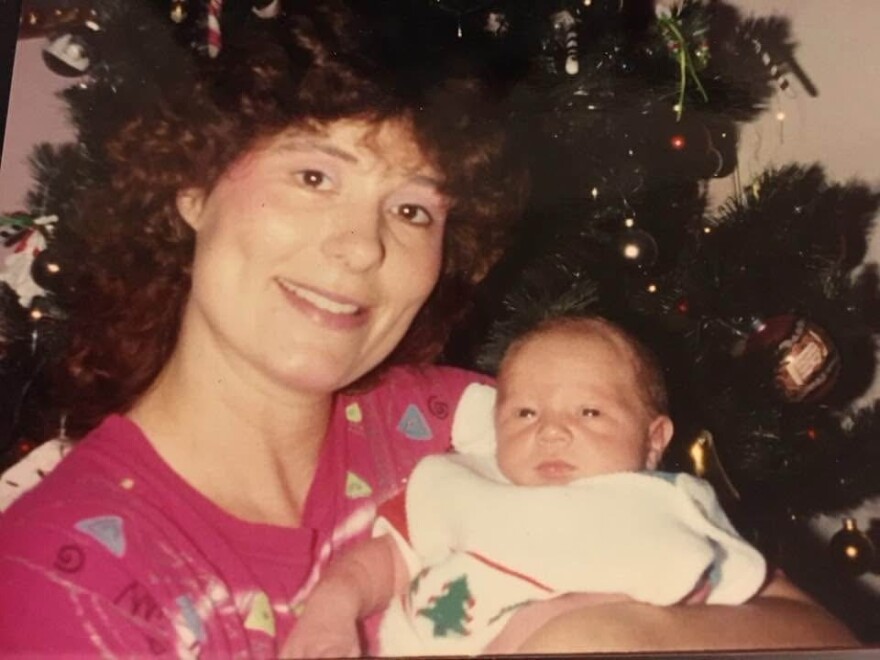
Photo courtesy of Tamara Patzer/Suncoast Searchlight
Tamara Patzer poses with her son, Richard Freshwater, when he was a baby.
“The only person in the entire law who is ever required to do anything — or faces any consequence — is the mentally ill person,” Patzer said in an email to Suncoast Searchlight. “Law enforcement, the state, the sheriff’s departments: never held accountable. That is not reform. That is a paper tiger.”
The law offers grant opportunities that counties can use to create specialized mental health training for emergency responders, or to create mental health diversion programs for people with lower-level charges.
The law doesn’t require that any of these processes be created. All it does is offer them as an option.
It does require that defendants found incompetent to face their charges — but who receive competency training and are later sentenced to probation — complete a mental health evaluation and then follow the recommendations, in order to maintain their probationary status.
Competency training — designed to make sure a person understands the details of their case and how to act in a courtroom — is the closest thing most defendants with mental illness get to treatment while going through the court system, Mitkevicius said.
Mitkevicius, who often deals with mental health cases as a defense attorney, said that while the idea behind the Tristan Murphy Act is good, he’s not optimistic that any of the new processes will be used at all.
“The Legislature, with all their good intention, passed this law that provides an opportunity for judges and prosecutors around the state to have some tools that they can use to deal with this issue, but they don’t understand that the system that we’re operating in functions on dehumanizing,” Mitkevicius said. “The players in the system, particularly the judges and prosecutors, are in a perpetual state of dehumanizing.”
Diversion programs, like the one outlined in the Tristin Murphy Act, are not a new concept. They are often used for low-level crimes to keep people who aren’t likely to reoffend from clogging up court systems.
“The more people that can be funneled through something like that, the better,” Mitkevicius said. “With the volume of the nonsense that’s going through the system, the more we can send through any type of diversionary program, for me, is great.”
Especially for mental health cases, Mitkevicius said the best option is to get the person out of the justice system as soon as possible.
“I get family members who just want to get help, and they want to do it through probation or something, and I tell them ‘Get them help somewhere else,’” Mitkevicius said. “This is not the place to fix yourself … If you’re ill, we just need to get you out of here as soon as possible.”
Despite his struggles, Freshwater has built a life for himself with the help of his family. He has a hard time holding down a steady job, but he has worked in landscaping and offers handyman services to earn some cash. He bought his first home in 2021, something Patzer said was a major milestone for him.
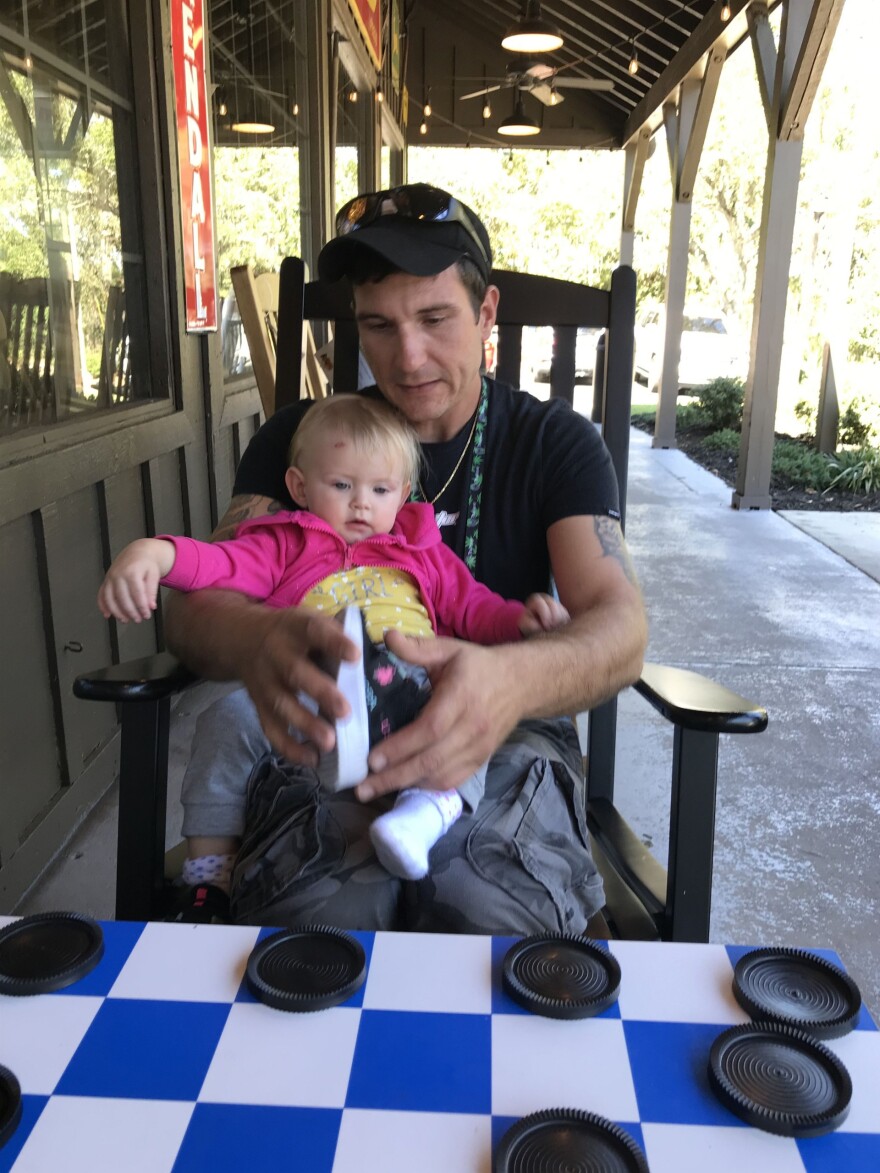
Submitted/Suncoast Searchlight
Richard Freshwater, 36, and his daughter in Tallahassee, where he drove her to safety ahead of Hurricane Ian in 2022.
He has a 4-year-old daughter — turning 5 at the end of May — who lives with Patzer.
Freshwater visits every weekend without fail, when he is out of custody, according to his mother. He prioritizes being a parent and has completed more than 100 hours of parenting classes while incarcerated.
Freshwater always wanted to be an airplane mechanic, and a couple years ago, he started attending classes at Charlotte Technical College, but he was dropped from the program after missing several days because of a bipolar episode.
“My son … is a real human being with ideas about what he wants to do with his life,” Patzer told Suncoast Searchlight in an email. “Instead of addressing the root cause — mental illness — the system punishes him for what happens when you try to exist in the real world with untreated delusions and paranoia.”
This story was produced by Suncoast Searchlight, a nonprofit newsroom of the Community News Collaborative serving Sarasota, Manatee and DeSoto counties. Learn more at suncoastsearchlight.org.