
At a glance, there’s little to distinguish the five professionals Heidi Thomas oversees from other staff inside Sioux Falls schools.
They attend meetings. They build relationships with students and teachers. They’re part of the daily rhythm of the building.
But they’re not employed by the Sioux Falls School District.
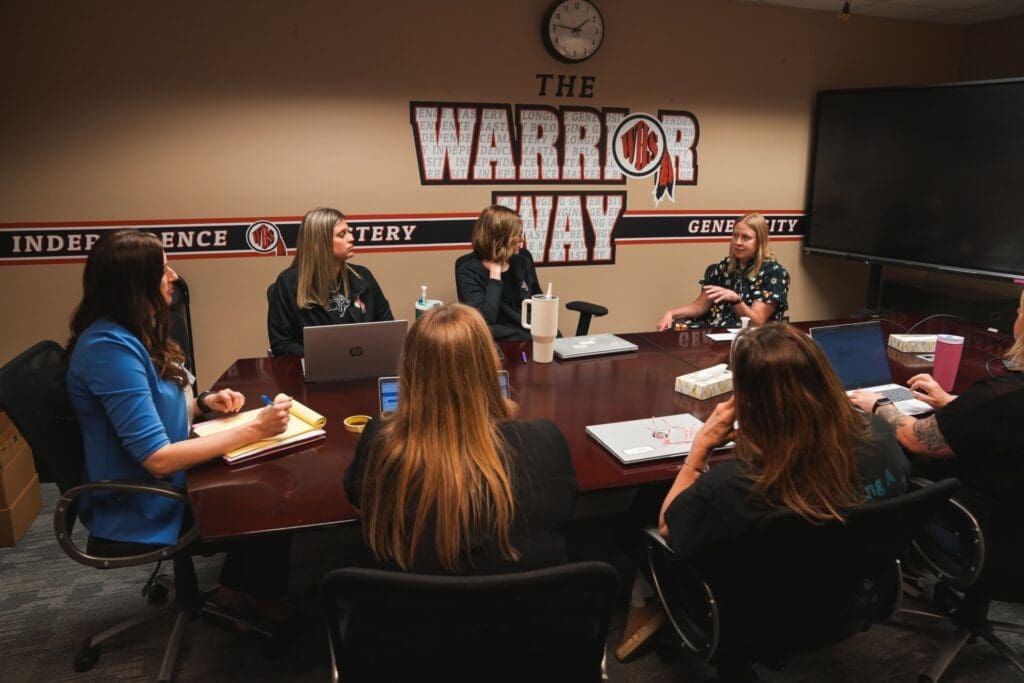
They’re licensed therapists with Avera Health — embedded directly inside five schools as part of a pilot program designed to meet students where they are when it comes to mental health.
And in its first year, the approach already is showing promising results.
“Each therapist, we have reached capacity, and we serve over 125 students a week,” said Thomas, who manages the program. “That really removes a lot of the barriers — like taking time off work or transportation — because instead we can bring it right to them.”
For some students, those in-school sessions replace appointments they otherwise might have had outside of school. But for many, it’s their first connection to mental health care.
“A lot of times, these children are being referred because of behavioral challenges that go beyond what the classroom can support,” Thomas said. “Oftentimes, there’s something bigger happening — a significant loss, trauma, changes at home — and the school has identified they could benefit from help during the day.”
Built around access — and relationships
The program, called Rooted in Schools, launched in late 2025 as a three-year, donor-funded pilot to plant Avera Behavioral Health therapists in the Sioux Falls School District.
Therapists are embedded at Washington High School, Whittier Middle School and three elementary schools — Cleveland, Terry Redlin and Rosa Parks — serving about 25 students per week at each site.
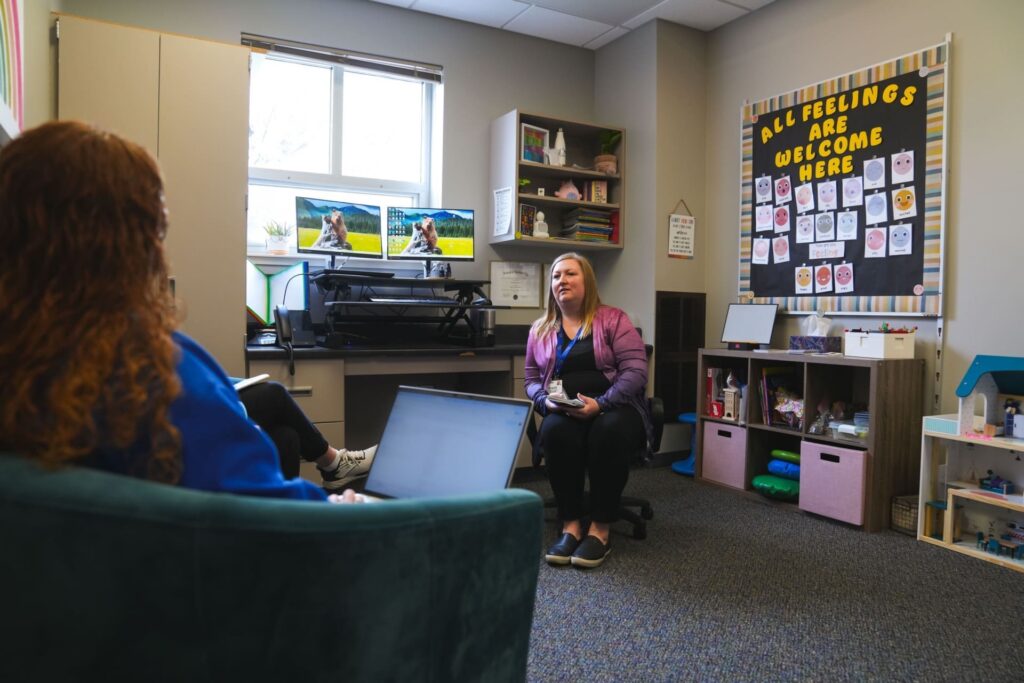
The idea behind it is straightforward: Reduce barriers to care, and increase access by bringing services into a place students already trust.
“A lot of kids who need mental health help don’t ever receive services,” said Thomas Otten, Avera’s vice president of behavioral health. “If we can treat issues as they’re coming up in real time, it can prevent things from escalating into older adolescence or even adulthood, and it gives them the best chance of success academically, socially and emotionally.”
Transportation challenges, cost, stigma and a shortage of providers all can stand in the way of care. Embedding therapists in schools helps remove those obstacles — while also normalizing the idea of seeking help, he added.
“Instead of going to the mental health clinic, it’s right here,” he said. “And just like a lot of other kids are getting help, this therapist is seeing me.”
The idea came to fruition thanks to the Seed for Success Foundation, which expressed interest in supporting youth mental health. From there, the Sioux Falls Area Community Foundation helped develop a plan.
“Like a lot of our donors … it’s a long-term relationship of understanding what they’re interested in,” said Andy Patterson, president and CEO of the Community Foundation. “In this case, it was how do you help kids, especially around mental health, in schools.”
The foundation helped research existing models, including successful programs in other states, and worked with local partners to adapt an approach for Sioux Falls. One in Hennepin County, Minnesota, became the basis for the Sioux Falls pilot.
“We brought it to the donor, and the school district quickly identified Avera would be a great partner,” Patterson said.
The result was a partnership that brought together philanthropy, health care and education — without creating another organization.
“This is one example of what the Community Foundation is trying to do,” Patterson said.
“We’re providing a perspective of community leadership when a donor has interest and we know a community need. Let’s do the work to find the intersection and solve that for the need of the community.”
Funding from the Seed for Success Foundation helps ensure that services are accessible regardless of a family’s ability to pay. Therapy is billed through insurance when possible, with additional support available to cover gaps.
For Sioux Falls School District Superintendent Jamie Nold, the impact goes beyond convenience.
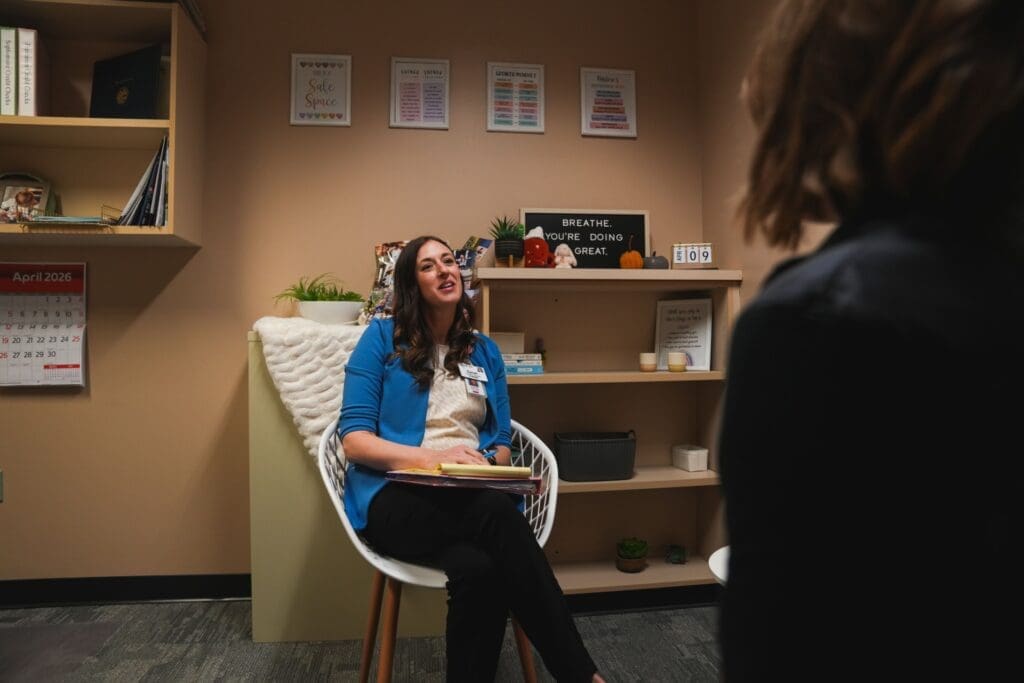
“We know relationships are critical. When students have relationships with adults they trust, they confide, they seek out help and support,” he said.
Students see therapists in hallways, interact informally and can build familiarity before a formal referral is made.
“They’re going to be more apt to talk to someone they know,” Nold said.
Participation requires a referral and parent or guardian consent, but once connected, students can receive ongoing support during the school day.
“The feedback has been incredible,” Nold said. “It has a real impact in the classroom, on other kids and especially on that individual child and family.”
Early results show impact
While the program is still in its early stages, initial data points to measurable progress.
Among students participating, attendance has increased by 14 percent — a key indicator tied closely to academic success.
Even more striking: a 51 percent decrease in what are referred to as “life threats,” or statements indicating potential self-harm.
“That’s pretty astounding,” Otten said. “We believe this could be a blueprint for the future success of kids.”
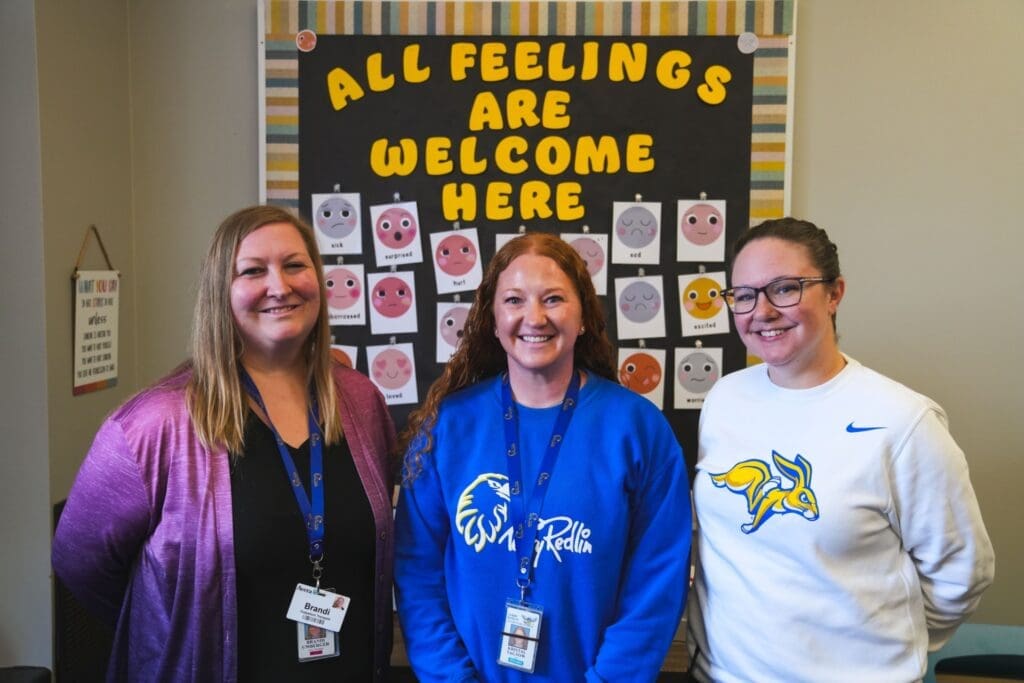
The program also is tracking academic performance, behavioral referrals, anxiety and depression scores, and other indicators.
At the same time, qualitative feedback is reinforcing what the data suggests.
“This program thus far is wildly successful,” Thomas said. “We specifically hear from many parents expressing a lot of gratefulness for different interventions, even through the high school level.”
In elementary schools, therapists often are working with students facing challenges related to trauma, family instability or neurodivergence. At the middle school and high school level, needs may shift but remain significant.
“Every school has its own challenges,” Thomas said. “From the school counselors and building administrators and classroom teachers, we hear often how incredibly grateful they are to have another layer of support in that school.”
Looking ahead
The pilot is designed to run for about three years, with ongoing data collection helping determine its long-term potential.
Already, there’s interest in expanding it.
“We’re hoping this can spread across our entire district,” Nold said. “I know every school would love to have a program like this.”
Scaling will depend in part on what the data shows — and on continued support from partners and donors.
“We want to keep learning and take it back to the original donors to say how it’s working,” Patterson said. “I think at some point if this is successful, there would be a need for others to help take it to other schools, and I can’t imagine Seed for Success would be sad to have others join them.”
For those closest to the work, the early signs point to something worth scaling.
“If we can catch those things before they escalate, it’s better for the patient, the family and the system,” Thomas said. “Everybody wins.”