
WARNING: This story references suicide.
A Canadian woman who has been fighting for medical assistance in dying (MAID) to be an option for people with mental disorders is now asking the courts to exempt her from current laws so that a doctor can end her life.
For decades, Claire Elyse Brosseau says she has struggled with her mental health, including diagnoses of bipolar 1 disorder, post-traumatic stress disorder and disordered eating. Despite wanting the option to die through MAID, Brosseau isn’t eligible under Canada’s MAID legislation because her only underlying conditions are mental illnesses.
In recent years, Brosseau has been part of a legal fight with advocacy organization Dying with Dignity Canada to challenge the federal MAID exclusion for people living with mental disorders.
Outside of Ontario’s Superior Court of Justice in Toronto on Monday, Brosseau, alongside her lawyer, said she has filed an urgent exemption because she has lost hope in the fight and is in a state of “unrelenting suffering.”
“I should not have to do this,” said Brosseau, who is 49 years old and lives in Toronto.
“The government should do the right thing and lift the exclusion that denies me the relief to my suffering that I am desperate for.”
Brosseau has previously told CBC News that from the moment she wakes up, she feels panic and dread. She said she rarely goes outdoors or speaks to anyone. Over the last 30 years, Brosseau said she’s tried multiple treatment options, with little to no relief.
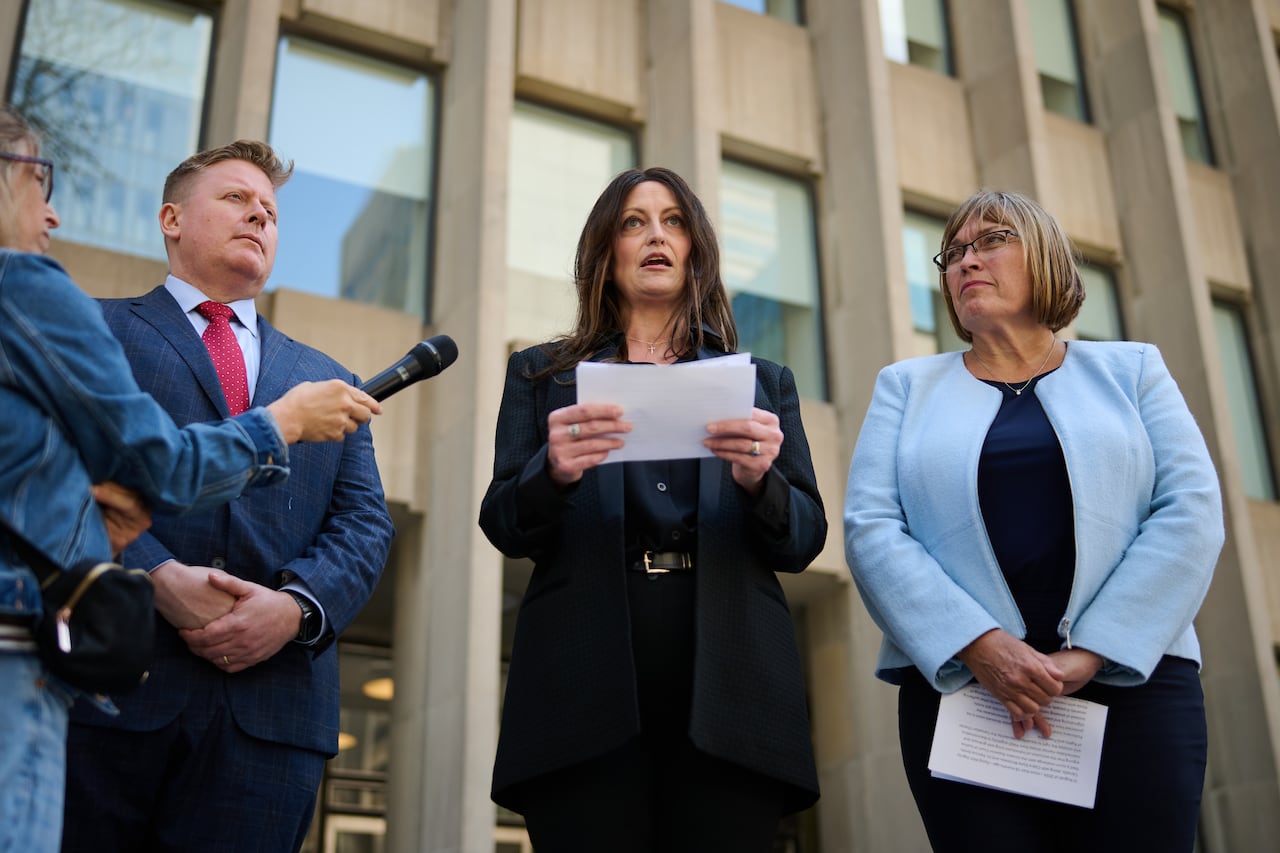 Plaintiff Claire Elyse Brosseau, centre, counsel Michael Fenrick, left, and Dying With Dignity Canada CEO Helen Long speak to media outside the Ontario Superior Court of Justice in Toronto on Monday. Brosseau is mounting a court challenge to secure MAID access for herself and others whose sole underlying condition is a mental illness. (Sammy Kogan/The Canadian Press)Canadian MAID laws don’t include mental illness, but plan to
Right now, Canada’s MAID legislation applies to people who are 18 or older, have a severe and incurable medical condition — an illness, disease or disability — are in a state of decline and have intolerable suffering that can’t be relieved.
There are currently two tracks:
Track 1: when a person’s natural death is reasonably foreseeable.Track 2: when a person’s natural death is not reasonably foreseeable.
The legislation excludes people who are suffering only from mental illness. In March 2027, that’s expected to change, but the federal government has already delayed the expansion twice.
“I want to be clear about what these delays mean for me personally. Every month of delay is another month of suffering that I am told I must simply endure,” Brosseau said Monday.
“I have been asked again and again to be patient. I was patient for years.”
A few months after the government’s second delay in 2024, Brosseau and Dying With Dignity Canada filed a constitutional challenge against the federal government. They claimed that excluding people with mental illness from accessing MAID violates the Canadian Charter of Rights and Freedoms.
Brosseau’s lawyer, Michael Fenrick, said federal lawyers had promised to respond to the challenge by the end of April 2026 but missed the deadline and have not said when they will file a response.
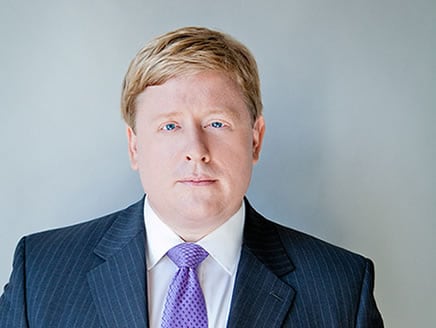 Michael Fenrick is legal counsel to Claire Elyse Brosseau and Dying With Dignity Canada. He says this is the first time someone with a mental disorder has filed an exemption to MAID legislation. (Paliare Roland)
CBC News has reached out to the federal Department of Justice but has not yet heard back.
Fenrick says the case can’t move forward without a response from the federal government.
“I think it’s deeply disappointing that there hasn’t been an urgency placed on resolving this important issue,” Fenrick said.
What does the exemption mean?
According to Fenrick, this is the first time someone in Canada with a mental disorder has requested an exemption to MAID legislation so that they can die.
Ahead of Track 2 MAID legislation in Canada, 19 Quebec residents whose natural deaths weren’t reasonably foreseeable applied for and were granted exemptions to the legislation at the time.
Fenrick says the exemption is filed as an urgent motion under the ongoing constitutional challenge. The motion asks the court for a temporary order that exempts Brosseau and a doctor from current legislation so that she can receive MAID.
Fenrick says the motion was submitted to the Ontario Superior Court of Justice on Monday. At the earliest, he said, it could be heard by a judge in the next few months.
But, he says, this isn’t an efficient pathway that people should have to take.
In an emailed statement, Dying With Dignity Canada CEO Helen Long said, “The legal avenue Ms. Brosseau is taking is an extraordinary step that should not be necessary. Dying With Dignity Canada strongly believes that the exclusion of MAID for those individuals whose sole underlying condition is a mental illness, is a clear breach of the Canadian Charter of Rights and Freedoms.”
WATCH | Poilievre says in 2025 he wouldn’t expand MAID beyond current rules:
Poilievre says he will not expand MAID, pledges new path to licensing for immigrant doctors
Conservative Leader Pierre Poilievre says he will not expand medical assistance in dying (MAID) beyond its current parameters. Poilievre also says he will address a shortage of family doctors by creating a new Blue Seal certification program to license immigrant doctors living in Canada.
MAID for mental illness has been highly contentious
Expanding MAID eligibility to people who are struggling only with mental illness has been heavily debated.
Those with severe mental illness who want access to MAID, and their loved ones, say it would give them the option to die in a dignified and compassionate way — surrounded by family and friends — as opposed to dying by suicide.
Under Canada’s Criminal Code, anyone who counsels, supports or helps someone die by suicide outside MAID provisions is guilty of a punishable offence, whether or not the suicide happens.
Meanwhile, some experts have said that continuing to exclude people with mental disorders from MAID is evidence of ongoing stigma faced by psychiatric patients, that it breaches their rights and that the system is ready to handle these cases.
But many say it shouldn’t happen.
One of the main concerns is that it’s hard to say with certainty that someone with a mental disorder won’t get better, especially if new treatments become available. Critics also argue that it will be difficult to determine whether someone is truly capable of consenting when mental illness can sometimes affect a person’s ability to make decisions.
Dr. Jitender Sareen, head of the psychiatry department at the University of Manitoba, testified at a recent Special Joint Committee on Medical Assistance in Dying (AMAD) meeting.
AMAD is currently working to advise the government on the eligibility of people like Brosseau.
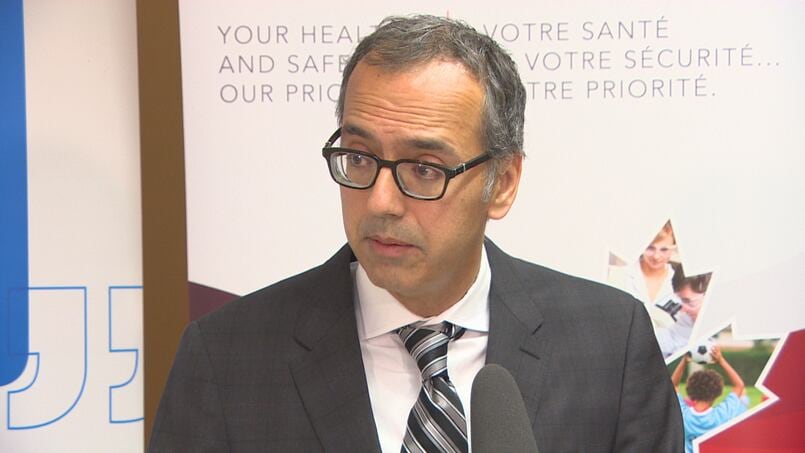 Dr. Jitender Sareen is the department head of psychiatry at the University of Manitoba. He is also the provincial specialty lead for mental health and addictions for Shared Health Manitoba. (Megan Goddard/Radio-Canada)
Sareen sent CBC News his testimony in an email, in which he stated that Canada shouldn’t expand MAID to include people who are only suffering from mental disorders.
“Individuals can remain severely ill for long periods and still improve, particularly with changes in treatment, and psychosocial situation,” reads part of Sareen’s testimony.
He added that there is “simply no way” to distinguish MAID from suicidality in mental disorders.
CBC News has also reached out to the International Association for Suicide Prevention, but didn’t hear back in time for publication.
On Tuesday, AMAD will meet for its final time with witnesses before it starts to prepare a report to the federal government.