
An exploratory study has found lasting changes in the human brain from first-time use of psilocybin — the naturally occurring psychedelic compound in certain fungi known as magic mushrooms — including increased cognitive flexibility.
These positive effects were higher for the participants who experienced higher psychological insights from the psychedelic dose, which may have the potential to treat depression symptoms, according to the paper’s authors.
They note that psychedelics have previously demonstrated strong effects on acute brain function and long-term behavior, but assert it’s still unknown if psilocybin can cause long-lasting functional and anatomical brain changes.
They found anatomical and functional brain changes from one hour to one month after a one-time dose of 25 mg.

“Psilocybin seems to loosen up stereotyped patterns of brain activity and give people the ability to revise entrenched patterns of thought,” says study first author, Taylor Lyons, Ph.D., a research associate at Imperial College London, UK.
“The fact that these changes track with insight and improved well‑being is especially exciting.”
Measured at peak psychedelic experience
The study, published in Nature Communications, included 28 people who had never used psychedelics and had not been diagnosed with any mental health conditions.
The researchers used brain imaging and brain measurement techniques before, at the peak, and one month after the psychedelic experience.
The participants first received 1 mg of psilocybin, which was regarded as a placebo in the study. The research team then monitored brain activity and electrodes on the scalp using electroencephalography (EEG).
In the following weeks, the researchers measured the participants’ psychological insight, well-being, and cognitive abilities. Brain activity was examined using a functional MRI, and brain connectivity was measured with diffusion tensor imaging (DTI).
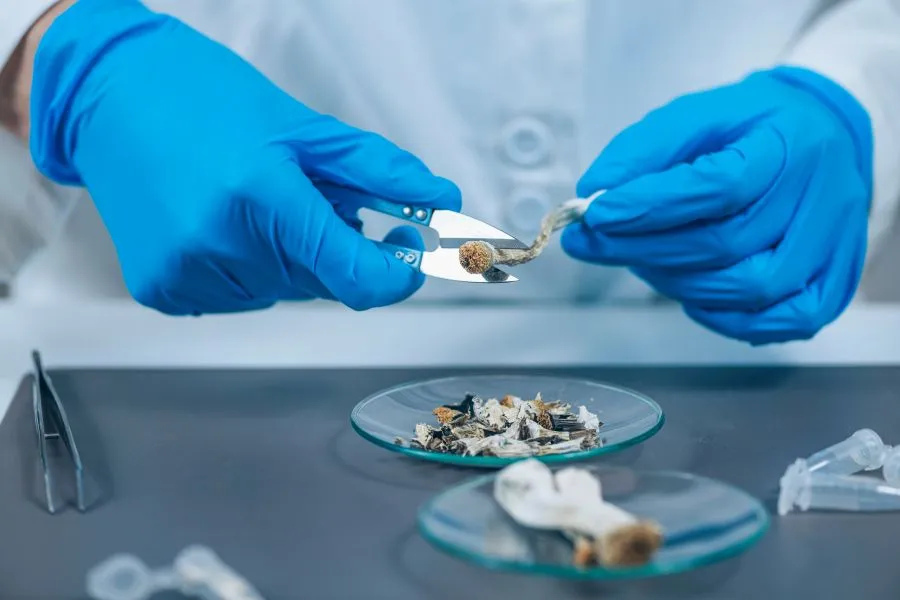 The participants took 25 mg, a high enough dose to offset a strong psychedelic trip.One month after taking the placebo, the subjects took 25 mg, a high enough dose to offset a strong psychedelic trip.
The brain activity was again measured with the DTI, measuring diffusion of water along neural tracts, and found them to be denser with more integrity. This is the reverse effect of what happens during aging, which makes these tracts more diffuse.
The two test time periods were done to compare the effects of the psychedelic trip on the brain and mind to the effects of the placebo.
Increased experience, higher well-being
The researchers also found that the participants with the largest brain entropy increase in the early minutes and hours after taking the dose were more likely to have increased psychological insights the day after and reported better well-being one month after.
All but one of the participants reported the psilocybin experience as the “single most unusual state of consciousness” ever experienced. Their state of well-being was determined from comments about feeling optimistic about the future or managing problems better after the experience.
The team suggests that the findings from the study could improve emerging mental illness therapies that are based on psilocybin. “We already knew psilocybin could be helpful for treating mental illness,” Carhart-Harris said. “But now we have a much better understanding of how.”
Clinical trials have previously shown that psilocybin has similar effects to antidepressants but with longer-term improvements for depressive symptoms. It has also shown potential for treating depression and anxiety in cancer patients with a single dose.