
image:
Researchers from Hasanuddin University present a qualitative study protocol for co-designing community-based mental health interventions to prevent suicidal behavior among adolescent females in Gorontalo, Indonesia, in a context-aware manner.
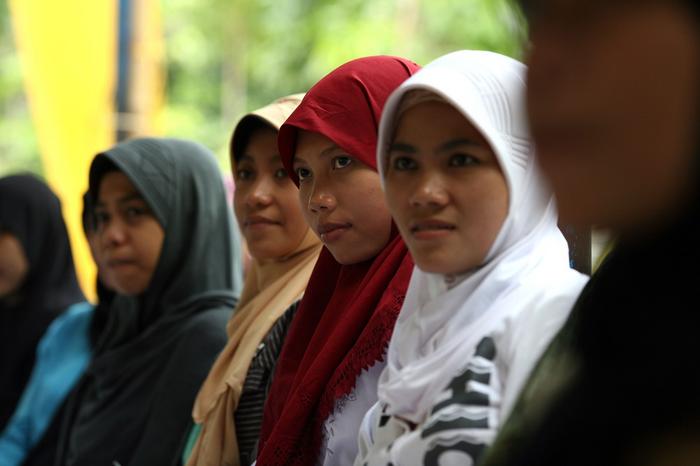
Credit: Josh Estey from Department of Foreign Affairs and Trade | Image source link: https://commons.wikimedia.org/wiki/File:Training_for_women,_Indonesia_(10730478146).jpg
The World Health Organization estimates that suicide claims more than 700,000 lives every year, making it a major public health concern that must be addressed urgently. However, the burden of suicide is unevenly distributed across different regions, generations, and genders; with young women in Indonesia carrying a particularly heavy share of this burden. Adolescent girls face compounding pressures, such as gender discrimination, family problems, social pressures, and limited access to mental health care, which place them at especially high risk of suicidal ideation and attempts.
Gorontalo, a province in eastern Indonesia known for its tight-knit communities and strong religious identity, has recorded some of the country’s highest rates of suicide. Unfortunately, despite growing data on how adolescent girls in Gorontalo are struggling, less is known about the root causes and the types of support that could actually help them. Existing mental health interventions are typically designed from the top down, built around clinical models that often miss the socioeconomic and cultural realities shaping young women’s lives in regions like Gorontalo. Even when support systems and services exist, they remain inaccessible or feel irrelevant to the people who need them the most.
Against this backdrop, a research team led by Dr. Sudirman Nasir from Hasanuddin University, Indonesia, has now created a study protocol aimed at addressing these gaps through community-driven approaches. Their work, published in Volume 25 of the International Journal of Qualitative Methods on February 6, 2026, describes the protocol for a qualitative study designed to explore the experiences of adolescent females in Gorontalo while integrating perspectives from government stakeholders, academics, and women entrepreneurs.
The goal is to use these insights as a foundation for community-based mental health interventions tailored to the region. Explaining further, Dr. Nasir says, “Co-creation and co-design approaches are essential methodologies in public health that effectively merge professional expertise with community members’ lived experiences. This integration ensures that health interventions are not merely top-down mandates but are genuinely reflective of and responsive to community needs.”
According to the proposed protocol, the study will unfold in two phases. In the first phase, researchers will conduct in-depth interviews with six or seven adolescent females (aged 18–24) who have experienced mental health challenges or suicidal ideation, where they would be asked to describe their emotional experiences, the barriers they faced in seeking help, and the kinds of community support they felt were missing. Separately, focus group discussions will be held with three other groups: local government mental health stakeholders, academics involved in mental or youth health promotion, and female entrepreneurs with ties to community resilience structures. Together, these groups represent what’s known as a ‘quadruple helix’ stakeholder group, representing a framework for engaging government, academia, the private sector, and civil society in shared problem-solving.
In the second phase, all groups will participate in co-creation and co-design workshops, where the qualitative findings will be translated into a concrete intervention model. These workshops will identify priority needs and develop specific program components, such as peer support groups, safe spaces, crisis response pathways, and vocational mentoring. They will also plan how the intervention can be sustained in the long term within the community.
In doing so, this work from Hasanuddin University aligns strongly with the United Nations’ Sustainable Development Goals, namely, Good Health and Well-Being (SDG 3) and Gender Equality (SDG 5), with implications extending beyond Gorontalo. Simply put, the researchers demonstrate how a community-based intervention can be built from the ground up and offer a model for other under-resourced settings across Indonesia and the broader Southeast Asia region. “By embedding co-creation and co-design processes within a qualitative exploration of lived experiences, this study provides a robust pathway for producing an intervention model that is culturally rooted, community-owned, and sustainable,” concludes Dr. Nasir. For adolescent girls navigating mental health crises in regions where care is limited, this kind of ownership could make all the difference.
Reference
DOI: https://doi.org/10.1177/16094069251414504
About Hasanuddin University
Hasanuddin University (Universitas Hasanuddin or Unhas) is one of Indonesia’s largest autonomous universities, located in Makassar. Established on September 10, 1956, and named after Sultan Hasanuddin of the Gowa Kingdom, the university has grown into a major center for higher education with 17 faculties, including medicine, engineering, law, agriculture, and natural sciences. Its origins date back to 1947 with an economics faculty linked to the University of Indonesia. Today, Unhas focuses on advancing science, technology, arts, and culture, with a strong emphasis on the Indonesian Maritime Continent, aiming to develop innovative and globally competitive graduates.
Learn more, here: https://www.unhas.ac.id/about/
About Dr. Sudirman Nasir from Hasanuddin University
Dr. Nasir is a lecturer at the Faculty of Public Health, Hasanuddin University, where he specializes in the social determinants of health. His extensive research focuses on community health, drug use prevention, HIV/AIDS, and maternal health. Through his work, Dr. Nasir aims to implement community-based, evidence-driven strategies that address critical public health vulnerabilities and improve long-term well-being.
Funding information
This work was supported by the Center of Higher Education Funding and Assessment (PPAT), the Ministry of Higher Education, and the Indonesia Endowment Fund (LPDP) (Grant Number: 202209090498).
Journal
International Journal of Qualitative Methods
Method of Research
Observational study
Subject of Research
People
Article Title
Protocol for a Qualitative Study on the Co-Design and Co-Creation of a Community-Based Mental Health Intervention to Prevent Suicidal Behavior Among Adolescent Females in Gorontalo, Indonesia
Article Publication Date
6-Feb-2026
COI Statement
All authors of this manuscript have disclosed any potential financial or personal conflicts of interest with organizations or individuals that may have influenced their work. The authors explicitly declare that there are no relevant conflicts of interest that could affect the objectivity of this study.
Disclaimer: AAAS and EurekAlert! are not responsible for the accuracy of news releases posted to EurekAlert! by contributing institutions or for the use of any information through the EurekAlert system.