
Resilience at the heart of BC3 student’s success

Gina Rhoades holds a photograph of her brother, Jacob, on Wednesday, May 22, 2024, before her graduation from Allegheny-Clarion Valley Junior-Senior High School in Foxburg. Submitted Photo
Gina Rhoades felt her brother’s heartbeat again more than a year after he died.
It was after a concert at 1:30 a.m. on a street in Queens, N.Y. A man she had never met stood beside an open driver’s-side door and reached out.
“He grabbed my hand,” she said, “and held it there.”
The heart of her only sibling was thumping alongside a pickup truck, its engine running.
Jacob Rhoades, 21, of Emlenton, died Aug. 5, 2023, two days after being flown by medical helicopter to a Pittsburgh hospital. His cause of death was suicide. His organs were donated.
‘Hold on until we get there’
Rhoades was vacationing with her family in Clearwater, Fla., when her mother screamed. Jacob had shot himself. They needed to get back to Pittsburgh.
Rhoades fell to the floor of the hotel room. As her family rushed to make unexpected travel arrangements, she spoke into a telephone pressed to her brother’s ear.
“I love you. Hold on until we get there. Don’t go until we get there. If you’re going to go, don’t leave yet. Why did you do this? Why didn’t you just talk to us?”
Jacob never regained consciousness.
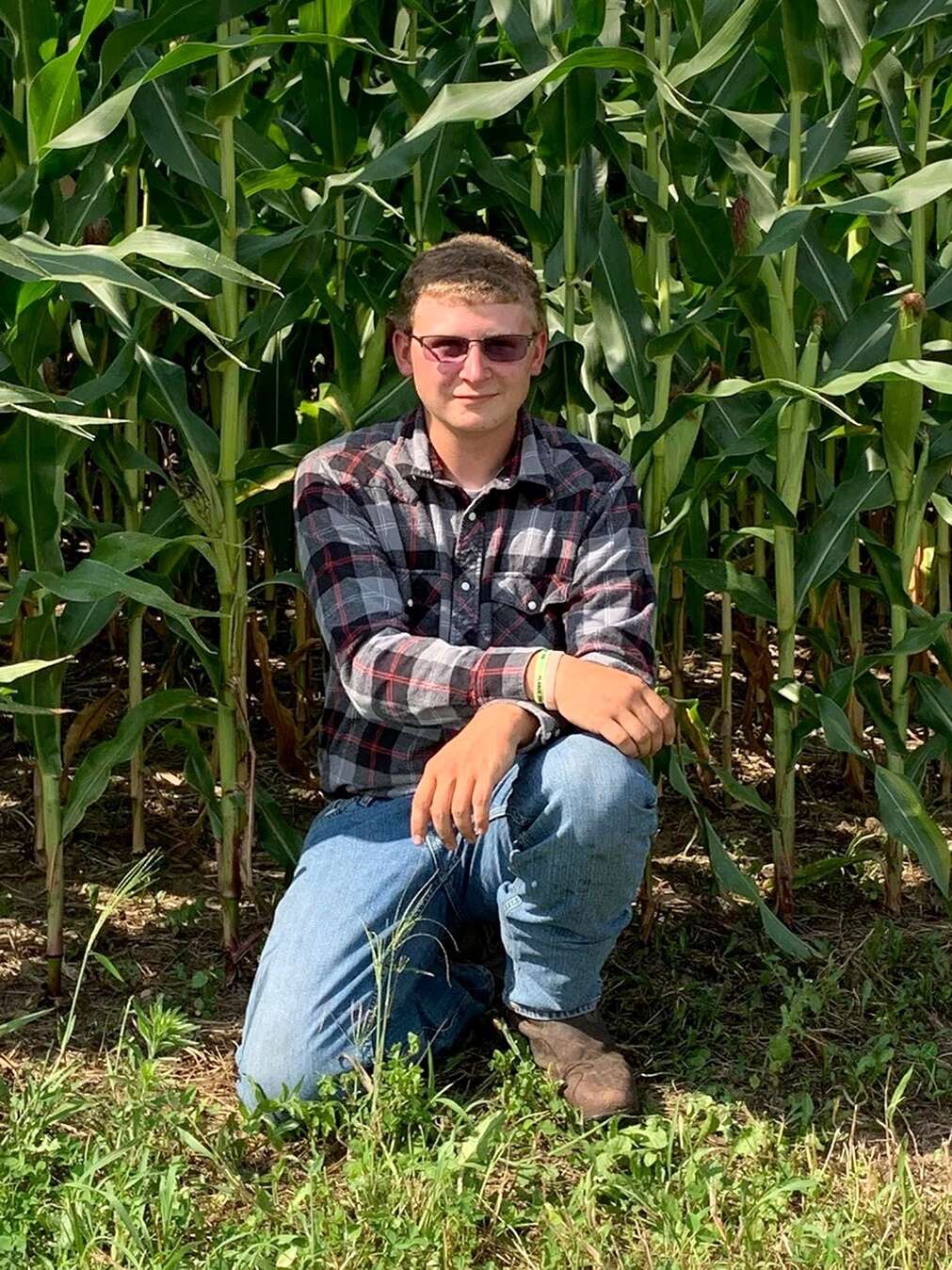
Jacob Rhoades poses for his senior class portrait Monday, Aug. 26, 2019, on his family’s Dick-Mar Farm in Nickleville, Venango County. Jacob, the only sibling of Gina Rhoades, of Butler, was 21 when he died by suicide in August 2023. Submitted Photo
Rhoades stood at his hospital bedside the next night and “got to say goodbye.”
He had left no communication. There would never be an explanation.
Two months later, she sat in her parked car on the first day of her senior year at Allegheny-Clarion Valley Junior-Senior High School in Foxburg, watching other students enter the building.
“It just didn’t seem important,” she said.
She withdrew. She quit the volleyball team.
The morning after, brushing her teeth felt like too much of an effort, so she called her physician.
Rhoades recognized she needed help. It was 14 months after Jacob’s death, October 2024, when she began treatment for anxiety and depression.
“‘We’ve got to do something,’” she said.
Earning a 4.0, speaking at BC3’s commencement
The Butler resident had just started classes at Butler County Community College.
It was at BC3, she said, where she felt seen and found support — and kept showing up. Getting out of her car. Attending classes. Completing assignments. Going to her job.
She wrote for the Alliance for Nonprofit Resources, Butler, as an intern. Worked in the college library. Joined an international academic honor society. Was selected as a 2025 Coca-Cola Leaders of Promise Scholar.
“You just go,” she said. “You keep going.”
Rhoades will graduate from BC3 on Wednesday, May 13. She earned a 4.0 grade-point average and an associate degree in communications. She will recite from her favorite book when delivering the student alumni address inside the Field House on BC3’s main campus in Butler Township.
“You never know the silent battles people are facing, even the people you’re closest to. You’ll never walk in my shoes and I’ll never walk in yours. Be kind to others and, most importantly, be kind to yourself,” the 20-year-old Rhoades plans to tell the audience.
Ill New Yorker: ‘I am ready to meet my maker’
While Rhoades was saying goodbye to Jacob in Pittsburgh, Phil Gornail was running out of time in Manhattan.
The cancer survivor had spent nearly two months in the hospital with chemotherapy-related heart failure — every day, waiting for a donor.
“In my prayer requests to my friends I said I am ready to meet my maker,” Gornail recalled. “But what I know about this calculus is that I am on the right side of the equation. And on the other side is a grieving family. So I insisted that my friends pray for a grieving family we may never meet, but I would like to.”
Before sunrise one morning, the 53-year-old sat in a darkened room facing a window overlooking the East River. Watching the city move beneath him. Wishing for more time with his four adult children. Just like every day before.
A nurse entered his hospital room, made eye contact with him and said, “We have a heart. We’re going to be preparing you for surgery.”
The heart, Gornail said he was told, “was coming from Pittsburgh and the donor was about 21.”
Heart recipient reaches out
The Center for Organ Recovery and Education is responsible for initial contacts between donors and recipients. Gornail requested to the not-for-profit organization that he would like to communicate with his donor’s family.
“My mom was all for it,” Rhoades said. “I want to get to know this man.”
On the day Rhoades purchased tickets for the concert in Queens, her mother had received Gornail’s telephone number.
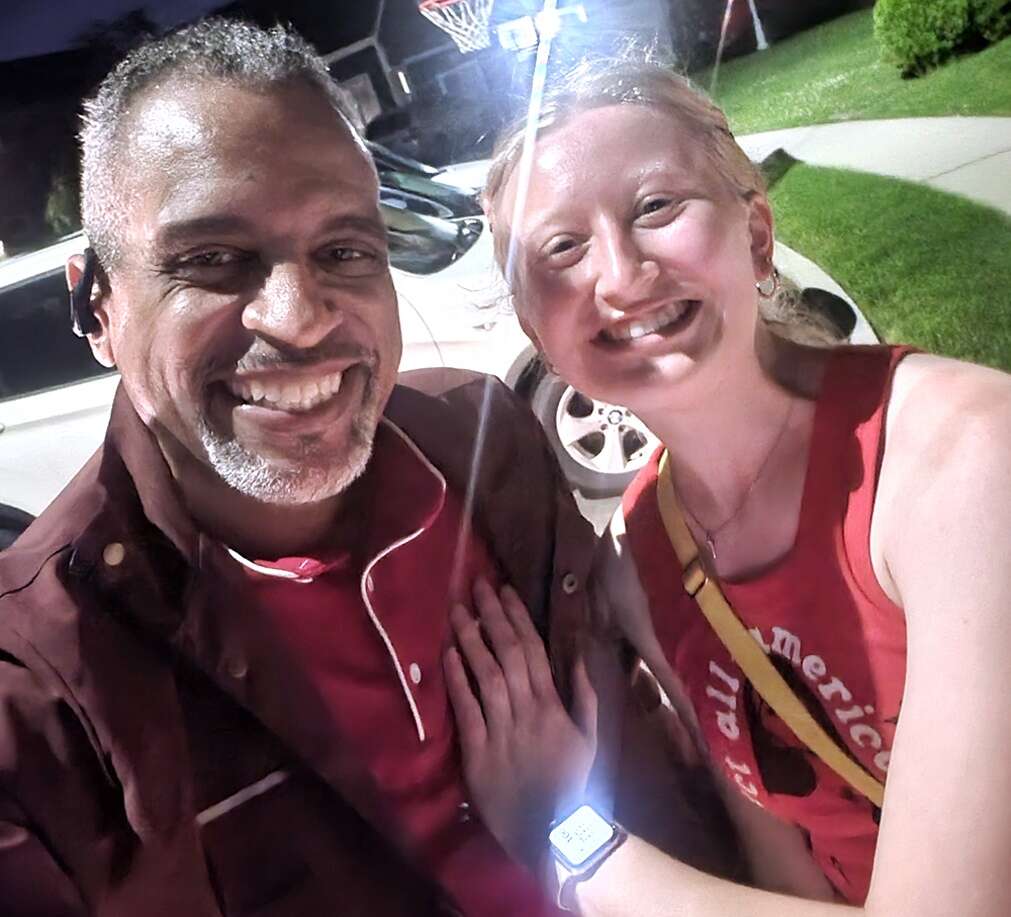
Gina Rhoades, right, of Butler, holds her hand to the chest of Phil Gornail, of Queens, N.Y., on Sunday, June 8, 2025, in the New York City borough. Her brother Jacob, her only sibling, was 21 when he died by suicide in August 2023. She met Gornail, the New York City resident who received her brother’s donated heart, last summer. Submitted Photo
“Gina, the concert you are going to is where Phil, the man who has your brother’s heart, lives,” Rhoades recalled her mother saying.
“I was unsure whether I wanted to know him,” Rhoades said. “If he got sick and something happened, I didn’t want to have that pain all over again.”
Rhoades’ mother had given her Gornail’s contact information in case she needed it during her three-day trip in June 2025 to attend the Olivia Rodrigo and Role Model concert.
Her shared ride never arrived to take Rhoades and her friend to a rental after the concert in Queens. She didn’t want to reschedule and pay for ride-share prices that had surged.
She called Gornail.
He answered.
He borrowed a truck and drove 40 minutes to pick up Rhoades and her friend.
They met beside the open driver’s-side door and embraced each other.
“It was a long hug,” Rhoades said. “It literally felt like my brother was hugging me.”
‘Life … doesn’t last forever’
Gornail once prepared mentally for his life to end.
Instead, he now lives with a heart that pumped in Western Pennsylvania, where Jacob and Gina rode through woodlands on an all-terrain vehicle and the preteens fished for minnows in a brook near their home.

Gina Rhoades, left, and her only sibling, Jacob, sit atop their family’s new all-terrain vehicle in fall 2009 in Nickleville, Venango County. Submitted Photo
Rhoades’ family created the Jacob E. Rhoades Foundation, which offers scholarships to those like her brother who want to begin their own business.
Had she not called her physician in October 2024 and started treatment for anxiety and depression, “I don’t know what my life would look like right now,” Rhoades said.
“She doesn’t occur to me as someone who is doing something special to be who she is,” Gornail said. “She is a special person. She occurs to me as a thriving, well-adjusted young lady who’s dealing in a gracious way with what life throws her way.”
Rhoades is the only member of her family to have met Gornail.
She will pause her BC3 commencement speech when graduates shift their tassels from the right side of their mortarboards to the left, then finish with lines from her favorite movie.
“What makes life valuable,” Rhoades plans to say, “is that it doesn’t last forever. What makes it precious is that it ends. I know that now more than ever. Don’t waste the life you’ve been given … You were put on this Earth for a reason, so live like it.”
Rhoades will transfer to Slippery Rock University of Pennsylvania this fall to pursue a bachelor’s degree in strategic communication and media.
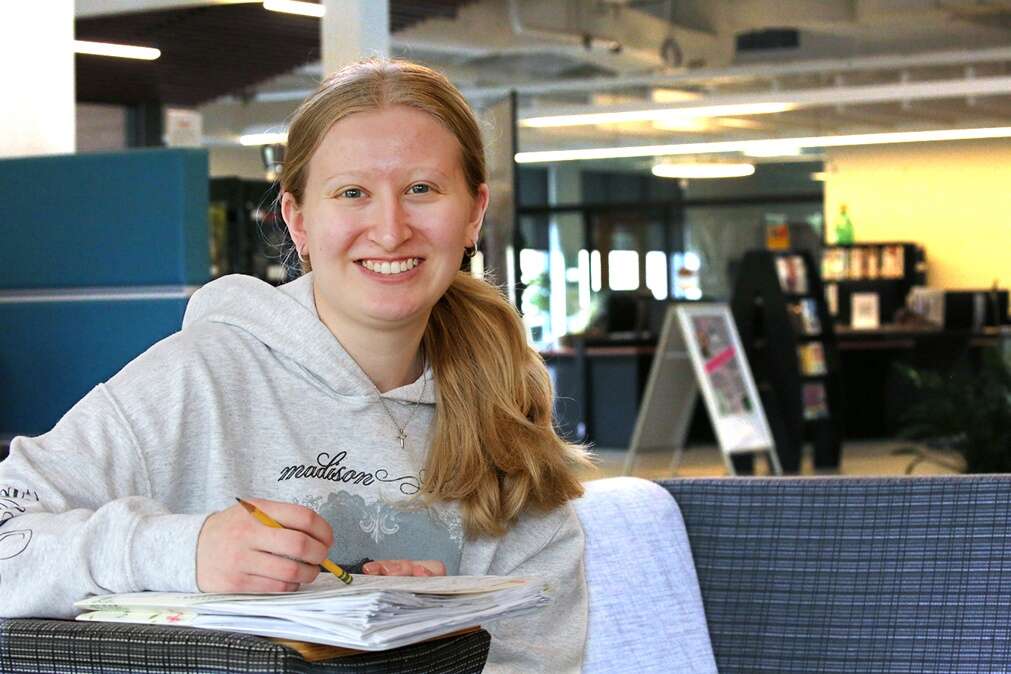
Gina Rhoades, of Butler, is shown Wednesday, May 5, 2026, in the Heaton Family Learning Commons on Butler County Community College’s main campus in Butler Township. Submitted Photo
Focus on students ‘from a mental-health standpoint’
The traditional age range for college students in the U.S. is 18 to 24.
Those aged 18 to 25 had the highest prevalence of having any mental illness and in having severe mental illness in 2022, according to the National Institute of Mental Health.
Anxiety disorders are the most prevalent psychiatric problems among college students, according to a National Library of Medicine report in October 2015. Another common mental health problem among college students, the report stated, is depression.
BC3’s most recent five-year strategic plan, which like its predecessors guides the college’s direction, priorities and purpose, began in 2022. Among the strategic objectives are those focused on mental health.
“We are always paying attention to the experiences of our students, not just in the classroom, but with things they might need outside the classroom,” said Megan Coval, BC3’s president. “And we began to realize, along with more national trends that we are seeing, that we needed to spend more time focused on making sure our students were doing well from a mental-health standpoint.
“That’s why we made this a priority and important enough to include in our strategic plan. Our strategic plan is truly a living document and we intend to walk the walk on what we include.”
College’s efforts on mental health
Since 2022, BC3 has hosted national speakers, resource fairs and panel discussions about mental health and provided training to employees about suicide prevention and other mental health issues, said Dr. Josh Novak, BC3’s vice president for student affairs and enrollment management.
Half of BC3 students who responded to a student basic needs survey completed in July reported having experienced anxiety or depression, or both. They separately indicated that those conditions affected their academic performance.
Nearly 20% of the 218 respondents stated they had unmet mental health needs.
BC3 established a partnership with Glade Run Lutheran Services, Zelienople, which since January has offered in-person outpatient counseling for students, faculty and staff on the college’s main campus and options for those at BC3’s additional locations.
“Our framework has been that mental health is health,” Novak said. “If we are not helping students navigate that, we’re not helping to create successful, productive citizens. We know that mental health impacts everything. It impacts engagement, grades, outcomes.
“Whether it is programming, speakers, therapy dogs or information sessions or training for faculty or staff, supporting mental health is supporting students.”
“There are a lot of services that they offer,” Rhoades said, “and they do go out of their way to be there for their students … the professors … even the deans, the administrators, every single person on this campus, if you need to talk to somebody, they will listen to you.”
Bill Foley is coordinator of news and media content at Butler County Community College.