
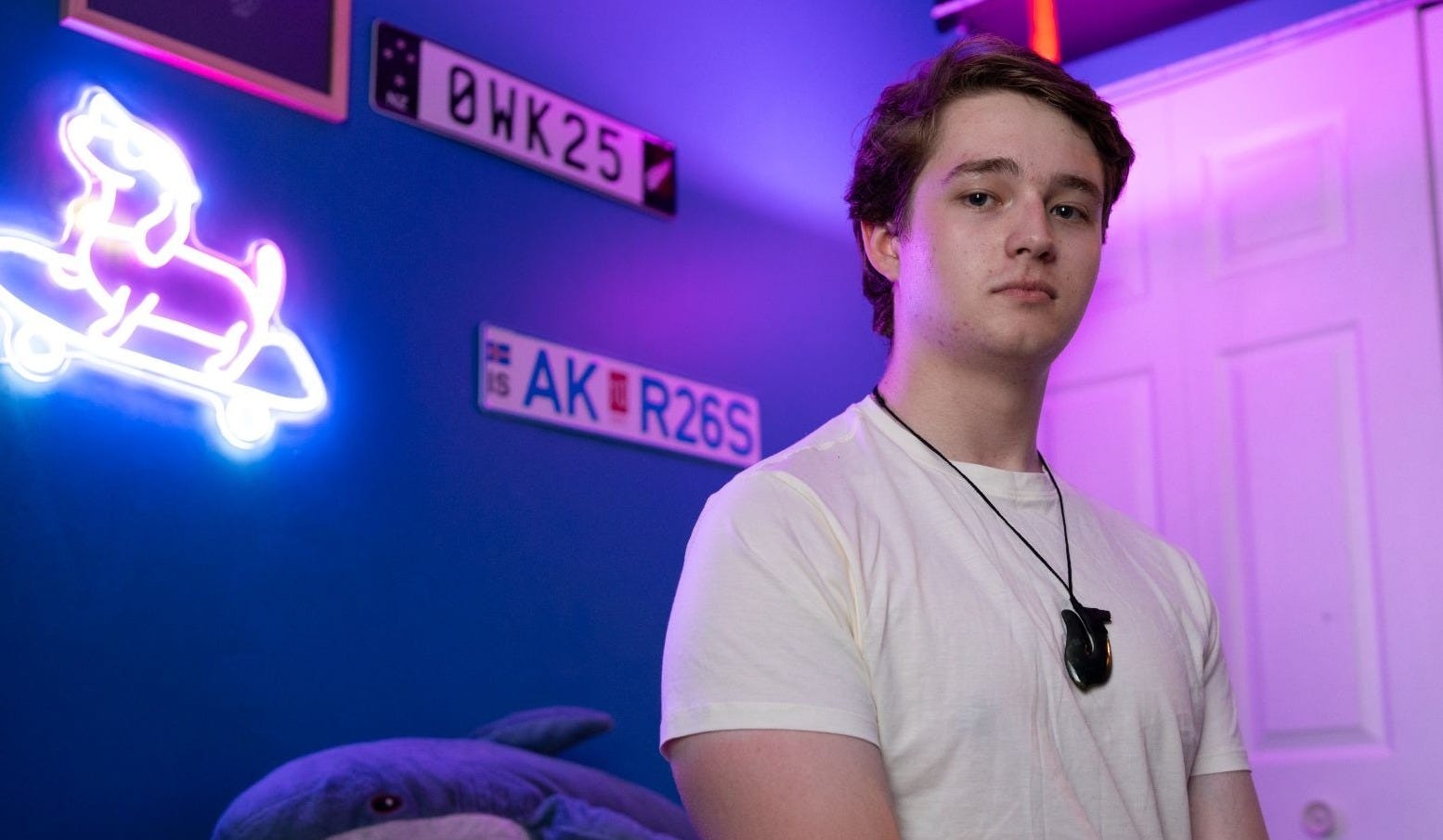
 Jack Wonnacott in his room. Photo by Paige Taylor White for Uncloseted Media.
This story talks about addiction, suicide and substance use. If you or someone you know needs help, resources can be found here.
This story was produced with the support of MISTR, a telehealth platform offering free online access to PrEP, DoxyPEP, STI testing, Hepatitis C testing and treatment and long-term HIV care across the U.S. MISTR did not have any editorial input into the content of this story.

Last year, at 17 years old, Jack Wonnacott remembers taking a work break in his car, tears streaming down his face as he clutched the steering wheel. He had been keeping his gay identity a secret, and the weight of staying closeted was destroying his mental health.
“My mindset that day was, ‘I’m probably not going to go back to my home after this. I’m probably not going to see my family again,’” Wonnacott, now 18, told Uncloseted Media. After making a phone call to the 988 crisis hotline—a mental health helpline funded by the Canadian government—the operator felt that Wonnacott was a danger to himself. They called the police to have him picked up and taken to a hospital for a psychiatric evaluation.
His parents were eventually notified and picked him up. After returning home, he came out to his family and found acceptance. But getting to that point had felt impossible.
In both countries, LGBTQ youth report mental health challenges at significantly higher rates than their cisgender, straight peers. In Canada, 77% of LGBTQ youth report being the target of bullying. In addition, they are five times more likely to consider suicide and seven times more likely to attempt it.
And despite its universal healthcare system, 75% of Canadian kids with mental health disorders, including countless LGBTQ young people, do not have access to specialized treatment.
“If you think we’re in some sort of progressive place where everything is good, that’s absolutely not the case,” says Dani Gagnon, a registered psychotherapist (qualifying) who specializes in working with LGBTQ clients ages 16 and up. “It’s really disappointing that this is happening in Canada.”
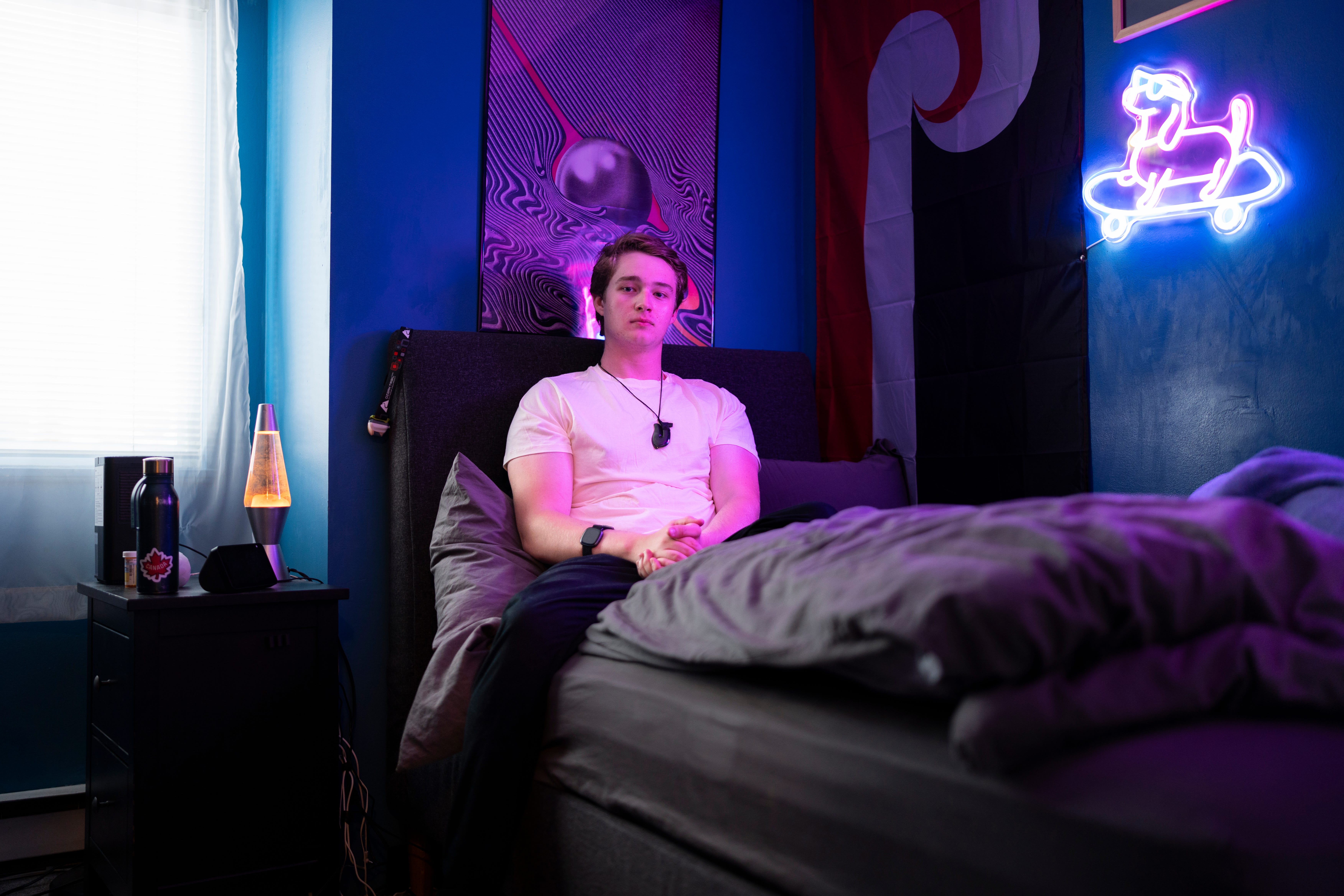 Photo by Paige Taylor White for Uncloseted Media.
Social settings and school made things worse. As an avid gym-goer, Wonnacott remembers locker room talk that made him question how safe it would be to come out. “There was a lot of talk about girls, and it was also a lot of conservative political talk,” he says. “You got a lot of use of slurs, a lot of calling things ‘gay.’ It just made me feel like maybe it’s not the best environment for me.”
The use of anti-LGBTQ slurs can be a destructive force for many young queer Canadians. A 2021 Egale Canada survey found that 62% of LGBTQ students felt unsafe at school, and a 2025 study found that the health disparities faced by queer Canadians are the “result of stigma associated with queer identities.”
As Wonnacott continued to spiral, his depression intensified. “If I don’t fit in, is there going to be some sort of repercussion? Am I going to be ousted?” he remembers thinking daily.
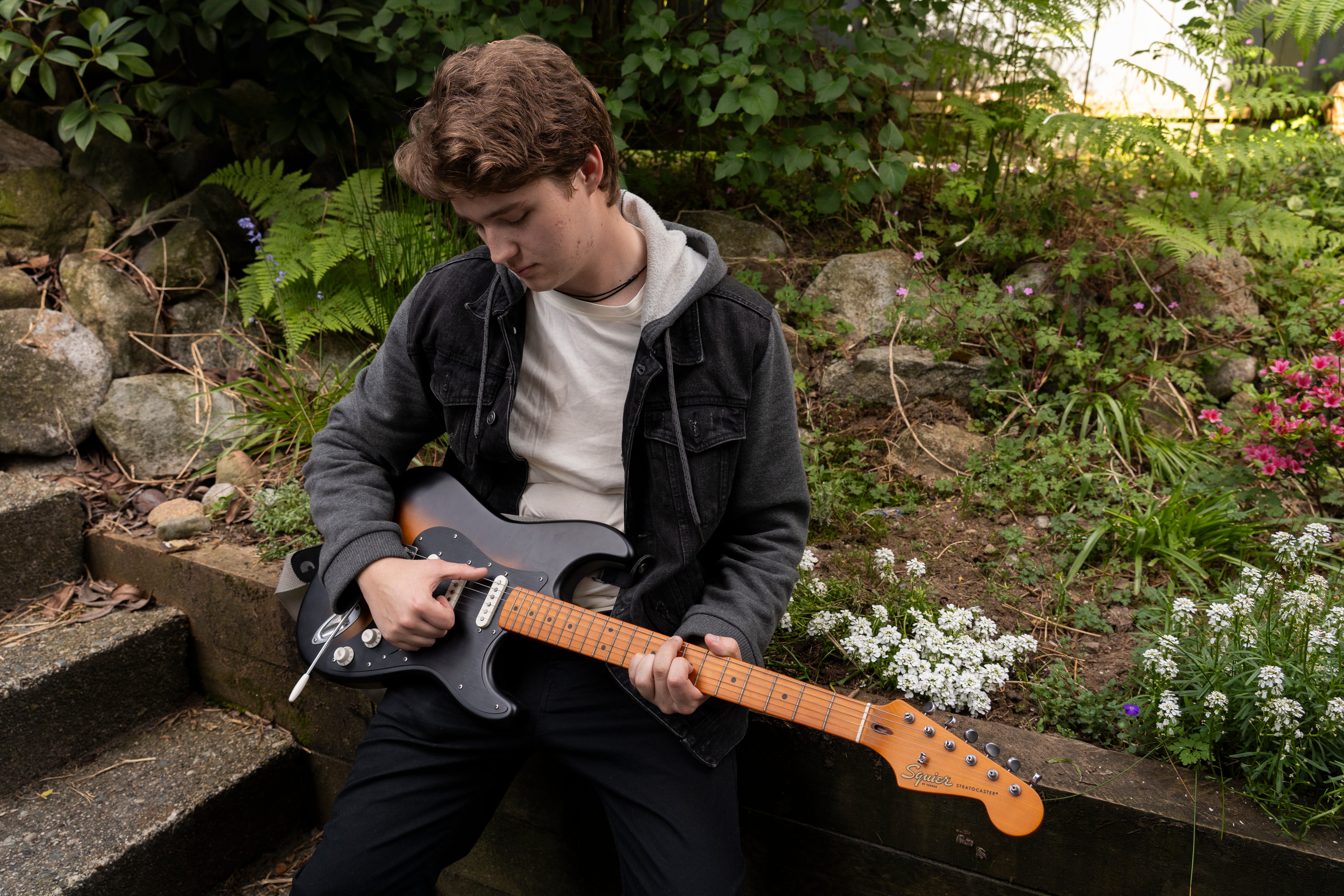 Photo by Paige Taylor White for Uncloseted Media.
“It built up over time, but it turned into ‘Maybe I just need to correct myself … to become normal,’” he says. “It snowballed into trying to change myself, and feeling like I’m not accepted or worthy.”
By the 12th grade, Wonnacott’s mental health went from bad to worse when a crush on a friend led to complicated and intense feelings. He knew he needed support and managed to get on an antidepressant medication, commonly known as Lexapro, which Wonnacott says helped to even out his mood. Connecting with a gay therapist through a local government-funded youth wellness support center was also a big help. “We made a connection, and he was able to understand what I was going through,” he says.
“There’s a lot of therapy that is not covered by the government. It’s hell on earth trying to get an appointment with a psychotherapist,” Gagnon says.
Gagnon believes this leads many providers to send queer kids, many of whom need talk therapy, to psychiatrists “because it’s the easiest way to get into the mental health system.”
Sanderson agrees: “Canada struggles in [this] regard.”
Even with strong support, the homophobia Wonnacott had internalized at school translated into a deep fear that his parents would reject him.
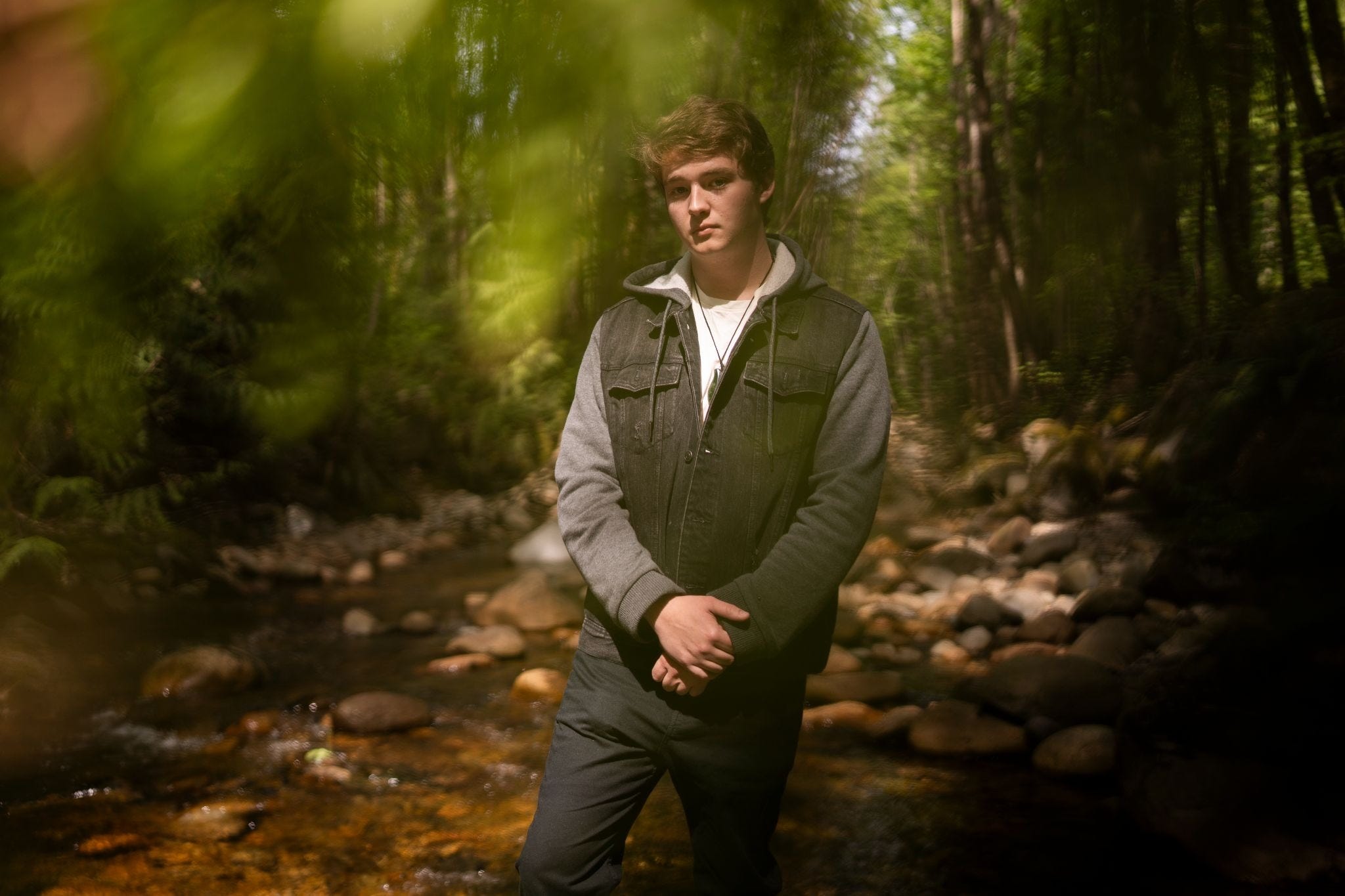 Photo by Paige Taylor White for Uncloseted Media.
“At one point, I was leading a double life,” he says. “If I had [known] that support from my family was coming, then it would have been different. I would have known that I shouldn’t be ashamed or scared. That would have been a game changer.”
One 2023 review published in Frontiers in Psychiatry suggested that internalized stigma is impacted by messaging and information that deem queerness as “abnormal, unhealthy, unnatural, psychopathological, and harmful.” The review found that this messaging leads LGBTQ people to develop similar negative attitudes and beliefs about themselves. And a 2009 study from McGill University found that 65% of its 220 participants dealing with internalized homophobia struggled with suicidal ideation at some point in their life.
“[The stress] built up into a feeling that I couldn’t ignore. It became bigger and bigger,” he says. “And that just built up to, ‘How do I fix it if trying to change how I look or diet didn’t help?’ Then it turned into, self-harm [and] thoughts of suicide.”
“I am isolated, I am alone in this. I am broken,” Wonnacott remembers thinking.
All of this led him to that parking lot and nearly taking his life.
Of all queer young people, trans and nonbinary Canadians experience the highest levels of social stigma, with trans youth being two times more likely to consider suicide than LGB youth. As a closeted kid, Casey Mariani, who identifies as nonbinary and queer, remembers being chased around the schoolyard by their peers brandishing makeshift crosses and Bibles in their face. After showing interest in starting a gay-straight alliance at their school in Toronto, Mariani’s classmates turned against them.
“At recess, they all made an anti-gay club and chased me around,” Mariani, now 23, remembers of their experience at Catholic School. “It was like I was a vampire and they’re trying to get away from me.”
Around age 14, Mariani first started to think they might be queer. They had entered online spaces on Tumblr and found acceptance there. “I changed my name to Casey online, and I started going by that. … I was kind of living this double life. In real life, I was still going by my birth name. I hadn’t told my family anything,” they told Uncloseted Media.
 Casey Mariani. Photo courtesy of Mariani.
Mariani grew up in a strict Catholic family with Filipino and Italian parents, where secrecy felt like the safest option.
Their concerns reflect the data: Only 7% of trans youth from immigrant families say their cultural or ethnic communities are supportive. Mariani’s mom was born in Manila and raised in a world of strict gender roles. They believe this may have contributed to their mom’s difficulty in accepting their trans identity.
While Mariani did get a therapist at 15-years-old through a Toronto hospital, they say it didn’t provide any relief because they didn’t feel like they could trust their therapist. “There would be very long silences in the sessions because I didn’t know what I could say. … I remember she just kept trying to push me to come out to my family,” they recall.
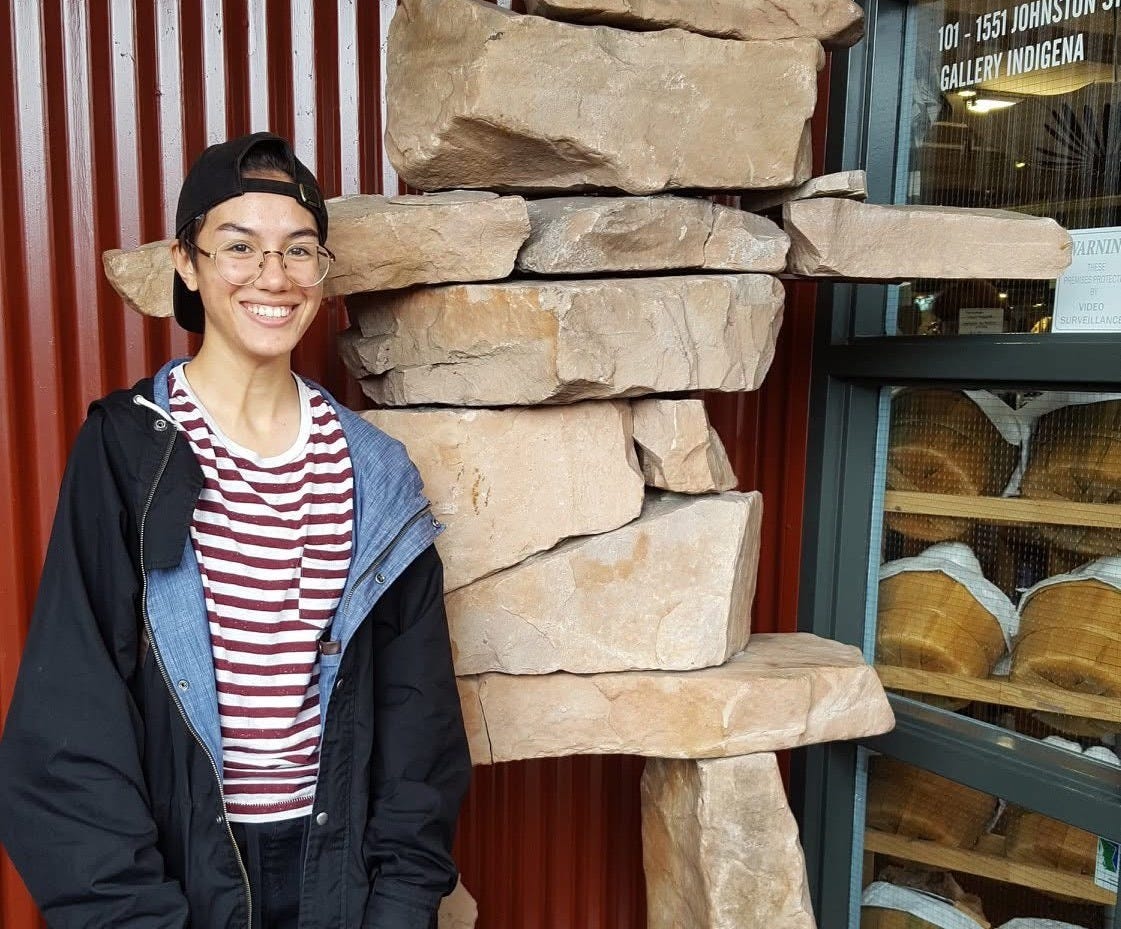 Photo courtesy of Mariani.
Mariani, who is autistic, remembers feeling like their therapist did not understand them. “I never really had a safe space to talk and to feel like I was being listened to,” they say.
With little to no support, Mariani’s mental health deteriorated, and at around 17 years old, they leaned into restrictive eating and alcohol. “I started taking Tylenol and drinking a whole bottle of wine almost every night,” they say.
It took years until Mariani started attending Alcoholics Anonymous meetings, where they met their sponsor, who became a transformative mentor. They say if they had someone who is queer in their corner when they were younger, it would have been a huge help. “I think I wouldn’t have gotten burnt out,” they say. “They are definitely the most cherished person I have in my life right now.”
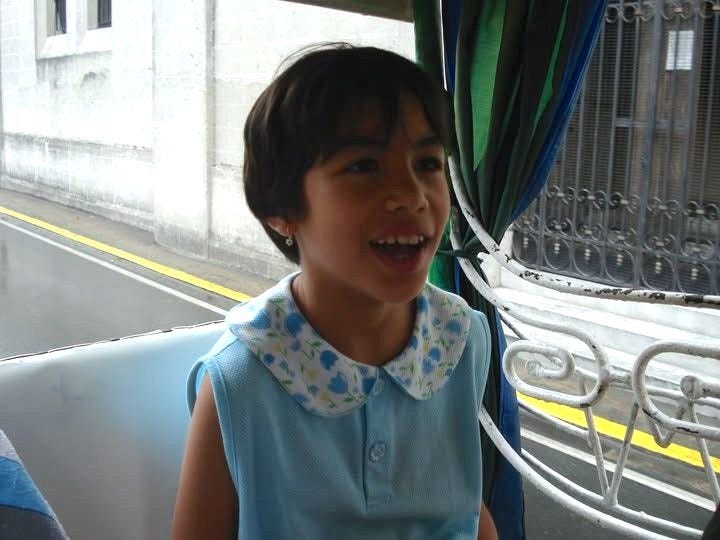 Photo courtesy of Mariani.
Aaron Sanderson with the Kids Help Phone Foundation believes support services for LGBTQ youth in crisis need to be made more accessible through an increase in virtual services.
“We have to consider the role that in-person, physical services might play in relation to stigma,” says Sanderson. “Walking into a building takes a different level of bravery than it does to, for example, connect with a confidential or anonymous service. … We need to make it really easy for those people, because it’s when people are not at their best that they need the support.”
Since calling 988 and coming out to his parents, Wonnacott is now out and proud. His relationship to his family has improved. “I am close now with my parents,” he says.
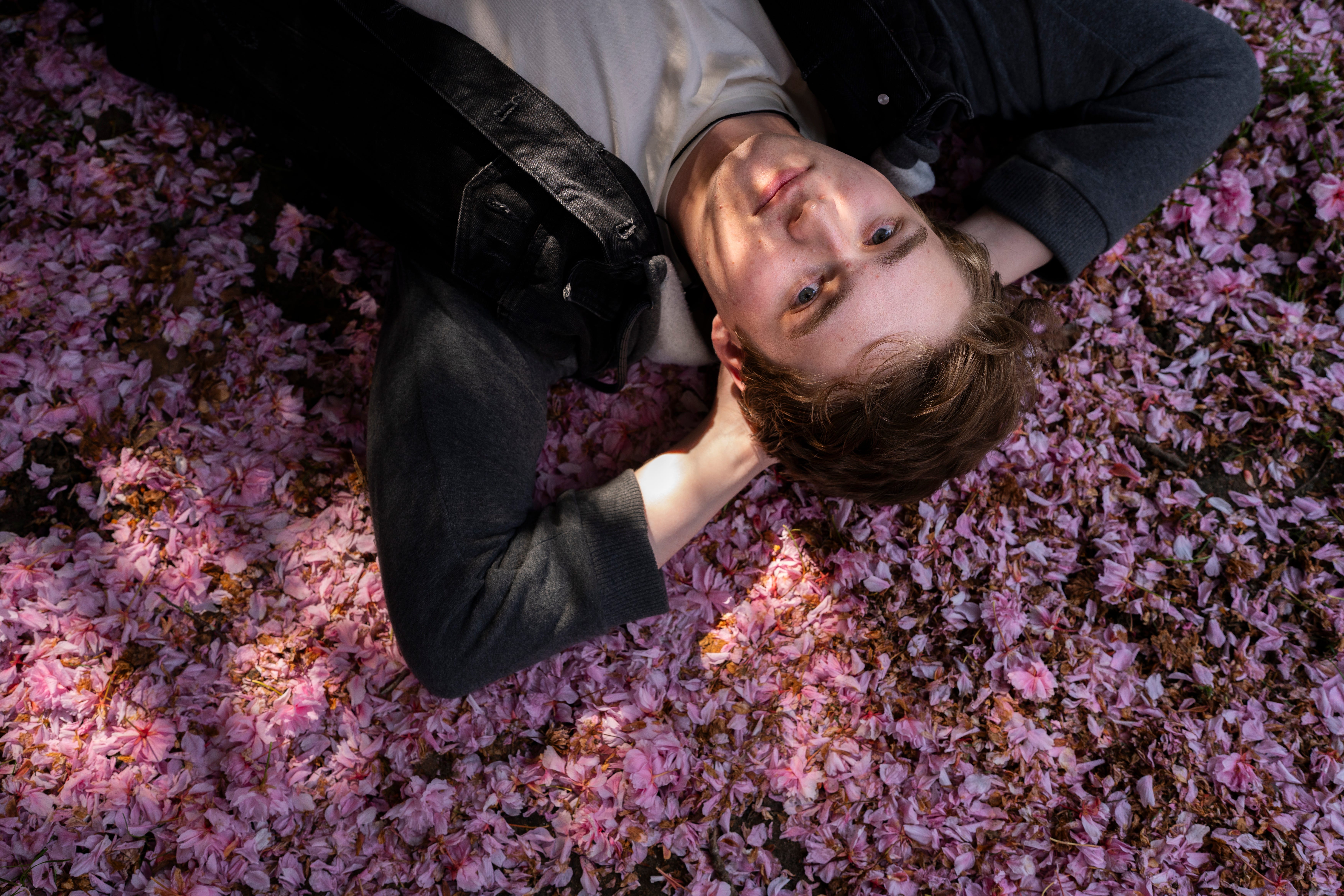 Photo by Paige Taylor White for Uncloseted Media.
Wonnacott is now in a relationship, and says his boyfriend is “a constant presence and someone [he] can trust.”
Additional reporting by Hope Pisoni.
If you are a Canadian and would like to support our journalism, please consider a charitable tax-receipted donation to Uncloseted Media Canada here:
If you’re in the U.S. or elsewhere, please consider making a tax-deductible donation through our 501(c)(3) fiscal sponsor, Resource Impact, here:
