
 Save
Save
You have reached your maximum number of saved items.
Remove items from your saved list to add more.
AAA
For three years in her 20s, Rebekah Beddoe lived in what she recalls as “literally hell on earth” because of medications designed to remove mental anguish.
One of Australia’s most commonly prescribed drugs, intended to help her with a wash of emotions from post-natal exhaustion, triggered such harrowing changes in Beddoe’s behaviour and mind that she went from flying high at work and in life to suicidal and getting electroconvulsive therapy.
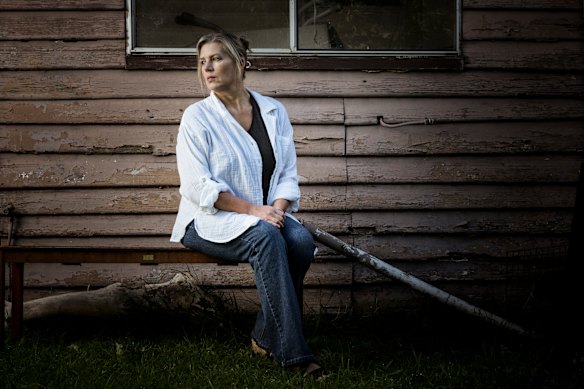 Rebekah Beddoe survived a three-year ordeal after an adverse reaction to a common antidepressant and is the face of a push for more non-pharmaceutical support for people experiencing distress.Chris Hopkins
Beddoe was prescribed sertraline, brand name Zoloft, by a well-meaning GP who sent her to a mother-baby unit for support with a highly unsettled newborn, who cried constantly and struggled to feed.
She was grateful to be in supportive care but not convinced she needed drugs to cope with her feelings. “To me the context was clear, as to why I was struggling, and I just didn’t see the need for medication,” she says.
Insomnia, panic attacks and unbearable agitation came on quickly after she agreed to start the medication. She developed pacing and extreme restlessness (known as akathisia), and self-harm suicidal thoughts, even while still in hospital.
“I had no psychiatric history [of ill-health] before this at all,” says Beddoe. But as her symptoms worsened her psychiatrist added more medications.
‘We’re medicalising distress when it would be better to try to understand and support people through it.’
Psychiatrist Professor Jon Jueridini, lead of Adeliade University’s Critical and Mental Health research unit
It was the beginning of a “cycle of prescription” in which a shifting group of drugs failed to improve her condition, and bouts of mania led her doctor to diagnose her with bipolar disorder.
By two years in, Beddoe had been in and out of psych units, spent periods separated from her baby, and was on six medications including lithium, antipsychotics, tranquillisers, and multiple antidepressants. At her lowest, she was threatened with involuntary hospitalisation.
It was only when a family friend drew her mother’s attention to a documentary including rare but extreme adverse effects some people had when they started the now-ubiquitous antidepressants Selective Serotonin Reuptake Inhibitors that Beddoe began to suspect this caused her ordeal.
Having gained 25 kilos, and feeling psychologically unrecognisable to herself, she gathered information before tapering off each drug extremely slowly and with great care.
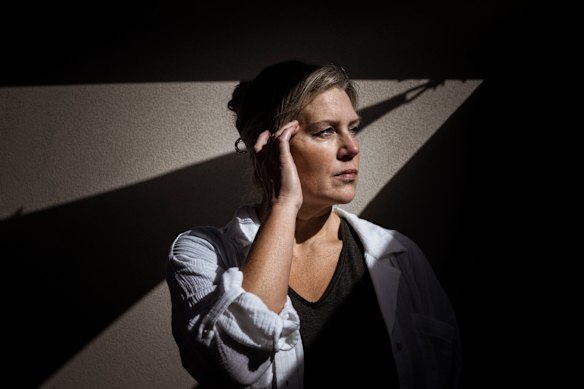 Rebekah Beddoe says the cascading medications she was prescribed after her undetected reaction to Zoloft made her unrecognisable to herself.Photograph by Chris Hopkins
“I completely regained my mental health,” she says. Eighteen months later, her then psychiatrist noted they saw “no evidence of bipolar mood disorder” – without her revealing she had ceased her medication.
While it is not considered safe for people to adjust their own medication, and Beddoe is not suggesting others do so, her horrendous experience has prompted her to be the face of a new national push by clinicians and former patients to question why so many Australians are on long-term medications for distress the group believes could be better supported in other ways.
Nearly one in five Australians are on mental health-related prescriptions, according to the latest data from the Australian Institute of Health and Welfare (AIHW), from 2023-24. This equates to around 5 million people, 67 per cent of these on prescriptions for antidepressants.
Related Article
“We’re medicalising distress when it would be better to try to understand and support people through it,” says Professor Jon Jureidini, a psychiatrist and lead of Adelaide University Critical and Ethical Mental Health research group.
“The classic example [of someone routinely given antidepressants] is somebody who has the expectation that they should get over a bereavement, loss or trauma more quickly, it hurts and is taking longer than they were expecting it to,” he said.
He and the new group, The Not Broken Project, are concerned at the rapid increase in prescription of mental health drugs, and that many people are not given ways to get off them. Between 2014-15 and 2023-24, numbers of scripts rose 37 per cent, to 47.3 million, making Australians among the world’s highest consumers.
More than half of Australians on antidepressants are on them for longer than the recommended period (nine to 12 months after remission) and 2 million people use them long term, which researchers suspect may be at least in part because withdrawal side effects can be severe and long-lasting.
“Even if people having serious adverse outcomes from taking these medications is not common, when you’ve got more than 5 million people taking them, and there is even a small chance of having a serious adverse reaction that’s still a hell of a lot of people,” Jureidini said.
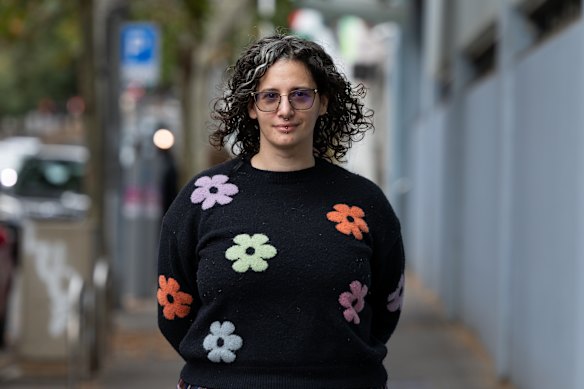 Siswella Lanzillotti says she lost her 20s to the debilitating effects of mental health medication she did not need after misdiagnosis.Ruby Alexander
“The second thing is [the medications] can act as a distraction from what might be effective or they might need. This idea of a ‘broken brain’ that can be fixed with medication is pseudoscience.”
His group, created with Alfred Health psychiatrist Dr Paul Denborough, wants to raise awareness of a systematic umbrella review of evidence that found there is no evidence depression is caused by a chemical imbalance in the brain, and to promote better provision of non-pharmaceutical supports for people suffering from grief, loneliness, sadness and other distress linked to life circumstances.
Rachel Barbara-May, a social worker and Alfred Health’s capability and impact lead, is on the Not Broken steering committee with lived-experience advocates including Siswella Lanzillotti – who also lived through nightmarish years of adverse reactions to mental health medications after having her symptoms misdiagnosed.
Denborough, director of Infant, Child, Youth & headspace at Alfred Health, is particularly concerned about the dramatic rise in prescriptions of stimulants for ADHD. Prescription is up 600 per cent since 2017, especially among adults and women.
Mental health-related prescription in 2023-2447.3 million mental health-related scripts issued in Australia (then population approx 27 million)Increase since 2014-15, 37%Five million people were dispensed a mental health script3.9 million – the increase in numbers of Australians on since 2014-15Antidepressants were the most commonly dispensed mental health medication, 3.7 million peopleNumber of antidepressant scripts dispensed in 2023-24 34.2 millionSource, Australian Institue of Health and Welfare
“A lot of people in the community are very worried about the literally exponential increase in amphetamine prescribing,” he said.
“This is not so much a moral judgment about if people should or shouldn’t take them, it’s about this idea that there is something measurable that is broken in you and there is zero evidence of that, it is totally untrue.”
The new project aims to help spread awareness that mental health medications are “very easy to start, but harder to stop”.
Related Article
“The fundamental question for me is, if you’re taking the drug to correct a chemical imbalance, or think you have a ‘broken brain’, it’s very difficult to come off it because you worry about where does that leave me?” he said.
“If you are taking [an antidepressant] to relieve some sort of suffering or crisis and have an effect of numbing feelings, that is very different from taking it thinking you are correcting some underlying disease.”
The idea that mental health-related prescription rates should be re-evaluated has also been raised recently by Australian and English researchers in the Medical Journal of Australia and other journals. The MJA article of May 2025 noted: “It is unlikely that 14% of the Australian population would fit the clinical guideline criteria for antidepressant use.”
A trial of a now-adopted protocol to help people reduce or cease medications attracted “hundreds of emails from both practitioners (general practitioners, psychiatrists, pharmacists and psychologists) and patients from across Australia and internationally”.
When the AIHW released its mental health-related prescriptions data in 2023-24, Dr Cathy Andronis, chair of the Royal Australian College of General Practitioners’ Specific Interests Psychological Medicine, also expressed concerns about the problematic and disempowering nature of people being placed on antidepressants without having other support to address underlying causes of their distress.
Lanzillotti, now a mental health peer support worker, experienced severe behavioral and mood side effects, including suicidal ideation, after being prescribed medication for what was thought to be depression as a student. Incorrect diagnoses of bipolar and then borderline-personality disorder followed.
The electroconvulsive therapy Lanzillotti was given erased the memories of the years from about age 20 to 30. She spent one year withdrawing from her original medications, a terrifying experience.
“I had essentially been taught by the medical system that I was broken and not to be trusted: I pathologised every emotion,” she said.
An NDIS occupational therapist provided support for the transition off the drugs, and onto medication for what was eventually found to be an underlying sleep disorder.
Like Beddoe, Lanzillotti joined Not Broken group to help promote the importance of offering wider support than routine prescription of mental health medications to people with symptoms, and wants people to ask questions before choosing to remain on medication long term.
“For some people, medications are the answer, and that’s fine,” Lanzillotti said. “For a lot more people, they need actual support outside the mediation, and they need to change how they live their life to recover.”
The Royal Australian and New Zealand College of Psychiatrists and the Australian Medical Association were contacted for comment.
Save
You have reached your maximum number of saved items.
Remove items from your saved list to add more.
 Wendy Tuohy is a senior writer focusing on social issues and those impacting women and girls.Connect via X or email.From our partners