
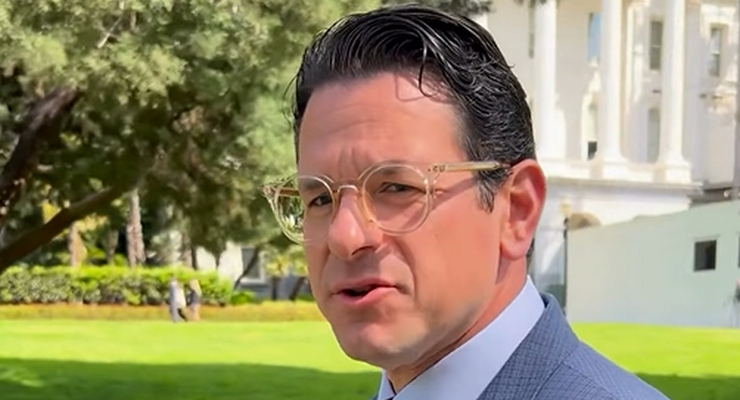
 Pasadena Assemblymember John Harabedian
Patients with schizophrenia, bipolar disorder, and substance use disorders would no longer have to try and fail on cheaper medications before their insurers cover the drugs their doctors actually prescribed, under a bill by Assemblymember John Harabedian (D-Pasadena) that cleared its first legislative hurdle this month.
AB 1970, which passed the Assembly Committee on Health on a 15-0 vote on April 21, would prohibit health plans and insurers from requiring step therapy — a practice widely known as “fail-first” — for prescription drugs used to treat serious mental illness and substance use disorders. The bill heads next to the Assembly Committee on Appropriations.
Harabedian, who represents the 41st Assembly District including Pasadena and serves on the Assembly Insurance Committee, has made behavioral health access a legislative priority since taking office in 2024. The bill comes after Governor Newsom vetoed Harabedian’s AB 1032 last October, which would have required insurers to cover 12 additional behavioral health visits for wildfire survivors — a measure the governor rejected amid concerns about rising health care premiums.
“When someone is dealing with serious mental illness or substance use disorder, delays in starting the right treatment can have real consequences for stability and recovery,” Harabedian said in a statement announcing the committee vote. “AB 1970 helps reduce those delays by allowing providers to move directly to the treatment most appropriate.”
Step therapy protocols require patients to try one or more lower-cost medications before their insurer will authorize coverage for the drug a physician originally prescribed. The practice is a standard utilization management tool used by health plans to control costs and, insurers say, to ensure medication compatibility. But behavioral health providers argue that for patients with serious psychiatric conditions, the delays imposed by failing on one drug before moving to another can lead to hospitalizations, relapses, and disengagement from treatment.
The California Health Benefits Review Program, an independent state body, published its analysis of AB 1970 on April 14. CHBRP found some evidence that step therapy requirements for drugs used to treat serious mental illness decrease utilization of those medications and increase hospitalizations, though the agency cautioned that some of the studies analyzed older drugs no longer subject to step therapy. CHBRP projected the bill would affect insurance covering approximately 22.8 million enrollees — about 60 percent of Californians — and estimated a total of $2.44 million in additional annual premiums statewide, with roughly 300 enrollees shifting from generic to branded medications.
The bill would not apply where the U.S. Food and Drug Administration’s own labeling requires that a patient take a prior medication first, such as oral stabilization before certain long-acting injectable antipsychotics. Medi-Cal beneficiaries are already exempt from step therapy for these drugs, according to the CHBRP report.
Dr. Le Ondra Clark Harvey, CEO of the California Behavioral Health Association, a statewide organization representing behavioral health agencies serving more than two million Californians, said in a statement that her organization supports the measure.
“In behavioral health, those delays can be dangerous, often leading to relapse, hospitalization, homelessness, or worse,” Clark Harvey said. “This bill restores decision making where it belongs: between patients and their providers.”
In California, an estimated 1.2 million adults live with serious mental illness, according to the National Alliance on Mental Illness. More than half of adults with mental health conditions nationwide do not receive treatment, and the average gap between the onset of symptoms and first treatment is approximately 11 years, according to NAMI.
The legislation is part of a growing national effort to limit step therapy in behavioral health care. Illinois enacted a step therapy ban effective January 2025, and at least seven other states have introduced similar measures in 2026, according to the CHBRP report.
For Harabedian, the bill also carries a local dimension. The January 2025 Eaton Fire, which killed at least 31 people and destroyed roughly 16,000 structures across Altadena and the Pacific Palisades, intensified demand for behavioral health services in the assemblymember’s district. Data from the California Parent & Youth Helpline showed that 62 percent of all calls related to mental and behavioral health needs after the fires came from Southern California, according to Harabedian’s office.
If enacted, AB 1970 would take effect for insurance contracts issued or renewed on or after January 1, 2027.
AB 1970 is scheduled for consideration in the Assembly Committee on Appropriations in May. The text of the bill and the CHBRP analysis are available at leginfo.legislature.ca.gov and chbrp.org.
Harabedian’s district office is at 257 S. Fair Oaks Ave., Suite 210, Pasadena, CA 91105; (626) 351-1917.
 Get our daily Pasadena newspaper in your email box. Free.
Get all the latest Pasadena news, more than 10 fresh stories daily, 7 days a week at 7 a.m.