
In the sea of human emotions, mental health issues often lie undetected, with consequences ranging from silent suffering to suicide.
And even clear cases go untreated for lack of resources.
At the University of Minnesota, researchers like Eunice Areba and Carrie Henning-Smith generate the kinds of knowledge health care professionals need to prevent or alleviate these conditions. The work of Areba, a clinical associate professor in the School of Nursing; and Henning-Smith, an associate professor in the School of Public Health, moves the state and nation closer to developing better means of identifying potentially suicidal individuals and to reducing the forms of debilitating stress that many rural residents grapple with alone.
May is Mental Health Awareness Month. Let University of Minnesota experts increase your awareness by busting five mental health myths.
Patterns hidden in the data
Areba leads a team of University and community researchers studying data from students in all Minnesota high schools.
Suicide rates among Black youth are rising faster than for any other racial group everywhere. But Areba’s group found that within the broad category of “Black youth,” the rates of suicide ideation — contemplating suicide — and suicide attempts varied according to geographical location and ethnicity.
“We need to separate the data into meaningful groups,” Areba says. “We found that some subgroups within the ‘Black’ group had very different rates. The highest were in the Black Hispanic (Latine) and Black/American Indian groups. The Somali group had the lowest rate, and Black/African Americans were in between.”
Data that failed to make this distinction would have masked the higher rates in some subgroups, blunting the ability to assign prevention efforts most effectively.
Her team also found that some adolescents who had not reported suicide ideation in screening questionnaires went on to report suicide attempts. Again, patterns of this behavior in specific racial/ethnic groups would have been missed if the groups had been too broad.
Modern factors affecting mental health
Following the federal Operation Metro Surge this winter, Areba’s group paused their study and are now studying its effects on mental health in youth.
“We’re changing our protocol to get perspectives of young people all over the country,” she explains. “Metro Surge was based on a person’s racial or ethnic identity. It deeply affected young people because they’re still developing their ethnic and racial identity.
“We’re now documenting what happened, especially to young people..”
Areba also calls out one widely available factor’s role in youth suicides.
“We need more research on the harmful content and addictive nature of social media on young people’s brains, which are still developing,” she says.
In the meantime, “The best thing you could do for your child is to give them one supportive adult in their life,” she says. “Listen to them, know what they’re doing, and be interested in their activities. And remember to keep the door of communication open.”
Access to care in rural America
Sixty million people live in rural America, says Henning-Smith, and stereotypes about an aversion to seeking help for mental issues still persist.
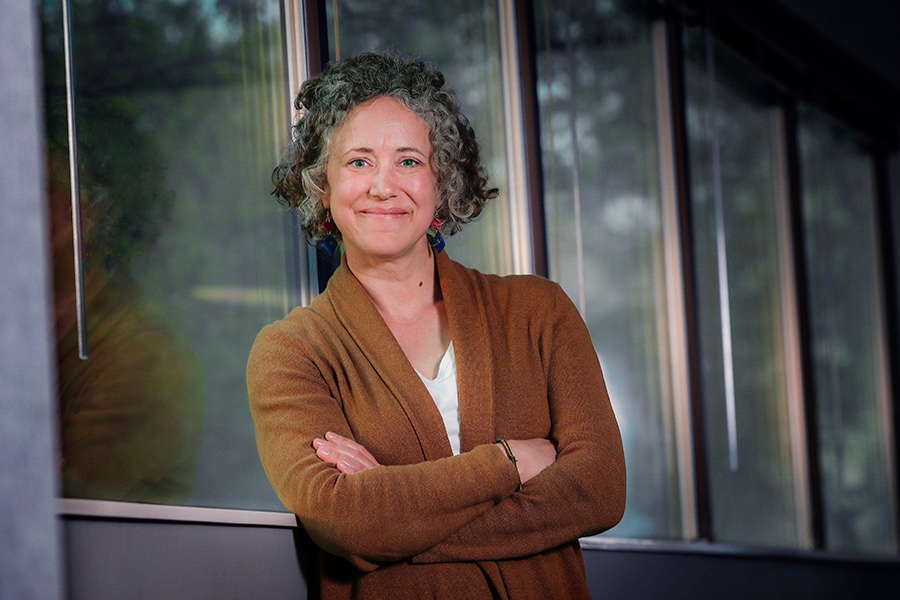
Carrie Henning-Smith
“One stereotype is that farmers and other rural residents are stoic, reluctant to seek help,” she explains. “But my work has shown they will, if help is both accessible and affordable.”
But farm and rural dwellers have less access to mental health care and higher suicide rates than city dwellers, she says, partly because most mental health care providers live in cities. And where farming is the main support for a community, factors like the vagaries of weather and costs for seed and equipment make it nearly impossible to banish the specter of economic despair.
“Some farmers live with crushing debt and no clear way out,” Henning-Smith observes.
In a 2024 survey of active Minnesota health care professionals practicing in mental health or related specialties, Henning-Smith and colleagues put pieces of the rural mental health care puzzle in place. In a key finding, they measured the odds that professionals in four different mental-health related specialty groups would choose to practice in a rural area. Psychologists were the least likely, with just four percent likely to choose a rural area. The most likely were licensed drug and alcohol counselors, at 10 percent.
They also found that the number one factor — by far — in leading respondents to choose rural work was that they themselves had come from a rural area.
Learn how the University of Minnesota is building a culture of care across all its campuses.
“So we need to make opportunities for rural kids to think about health care careers and make education available,” Henning-Smith says. “It’s not rocket science.”
Bucking the stereotype
She has also been heartened by stories of individuals bucking the stereotype and seeking mental health care when they needed it.
“For example, in recent interviews with farmers, people talked about the profound pain they’ve experienced and having the courage to say, ‘Wait a minute, I need to take care of myself so I can take care of my family and my community,’” she says.
Through her work — which includes taking part in committee hearings in the U.S. House of Representatives and Senate — Henning-Smith has pressed for greater attention to supporting the well-being of rural America. Too often, she says, she has seen “urban” and “rural” pitted against each other.
“But in reality, our lives are entwined,” she explains. “We can’t have a thriving country without thriving rural areas.”
Learn about mental health resources at the University of Minnesota’s Twin Cities, Crookston, Duluth, Morris, or Rochester campus.