
Anxiety affects nearly one-third of the U.S. workforce,¹ showing up in subtle ways such as trouble focusing, poor sleep, and a constant sense of being “on edge.” These challenges often go unseen, yet they can significantly impact employees’ health, productivity, and overall well-being.
Research from The Cigna Group² show that small, self-directed actions – such as using mental health apps, engaging in hobbies, and volunteering – can meaningfully impact vitality, healthy habits, and workplace motivation.
“When you are suffering from anxiety life can seem overwhelming, so one of the most encouraging insights from this research is how much progress can come from small steps,” said Jason Youngblood, director of behavioral clinical account management at Cigna Healthcare. “When people with anxiety take simple actions to support their mental health, the benefits ripple across their lives and their work.”
Mental health apps: A modern tool with measurable benefits
Mental health apps offer wellness experiences such as guided meditation, stress-reduction techniques, and sleep support. Workers with anxiety who used a mental health app in the past three months report significantly stronger well-being than those who did not. About 72% say apps make managing their mental health easier, and 73% report a positive impact on their overall health. These benefits extend into the workplace, where users report greater motivation, optimism, and engagement.
“Digital mental health tools can be a powerful complement to traditional care,” Youngblood said. “For many people with anxiety, apps offer accessible, on-demand support that helps them feel more in control of their health and more optimistic about their work and their future.”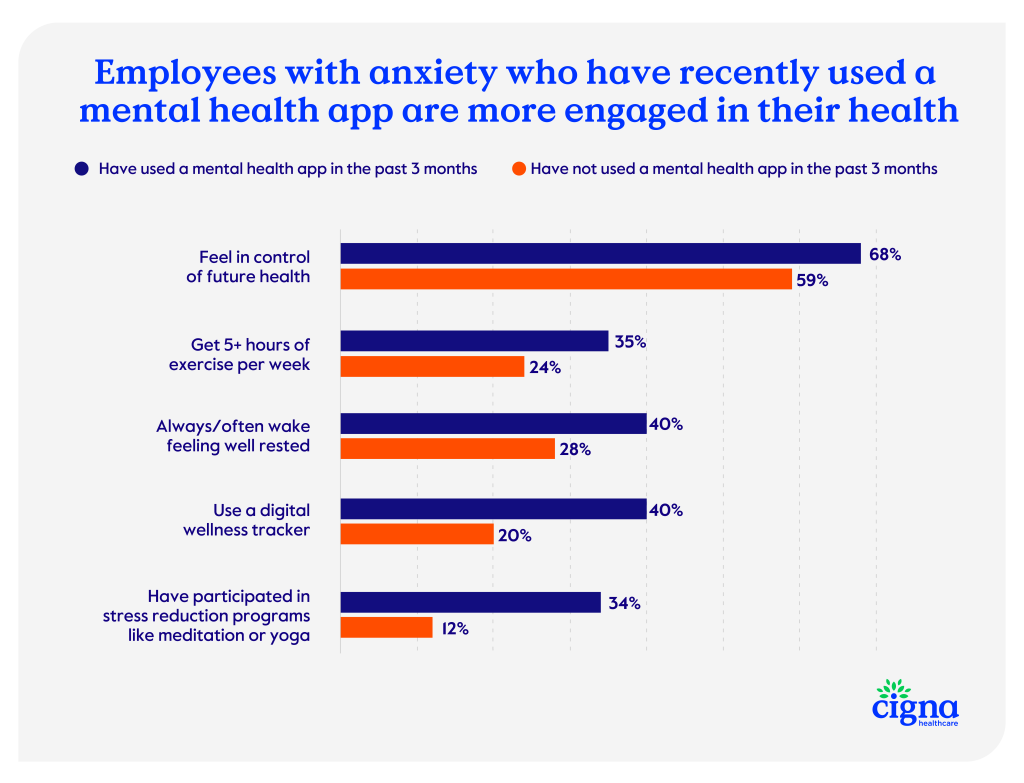
Despite these benefits, adoption remains low. Only 19% of workers with anxiety have used an app in the last three months. However, about 40% say they would try an app recommended by a health care provider.
Hobbies: Consistent activities that help reduce stress
Regular engagement in hobbies plays a meaningful role in reducing stress and improving well-being. Workers with anxiety who participate in hobbies at least once a week report higher vitality than those who do so less often. They are also more likely to maintain healthier habits, including regular exercise and better sleep. Even short, consistent activities – such as gardening, playing music, or taking an art or fitness class – can help restore mental energy and interrupt stress cycles.
Overall, regular hobbyists report greater resilience, lower stress, and fewer feelings of depletion in their work and personal life.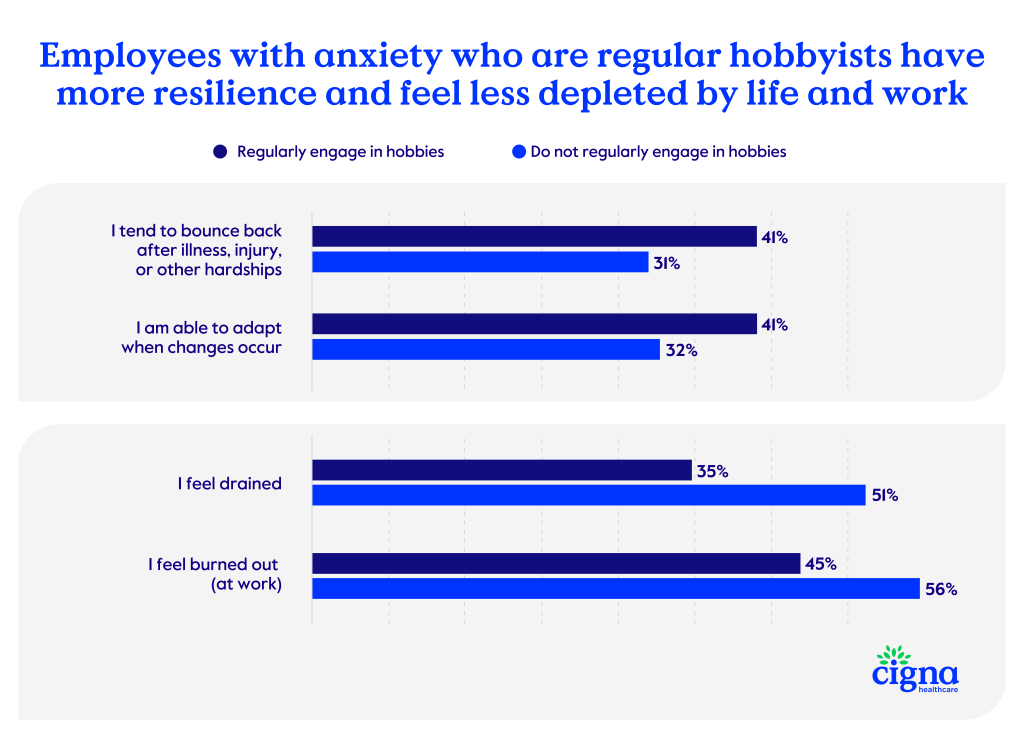
Volunteering: Giving back for resiliency and purpose
For workers with anxiety, volunteering helps foster purpose, connection, and social engagement. Workers with anxiety who volunteer report higher vitality both at work and outside of it. They are more likely to report better physical and mental health, practice healthier behaviors, and experience fewer symptoms of anxiety and depression. They also report greater enthusiasm, motivation, and willingness to go above and beyond in their roles at work.
Volunteering also strengthens social well-being, reducing loneliness and increasing a sense of belonging.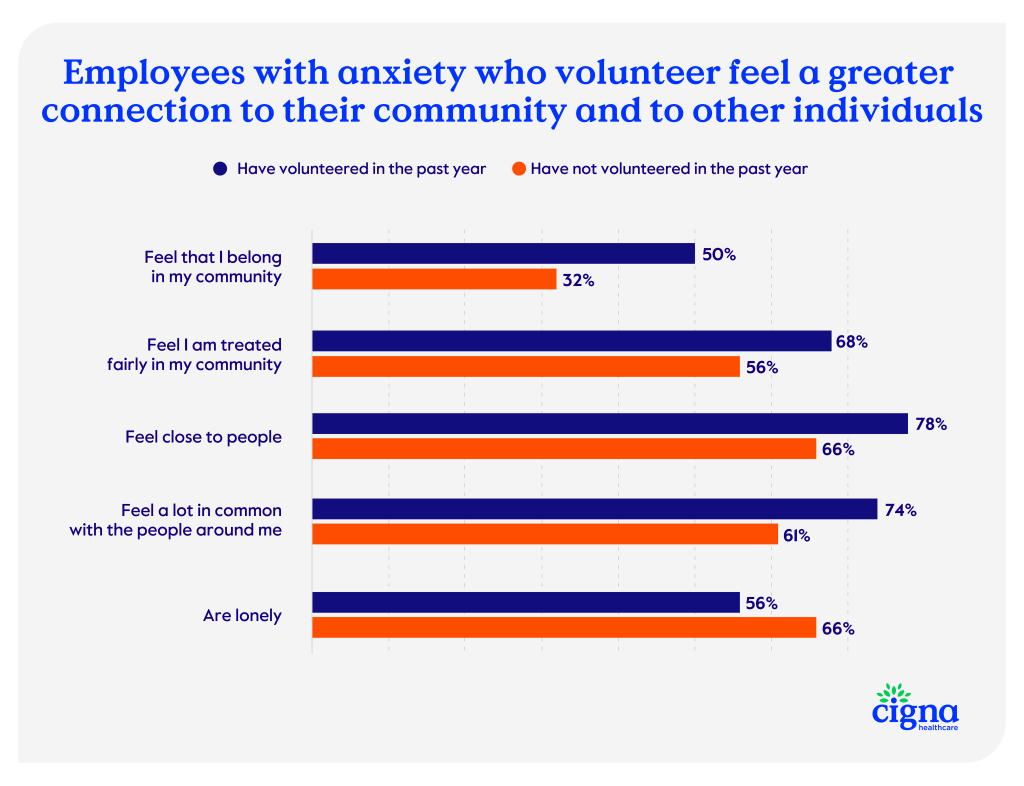
Considerations for employers
These findings highlight that small, practical actions can significantly improve workforce well-being. Employers can help by promoting accessible strategies that support employees managing anxiety:
Encourage digital well-being tools: Promote vetted mental health apps during enrollment, onboarding, and throughout the year.
Support hobbies and creative outlets: Offer opportunities for employees to participate in hobby clubs or creative activities that help them recharge.
Provide volunteer opportunities: Enable employees to give back through company-sponsored programs or paid volunteer time.
Communicate mental health resources clearly: Ensure employees understand how to access available benefits and feel empowered to seek support.
Small actions can deliver meaningful improvements in vitality, engagement, and productivity. “Supporting small, everyday actions can go a long way in helping employees manage anxiety and sustain energy, engagement, and well-being over time,” Youngblood said.
1. Bryant N. Supporting workers with anxiety must be a business imperative. The Cigna Group Newsroom, Sept. 16, 2025. https://newsroom.thecignagroup.com/supporting-workers-with-anxiety
2. The research is based on The Cigna Group’s Q4 2025 Vitality in America study, which analyzed responses from 5,000 U.S. adults.