
LYNNWOOD — The City of Lynnwood and Sea Mar Community Health Centers cut the ribbon Monday on a new Crisis Care Center, a short-term behavioral health facility designed as an alternative to emergency rooms and jails for people in mental health or substance use crises.
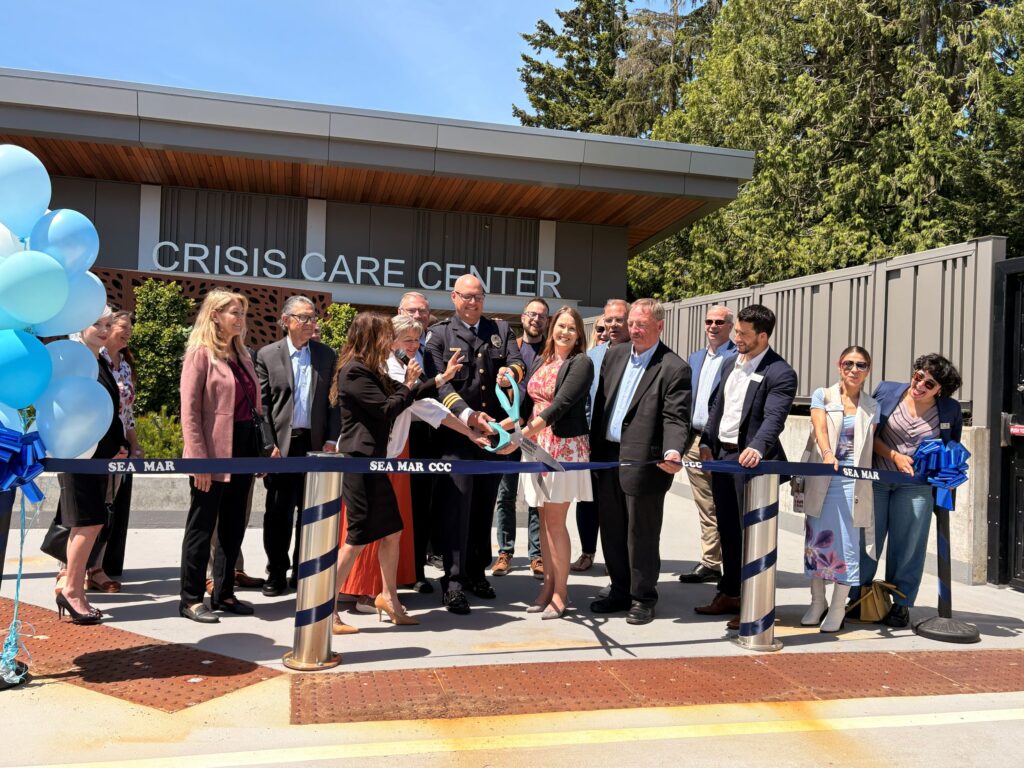 Dignitaries and healthcare professionals cut the ribbon on Lynnwood’s new Crisis Care Center. Photo: Kienan Briscoe, Lynnwood Times
Situated next to the Community Justice Center, the three-story building includes a 24-hour crisis receiving area and a stabilization unit. It can accept voluntary walk-ins, first-responder drop-offs and referrals from the 988 suicide and crisis lifeline, offering immediate care in a setting focused on dignity and recovery rather than incarceration.
The center’s opening traces directly to a tragedy that exposed deep community divisions. On July 13, 2021, 47-year-old Tirhas Berhand Tesfatsion died by suicide in a Lynnwood jail cell, just two weeks before the City Council was set to approve construction of a larger Community Justice Center. Her death triggered protests and demands to scale back the jail component in favor of mental health services.
“I watched as the community I represent became painfully divided,” Rep. Lauren Davis recalled.
State Rep. Lauren Davis responded by proposing that the city reduce the planned jail and carve out space for a crisis facility. She first approached then-Mayor Nicola Smith, who backed the idea without hesitation. Davis then met late one Friday evening with then-Police Chief Jim Nelson. Although architectural plans were finished and a contractor already selected, Nelson listened with an open mind, Davis said. He sketched the existing layout on a sheet of paper and pointed to the northeast corner, saying that section could be removed to make room for the new center.
“I want you to know, need you to know, that if the police chief had said no that fateful night, we wouldn’t be here today,” Davis said Monday.
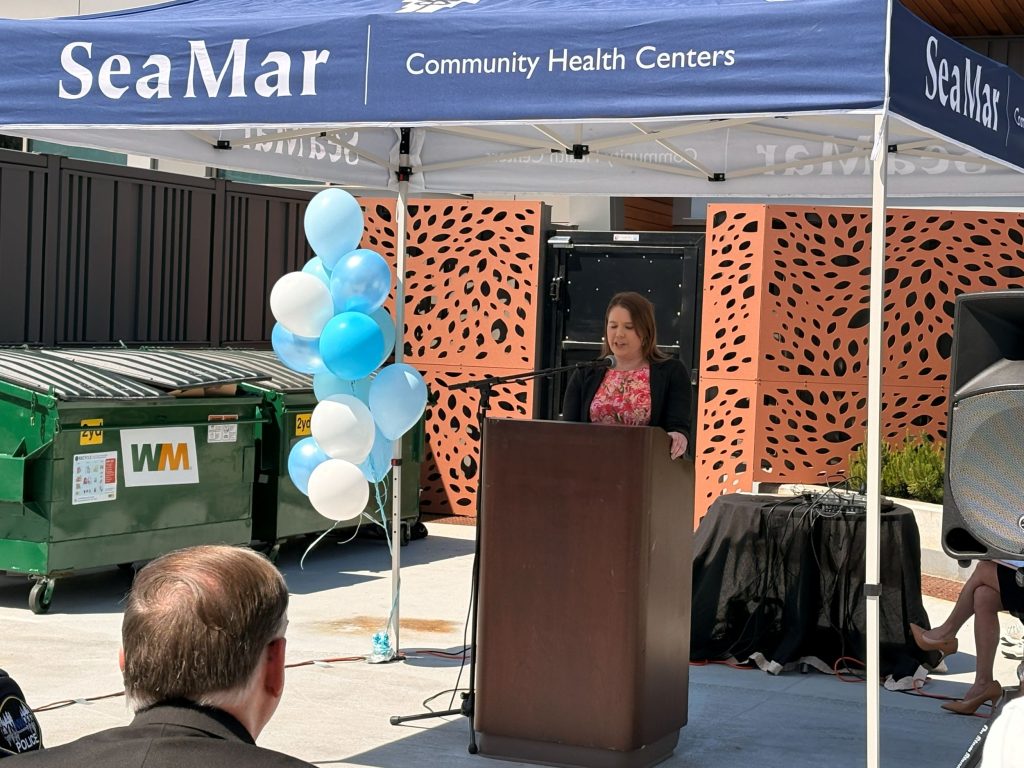 Washington State Representative Lauren Davis. Photo: Kienan Briscoe, Lynnwood Times
With support from the mayor and police chief, Davis persuaded the City Council to delay the construction contract. Three members already favored her plan; the fourth and decisive vote came from then-Council Member Shannon Sessions after the two met for coffee on Aug. 2, 2021. The council approved the delay on a 4-3 vote that night.
Davis and Nelson then co-chaired a task force that, after six weeks of meetings and community input, reduced the jail size by 30 percent to accommodate the crisis facility. Funding proved the final hurdle. Davis made the center her top capital-budget priority each year until it was fully covered. Snohomish County Council Member Jared Mead secured the first $3 million in construction money and later another $3 million for operations. Additional state grants and $12 million from the capital budget, backed by Sens. Jesse Salomon and David Frockt, closed the gap.
Lynnwood Police Chief Cole Langdon dedicated the center to Tesfatsion and her family, apologizing for lapses in jail monitoring policies at the time of her death. New protocols are now in place, he said, and he pledged that no similar in-custody death would occur under his watch.
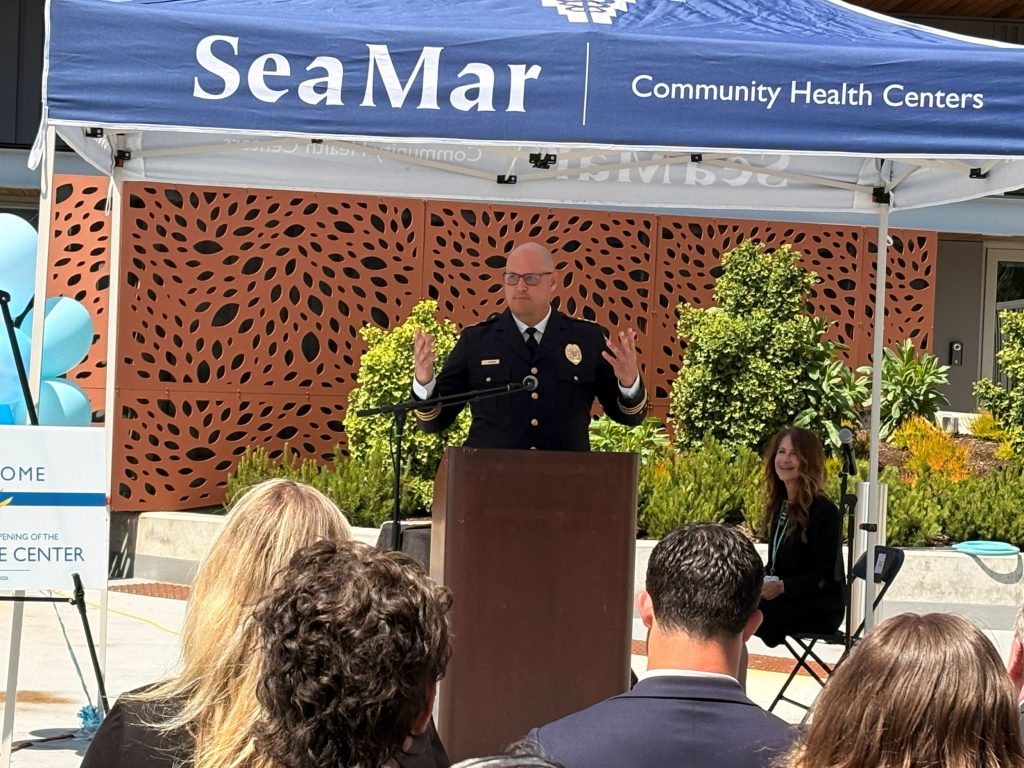 Lynnwood Police Chief Cole Langdon. Photo: Kienan Briscoe, Lynnwood Times
“This was supposed to be 36 jail beds and it’s not. It’s a place of healing of hope, of refuge and resilience, and that is because former Mayor Nicola Smith, former Police Chief Jim Nelson, former council member Shannon Sessions, Snohomish County Executive Dave Somers, Snohomish County Councilman Jared Mead, former Senator David Frockt, Depuy Chief Chuck Steichen, Chief Cole Langdon, Claudia D’Allegri, and so many other people stepped out in faith,” said Rep. Davis.


Sea Mar Senior Vice President and Chief Behavioral Health Officer Claudia D’Allegri emceed Monday’s ceremony and captured the collaborative spirit behind the project.
“This center stands as a testament to what we can accomplish when community and public safety partners work together with healthcare toward a common goal,” D’Allegri said. “Today we open a promise of a place of dignity, healing and hope.”
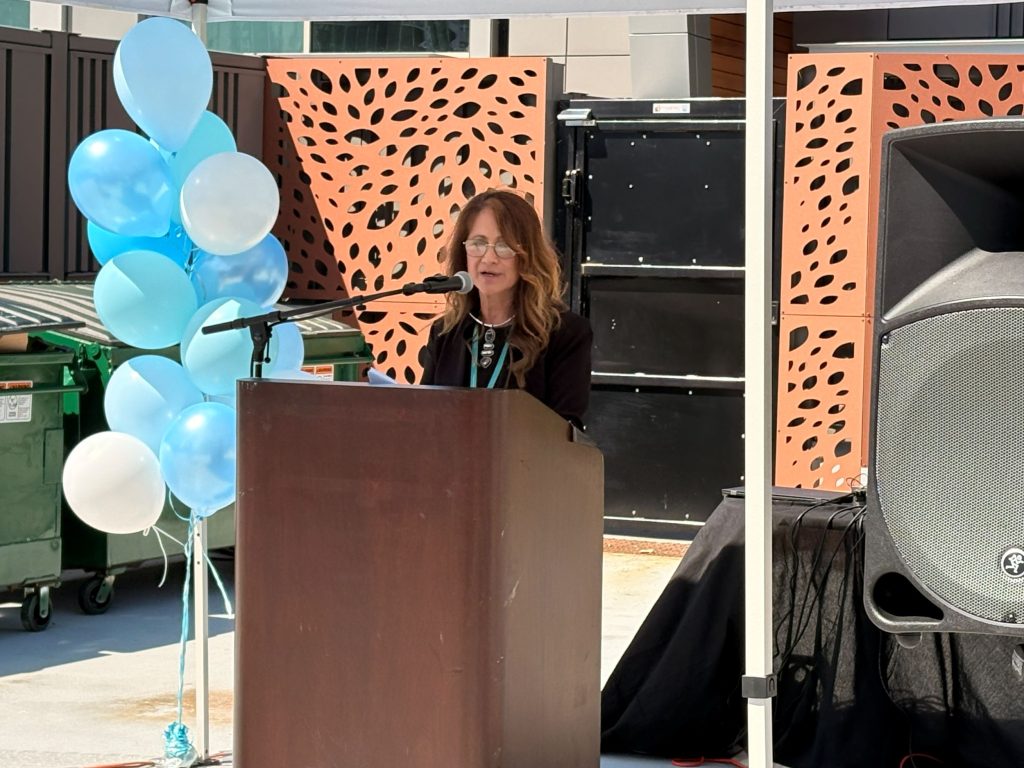 Sea Mar Senior Vice President and Chief Behavioral Health Officer Claudia D’Allegri. Photo: Kienan Briscoe, Lynnwood Times
Davis credited a group she called the “10 heroes in the community” — including former Lynnwood Mayor Nicola Smith, former Lynnwood Police Chief Jim Nelson, former Lynnwood City Councilwoman Shannon Sessions, County Councilman Jared Mead, Snohomish County Executive Dave Somers and others — whose efforts turned the idea into reality.
At Monday’s ribbon cutting ceremony, speakers shared deeply personal stories. Somers recalled losing his brother to a fentanyl overdose two years ago.
“Ever individual that comes through these doors has a story. They have value, they have talents, they have skills and they are worth every penny and every second we put into helping them through their trauma,” Somers said.
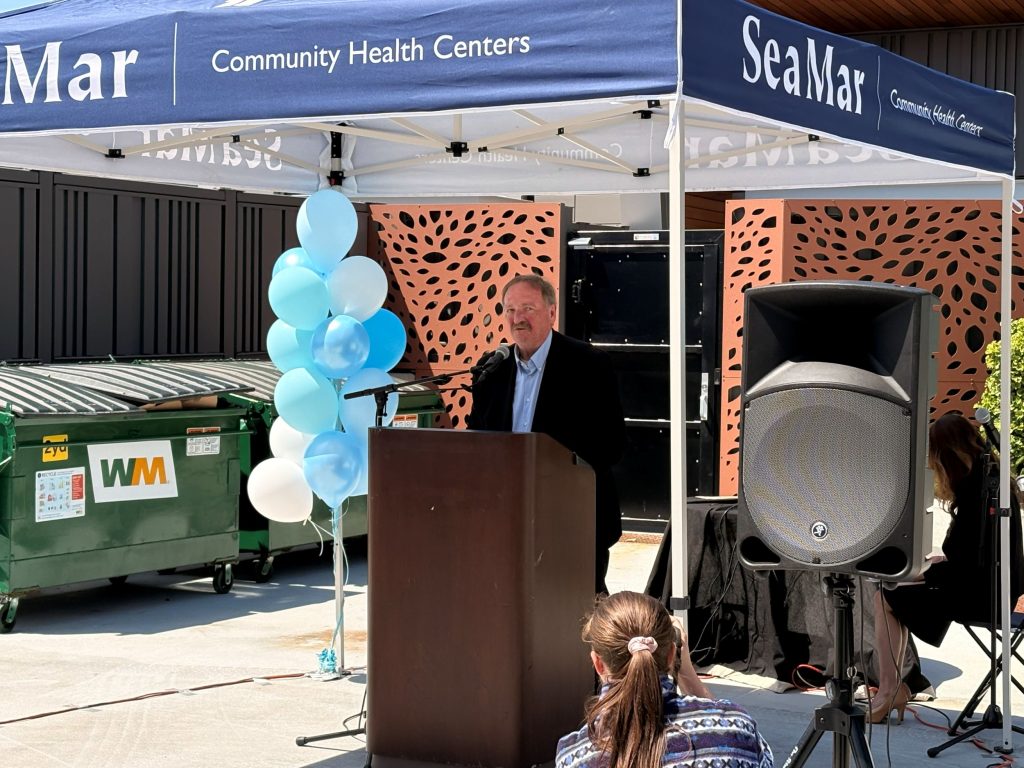 Snohomish County Executive Dave Somers. Photo: Kienan Briscoe, Lynnwood Times
Mead described his father’s lifelong battle with addiction, their brief reconnection after decades apart, and his father’s death alone in a homeless encampment.
“Because of this facility people will have that opportunity to make up for lost time, and those grandkids will have that opportunity to meet with their grandparents,” Mead said.
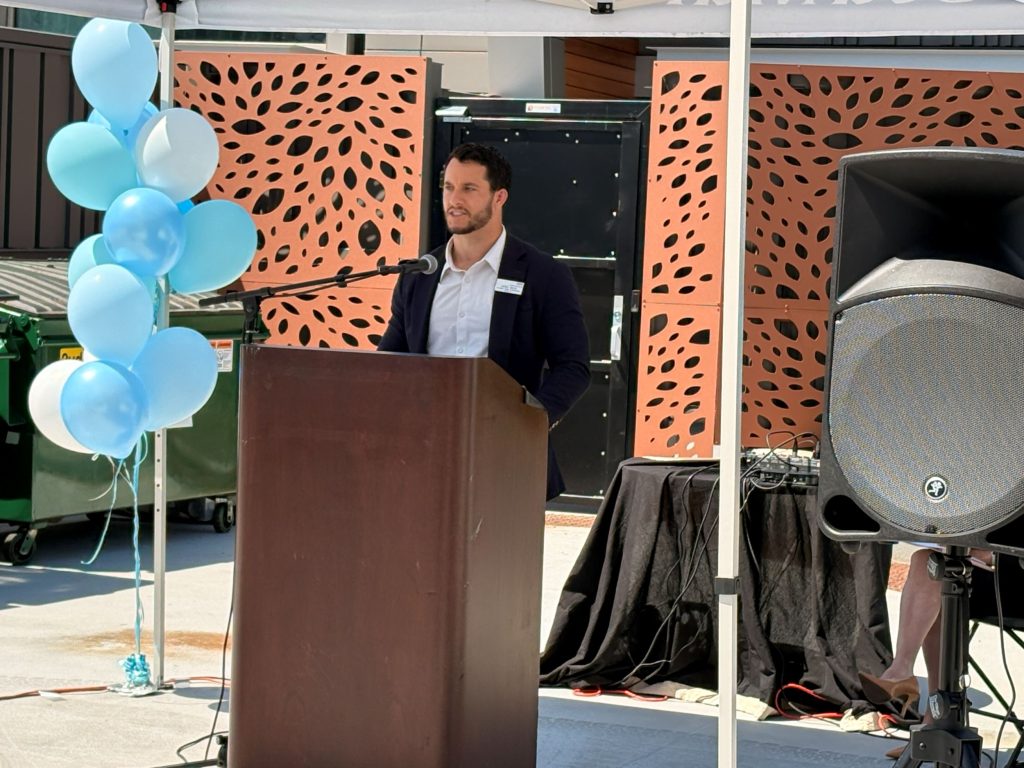 Snohomish County Councilman Jared Mead. Photo: Kienan Briscoe, Lynnwood Times
Mayor George Hurst remembered the raw emotion in council chambers the night after Tesfatsion’s death, when residents packed the room in anger.
“Out of the ashes of loss and righteous anger we have this community center now,” Hurst said. “I really see this as a sanctuary.”
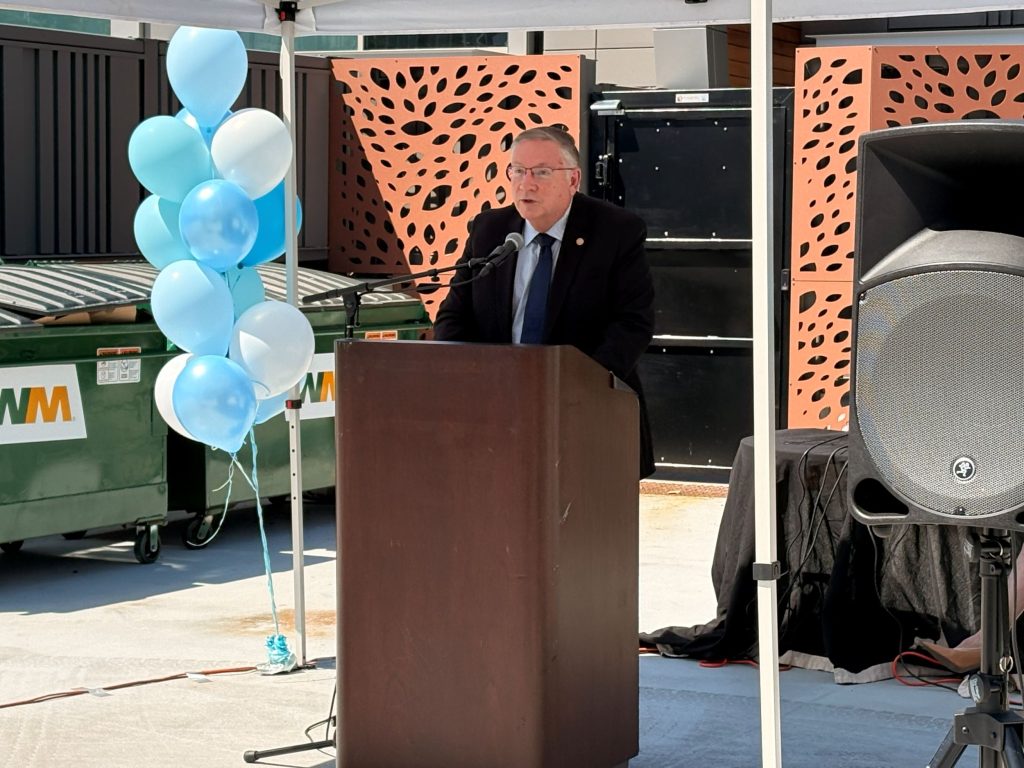 Lynnwood Mayor George Hurst. Photo: Kienan Briscoe, Lynnwood Times
The Lynnwood center fits into Washington’s larger push to expand crisis services. In 2023 the Legislature authorized licensing for 23-hour crisis relief centers, creating a voluntary, community-based option modeled after programs in Arizona and New York.
Similar facilities have proliferated in other states. Wisconsin opened five regional crisis stabilization centers in 2024. Virginia continues to expand its network with new receiving and stabilization units. Most recently, North Carolina Gov. Josh Stein signed an executive order in February directing state agencies to strengthen the behavioral health crisis system, improve coordination with law enforcement and expand stabilization services.
Nationally, President Trump’s July 2025 executive order on homelessness and public safety encouraged greater use of civil commitment and institutional treatment for people with serious mental illness or substance use disorders who cannot care for themselves, aiming to move individuals from streets or jails into appropriate care settings.
Critics, including the American Civil Liberties Union, argued the approach risks over-institutionalization, raises civil-liberties concerns and arrives alongside proposed federal cuts to behavioral health funding that could undermine community-based alternatives.
In Washington, providers have also warned that reimbursement rates — especially for uninsured patients — remain a challenge, contributing to delays in getting some centers fully operational after construction.
Still, for Lynnwood and the families who fought for it, Monday marked a quiet victory. As one speaker after another stepped to the podium, the message was the same: Every person who walks through these doors has a story, and now they have a place that offers hope instead of another cycle of crisis.
Also in attendance at Monday’s ribbon cutting ceremony was Representative and County Councilman Strom Peterson, Lynnwood Mayor George Hurst, Lynnwood City Council members Nick Coelho, Derica Escamilla, David Parshall, Chelsea Wright, and Isabel Mata, Senator Jesse Salomon, Snohomish County Prosecutor Jason Cummings, former Mayor Nicola Smith and former Lynnwood City Councilwoman Shannon Sessions.