
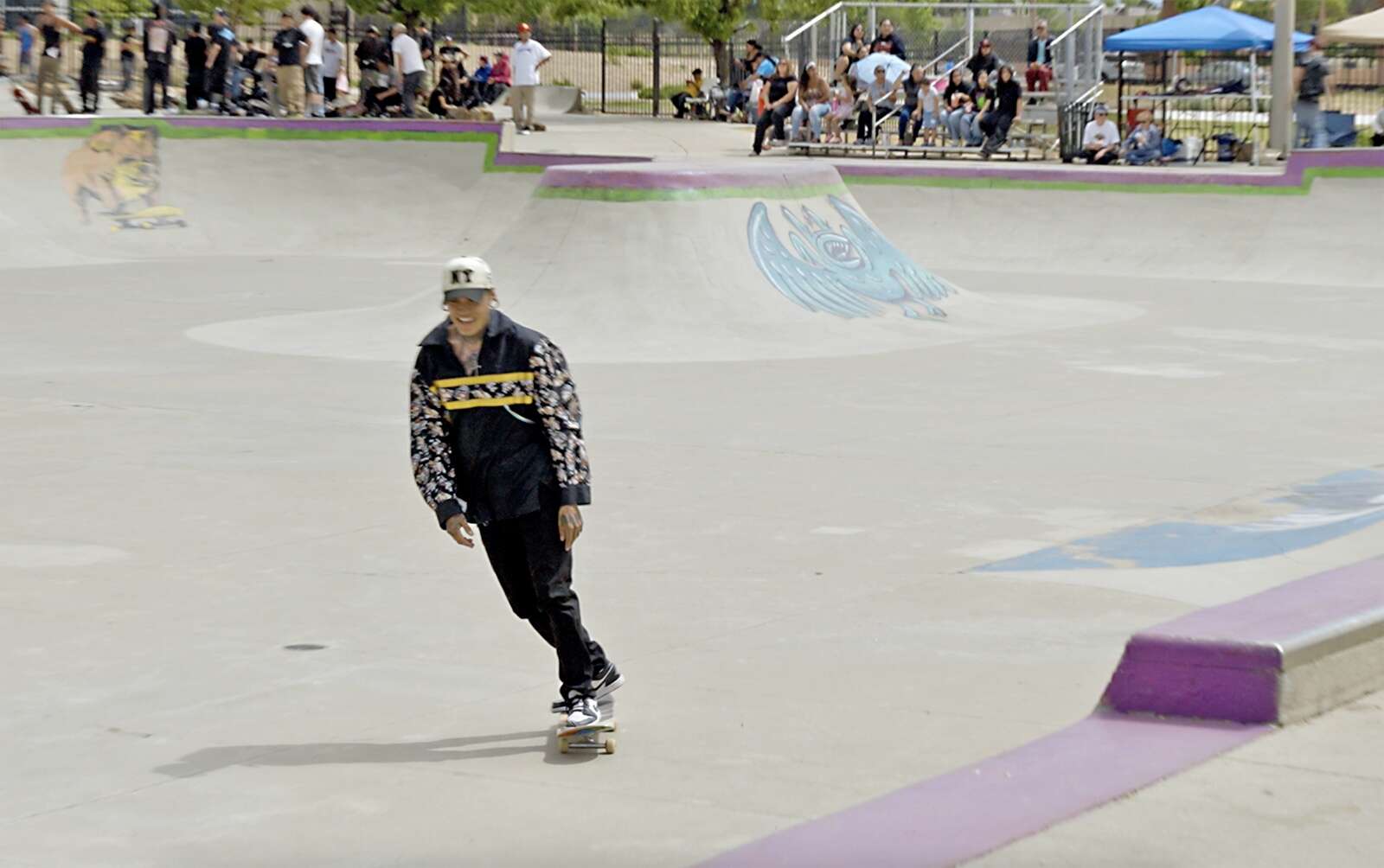
Cody Dutton (Comanche/Navajo) skates during a competition at Los Altos Skatepark in Albuquerque on April 25. Benjamin C. Yazza/New Mexico In Depth and NMPBS
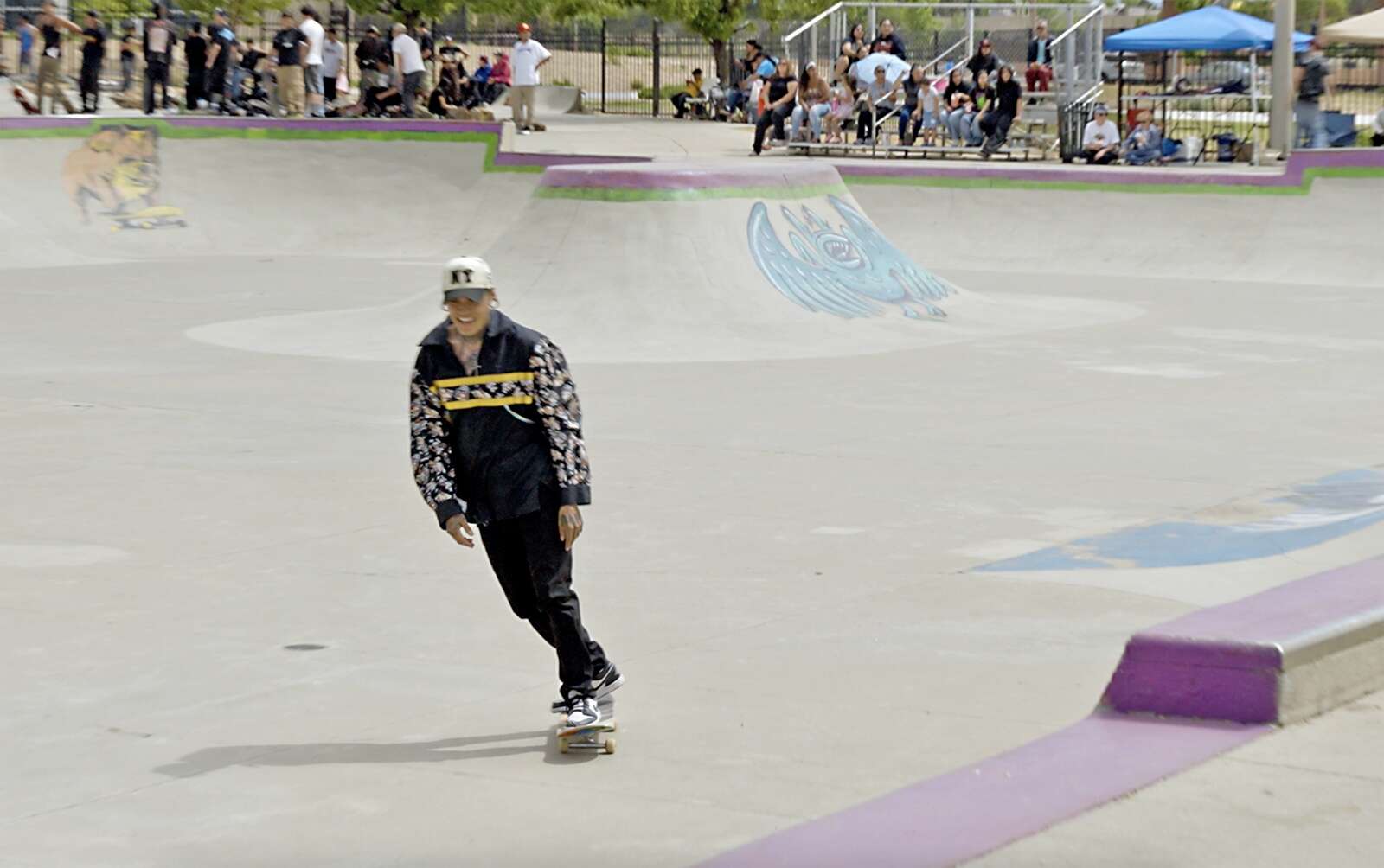
For many, skating is about practicing wellness and cultivating a strong community
The sound of metal music and the smell of hot dogs filled the air as skaters, from toddlers all the way to seniors, watched one another during the 18th annual All Nations Skate Jam at Albuquerque’s Los Altos Skatepark earlier this spring.
“One of the things that’s unique about skateboarding is that even though we’re in competition with each other, we also want to see our competition do better,” organizer Todd Harder (Creek) said.
For many of the attendees, skating is about practicing wellness and cultivating a strong community. Because it’s intergenerational, it’s also a way for traditional beliefs and teachings to be shared in a way youth are more receptive to, Harder said.
“The kids get to highlight their traditions,” he said. “Our traditions have evolved from way back in the day to now, and they’re going to evolve from here on up. And this is becoming a new tradition because they’re making it their own.”
Kristean Velasquez (Ute) and her partner Cody Dutton (Comanche/Navajo) traveled from the Southern Ute Indian Reservation in Colorado. It was their son’s first time competing at the event.
“It’s a different culture, skate culture and then traditional culture,” Velasquez said. She wore a ribbon skirt and Dutton wore a ribbon shirt. “And I love that we match … being cultural, but also being in other spaces, that’s something that we like to focus on.”
Velasquez and Dutton are local business owners, and the event was a good opportunity to make connections.
The skating community is new to her, Velasquez said, while Dutton grew up in it. It’s a supportive community, he said. To him, the board is like a pencil and how one person writes or skates can be completely different from the next person, but neither style is better than the other.
“We love this stuff … and it’s away from the bad world. I feel like especially for the youth, this brings a lot of happiness to their life,” Dutton said.
Skateboarding has a range of benefits for young people, including improving mental health, University of Southern California researchers found, based on more than 2,000 survey responses from people between the ages of 13 and 25.
That was true for Rose Archie (Tsq’escném’c), who traveled to New Mexico partly for the competition. Growing up in her First Nations community in British Columbia, she and her sister hitchhiked to get to skate parks that were hours away.
“Our community was going through lots of loss, and every time I grabbed my skateboard, I would feel that freedom,” Archie said in an interview a couple weeks after the event. “Skateboarding, I’ve always thought of it as an inclusive sport. It felt like no one cared about the color of anyone’s skin. … A lot of the best skaters are from broken homes, or they’re from the foster care system, or they’re just going through it.”
A few decades later, in 2019, Archie got an invitation to travel to a city in northeastern British Columbia to lead a community conversation about skateboarding and mental health. She went with a few friends and met Native kids who were struggling with the same issues stemming from colonialism and intergenerational trauma.
She knew it wasn’t going to be the last trip.
Sitting in her living room that same year trying to figure out how to keep doing the work, she and her friends came up with Nations Skate Youth. The organization hosts lessons and other educational events throughout North America and promotes the construction of new skate parks.
“There’s going to be a lot of good kids finding themselves through skateboarding, and that’s really important, allowing our youth to grow up to feel comfortable in their own skin,” Archie said.
This story was originally published by New Mexico In Depth and is republished here with permission.
Copy article link