
WATSONVILLE — Watsonville community members welcomed a new state-of-the-art center for behavioral health and substance use treatment Friday.
A ribbon-cutting celebration marked the grand opening of the Sí Se Puede Behavioral Health Center, a substance use disorder and mental health outpatient and residential treatment facility run by Encompass Community Services, a project 10 years in the making.
The center is expected to serve over 900 community members a year with its 30-bed male residential treatment campus and mental health and substance use disorder outpatient center for adults of all genders.
“Before you are two buildings: A 30-bed residential treatment center, thoughtfully designed to support healing and recovery, and a new outpatient treatment center, allowing us to serve both adults and transition-age youth with flexible, accessible care,” Kim Morrison, Encompass chief executive officer, said at the unveiling event.
Encompass had been working on the project since 2016, according to Morrison, and broke ground on construction in June 2024.
The site, at 161 Miles Lane, was previously the location of a 24-bed residential treatment facility also named Sí Se Puede run by Encompass Community Services. The previous Sí Se Puede campus was demolished in 2024 and residents were relocated to another site in Watsonville.
Monica Martinez, District 5 Santa Cruz County supervisor and former Encompass CEO, said that though the previous building and program was beloved, it did not reflect the quality of the services offered.
“I saw a building that had really outlived its lifespan, to be frank, we’d walk up to the front and there was this massive crack along the front facade and I thought, ‘Oh my gosh, please do not collapse when I walk in that building,’” Martinez said. “If I had to think where I would want to send my father, my uncle, my son to receive the highest quality treatment, I don’t think that building reflected the type of dignity that our community deserved.”
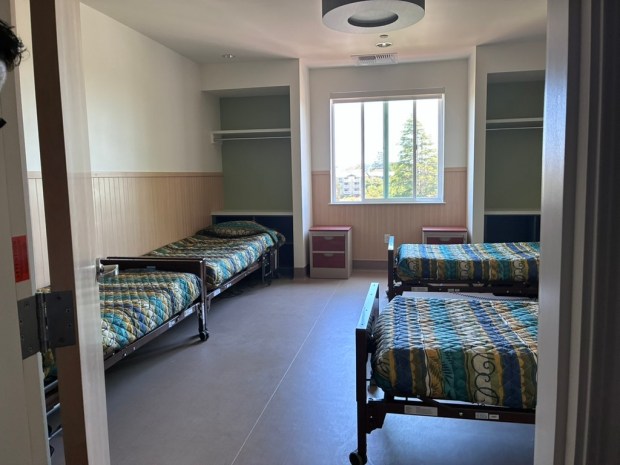 A residential unit inside the Sí Se Puede Behavioral Health Center in Watsonville. The unit houses four clients and is a part of a larger building with a community center, commercial-grade kitchen and in-house medical services. (Gabrielle Gillette — Santa Cruz Sentinel)
Over 21,000 adults and adolescents cope with a substance use disorder each year, according to the Sí Se Puede center’s website, and 133 people died of a fentanyl overdose in 2023.
“This is where people will make the difficult but brave decision to begin their recovery journey, to find hope, restore their health and work hard to thrive again,” Morrison said. “Our beloved Sí Se Puede program, aptly named ‘yes I can‘ in Spanish, now has a facility worthy of its longstanding reputation.”
The Sí Se Puede program has operated in Watsonville since 1981, and is one of the only bilingual and monolingual treatment programs in the country, according to Encompass’s website.
In addition to mental health and substance use counseling and intervention, the Sí Se Puede program has been involved in the community through providing volunteers at local events and connecting with local students to hear clients’ life stories as well as teach about living healthy lifestyles, said Jorge Gutierrez, Encompass program manager.
Clients have the opportunity to learn job skills through partnerships with the city of Watsonville on recycling and graffiti clean up programs, vocational training and community support.
“Just imagine how many people have passed through Sí Se Puede, how many families have been saved and also the community that have been receiving our services,” Gutierrez said.
Getting the program off the ground was a battle, as Martinez described being rejected for grants, having a short initial donor list and the rising cost of supplies and inflation.
Sí Se Puede eventually received $18 million of its $19 million fundraising goal through private donors, funding grants from the state and funding from local legislators like Rep. Zoe Lofgren.
To participate in the program, clients must be over the age of 18, have active Santa Cruz County Medi-Cal insurance and have a substance use disorder diagnosis from a clinician.
“There are going to be thousands of people whose lives don’t feel promising, who show up here and have a very big different future,” Lofgren said. “We can stand up and have a better future, and this program is part of that.”