
After struggling with a history of mental illness, including schizophrenia and bipolar disorder, a 44-year-old woman was admitted to Albany Care psychiatric facility in Evanston in 2023 for her own health and safety.
However, in October of that year, the woman was left alone and unsupervised when a man who also lived at the facility entered her room and raped her, according to a lawsuit filed last year in Cook County on the woman’s behalf, charging negligence by Albany Care. The woman was taken to a hospital where, the suit stated, testing confirmed that she had been sexually assaulted. The suspect was charged with home invasion and aggravated criminal sexual assault.
While the allegations are horrific, the incident was far from isolated. It was among 657 calls to 911 involving Albany Care residents from 2020 to May of 2025, according to the city of Evanston. Those included reports of a man with a gun, three drug overdoses, 56 disorderly conducts, 11 batteries, 13 trespasses and five robberies. There was also a stabbing of one resident by a former resident, and the deaths of at least five residents in the past four years.
Now, the Illinois Department of Public Health has revoked the license of Albany Care, home to about 170 people with mental health and substance abuse issues. The facility remains operating while managers appeal the citation, saying they are doing all they can to prevent and manage such incidents for a challenging population.
Albany Care officials say they have followed all health and safety requirements, and have helped many residents dealing with both mental illness and substance abuse. And several residents praised the facility as a refuge. They expressed fears about losing their home, and wondered where they would go.
“I’ve loved it here, and I don’t want to move,” resident Aliya Ferguson said.
 Aliya Ferguson, left, and Maurice Marks, both residents at Albany Care, speak about the positive experience they’ve had living in the facility on June 5, 2026, in Evanston. (Stacey Wescott/Chicago Tribune)
The facility is testing the hospitality of Evanston, whose residents pride themselves on being welcoming to people with disabilities, since the problems have spilled into the surrounding neighborhood. Almost 1,500 people signed a petition calling for an investigation of the facility, and a ban on new residents pending the results.
The city has gone so far as to sue the facility as a public nuisance, claiming its hundreds of calls for first responders are a drain on city services, and calling it “a horror.”
Complicating the issue, the seven-story building is next to a residential neighborhood. Some neighbors say they have had enough of break-ins, trespassing, verbal assaults, violence, and alcohol and illegal drug use in Grey Park across the street.
“I worked with hospitals for 20 years, and I’ve never seen anything like it,” said neighbor and attorney Joan Lebow. “They admit people who are dangerous to other residents and the staff. It is an unsafe, dangerous place.”
The controversy raises broader concerns about facilities like Albany Care that provide homes and treatment for adults with serious mental illness.
The facilities are supposed to provide intensive support to help patients become independent, though some residents of Albany Care stay there for years or decades.
The challenge such facilities face is to treat serious conditions like schizophrenia and addiction, and provide oversight to keep residents and neighbors safe, all while residents are free to come and go and largely do as they wish.
A history of violations
Resident Mark Williams, 44, came to Albany Care a year ago from transitional housing facilities in Kankakee. He attends counseling programs there, works with support groups from the National Alliance on Mental Illness, and keeps his room clean, with clothes neatly folded and his documents carefully cataloged.
“I appreciate this place,” he said. “I’d hate to see them close. I’d have no place to go but the shelter. This is the definitely one of the safest places to be in Evanston.”
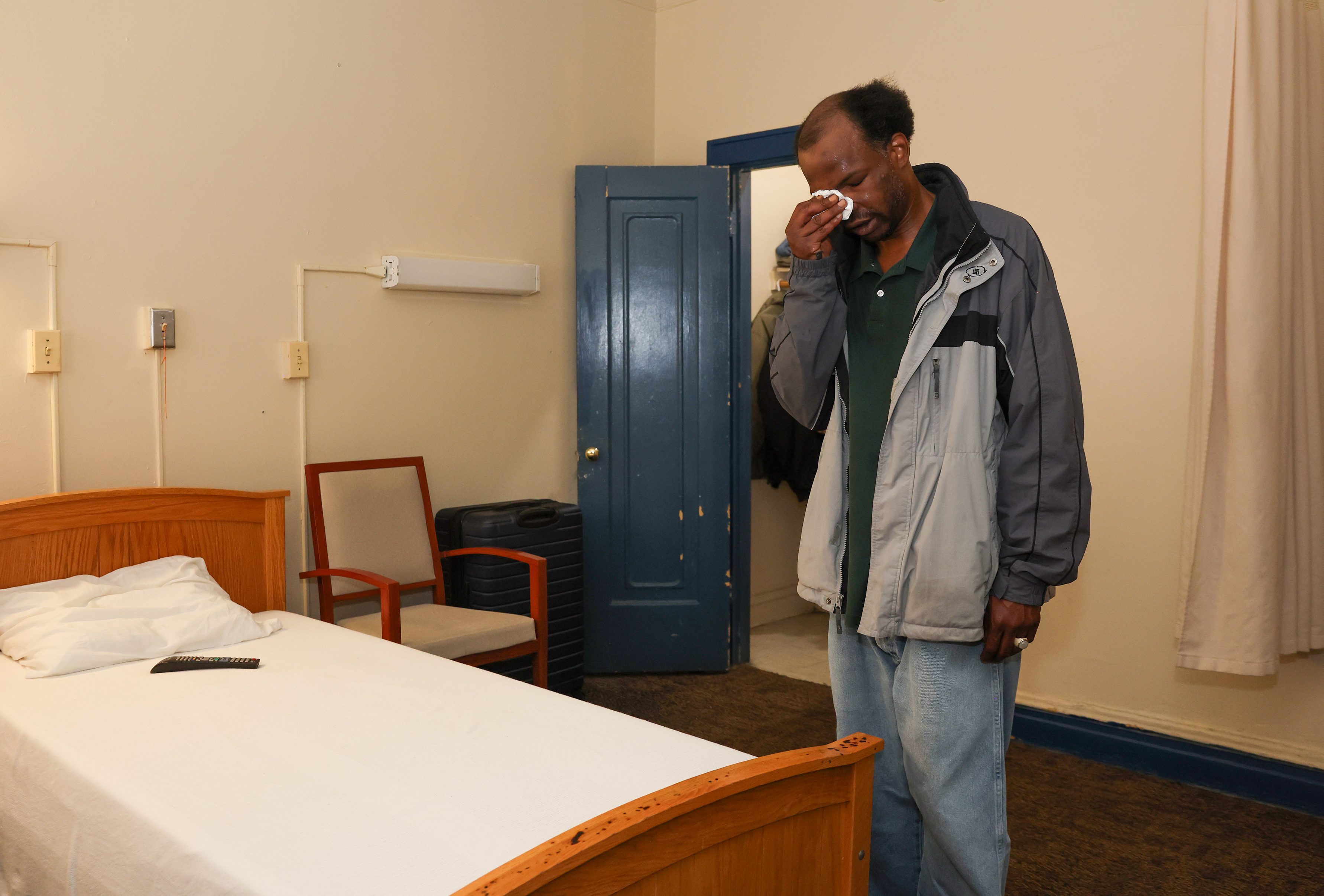
Mark Williams wipes sweat from his face as he stands in his room and speaks about his experience at Albany Care on June 5, 2026, in Evanston. (Stacey Wescott/Chicago Tribune)
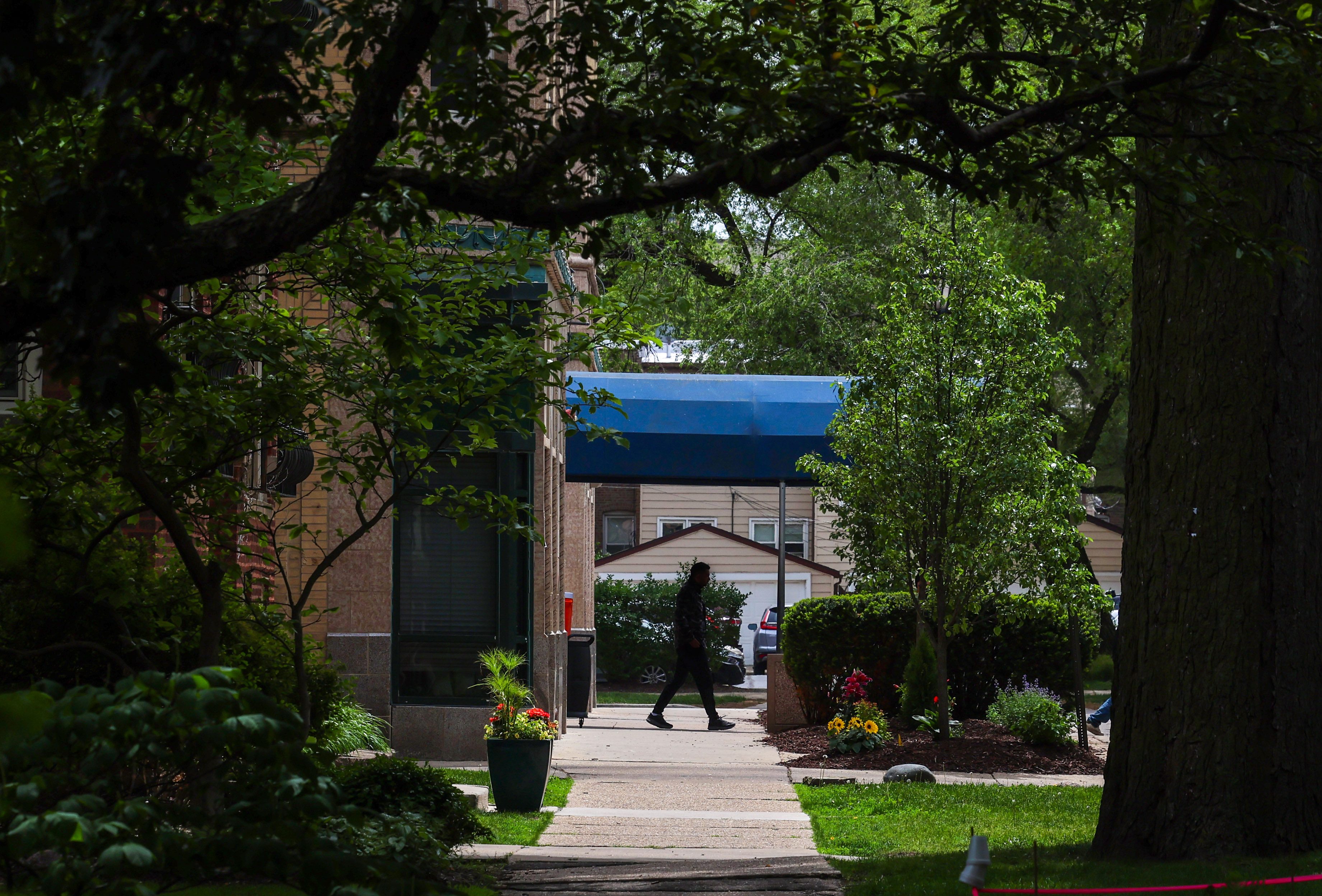
A person walks out of Albany Care along the 900 block of Maple Avenue on May 26, 2026, in Evanston. (Stacey Wescott/Chicago Tribune)

Shayne Schumacher, executive director of Albany Care, right, hugs a resident who gets upset about the prospect of Albany Care closing down and having to move, June 5, 2026. (Stacey Wescott/Chicago Tribune)
Show Caption
1 of 3
Mark Williams wipes sweat from his face as he stands in his room and speaks about his experience at Albany Care on June 5, 2026, in Evanston. (Stacey Wescott/Chicago Tribune)
Though Albany Care previously filled most of its 417 beds, the current population is down to about 170. But over the past several years, the state has issued repeated citations for violations that in effect put the facility on probation and prohibited it from taking in new residents.
The most recent filing cited the death of a 72-year-old man who had an elevated pulse, and was told to sit and wait to check it again, but by 20 minutes later, he walked outside, collapsed and died. State officials said Albany Care failed to notify a doctor and provide adequate treatment.
In court documents, Albany Care replied, “The facility did everything possible in regard to (the resident). Nothing the facility did or failed to do caused him to expire.”
In its suit filed last year, Evanston officials charged that they had met with Albany Care repeatedly, but received no concrete plans to address what they said had become a public nuisance. They charged that the facility failed to provide adequate care and protection to both residents and neighbors, resulting in fights, thefts, robberies, trespassing, verbal assaults involving profanity and slurs, and alcohol and illegal drug use, with no repercussions in the facility.
Albany Care appears to admit residents who are still using drugs or alcohol “little to no” screening, and staffing is at the lowest possible level, with one security guard for the entire building, city officials alleged.
“Albany Care runs a poorly managed facility that creates a public nuisance and does nothing to abate it — so long as it can continue to collect its Medicaid payments,” the suit stated.
Management consulting for the facility is provided by S.I.R. Management in Lincolnwood, co-founded by Eric Rothner, Bryan Barrish and Michael Giannini. In 2002, the latter two paid a $2 million settlement for nursing home-related fraud and money laundering.
The suit also noted multiple arrests for drug sales to Albany Care residents, and seizures of narcotics, guns and vehicles. If the nuisances continue at Albany Care, the city is seeking a court order to shut the facility down, separate from the state action.
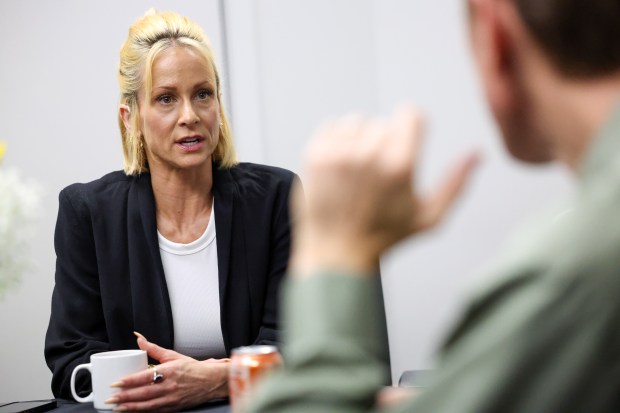 Shayne Schumacher, executive director of Albany Care, left, speaks about the services offered at Albany Care on June 5, 2026, in Evanston. “Every day, we succeed in helping people move forward from their addictions and behavioral health struggles. But we do so against a raging sea of adversity and disinvestment,” she said. (Stacey Wescott/Chicago Tribune)
In response to questions from the Tribune, Albany Care Executive Director Shayne Schumacher issued a statement that Albany Care is heavily regulated, with frequent inspections. Health and safety are paramount, with 911 calls mandated for emergencies.
“The population that we serve at Albany Care suffers some of the most difficult diagnoses, often with long-term behavioral health conditions that were left untreated for years before joining our community,” Schumacher stated. “Many of our consumers have turned to unhealthy forms of self-treatment. Mental health professionals across the state recognize that these are some of the most difficult people to treat. That is why many healthcare providers simply refuse to treat people with these complicated cases.”
Illinois’ historically abysmal Medicaid reimbursement rates, funding cuts to psychiatric leadership grants, and the increased need for services with fewer mental health facilities have made the job even tougher, Schumacher said.
“Instead of whittling down the care available to our most vulnerable populations through putative actions, Illinois should fully fund Medicaid and provide funding for the treatment that this population so desperately needs and deserves,” Schumacher stated.
“Every day, we succeed in helping people move forward from their addictions and behavioral health struggles. But we do so against a raging sea of adversity and disinvestment. Imagine the strides we could take with proper funding and investment into people and programs, not just in Evanston, but across Illinois.”
SMHRFs
Specialized mental health rehabilitation facilities, or SMHRFs (pronounced smurfs), like Albany Care, were authorized in 2013 to transition from Institutions for Mental Disease to focus on rehabilitation and recovery.
The goals of such homes are to improve daily life skills and independence, help integrate residents into community settings, and prevent long-term institutionalization. Twenty such facilities in Illinois are home to about 2,500 residents.
Melissa Kula, a spokeswoman for the Illinois Department of Healthcare and Family Services, told the Tribune that the agency is contacting residents to tell them what other facilities are available, including community-based settings with services to support them.
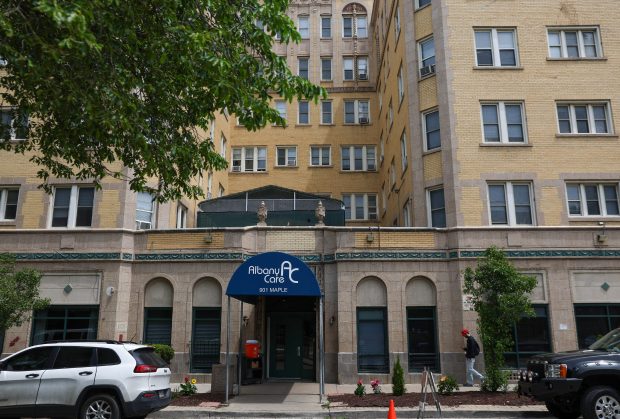 A person walks past Albany Care along the 900 block of Maple Avenue on May 26, 2026, in Evanston. (Stacey Wescott/Chicago Tribune)
If Albany Care closes, the agency supports alternative placement, such as community options, another SMHRF, or other options, left to the resident’s choice.
Asked if the state law needs any improvement, Illinois Department of Public Health (IDPH) spokesman Matthew Mata wrote in an email to the Tribune, that the agency will continue to protect residents’ access to safe, reliable health care. “IDPH is committed to working with our legislative partners to ensure continuity of care and advocate for new practices as needed,” he wrote.
He noted that all SMHRFs in Illinois are regulated under a consent decree, a court order meant to guarantee mental healthcare residents access to the least restrictive housing they want and can handle.
Treatment, not trauma
On a tour of the facility given to a Tribune reporter and photographer, the building appeared to be old but clean, with staff and residents exchanging greetings in the hallways, and residents gathering to watch television in the day room.
The building has a full-time counselor who holds group and individual therapy sessions about three or four times a day, plus a dining hall, and an upstairs smoking patio.
Residents live in pairs in plainly furnished but spacious rooms. They are issued medications and attend activities like talent shows, arts and crafts, and magic shows.
Some hope that the facility could return to the standards it had in the past. Albany Care had operated for years as part of the neighborhood without a problem, City Council member Jonathan Nieuwsma said.
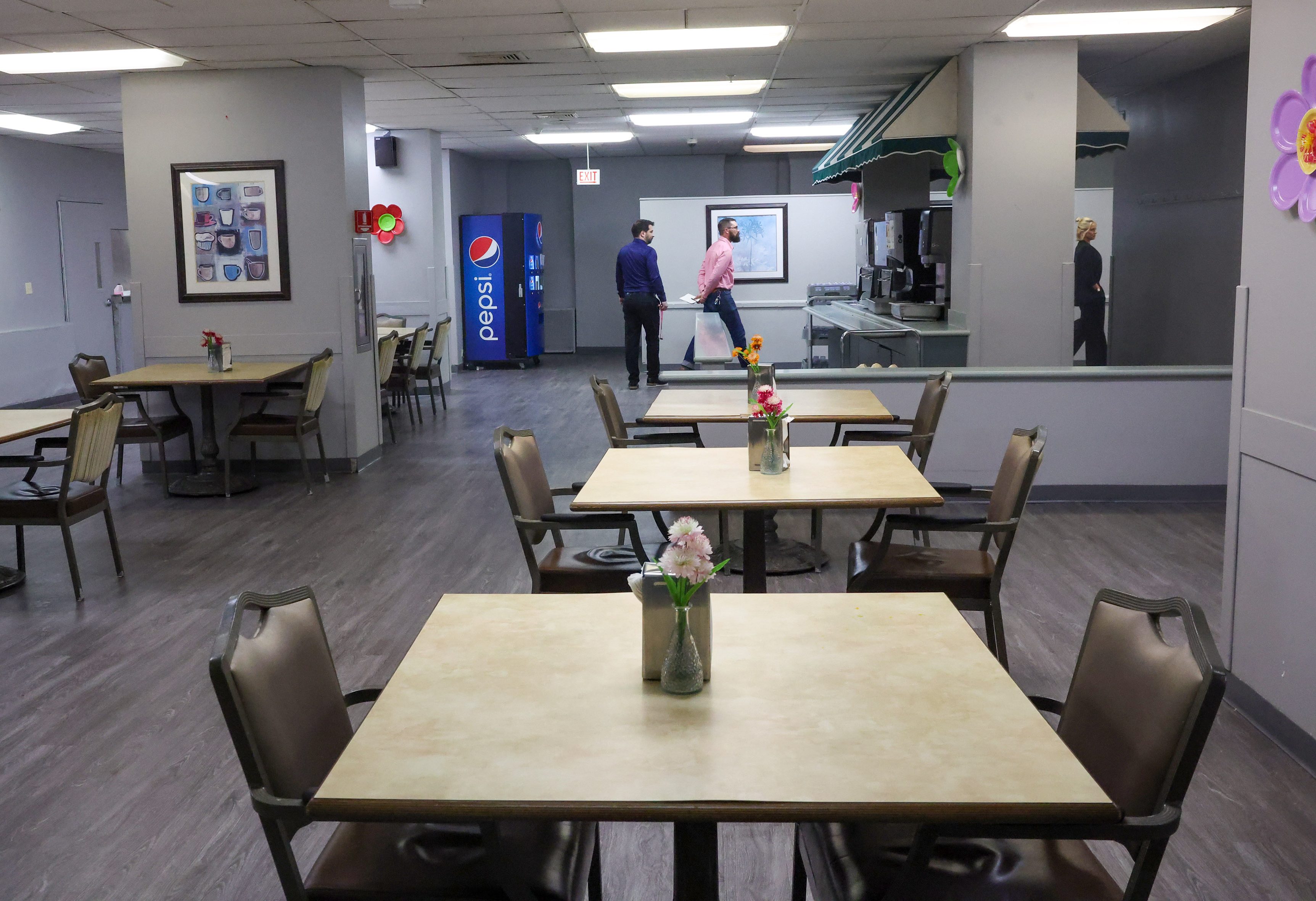
The cafeteria at Albany Care on June 5, 2026, in Evanston. Albany Care is a former hotel that now houses people with mental illness.(Stacey Wescott/Chicago Tribune)
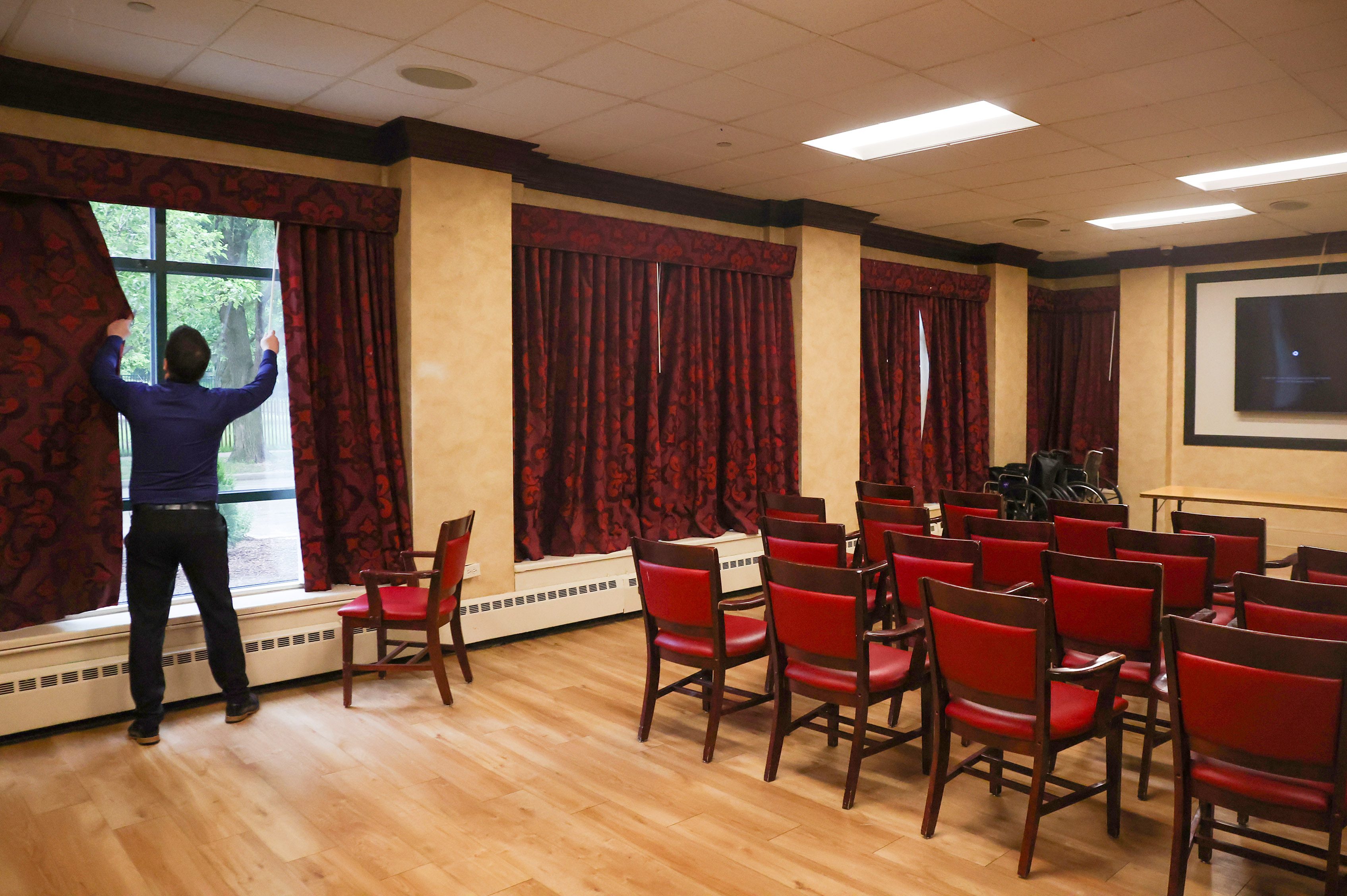
Patrick Ballke closes the curtains in the small theater at Albany Care on June 5, 2026, in Evanston. (Stacey Wescott/Chicago Tribune)
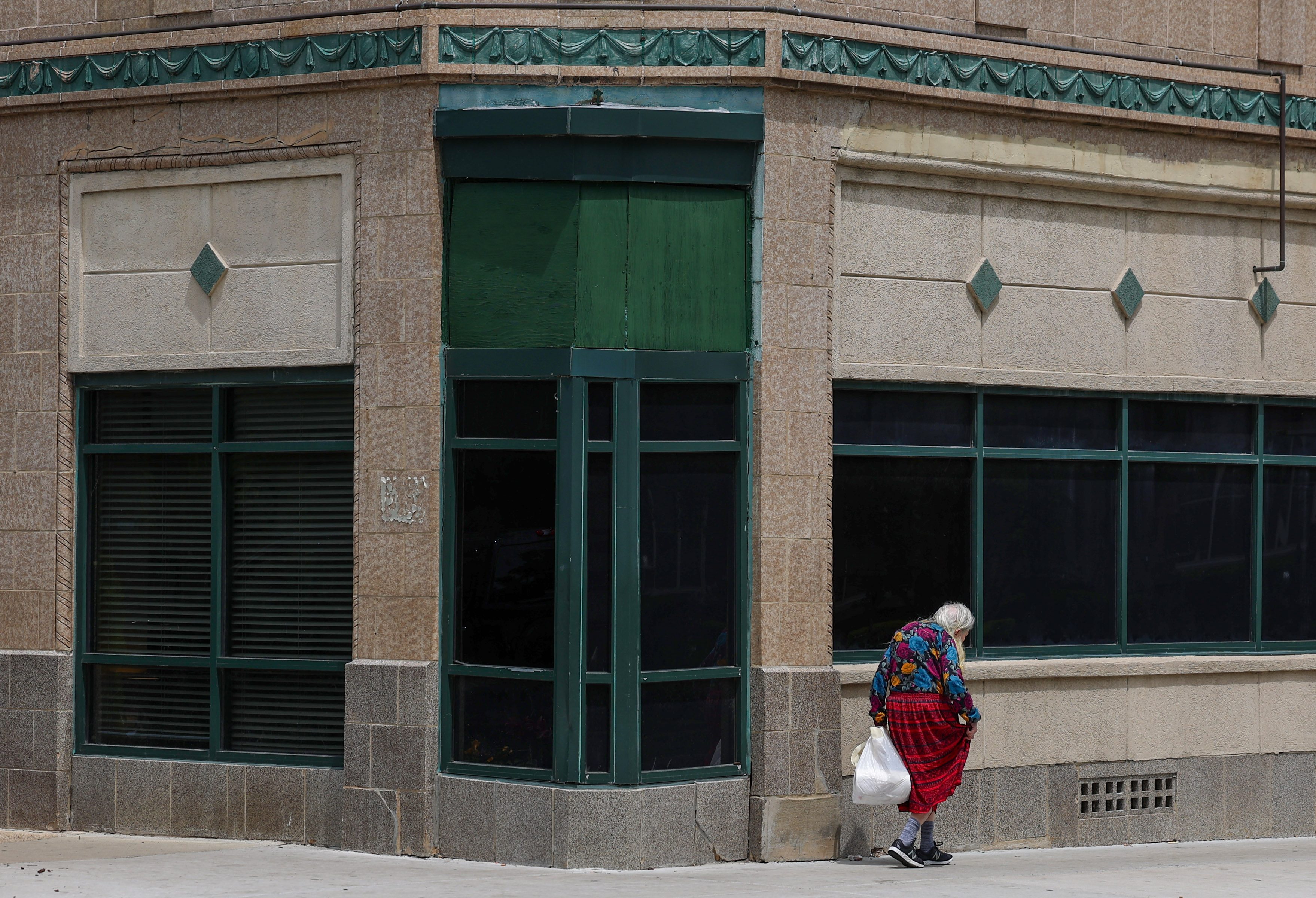
A person walks past Albany Care along the 900 block of Maple Avenue on May 26, 2026, in Evanston. (Stacey Wescott/Chicago Tribune)
Show Caption
1 of 3
The cafeteria at Albany Care on June 5, 2026, in Evanston. Albany Care is a former hotel that now houses people with mental illness.(Stacey Wescott/Chicago Tribune)
But around the time the COVID pandemic hit, and skilled-care facilities suffered a loss of workers, 911 calls for service increased dramatically.
Nieuwsma, Mayor Daniel Biss, and State Rep. Robyn Gabel tried to get the administrators to tighten oversight of residents, but said they were told behavior outside the facility was not their responsibility.
“Without adequate treatment, we’re just hosting a drug market in our neighborhood,” Nieuwsma said. “I would like to see adequate treatment there, so folks get the help they need, so the drug market goes away. Then we can go back to where we were for years, with the facility accepted as part of the neighborhood, in a town with good-hearted people who understand the need for treatment, as long as it’s well-run.”
If the facility closes, Nieuwsma is confident that the residents would be able to find room at other facilities that could provide good care, but says the root causes are broader.
“The fundamental root cause is a national healthcare system that’s relegated mental healthcare to a for-profit system,” Nieuwsma said. “They’re in it to make a buck putting head in beds while meeting minimal requirements that are woefully inadequate.”