
The Substance Abuse Engagement Center operated by the Macomb County Community Mental Health has widened its eligibility to include those who have used substances within the past week or are at risk of relapse.
The Center, located in Sterling Heights, previously required its patrons to have used substances within the past 48 hours, county CMH officials said in a news release. The expanded eligibility puts Engagement Center staffers in a better position to provide care to more people.
“The need for support doesn’t always fit within a narrow timeframe,” said Nicole Gabriel, county CMH Director of Substance Use Services. “This update reflects a more flexible, person-centered approach, allowing us to step in sooner and meet people where they are in their recovery journey.”
The center, which opened last October in partnership with CARE of Southeastern Michigan, provides around-the-clock “peer-led, short-term crisis intervention in a safe and welcoming environment” for those experiencing a substance-abuse and mental-health crisis, often when police are called.
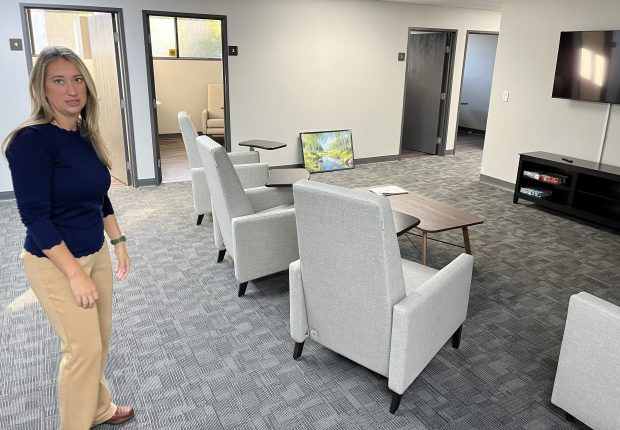 Nicole Gabriel, director of the Macomb County Office of Substance Abuse, in the living room of the county Community Mental Health Engagement Center around the time it opened last October.
MACOMB DAILY PHOTO
Individuals can stabilize, meet basic needs such as meals and showers, and connect with treatment providers and community resources that support long-term recovery, officials said.
The 12-percent-capacity center, located at 38300 Van Dyke Ave., Suite 101, near 16-½ Mile Road, has served more than 70 individuals, with 65% of them linked to treatment after visiting the facility.
It is funded through a combination of state grants, local funding and opioid settlement funds.
Susan Styf, president and CEO for CARE of Southeastern Michigan, expressed support for the expansion, noting it “reinforces our joint commitment in responding to the behavioral health needs of our community members
Individuals seeking services must first contact the CMH’s 24/7 Crisis Line for screening and referral at 586-307-9100.