
CALIFORNIA – Just 50 miles from downtown Los Angeles, a critical junction where two of California‘s most powerful fault systems meet has been quietly accumulating stress levels matching 1,000-year highs, new research suggests.
It’s been over 100 years since the San Andreas and San Jacinto faults produced a major earthquake, and in peacetime, tectonic stress has grown to significant heights along key parts of the systems, raising concern of a dangerous earthquake that could be catastrophic for one of the most densely populated areas in the U.s.
One Of The Most Dangerous Fault Lines In The Us Is Overdue And The Impacts Could Be Catastrophic
As stress increases along these Southern California fault lines, so too does the likelihood of a dangerous earthquake, with a new study putting the concerning spotlight on one area: Cajon Pass.
Cajon Pass lies at the critical point where the Mojave South and North San Bernardino segments of the San Andreas Fault, and the San Jacinto Bernardino segment of the San Jacinto Fault meet. Together, they form a critical fault junction northeast of Los Angeles.
Using computer simulations of the last 1,000 years of rupture history, the study published this month in the Journal of Geophysical Research found estimations on how stress builds up in these critical fault segments and impacts surrounding areas over time.
Eye Of The Season: The Most Notable Atlantic Hurricanes During El Niño Years
The model estimated stress levels of 2.8 on the Mojave South segment, 1.8 on the North San Bernardino segment and 3.6 on the San Jacinto Bernardino segment, making the San Jacinto segment the most heavily loaded portion of the Cajon Pass fault junction.
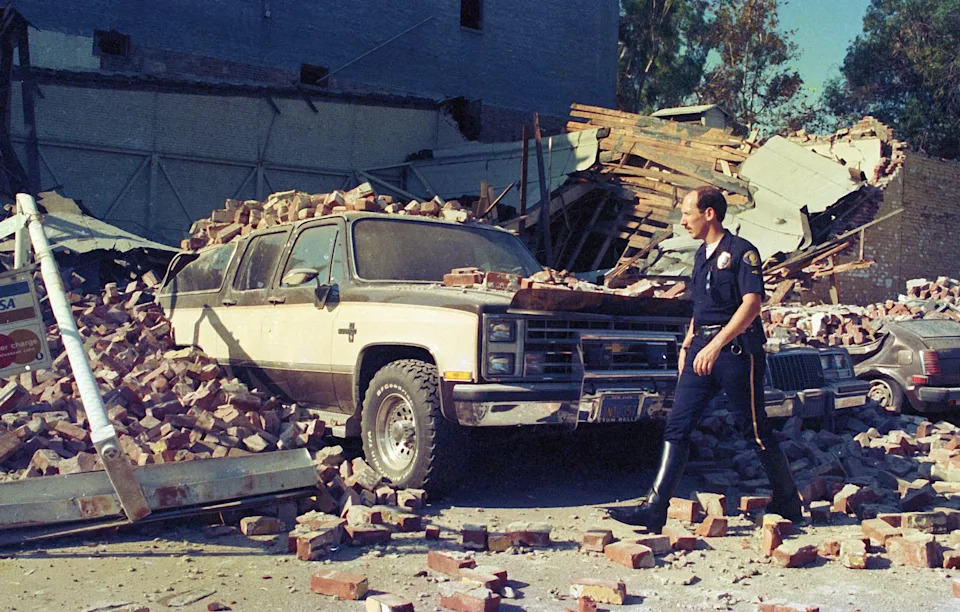
Pasadena police officers inspect damage following an October 1987 earthquake in Southern California. New research suggests stress continues to build along key segments of the San Andreas and San Jacinto fault systems, which have produced at least 36 earthquakes of magnitude 6.4 or greater over the past 1,000 years.
(Getty Images)
The study found that stress has reached high levels across the densely populated region and that the two faulty systems may interact when their stress levels become equal, suggesting concerning results that the Cajon Pass could act as an “earthquake gate” that significantly impacts tectonic activity on nearby systems.
To Study California’s Largest Active Volcano, Scientists First Have To Climb It
The “earthquake gate” serves as a critical junction that can influence how earthquake ruptures spread, sometimes halting a rupture at Cajon Pass and other times allowing it to jump between the San Andreas and San Jacinto fault systems – a massively important feat considering the proximity to Los Angeles.
In the event that an earthquake spreads to a different fault line beyond Cajon Pass, the rupture could spread to additional fault segments that would threaten the creation of a longer, larger and more complex earthquake.

The Los Angeles skyline rises beyond one of the nation’s most seismically active regions. Scientists say understanding the behavior of fault systems near Cajon Pass is critical because the area serves millions of residents and supports major transportation, energy and commerce corridors across Southern California.
Researchers say Cajon Pass could play a pivotal role in determining whether a future earthquake stays confined to a single fault or cascades across multiple connected fault systems, increasing the potential size and reach of the event.
Researchers found that several segments near Cajon Pass are carrying some of the highest stress levels reconstructed from the past 1,000 years.
Can Concerts And Sporting Events Cause Earthquakes?
Years of relative tranquility along the threatening fault lines has raised concerns that the next slip in the region home to millions could be devastating.
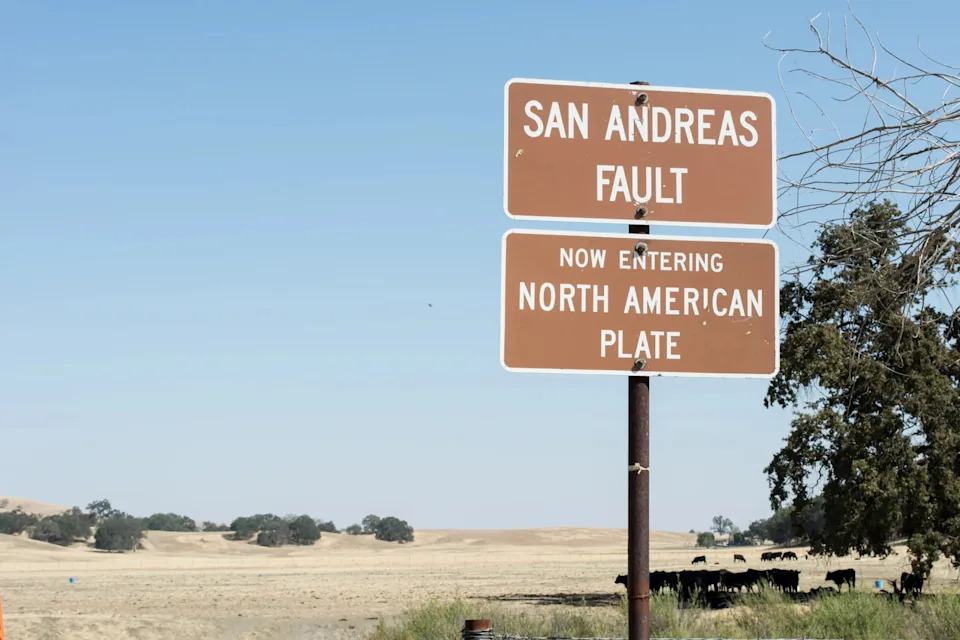
Parkfield, CA, September 9 ,2016: Cattle grazing on the faultline of the San Andreas Fault in Parkfield, California. Parkfield, CA calls itself the earthquake capital of the world where the faultline between the Pacific plate and the North American plate is prominently marked.
According to the study, in the last 1,000 years, the San Andreas Fault and the San Jacinto Faul have hosted at least 36 earthquakes of magnitude 6.4 or larger and accommodate approximately 90% of the North American‐Pacific plate slip rate in Southern California.
While the study does not predict when the next major earthquake will strike, it highlights the dangerous reality: stress continues to build across one of the most complex and consequential fault junctions in North America.
Original article source: One of America’s most dangerous fault lines reaches highest stress levels in 1,000 years, study finds