
The nation’s fight against drug addiction will pivot away from harm reduction, while incorporating more faith-based programs
HHS Secretary Robert F. Kennedy Jr. chose a southeastern Michigan mental health provider Wednesday to make the announcement
He blamed the Biden administration for shifting the focus away from faith and announced millions of dollars to boost local drug fighting efforts.
CLINTON TOWNSHIP — The nation’s fight against substance use addiction is getting an infusion of federal funds as well as a shift in priorities — away from harm reduction and toward more options that offer faith and spirituality.
Harm reduction efforts, including needle exchange programs, is one of four pillars of Michigan’s drug fighting efforts, but US Health and Human Services Secretary Robert F. Kennedy Jr., blamed the approach for what he said has been “a proliferation of open-air drug markets around the country.”
“Ignoring addiction doesn’t work. Harm reduction doesn’t work,” said Kennedy in announcing a new White House initiative called Streets. “Accepting open-air drug use doesn’t work.
“Allowing people with serious mental illnesses to cycle endlessly between streets and emergency rooms and shelters and jails does not work.”
Rather, recovery must be driven by accountability and it must offer services founded in faith and spirituality. Kennedy said Wednesday, in announcing funding for several programs that will boost the Trump administration’s Great American Recovery Initiative.
They include:
$96 million for the new Safety Through Recovery, Engagement, and Evidence-based Treatment and Support, or STREETS program. STREETS will fund eight communities up to $3 million a year for four years to “develop multisector, state-of-the-art care systems” for people who are homeless with substance use disorders and serious mental illness.
$223.1 million for Certified Community-based Behavioral Health Clinics, or CCBHCs, to build out mental health and substance use disorder services.
$238.6 million for the federal 988 & Suicide Crisis Lifeline to boost capacity for phone calls, chats and texts and to improve services for its users.
$80 million for substance use prevention, treatment, and recovery programs in specific focus areas, including efforts in rural communities.
More than $70 million for additional mental health services and supports.
Kennedy chose as the backdrop for his announcement the office of Easterseals MORC, a certified community behavioral health center which offers mental health and substance use disorder counseling to residents of Oakland and Macomb counties.
Harm reduction in Michigan
The federal shift away from harm reduction is a move in the opposite direction from Michigan’s approach.
The Whitmer administration has established four focus areas as it decides how to spend millions in opioid settlement dollars: prevention, harm reduction, treatment and recovery. Many of the funds have been spent on harm reduction, including naloxone kits, better known as Narcan, that reverse overdoses and drug test strips that allow users to detect additives such as fentanyl.
Those expenditures have been credited, at least in part, with the drop in drug deaths to the lowest in a decade.
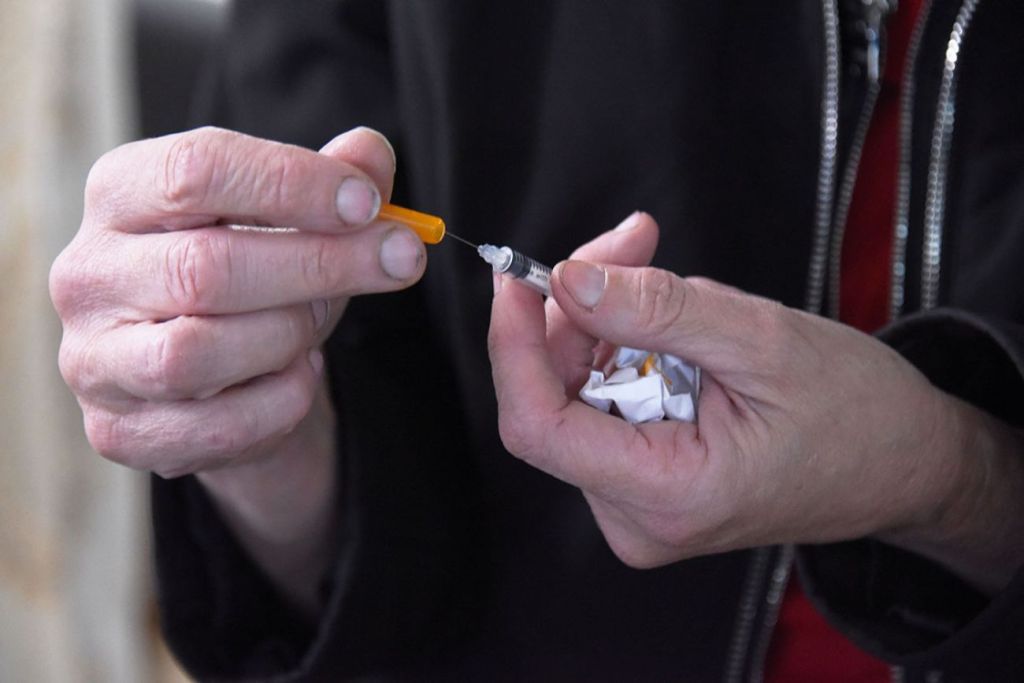
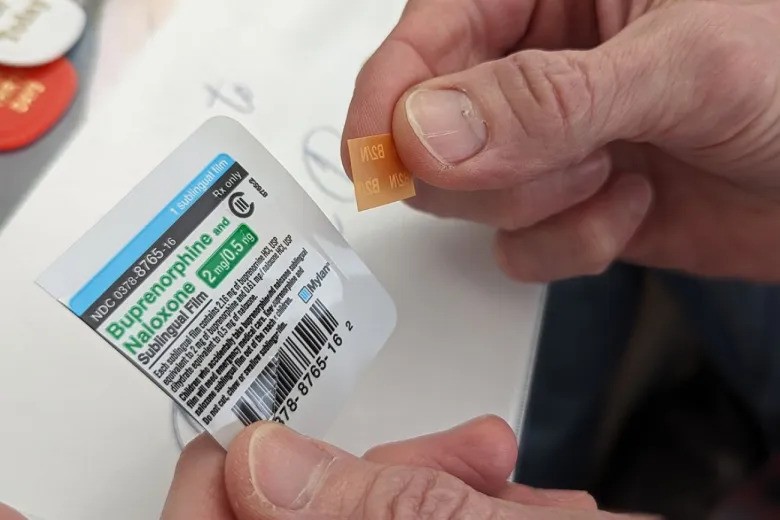
Drug testing strips, clean needles and the overdose-reversal drug, naloxone, are some of the staples of harm reduction in Michigan’s drug fight. Methadone and buprenorphine, which curb cravings and withdrawal symptoms, also are considered harm reduction. (Bridge file photos)
Kennedy said federal funds for methadone and buprenorphine, which the American Addiction Centers considers key in harm reduction, will remain in place. The drugs are used to reduce cravings and withdrawal symptoms.
Buprenorphine is commonly known as Sub/oxone, which is a combination of buprenorphine and naloxone.
“Methadone and Suboxone are part of the president’s recovery initiative,” Kennedy said. “Harm reduction like safe injection sites and needle exchanges probably will not be getting federal money.”
RELATED:
He did not address Michigan’s efforts, but he noted that states are sharing $50 billion dollars in opioid settlement funds paid by opioid manufacturers, distributors and others to settle lawsuits against them.
The HHS initiatives, he said, “can help guide the state(s) in making good decisions about where to invest.”
Moreover, non-faith based programs will continue, but the Trump administration’s efforts will more heavily support programs that incorporate faith and spirituality in recovery.
One 2019 review, published in the peer-reviewed Journal of Religion and Health, found the “vast majority” of the nation’s treatment and recovery programs incorporate some sense of spirituality or a higher power, and the Substance Abuse and Mental Health Services Administration funds faith-based treatment and recovery services.
Still, Kennedy said people with addiction need more options.
Joining Kennedy was Kathryn Burgum, co-chair of the White House’s Great American Recovery Initiative. Burgum, who said she formerly was a “blackout drinker” who “struggled for 20 years” has credited her faith for her recovery.
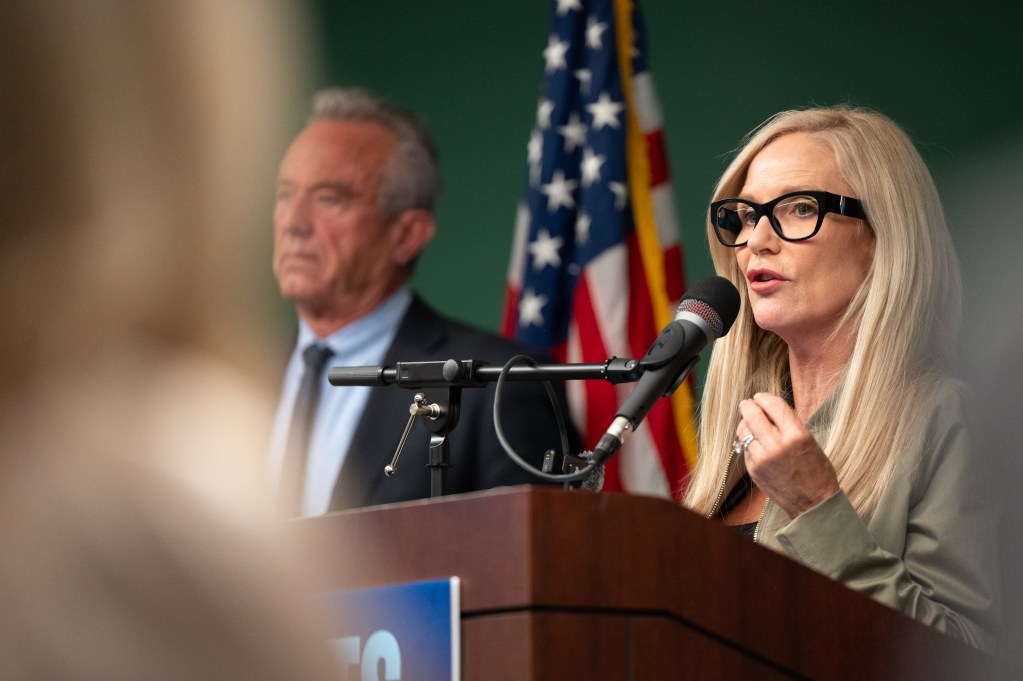 Kathryn Burgum, co-chair of White House Great American Recovery Initiative and senior adviser for addiction recovery, credits God for her recovery. She helped announce the nation’s shift in drug recovery efforts Wednesday in Clinton Township. (Ella Miller/Bridge Michigan)
In addition to more faith-based services, Burgum called for more peer support.
The political backdrop
The Health Secretary has been making rounds in House districts where voters could swing the midterms, according to the news site Politico. On Tuesday, he appeared alongside US Rep. Tom Barrett and members of the Michigan Farm Bureau to discuss the importance of Michigan’s agricultural industry and Kennedy’s food-as-medicine approach to health.
Kennedy’s stops in two of Michigan’s most competitive Republican-controlled congressional districts come as Republicans fight to keep full majority control in Congress.
Soaring gas prices and President Donald Trump’s low approval ratings on key issues like the economy and the Iran War could give Democrats a boost in the 2026 midterms, and Barrett’s Lansing-based tossup district in particular could play a decisive role in which party controls the US House for Trump’s final two years in office.
The Health and Human Services secretary also has stepped up efforts in recent months on his Make America Healthy Again agenda — an initiative that may resonate for some voters more so than his concerns about vaccines.
On Monday, he announced GetActive.gov, a government website that challenges Americans to be able to do 100 push-ups and 50 pull-ups in 10 minutes — or work toward it. The webpage also has resources to national parks and events that help Americans be active outdoors.
Bridge staff writer Lauren Gibbons contributed to this report.
This article first appeared on Bridge Michigan and is republished here under a Creative Commons Attribution-NoDerivatives 4.0 International License.