
A coronial inquest into the death of a 10-year-old girl has heard it is “extremely rare” for a person of her killer’s age to develop psychosis.
The NSW State Coroner Teresa O’Sullivan is examining the circumstances leading up to the death of Bridgette “Biddy” Porter in rural NSW in July 2020.
In 2021 the Supreme Court found her killer, referred to as “XR” during the inquest, not criminally responsible for mental health reasons. They were detained in a forensic health facility.
Forensic psychiatrist Olav Nielssen told the coroner that XR “had an early onset form of schizophrenia”, which he described as a “severe form of mental illness”.
If you or anyone you know needs help:Suicide Call Back Service on 1300 659 467Lifeline on 13 11 14Aboriginal & Torres Strait Islander crisis support line 13YARN on 13 92 76Kids Helpline on 1800 551 800Beyond Blue on 1300 224 636Headspace on 1800 650 890ReachOut at au.reachout.comMensLine Australia on 1300 789 978QLife 1800 184 527
Dr Nielssen, one of the final witnesses to give evidence, told the inquest he had not interviewed XR but based his diagnosis and findings on written reports, a police interview and assessments clinical experts conducted on XR.
Dr Nielssen said the condition presented as an abnormality in neurological function that affected thinking, emotional regulation, and caused central disturbances in auditory hallucinations and delusional beliefs.
Counsel assisting the coroner Peggy Dwyer SC asked the witness if it was “extremely rare” for a person of XR’s age, at the time of Biddy’s death, to develop psychosis.
“Yes, I don’t know of another case,” Dr Nielssen said.
He told the inquest that the “typical onset is later in adolescence”.
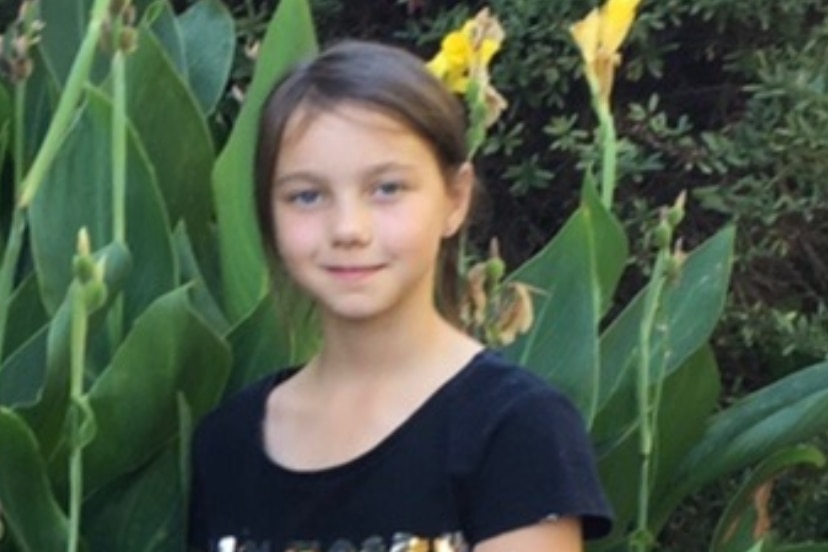
Biddy’s parents have campaigned for this coronial inquest to be held into her killing. (Supplied: Porter family)
Medical intervention
Dr Dwyer told the witness that two weeks before Biddy died her killer had said to their mother that they thought about killing people all the time, had thought about killing their parents, that they had killed six chickens and had seen cat’s eyes and heard voices.
The inquest heard that the mother had contacted a GP the day after XR made these comments.
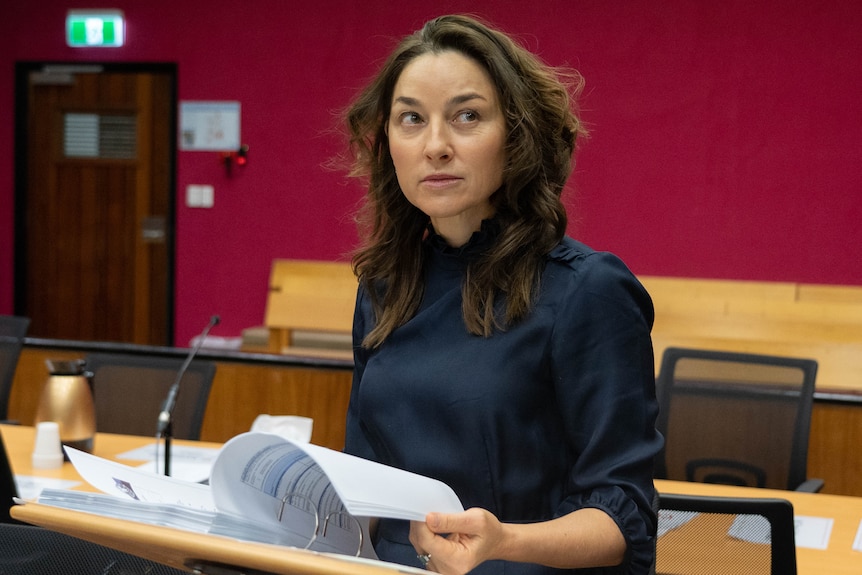
Peggy Dwyer said the inquest did not seek to stigmatise people with mental health conditions. (ABC News: Samantha Jonscher)
Dr Dwyer asked Dr Nielssen what advice he would give parents if they were in those circumstances. He said that they should seek “urgent medical attention”.
The witness was also asked what treatment XR was now receiving.
Dr Nielssen told the inquest that the person was given anti-psychotic medication and that they experienced “ongoing symptoms and behavioural problems over the next few years”.
He said “[they] had a very disturbed next few years” and that they had been put on a “last-resort medication for resistant schizophrenia”.
“The cause of the illness shows that it’s progressed to severe and chronic form,” Dr Nielssen said.
XR would have to be “medicated for the rest of [their] life”, he told the inquest.
Dr Nielssen agreed with Dr Dwyer’s suggestion that the inquest did not seek to “stigmatise” all people diagnosed with schizophrenia.
Under cross-examination, Dr Nielssen was asked about the actions of the GP who XR’s mother had contacted before the killing.
The witness said he believed the doctor’s triaging of XR, based on the information they had at the time, “was appropriate”.
Family statements
Members of Biddy’s family delivered oral and pre-recorded impact statements after witnesses had finished giving evidence.
A video statement by Biddy’s mother, Rebekah Keukenmeester, was played to the coroner.
In the pre-recorded video, she expressed her grief at having her daughter taken from her, and said that in the aftermath of Biddy’s death the trauma enveloped her, and she plunged into a “cavernous pit of darkness”.
Ms Keukenmeester said her daughter’s special gift was kindness and that she missed her giggles, her smile and “everything about her”.
She dreamt of becoming a journalist, and in a “tragic twist, journalists will write Biddy’s story”, the inquest heard.
“The guilt I carry as a mother is overwhelming,” Ms Keukenmeester said in her video statement.
She said she hoped the inquest would deliver justice for her daughter and that it would serve as a catalyst for change.
Biddy’s father delivered his statement surrounded by supporters.
He expressed the overwhelming grief and trauma he had experienced since she was killed.
“She should have finished primary school and now be facing the challenge of high school, she should have grown up, she should have had the chance to become whoever she was going to become,” Mr Porter said.
“We lost every version of her … we lost ordinary days, the milestones, the small moments that other families take for granted.
“Nothing can give me back the life I should have had with my daughter.”
He asked the court to consider recommendations that would prevent this type of tragedy happening again.
State Coroner Teresa O’Sullivan thanked Biddy’s families for their statements, saying, “Biddy’s story and her precious life will not be forgotten.”
The inquest has adjourned until November 26.