
When Blake Johnston’s dad died by suicide, it was one of the worst days of his life.
“He was always my hero. He was my best mate,” he says.
The loss left the former pro surfer feeling a huge mix of emotions, from guilt to anger.
But in the aftermath of the complex trauma of losing his father, Blake became, in his words, a better person.
He transformed his own life and habits, and developed a passion for helping others in an example of the psychological change known as “post-traumatic growth”.
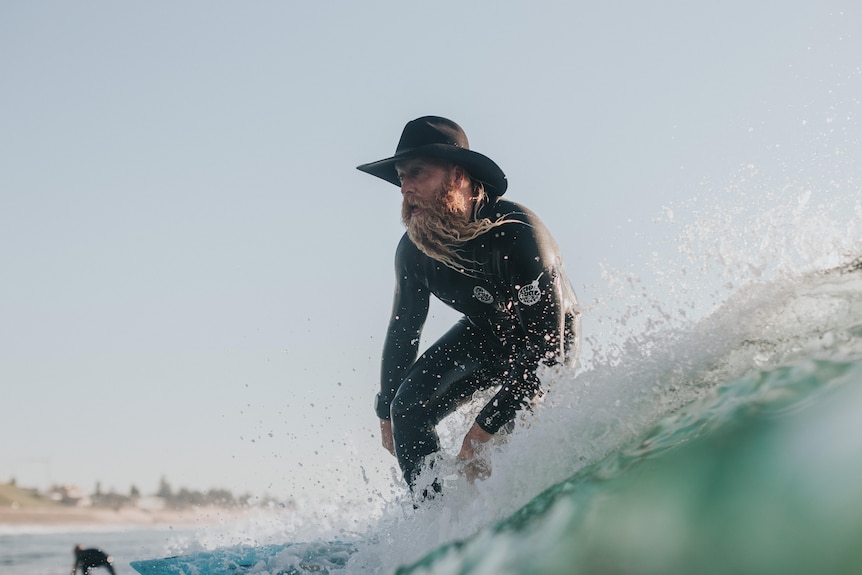
Surf coach Blake Johnston wants to change how we talk about mental health. (Supplied: Sam Venn)
The Cronulla surf coach is now dedicated to raising awareness for mental health through world record surfing challenges and advocacy work.
“The worst thing that’s ever happened to me is going to help make the world a better place too, just like my dad did,” Blake says on ABC Radio National’s All in the Mind.
What is post-traumatic growth?
The term post-traumatic growth has been around since the mid-1990s.
“[It’s a] psychological transformation that people go through as the result of the struggle with a traumatic event,” says Karl Andriessen, a mental health researcher at the University of Melbourne.
Loading…
Louise Harms — who researches adaptation to trauma, grief and loss at the University of Melbourne — says the term essentially recognises there may be positive transformations after a traumatic experience.
Those positive elements can act as an “anchor for many people’s recovery post-trauma”, Professor Harms says.
Early research on the topic focused on health traumas such as breast cancer but has since expanded.
If you or anyone you know needs help:Lifeline on 13 11 14Kids Helpline on 1800 551 800MensLine Australia on 1300 789 978Suicide Call Back Service on 1300 659 467Beyond Blue on 1300 224 636 or its COVID-19 support service 1800 512 348Headspace on 1800 650 890ReachOut at au.reachout.comCare Leavers Australasia Network (CLAN) on 1800 008 774Brother to Brother on 1800 435 799
Professor Harms’s work, for example, reflects on individual experiences like road trauma, as well as community trauma through bushfires.
While Dr Andriessen’s work includes experiences of post-traumatic growth following suicide bereavement.
It was this kind of trauma that Blake went through with the devastation of losing his dad.
But now, he’s able to recognise the positives the loss has inspired in his life.
“I’m not glad it happened, but I know it happened for me to become a better person,” Blake says.
Mental health struggles are part of the process
The factors that may lead to someone experiencing post-traumatic growth are unclear.
There isn’t one type of person who’s most likely to go through the transition.
But Professor Harms says there does seem to be a small correlation with post-traumatic stress disorder or feelings of extreme distress.
“So it seems to be that there has to be quite [a] significant degree of trauma disruption for trauma growth to occur,” she says.

For some people, grief may be accompanied by positive change. (Getty: J Studios)
This struggle with trauma might look like mental health challenges such as intense grief or suicidal behaviour, Dr Andriessen says.
Blake says the loss of his dad was incredibly difficult.
During this time Blake’s own mental health issues rose to the surface.
“I realised that checking the bank accounts seven times a day and obsessively thinking about not being good enough, lying in bed awake late at night and waking up in the morning and ruminating on things wasn’t good mental health”, he says.
How suicide bereavement differs from other kinds of grief
Grief following a loss by suicide is complicated.
Loading Instagram content
Dr Andriessen says the impact of a suicide loss usually has lifelong consequences.
People may experience anxiety, depression, sleep issues, difficulty eating, and more.
There’s also an elevated risk of suicide in people who are bereaved by this kind of loss.
Research has found that children of a parent who dies by suicide are three times as likely to later die by suicide themselves.
Blake says he didn’t feel like himself for five years following his dad’s death.
“A question I always ask myself is, ‘Why does it hurt so much with the bereavement of suicide?’
“I think it’s just the uncertainties of what you could have done, how you didn’t know, what didn’t you see.
“And I think that’s where the pain lies … you don’t have all the answers to it, and you never will.”
Grief doesn’t have to equal growth
Experiences of post-traumatic growth can vary.
“Some people find value in social relationships, for others they may go through a career change,” Dr Andriessen says.
It’s important to consider timing when talking about post-traumatic growth in order be sensitive towards the diversity of people’s experiences, Professor Louise Harms says. (Getty: oxygen)
He also says it’s hard to estimate how common post-traumatic growth is.
Some research suggests that between 20 to 50 per cent of people will experience this kind of growth following a traumatic event.
But not everyone will experience post-traumatic growth, and that’s OK.
“It doesn’t mean that there is something wrong with them,” Dr Andriessen says.
“It’s not essential for processing grief in a healthy way.”
Professor Harms says she doesn’t want people to feel pressure to go through post-traumatic growth.
“It’s never about minimising people’s real distress and the disruption of negative trauma,” she says.
And even if someone experiences post-traumatic growth, it doesn’t ease the pain they may feel, Professor Harms adds.
“For those people, their trauma may still just be as alive in their daily life as the growth.”
Turning pain into positivity
Blake has been able to channel both his grief and love of surfing into advocacy.
He says organising the world’s largest paddle out last year at Cronulla Beach was his way of giving back to his community.
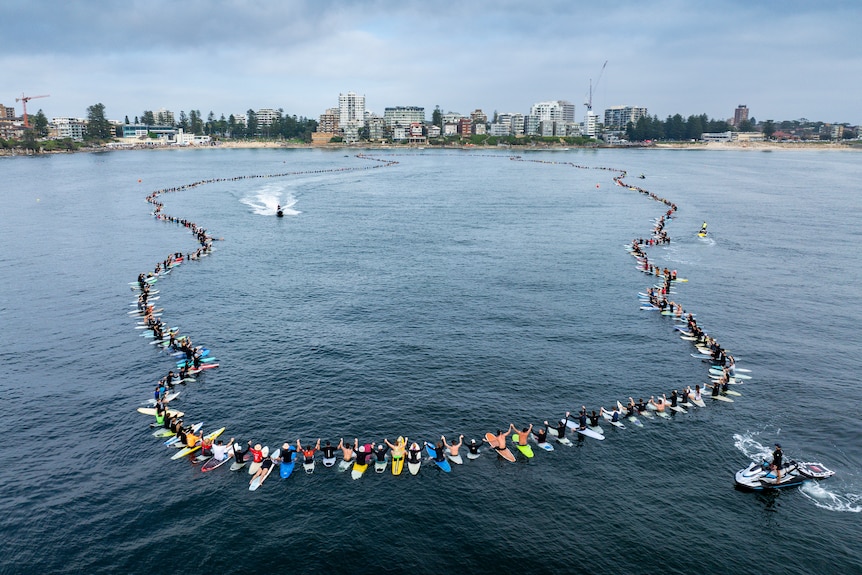
The world’s largest paddle out. (Supplied: Darian Woods)
“Traditionally, paddle out ceremonies in surfing are to celebrate the lives of people who have passed,” Blake says.
“This wasn’t about celebrating someone who had passed.
“This was about celebrating one another and the positive impact that human connection and community has on our mental health.”
More than 1,020 surfers participated in the event with additional support by a beach of spectators.
“Everyone was just grinning from ear to ear … it was an incredible moment.”
Hear more about post-traumatic growth on All In The Mind or subscribe to the podcast for more stories that explore the mind, mood and behaviour.