
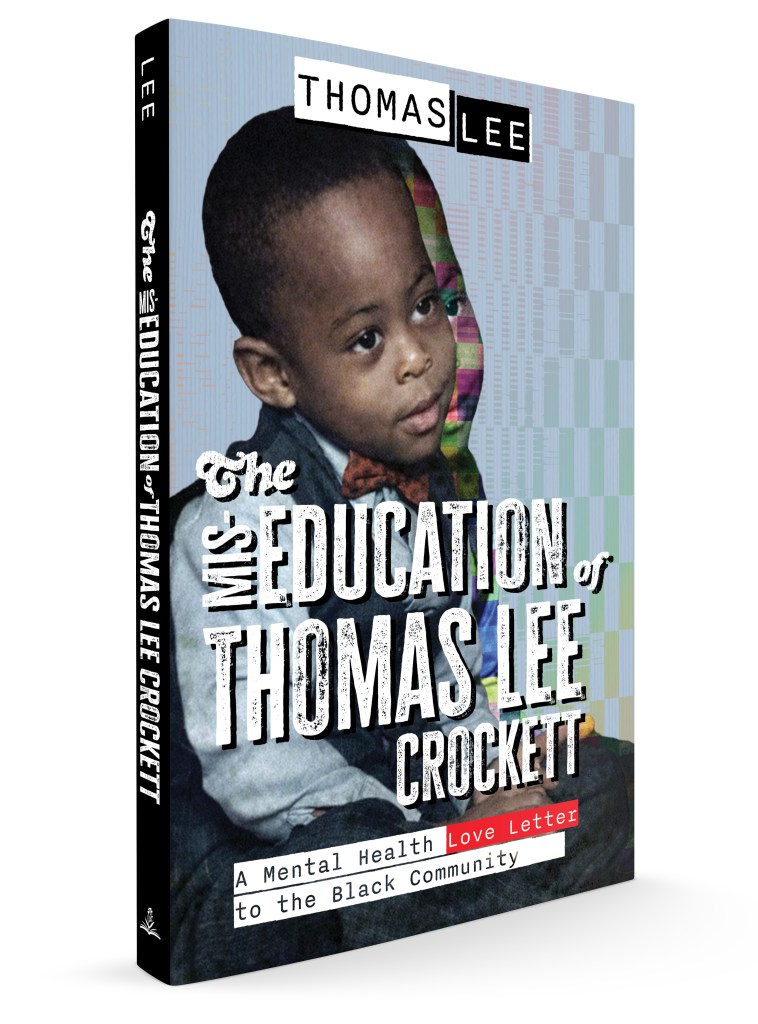
 Photo provided by Thomas Lee Crockett
Mixing the candid storytelling of George M. Johnson’s All Boys Aren’t Blue with the accessible and intersectional psychology of Dr. Rheeda Walker’s The Unapologetic Guide to Black Mental Health, licensed marriage and family therapist Thomas Lee says he is on a mission to fill a space on the shelf that’s still way too empty: mental health education for the Black community.
With his new upcoming book, The Miseducation of Thomas Lee Crockett: A mental health love letter to the black community, Lee says this is not some abstract psychology textbook written by an old white man a hundred years ago, but instead, this is therapy by, about, and for the Black community of today.
Each chapter, he says, blends mental health terms, cultural references, and lessons learned from Lee’s own life: growing up in Mississippi in a toxic family, losing his mother to a lengthy battle with cancer, working in spaces steeped in white supremacy, wrestling with homophobia and misogyny to be his authentic self, and eventually finding his place in all of it, as a mental health therapist determined to bring love, hope, and wellness to the Black community.
The Atlanta Voice spoke to Lee about his new memoir, the importance of therapy in the black community, advice for black LGBTQ+ people, and more.
The Atlanta Voice: What was the inspiration behind your new guidebook?
Thomas Lee Crockett: I started working on the book during the pandemic and I remember having this moment where I was in this little state of panic, because I felt like the world was in complete chaos. At that time, I was also providing therapy to clients that look like me and helping them unpack and process while still facing it myself. One night, while I was in my room, I was overwhelmed with everything that was going on, and I started thinking about my own legacy, which turned into this book.
AV: You refer the book as a love letter to the black community. Why do you think it was important to have this discussion revolved around the black community?
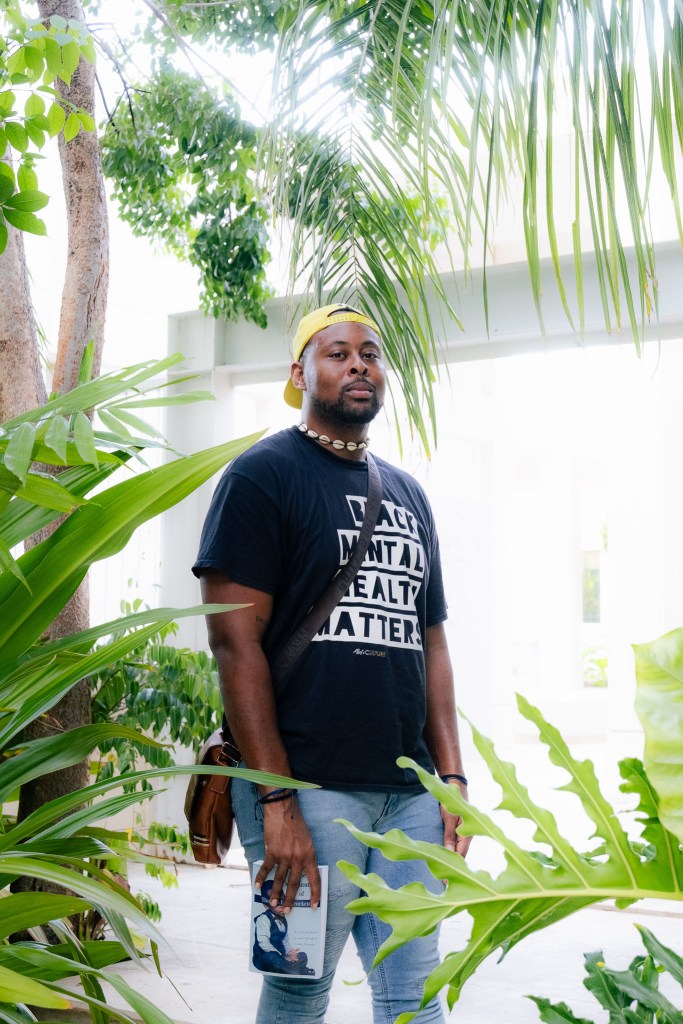 Photo provided by Thomas Lee Crcokett
TLC: As a member of the black community, I often do not feel loved by the world. I feel we’re not loved by the world, because it’s so easy for the world to extract from black culture, to commodify it, profit off of it, but yet show zero respect for the people, and for me, I wanted to give us love, because I feel there’s something we’re often not given far as love and respect. When it comes to mental health, this is something that we as black people have not had a lot of access to, and a lot of it has been due to financial resources, and then also the stigma that comes from going to see a health care professional.
AV: The book touches on your own story; did you find yourself healing from some of those traumatic experiences?
TLC: In the moment as I was writing these things out, it was cathartic in many ways, because it was like I was putting my pain onto the paper, and I was being vulnerable in a way that could help a lot of people. However, when I kind of looked back at what I wrote, I realized there were a lot of things I had to deal with because of situations I was born into, whether it be like the family, or being born into a black body, or being gay. The world is still not fully welcoming to black and gay.
AV: What do you want people to take away from your book?
TLC: I want people to see themselves in this because I did not know how pivotal mental health was at first. When I drafted this book, I wanted it to serve as a flashlight or a guide to give people tools to help them become aware a little bit earlier and start taking these steps earlier. I’m hoping this book can serve as a stepping stone and help people start their mental health journey, pointing them in the right direction, and I want people to know they aren’t alone.
AV: What was the importance of also highlighting mental health in the LGBTQ+ community?
TLC: It’s a very nuanced and unique experience. There are two things that is universal: the disdain for black people is universal no matter where you go, and then, depending upon which culture you go in, some people may be more accepting than other, but for most cultures, they have their own disdain for the queer population. There’s now an extra layer on top of being black to feel like they do not have to respect you. I also want to highlight my black trans brothers and sisters, because they have a whole other level they have to deal with. People don’t understand why it is that you are “transitioning” to this gender. My trans black brothers and sisters, but particularly my black trans sister, who are dying at an alarming rate because people don’t understand them.
AV: What advice do you have for the black community, no matter how they identify?
TLC: I wish somebody had told me I didn’t have anybody in my corner, or helped me see the good within myself, or helped me, or I felt like I would feel safe coming to about the situation. I would tell someone who you are is okay, and you’re always enough. Don’t let society or anyone else make you feel less than. Be yourself and be proud. We’re all different, and different is not necessarily an undesirable thing.
The Miseducation of Thomas Lee Crockett: A Mental Health Love Letter to the Black Community will be available June 30 in paperback and e-book.
Related