
Monday was the annual Safe Driving Day at Greenwich High School, but the event includes more organizations than the name suggests.
Timed around the intersection of April – both Alcohol Awareness Month and Safe Driving Month – and May, which is Mental Health Awareness Month – participating organizations touched on several themes.
The corollaries to driving under the influence and distracted driving include mental health, addiction and even co-occurring disorders, which focuses on the intersection of mental health challenges and substance misuse.
The event was again organized by GHS health teacher Kathy Steiner who has worked at the high school for 27 years and in the district for 37 years.
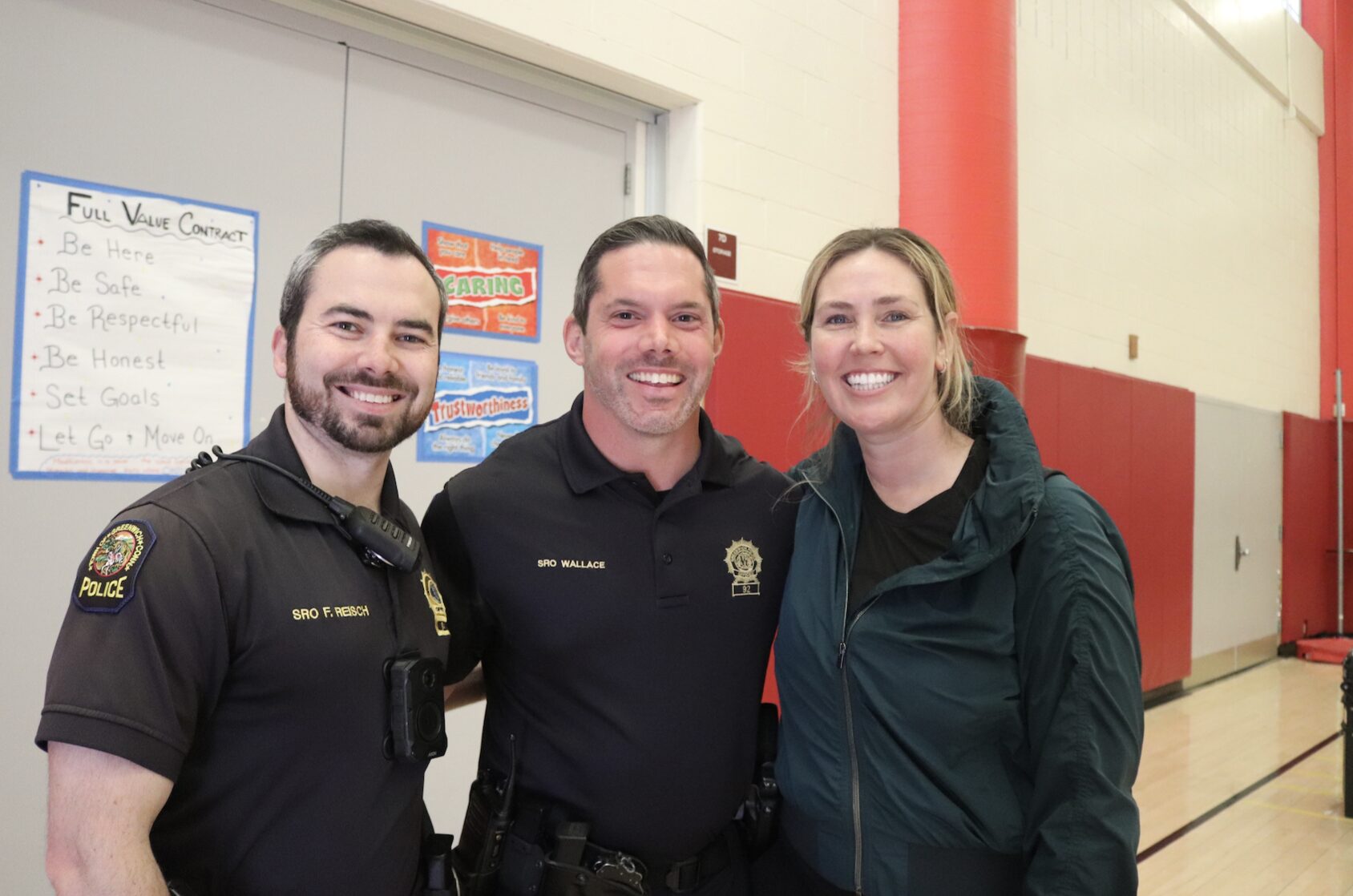
School Resource Officers Fred Reisch and Chris Wallace with Deirdre Burke at the annual GHS Safe Driving Event. May 4, 2026
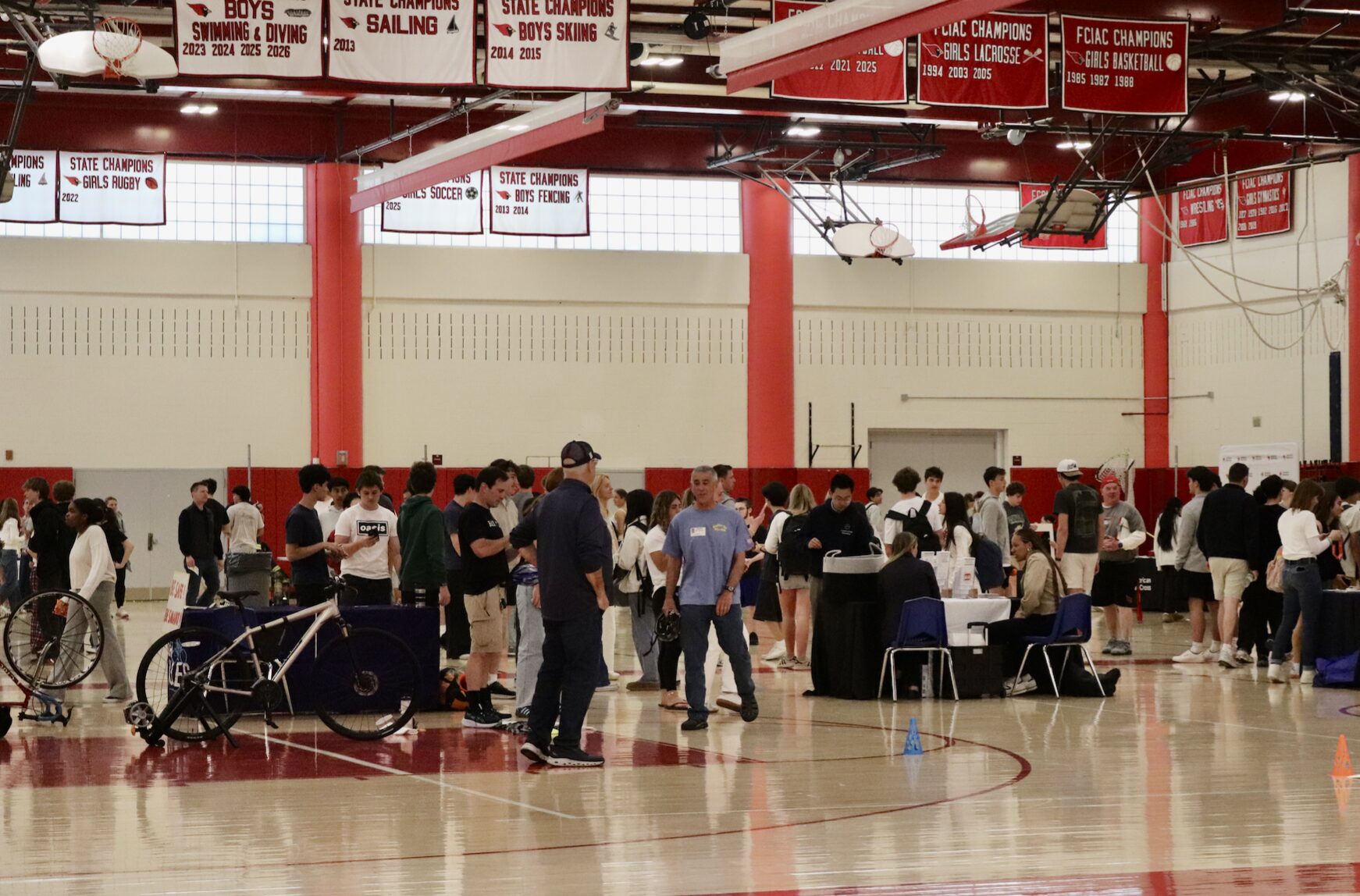
Students rotated through the exhibits at Safe Driving Day at Greenwich High School. May 4, 2026 Photo: Leslie Yager
“I’m so grateful for all the community organizations we have here in Greenwich who give their time to come to GHS,” Steiner said after the event. “From our first responders to our custodians, to our teachers. Build it and they will come,” she said.
“It’s worthwhile if you can just save one person because of what they heard today, and it helps them think the next time.”
Ms Steiner said the car crash simulation takes place in alternating years in the bus loop, and will return in 2027 as a caution against impaired and distracted driving. That exercise involves students, GEMS, Greenwich Police and Greenwich Fire Dept.
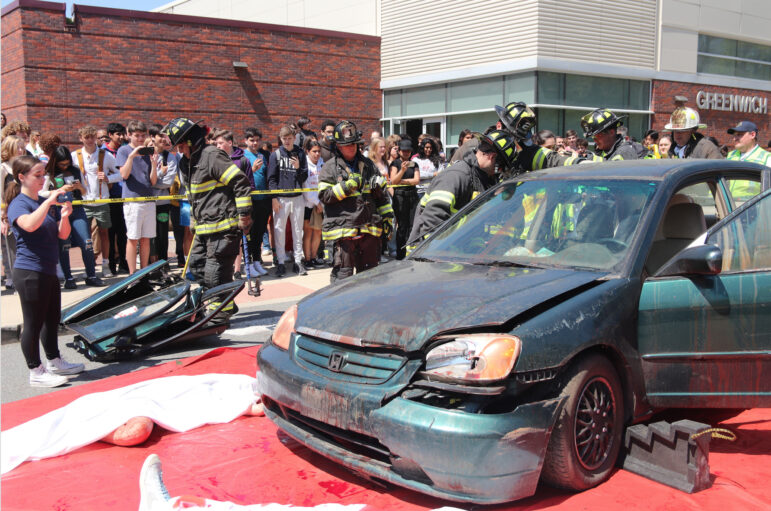
During Safe Driving Day students and first responders participated in a simulation of a drunk / distracted driving crash with fatalities at Greenwich High School. April 21, 2023
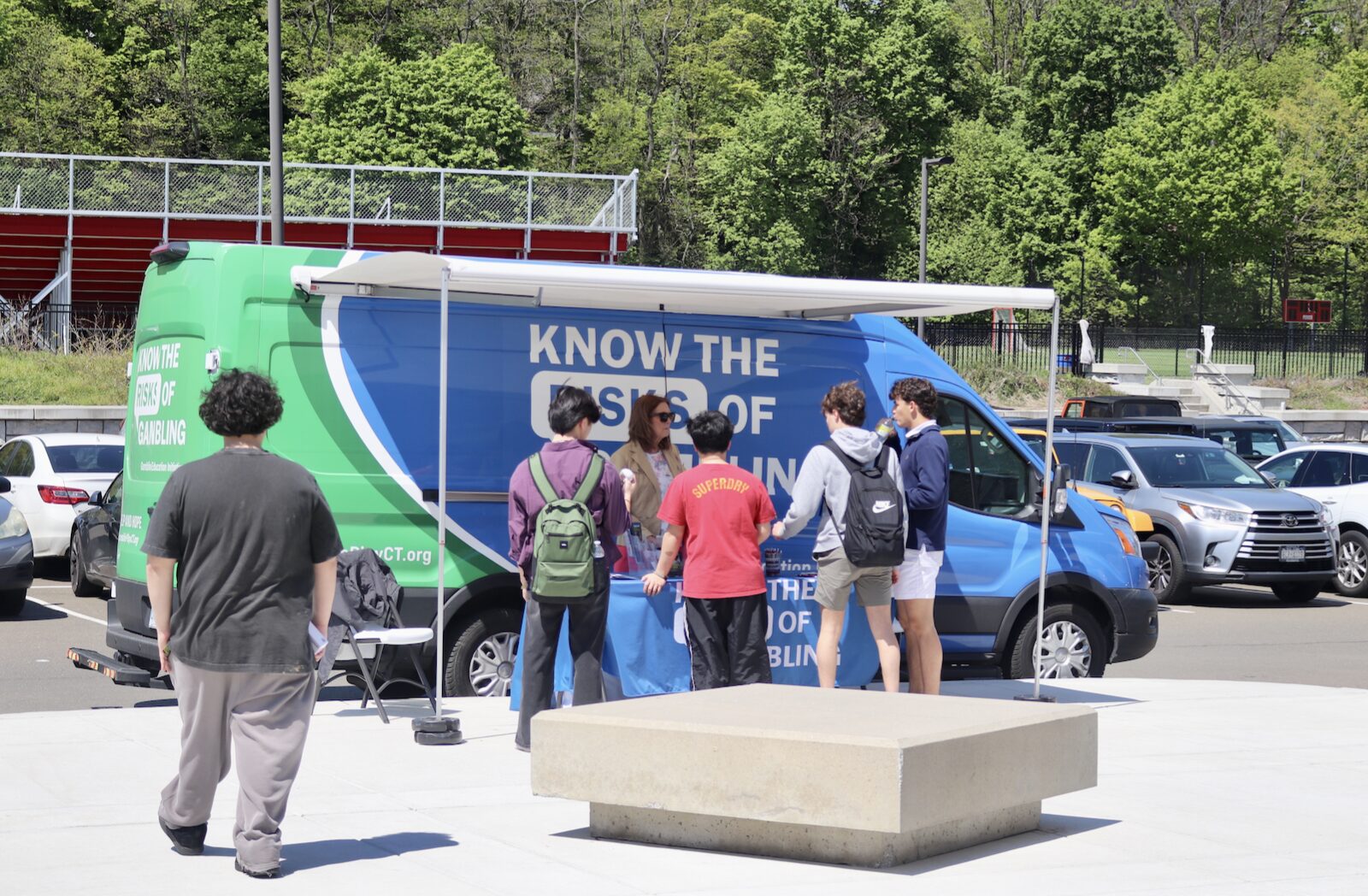
Gambling Awareness: MCCA Gambling Education Resource Van This year a gambling resource van was a popular stop for students.
A steady stream of teens chatted with Janice Taylor and Stephen Matos from Midwestern Connecticut Council of Alcoholism and the “Bettor Choices” gambling treatment program.
In their conversations, Matos and Taylor, who specialize in problem gambling services and recovery support, said it was clear students were already aware of problem gambling among their peers.
One girl who took a pamphlet and a stress ball said simply, “I know guys that do it. I don’t do it. I don’t think many girls do it. It’s (gambling apps) for sports.”
Students referred to gambling apps including FanDuel, DraftKings, Kalshi, Polymarket.
“These kids aren’t even old enough to gamble,” Matos said. “The legal age for casino gambling and online is 21. A lot of college kids aren’t even 21. And the legal age for prediction market apps like Polymarket and Kalshi is 18. But they all know about it and they’re gambling.”
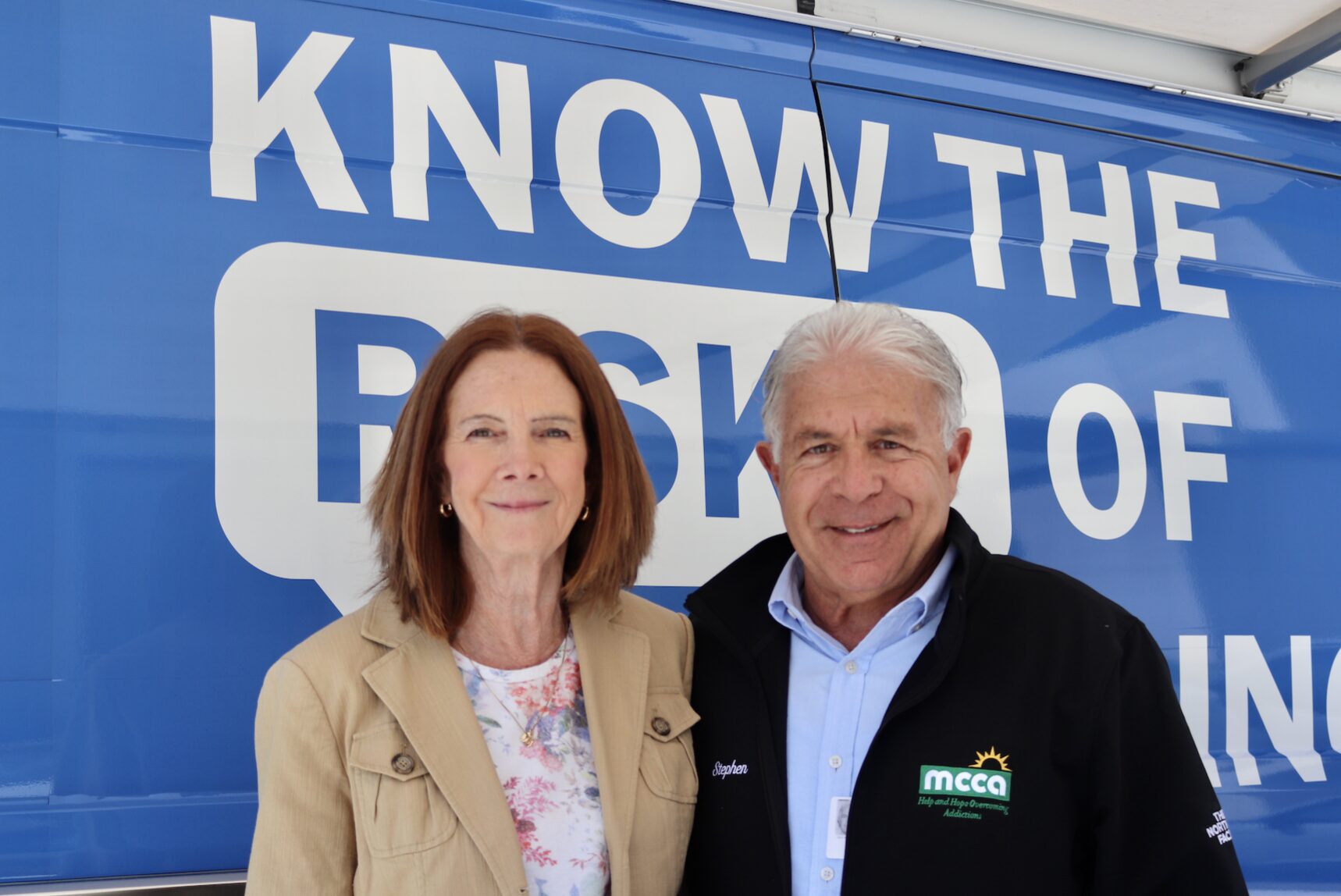
At the gambling awareness and resource van, Janice Taylor and Stephen Matos with the Midwestern Connecticut Council of Alcoholism shared information and resources during Safe Driving Day at Greenwich High School. May 4, 2026 Photo: Leslie Yager
Matos explained that underage gamblers have various ways they get onto the apps to gamble.
“This is why it is important for parents to get educated on the risks. You just cannot do enough prevention,” he said, going on to share examples.
“Some parents (encourage) poker nights in the basement and we hear, ‘At least they aren’t drinking.’”
“They don’t understand the risks. They’re not old enough to gamble but a lot of parents think that it’s okay. I ask parents, ‘Would you give your kid a beer?’ No? Then why would you let them bet on your app?”he said.
Ms Taylor said, “These kids aren’t old enough to gamble. The problem is they’re all getting on the apps anyway because either the parents set them up or they steal social security numbers.”
“They know more than we do,” she said. “They’re telling us what they’re doing. It’s always, ‘My friends have a problem.’”
During group training, Matos said he typically asks people the earliest age they started gambling.
“Nine times out of 10 they’ll say it was a scratch ticket in their Christmas stocking or as a gift when they were young. I’ve heard stories of people who decorate their Christmas trees with scratch tickets.”
Gender Gap is Narrowing
Indeed, risk for problem gambling is highest among males who are athletes. They are disproportionately affected due to high-stakes team environments, excessive gambling and early exposure.
That said, the gender gap is narrowing because increased access to online gambling and targeted advertising.
Taylor said as part of the “Bettor Choices” program, she co-facilitates a women’s support group.
“More and more young women are joining. We just had a woman join our group who is 28 years old. It’s online gambling – women are working from home. Or they have little kids or babies and are up at night. We’re getting more and more women. And they find these games online or they get on FanDuel and start betting.”
Taylor, in recovery for 15 years herself, said she was previously a casino gambler.
“I used to go to Mohegan. You see a lot of women on the slot machines, but I played blackjack. When I started, I played $5.00 tables and I’d go there for two or three hours.”
Taylor said that by the time she stopped gambling, she would play up to 70 hours straight on the $1,000 tables.
“I had no money, but as a gambler – you find the money,” she recalled.
Over the course of the 15 years since Taylor last visited a casino, she noted online gambling has become prevalent.
“The young women coming in now are online gambling,” she said. “Not as many as the men because it’s the athletes who are at high risk. But women are exposed to it more.”
Taylor said at Gamblers Anonymous she sees athletes, but also coaches and umpires. She said veterans and retirees are also at risk.
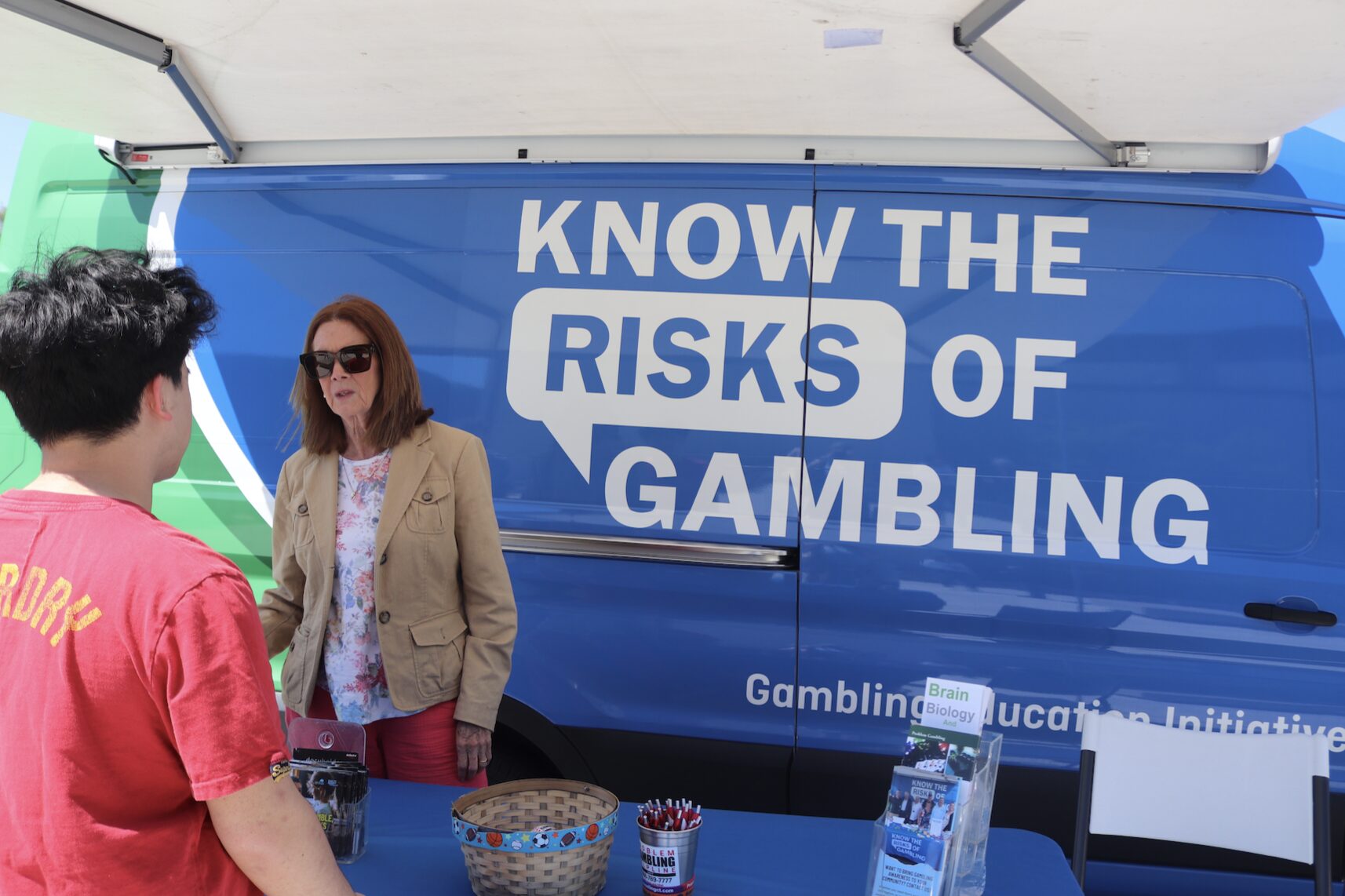
Janice Taylor talks to students at the MCCA gambling resource van during Safe Driving Day at Greenwich High School. May 4, 2026 Photo: Leslie Yager
College Visits
Mr. Matos said the gambling resource van travels to colleges throughout Connecticut.
“When we go to colleges, we’re almost late to the game,” he said. “I find that at a lot of high school campuses, young people are already gambling on these various apps, and gambling on their grandparents’ or parents’ accounts where their grandparents or parents place their bets in for them.”
“The problem is (parents and grandparents) aren’t educated on the risks of gambling and young people are significantly at risk. The brain isn’t fully developed until 25 years old at least, so that decision making part of the brain – they’re untouchable and think they’ll never get hurt.”
He added that peer pressure also often plays a part.
Problem Gambling Resources
The MCAA “Bettor Choices” program offers specialized outpatient treatment for problem gambling in Connecticut. Funded by the state, it offers counseling, psychiatric evaluations, and support groups for individuals and families at little to no cost.
Gam-Anon is also a good resource, given 7 to 10 others are affected by one person’s gambling.
More resources are available at ResponsiblePlayCT.org
According to the National Council on Problem Gambling underage gambling is skyrocketing as 1 in 3 youth report betting on sports before they turn 21, and two-thirds of US adults gambled before age 21.
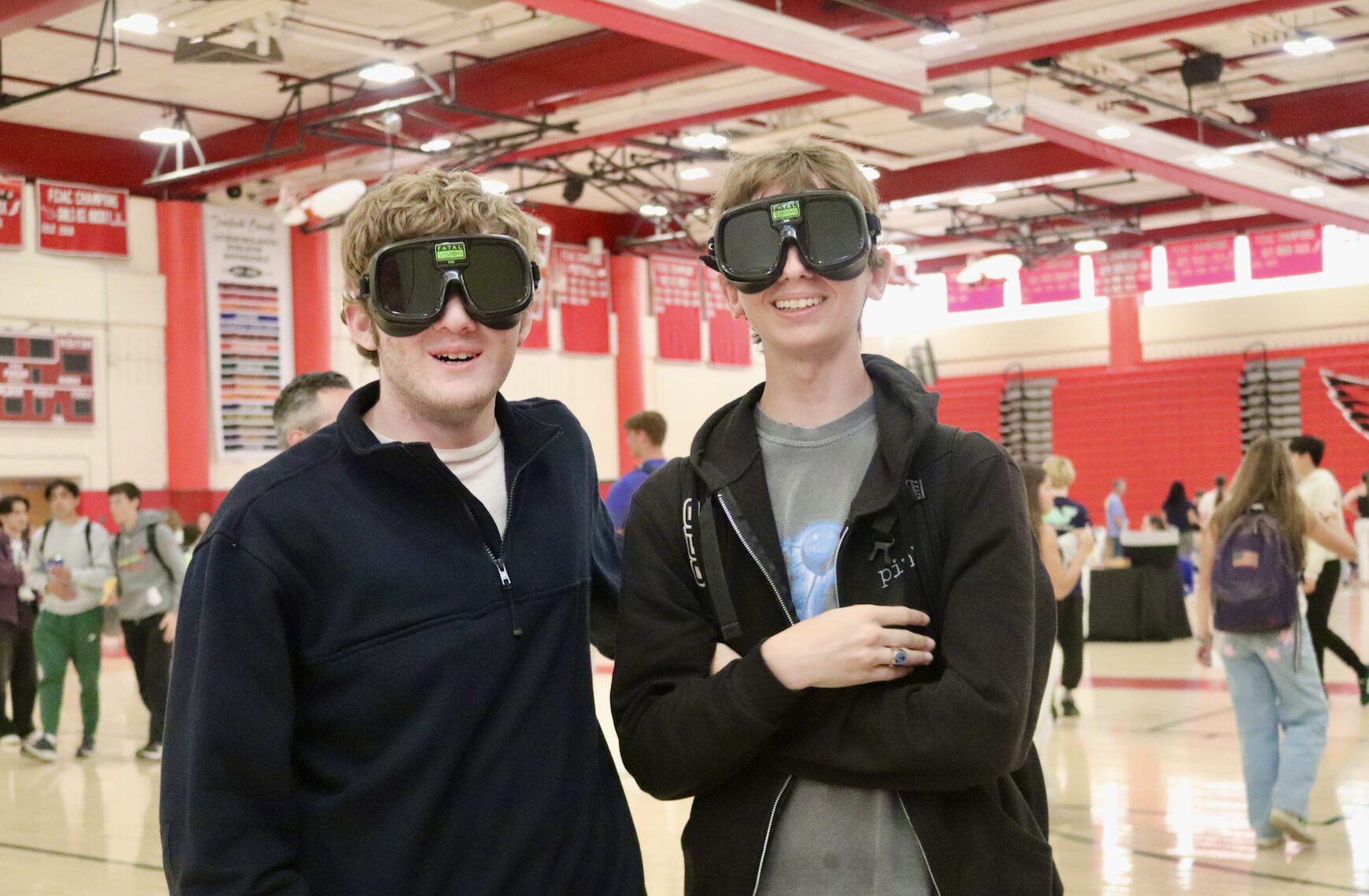
At the AAA northeast table, students put on goggles to mimic the effects of alcohol on vision and balance, highlighting the real life consequences of unsafe driving May 4, 2026 Photo: Leslie Yager.
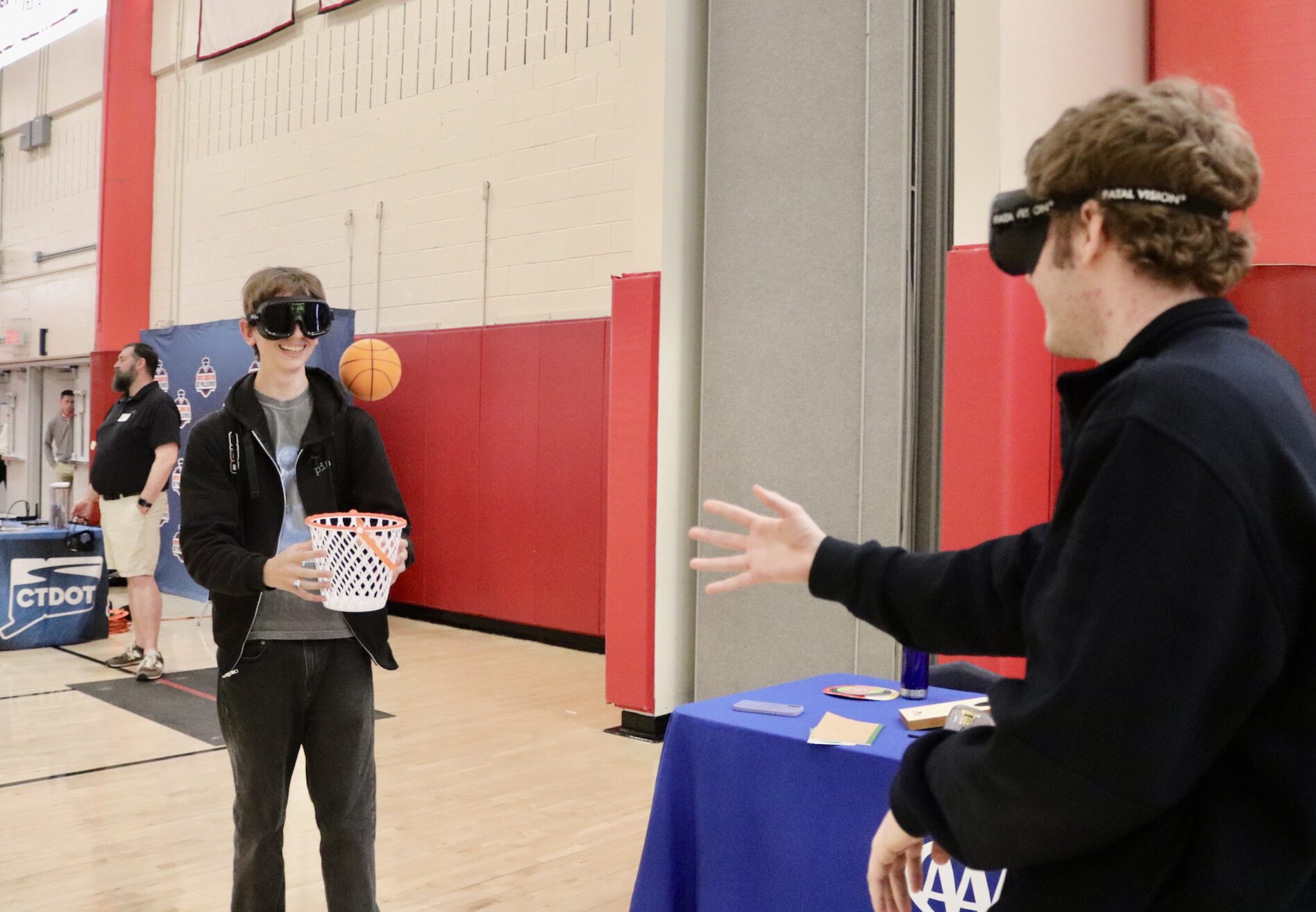
At the AAA Northeast table, Evan Dwyer tried to make a basket wearing goggles to mimic the effects of alcohol on vision and balance, highlighting the real life consequences of unsafe driving. May 4, 2026 Photo: Leslie Yager.
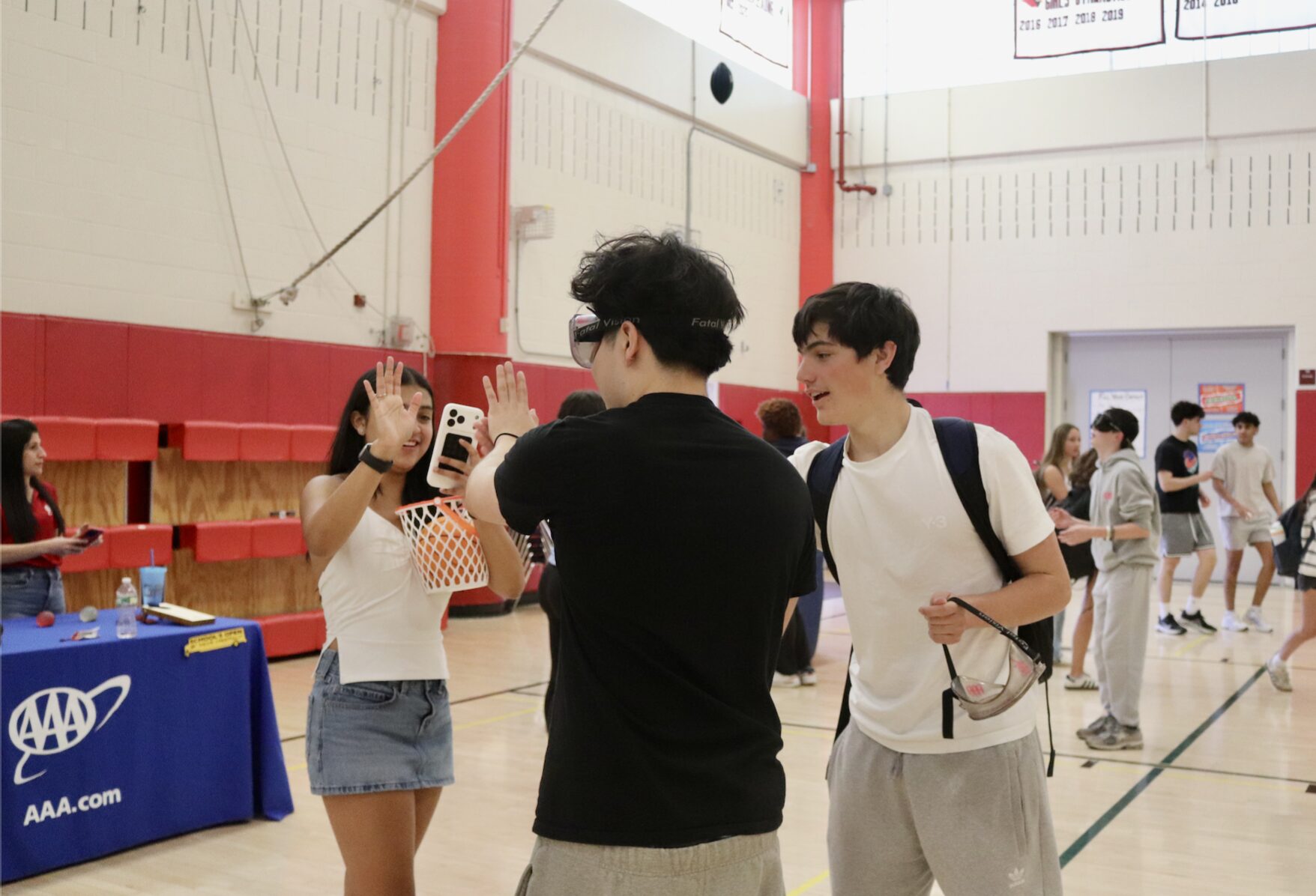
At the AAA northeast table, students put on goggles to mimic the effects of alcohol on vision and balance, highlighting the real life consequences of unsafe driving. May 4, 2026 Photo: Leslie Yager.
At the AAA northeast had activities including simple games of catch wearing goggles that simulate the effects of alcohol on vision and balance, highlighting the real life consequences of unsafe driving.
According to Adelle Zocher, safety specialist from AAA Northeast, teens often acknowledge that driving is not inherently difficult.
“It’s about everything else they have to respond to,” she said.
On Monday, when students wore the goggles, the situation changes.
“So they see even small, simple tasks – and even something that starts out easy can become inherently more challenging.”
“Anything we can do that is interactive and hits that message home – especially ahead of prom and graduation season – we want to them to have fun but we want them to make smart decisions,” said AAA Northeast’s Lauren Fabrizi. “One bad decision can be life altering.”
Evan Dwyer, a sophomore who is part of the Greenwich EMS Explorer Post, said the exercise was fun and turned the tables.
“I’m usually on the other end of it,” Evan said. “It was really interesting to see how how my basketball shot was so far off the mark.”
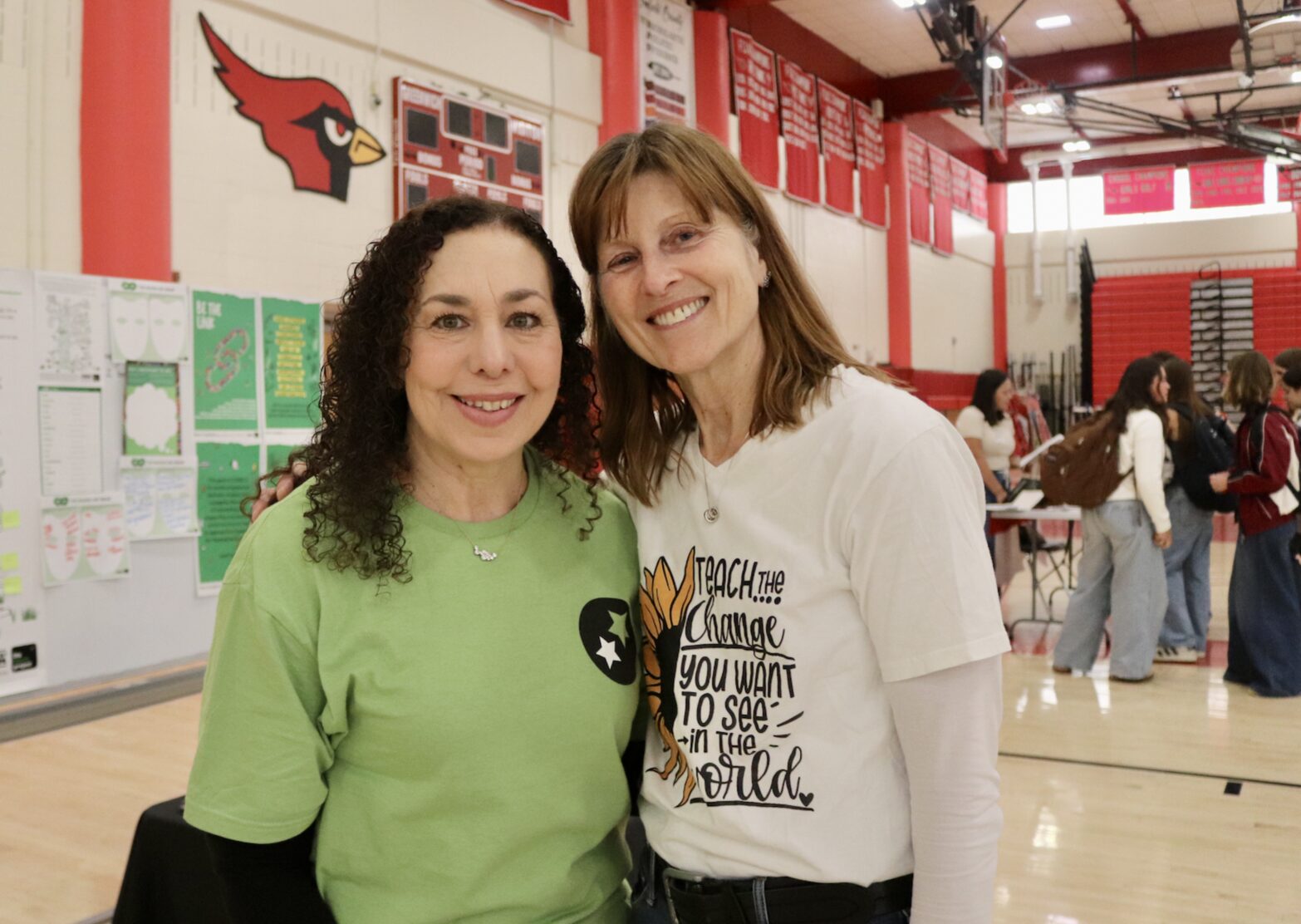
Founder of The Harris Project, Stephanie Marquesano with GHS health teacher Kathy Steiner at the annual Safe Driving Day event at Greenwich High School. May 4, 2026 Photo: Leslie Yager
A regular presence at Safe Driving Day was Stephanie Marquesano, who founded The Harris Project to spread awareness of co-occurring disorders (COD) after the death of her 19-year-old son, Harris, to an accidental overdose in 2013.
Marquesano created CODA (co-occurring disorders awareness) a peer-led prevention initiative in schools and communities. The idea is to change the conversation around mental health and substance misuse by focusing on the intersection of mental health challenges and substance misuse.
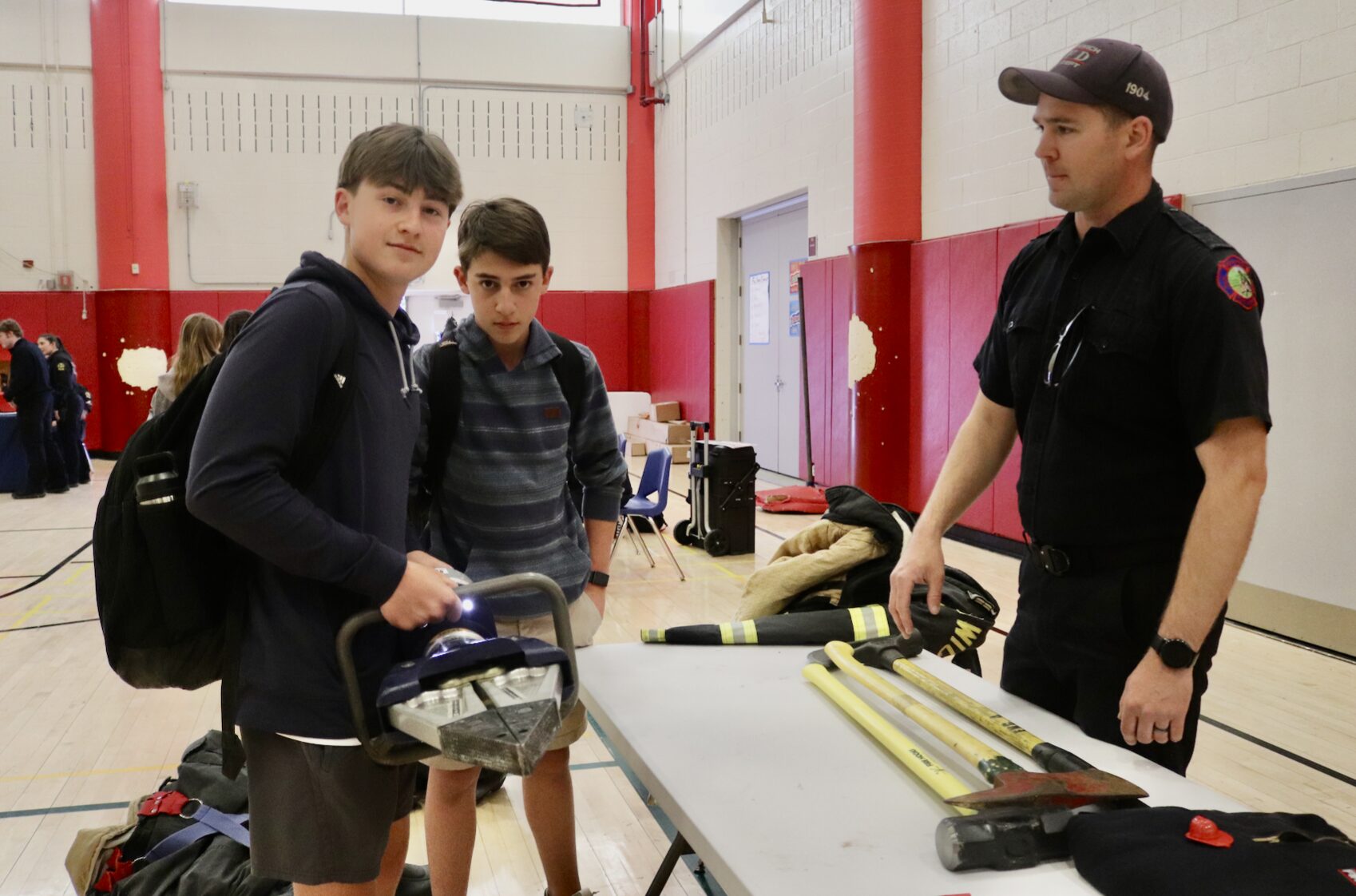
Greenwich Fire Dept’s Greg Brown talks to were able to open and close the Hurst “jaws of life,” a rescue tool used by the Fire Dept to cut and spread damaged vehicles to free trapped victims. May 4, 2026 Photo: Leslie Yager
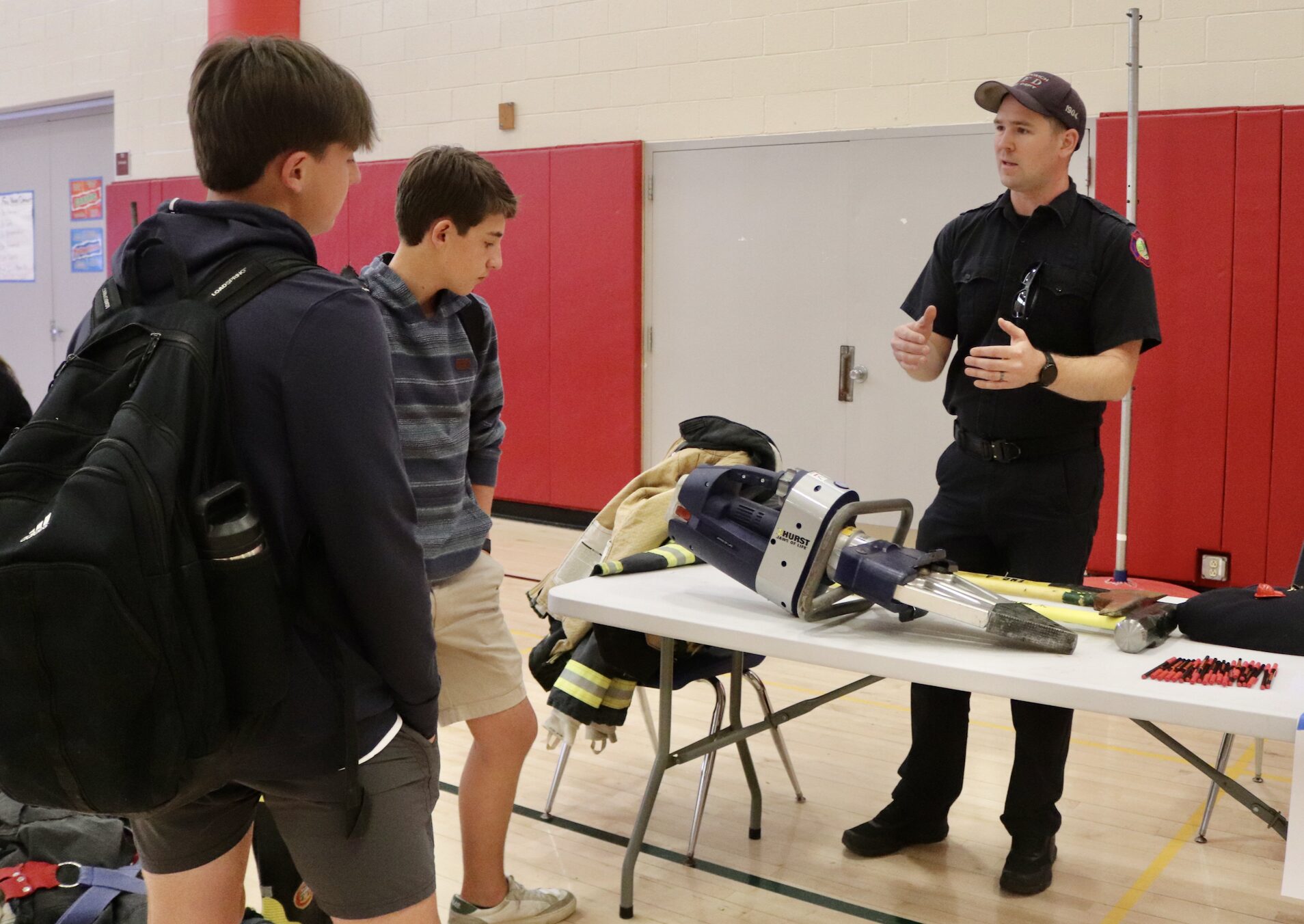
Greenwich Fire Dept’s Greg Brown talks to students about rescuing survivors of crashes, the the Hurst “jaws of life” tool. May 4, 2026 Photo: Leslie Yager
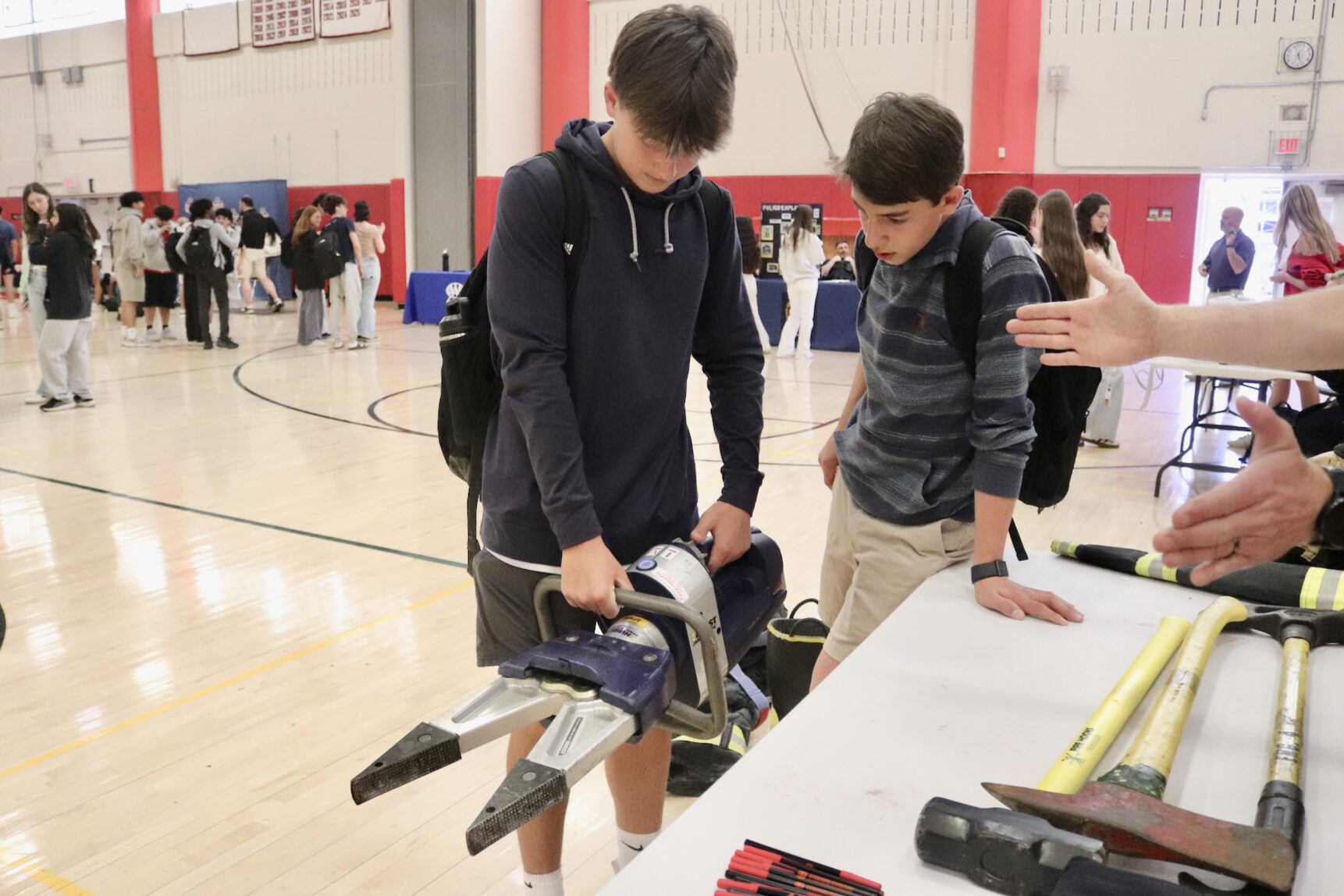
Greenwich Fire Dept’s Greg Brown talks to were able to open and close the Hurst “jaws of life,” a rescue tool used by the Fire Dept to cut and spread damaged vehicles to free trapped victims. May 4, 2026 Photo: Leslie Yager
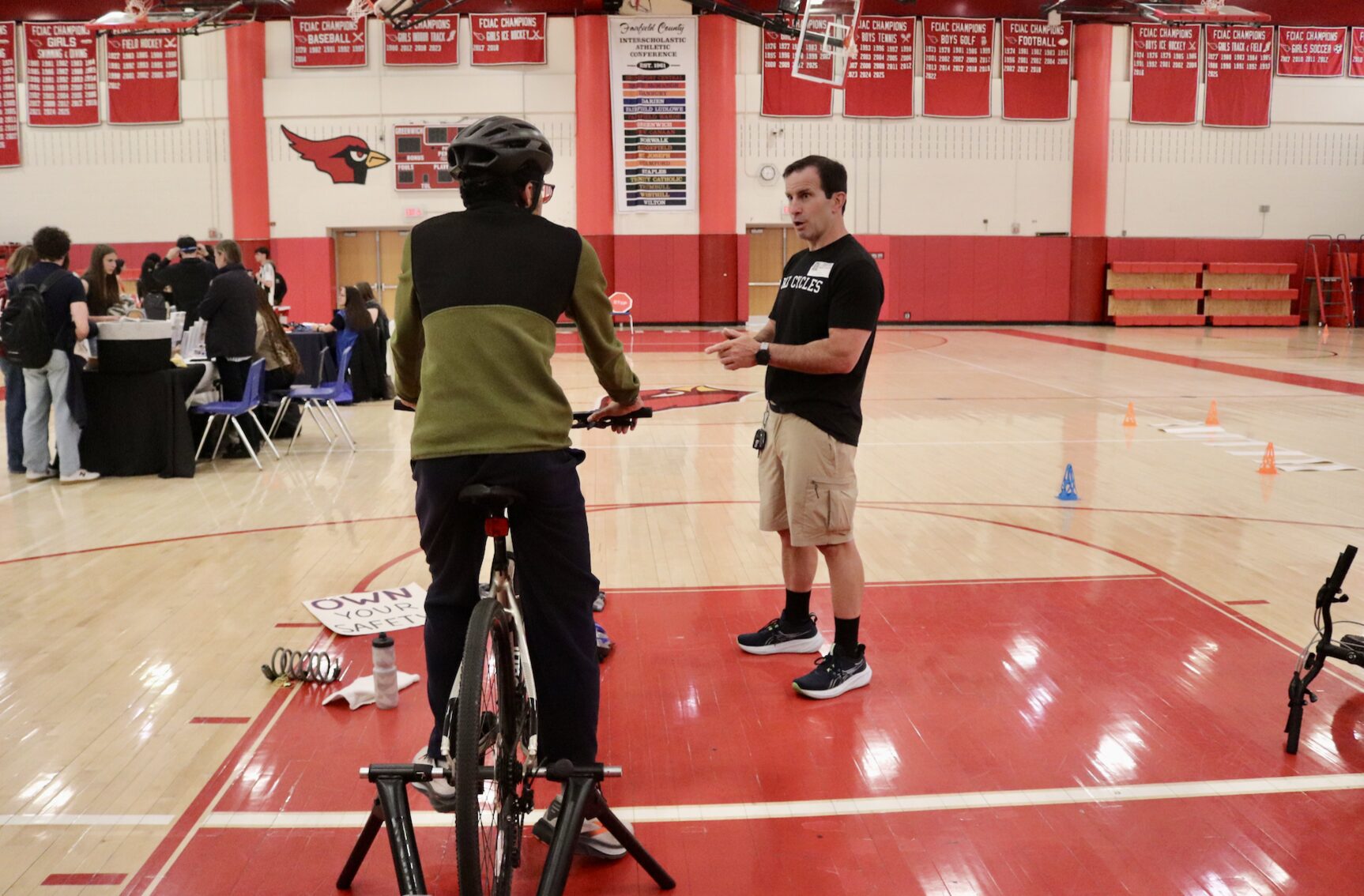
John Baxendale of Bax Cycles set up a bike course and shared information on bike safety & helmets. May 4, 2026 Photo: Leslie Yager
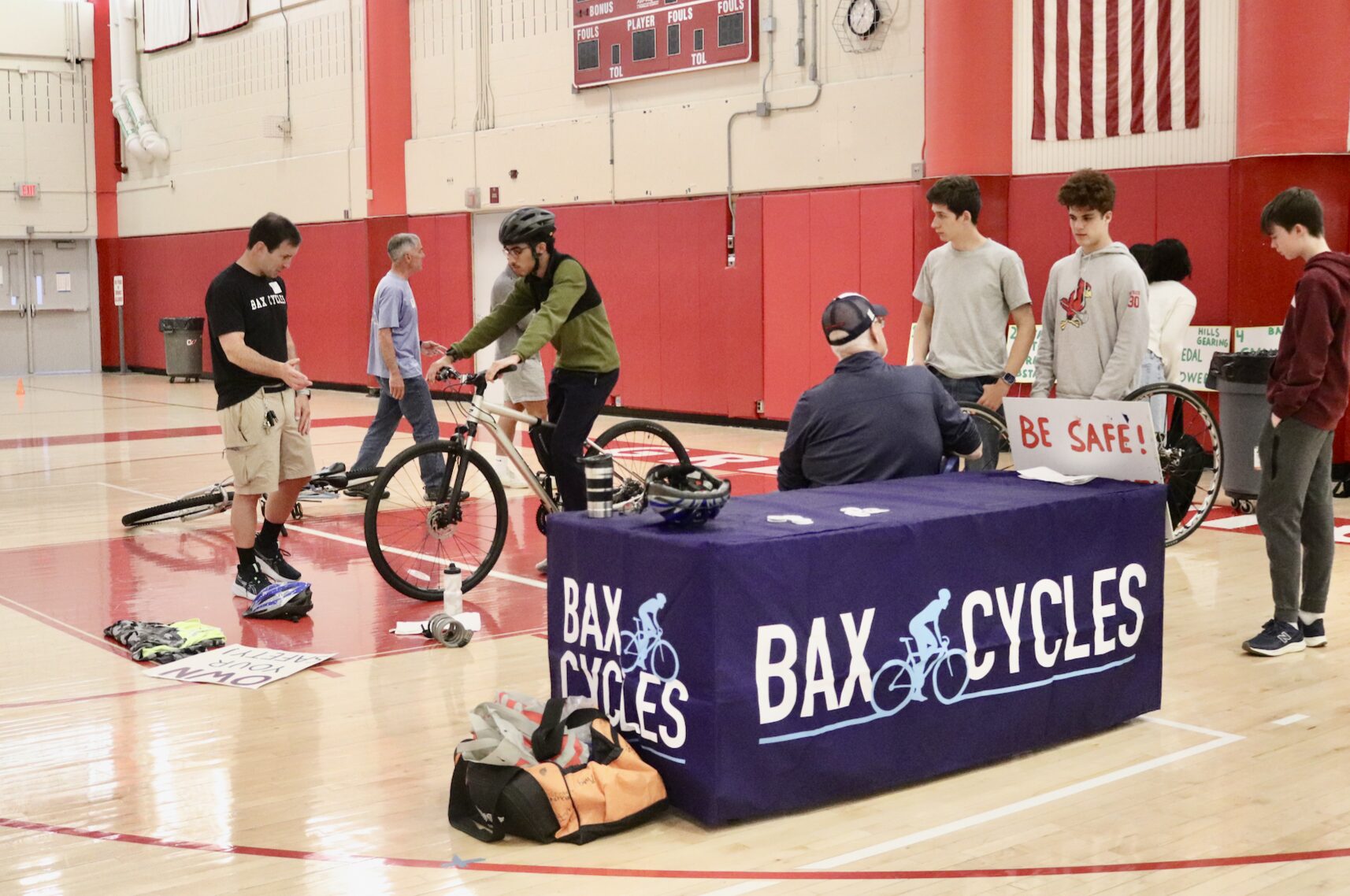
John Baxendale of Bax Cycles set up a bike course and shared information on bike safety & helmets. May 4, 2026 Photo: Leslie Yager
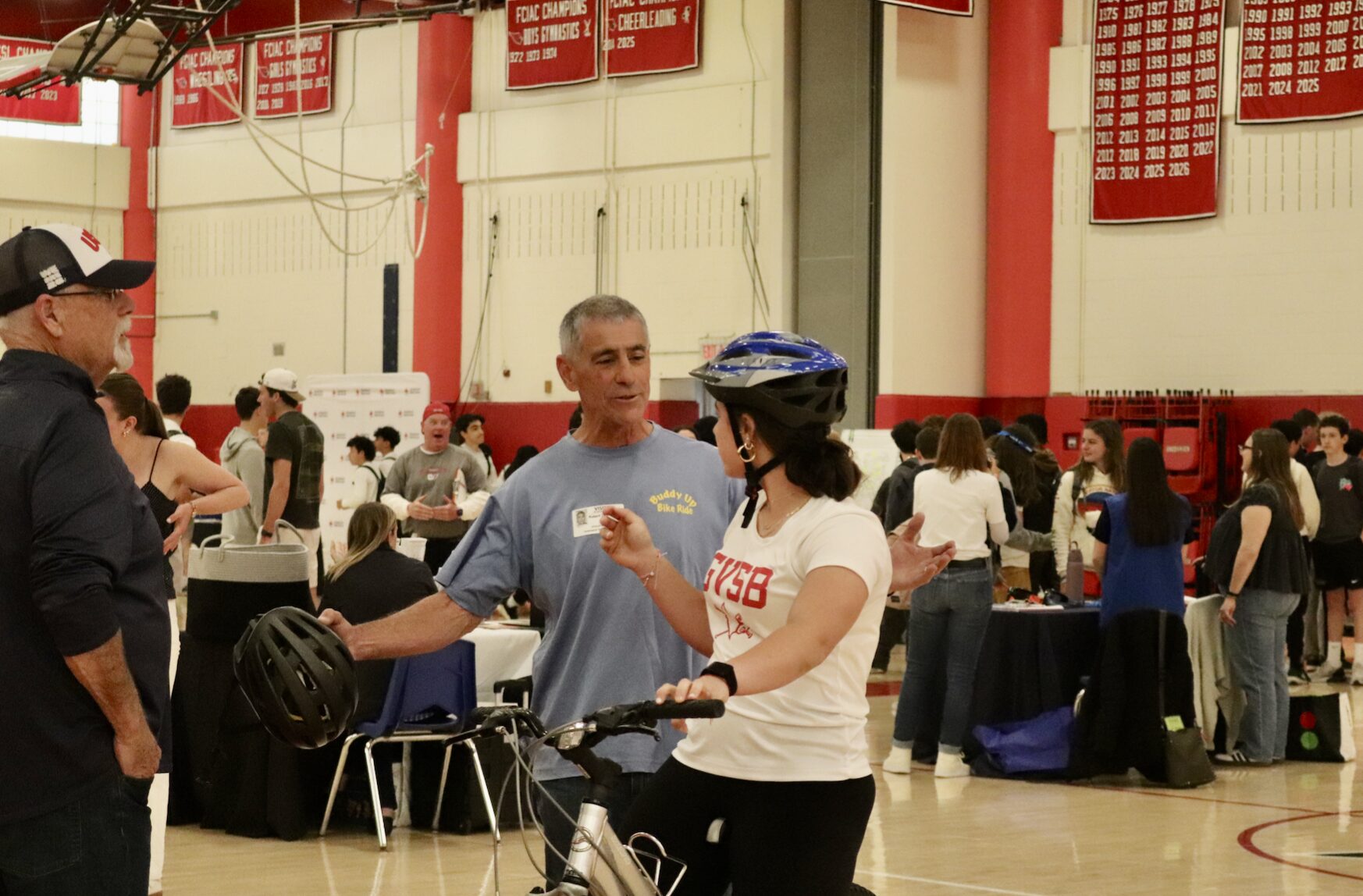
Bob DeAngelo shared information on bike safety & helmets at Safe Driving Day at Greenwich High School. May 4, 2026 Photo: Leslie Yager
John Baxendale of Bax Cycles set up a bike course and shared information on bike safety & helmets. May 4, 2026 Photo: Leslie Yager
John Baxendale of Bax Cycles set up a bike course and shared information on bike safety & helmets. May 4, 2026 Photo: Leslie Yager