
Kennewick, Wash.
The long-awaited first public recovery center in the Tri-Cities can’t open yet.
The Columbia Valley Center for Recovery was on track to open over the weekend, but as of Wednesday it still could not take patients.
That’s because there has been a delay in receiving the facility’s licensing. It’s unclear why the Washington state Department of Health has not issued the center’s license, or how long it will take to clear up.
Comprehensive Healthcare was selected to run the Benton County owned facility. A spokesperson for Comprehensive Healthcare told the Tri-City Herald that they are ready to begin treating patients for addiction and mental health care as soon as the state issues the center’s credentials.
“Due to state licensure timing taking longer than anticipated, the Columbia Valley Center for Recovery cannot yet accept clients,” the spokesperson said. “The facility and our clinical plans meet all requirements; this is a standard regulatory process, which we expect will be resolved shortly. We are on track to open and begin treating clients as soon as licensing is approved.”
Sen. Patty Murray, D-Wash., toured the facility Wednesday as part of a visit to the Tri-Cities to talk about Medicare funding.
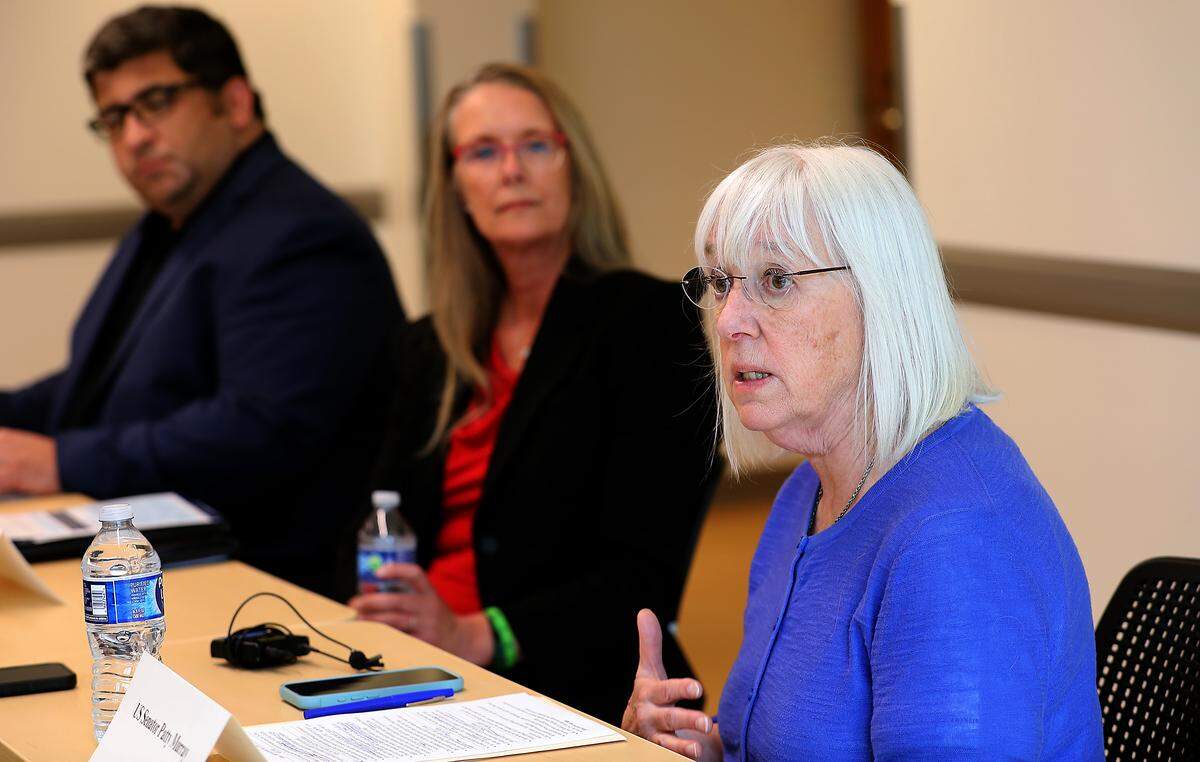 Sen. Patty Murray, D-Wash, holds a roundtable discussion about healthcare at the new Columbia Valley Center for Recovery Wednesday afternoon in downtown Kennewick. Bob Brawdy bbrawdy@tricityherald.com About the recovery center
The Tri-Cities’ first public recovery center is designed to be a “no wrong door” treatment center.
That means they will serve anyone with a need, regardless of their insurance status or ability to pay.
This approach is critical for law enforcement intervention. It means people who actually need medical care will not be turned away and just sent to jail. It will allow officers to bring in someone in crisis without having to involve them in the criminal justice system.
Franklin County still needs to work out a third party contract with Comprehensive Healthcare to pay for reimbursements, but law enforcement officials are eager to begin the partnership.
It will offer four key services, opening in tiers over the course of summer.
The residential wing will fully open as soon as the facility’s license is issued, along with half of the crisis stabilization beds and about half of the recliners used for short term/sobering care.
Then in June they plan to fully open the rest of the beds and recliners for crisis stabilization and short term/sobering care.
At that point, the plan is to open half of the withdrawal management beds, with the rest opened about a month later.
Staff has been in place and training for several weeks.
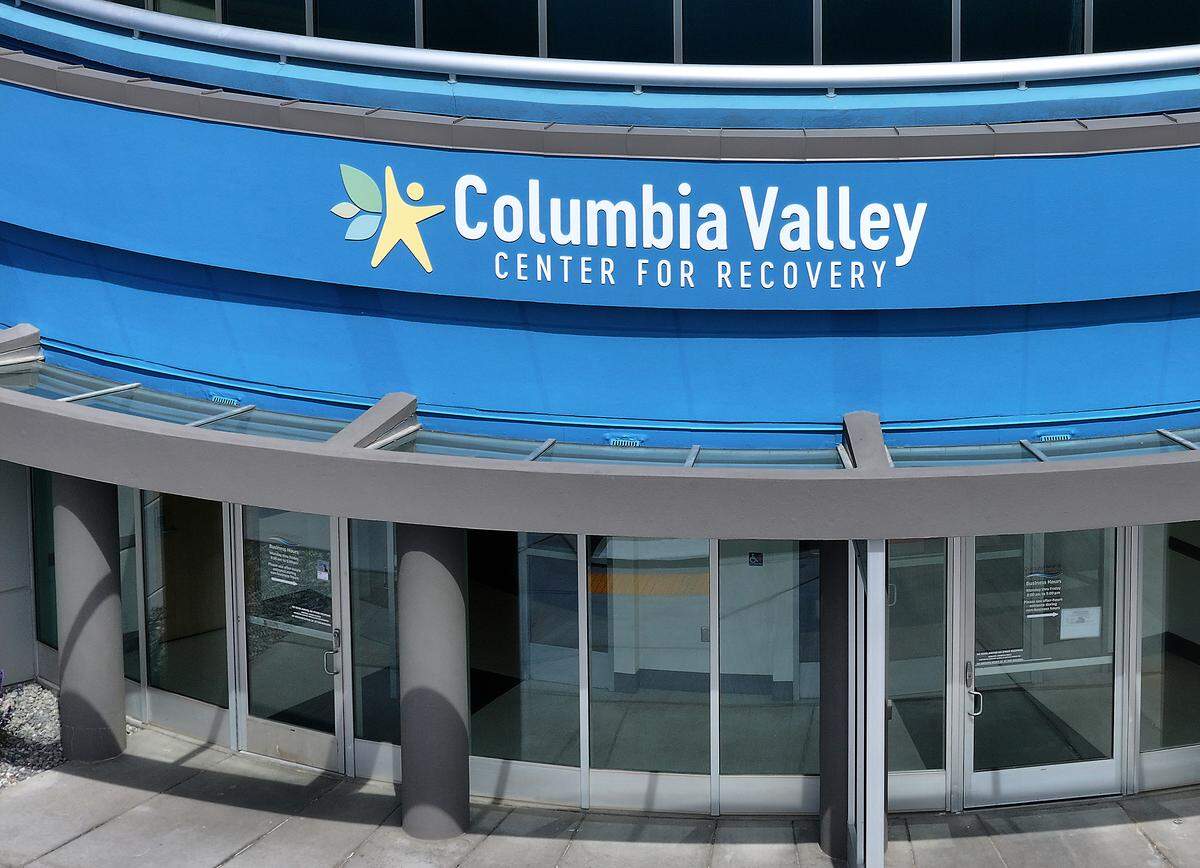 The Columbia Valley Center for Recovery is a $50 million comprehensive treatment facility for substance abuse and behavioral health in downtown Kennewick. Bob Brawdy bbrawdy@tricityherald.com
Short-Term/Sobering — A 23-hour observation unit that focuses on stabilization and sobering up. This unit will be structured like a living room setting with pods for recliners. Patients will be assessed here to determine longer care needs.
Crisis Stabilization — This unit is designed for clients whose primary diagnosis is mental illness related. Services will include assessment, diagnosis and treatment for those without the need for longer stays. Typically, they’ll spend five days or fewer here, but longer stays can happen voluntarily or by court order.
Withdrawal Management — This unit will provide secure withdrawal management and stabilization services. Patients will be assessed, stabilized and cared for while detoxing. There will be two levels of detox, one with monitoring and patient administered medication and the other with 24-hour medical care by nurses and doctors.
Co-occuring Residential Substance Use Treatment — This unit will be for longer-term substance use treatment, often for patients who also need some mental health treatment. The length of the stay will depend on ongoing assessments and progress toward treatment goals.
Related Stories from Tri-City Herald

Tri-City Herald
Cory is an award-winning investigative reporter. He joined the Tri-City Herald in Dec. 2021 as an Editor/Reporter covering social accountability issues. His past work can be found in the Tyler Morning Telegraph and other Texas newspapers. He was a 2019-20 Education Writers Association Fellow, and has been featured on The Murder Tapes, Grave Mysteries and Crime Watch Daily with Chris Hansen.