
Many people also gamble in online casinos. Right now, they can do that legally in only 7 states (Connecticut, Delaware, Michigan, New Jersey, Pennsylvania, Rhode Island and West Virginia). Still, online casino gambling is widespread throughout the country, with illegal sites openly advertising and allowing access from anywhere. When asked if people in Minnesota — where online casino gambling is not legal — were gambling online, Susan Sheridan Tucker, executive director of the Minnesota Alliance on Problem Gambling, said, “It doesn’t matter whether the sites are illegal or not. People are still gambling online. If we’re interested in reducing gambling harms, all types of gambling must be regulated.”
According to a 2025 study of online casino advertising trends published by the American Gaming Association, offshore and sweepstakes operators such as Chumba Casino, Pulsz.com and McLuck are focusing their advertising in states like California, Texas and Florida, which have the highest number of residents age 65 and older.
Over 75 million Americans — more than 1 in 5 — now have an account with an online sports betting service, and most of them use an app on their smartphone to place their bets, according to a 2025 national survey by researchers at Siena College Research Institute and St. Bonaventure University. Much of the $700 billion placed in bets last year was wagered online, and not just on sports.
Gambling problems grow
Online gambling became especially popular with older Americans during the COVID-19 pandemic, when lockdowns restricted trips to the casino, and people were looking for ways to fill their time. A review of betting data by England’s Royal College of Psychiatrists showed that online gambling during the pandemic increased more for people over 65 than it did for any other age group.
And with that popularity came addiction. The National Council on Problem Gambling estimated that the risk of gambling addiction grew by 30 percent from 2018 to 2021. One study published in JAMA in February 2025 reported a 23 percent nationwide increase in internet searches for help with gambling problems. Since Pennsylvania legalized online casino gambling in 2017, the number one reason people cite for calling the state’s gambling hotline for help is online casino games.
Jimmy C., 64, who is also in a recovery program for problem gamblers, says he is one of those who found out the hard way that online gambling can be more seductive than traditional forms of wagering. The New Jersey native is a lifelong gambler; he started betting in card games at age 12, on football games at 14 and in casinos as soon as he was old enough to frequent them. He got into financial trouble gambling as a young adult, but by working mountains of overtime at two jobs, he was able to cover his losses.
Once he started betting online, however, his compulsive gambling intensified, and his troubles accelerated. He opened accounts on four different apps, betting on sports and playing slots, and wagered far beyond his means. One year, he gambled more than $250,000 through a single online account. He seemed to play endlessly — driving in the car, during bathroom breaks at work, on the toilet in the middle of the night. He even set his phone on autoplay while taking a shower, losing $500. He rigged the TV monitors at one of his jobs, where he was supposed to be surveilling traffic conditions, to display four football games he had bet on. He blames the easy accessibility of his phone: It was always there, always available to take another bet. “As long as we’re awake and breathing, a compulsive gambler usually will engage in some activity as long as they have access,” he says.
The American Psychiatric Association classifies gambling addiction in its Diagnostic and Statistical Manual of Mental Disorders (DSM-5) as a disorder on par with substance use disorder. Indeed, gambling activates the brain’s reward systems similarly to how alcohol, cocaine, opioids and other drugs do. Those who develop a gambling disorder continue to bet despite symptoms such as a preoccupation with gambling, the inability to control their betting behavior, feeling the need to chase losses and gambling to escape problems.

Designed to seduce
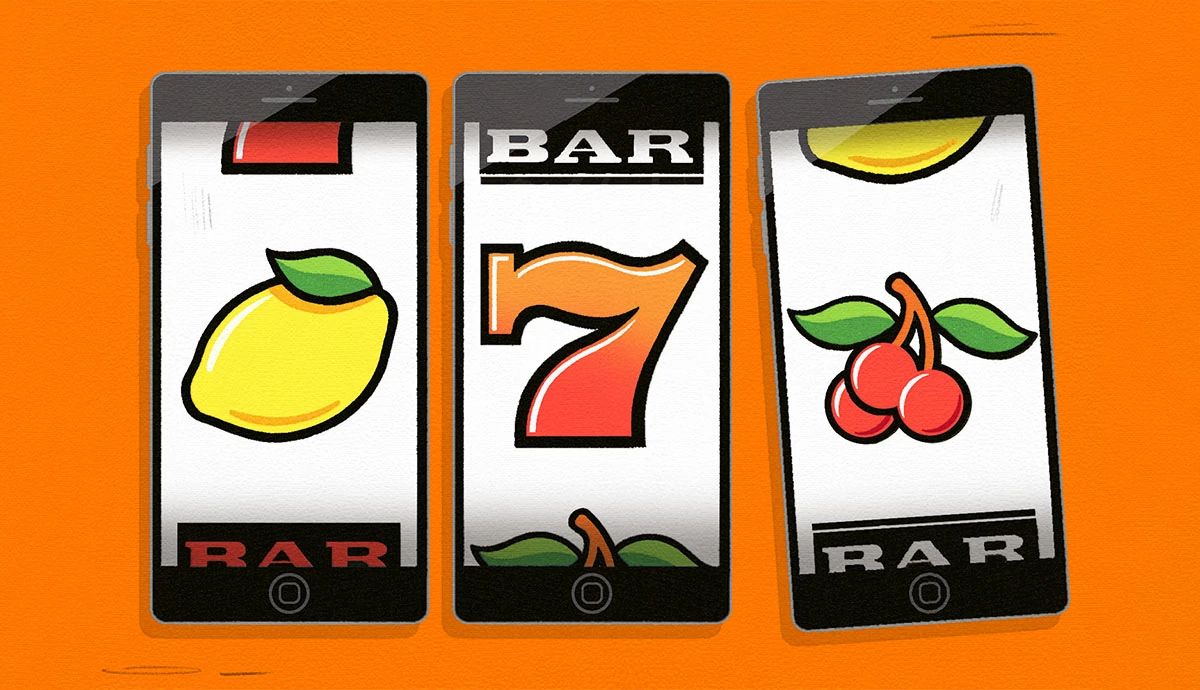
Gambling online may carry a greater risk than gambling at a casino because of features built into the apps. Some let users make bets continuously, as often as every three seconds. That continuous action — whether it’s placing a bet on if a pitcher will throw a strike or simply pushing a button — does not allow for a reflective pause, when a gambler might realize it’s time to take a break, and is known to induce riskier behavior more likely to lead to gambling problems. Some apps have an automatic betting feature, where “you can tell it to continually gamble for you,” says Krutz. “So you hit the button once and then it bets over and over and over and over and over again, and you just watch.… You may be sucked into that, and you may empty your account very quickly. We’re talking $1,200 an hour [making a $1 bet every three seconds], and you can do it for 24 hours a day, seven days a week.”