
Melbourne fashion designer Rochelle Gregory found success in 2018 when one of her custom-designed leather jackets was worn by actress Ruby Rose in a cosmetics billboard campaign.
The moment marked a career gear shift for Gregory, but as her sartorial narrative soared a mental health unravelling almost derailed her.
Now the rock ‘n’ roll-inspired designer, who has clothed the likes of Gigi Hadid, Dua Lipa, Hailey Bieber and Paris Hilton, has created a short film to tell her story.
Gregory was inspired to sew from a young age, all thanks to her Greek grandfather who worked as a tailor and kept his industrial machine at the front of his house.
That fashion love language was in her blood, and one she wanted to continue.
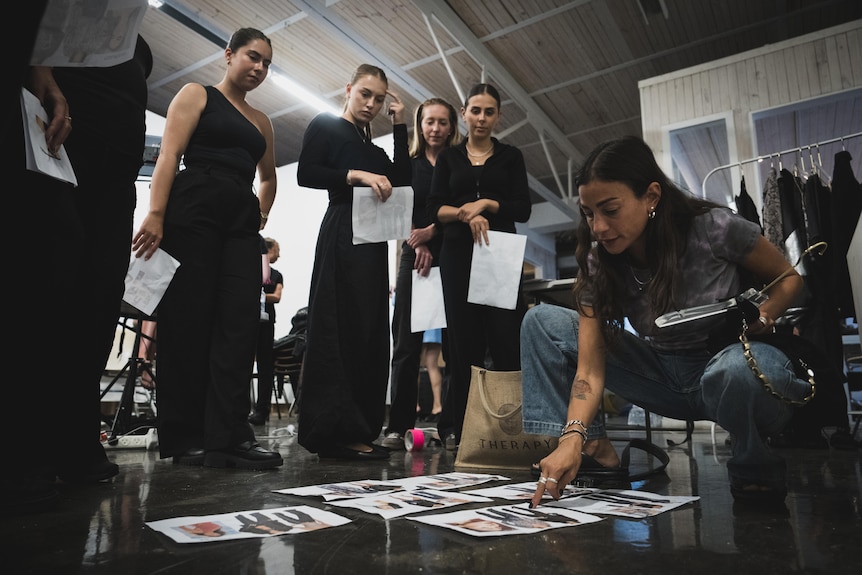
Rochelle Gregory threw herself into her work while also facing her own inner demons. (Supplied)
After graduating from the Whitehouse Institute of Design in 2014, she applied for an internship at Alexander Wang’s studio in New York but missed out.
She took the loss in her stride and started her independent label, Rocky Rafaela, in 2016.
The brand, built around custom pieces, edgy shirting, dance floor-bound dresses and ready-to-wear jackets made from sustainable leather and silk, proved the perfect distraction for Gregory, who was trying to work through multiple mental health diagnoses, from borderline personality disorder to depression.
For a period, the world was Gregory’s oyster; she even had a bricks-and-mortar store in Albert Park — a stone’s throw from where she grew up. It has since closed and business is via an online portal now.
Confronting demons
Recently, a decade after launching the label, she hosted a self-funded runway show as part of Melbourne Fashion Week to declare she was back with a new collection and a story to share.
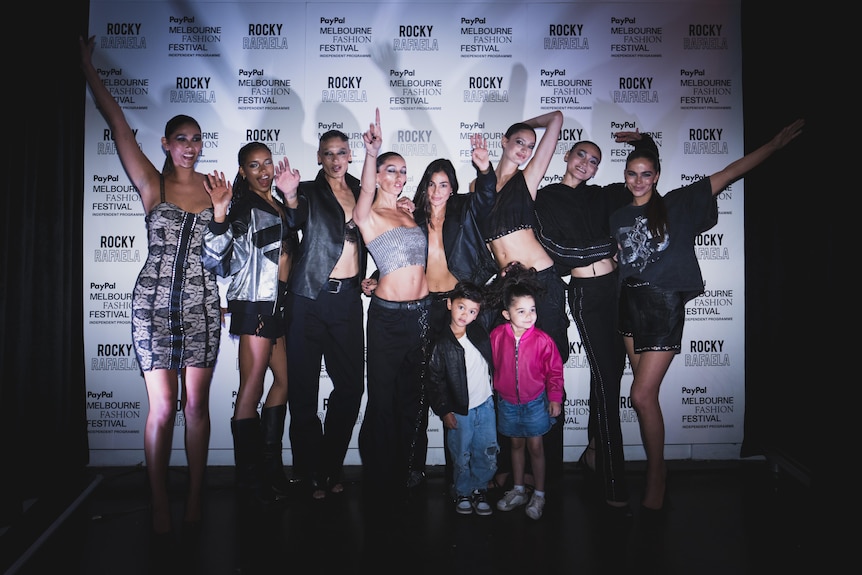
The new collection from Rocky Rafaela debuted at Melbourne Fashion Week, accompanied by a short film about Gregory’s struggle to regain her mental health. (Supplied)
Accompanying the runway show was the screening of a 12-minute film that was no ordinary pastiche of stills to ignite the pace of the night. Instead, Gregory was the star of the show; re-enacting her bouts of hospitalisation, self-harm, suicidal ideation and navigating her world of bulimia and anorexia.
If you or anyone you know needs help:Lifeline on 13 11 14Kids Helpline on 1800 551 800MensLine Australia on 1300 789 978Suicide Call Back Service on 1300 659 467Beyond Blue on 1300 224 636 or its COVID-19 support service 1800 512 348Headspace on 1800 650 890ReachOut at au.reachout.comCare Leavers Australasia Network (CLAN) on 1800 008 774Brother to Brother on 1800 435 799
The message was one of struggle, but ultimately of finding hope and a greater sense of self-worth.
“I turned to fashion as a distraction, a place I could hide from the truth. But eventually I had to confront my demons head-on,” Gregory says.
She is now working as an ambassador with Lifeline, including working on a T-shirt collaboration to help them raise money in a campaign launching later this year.
“I had some childhood trauma occur that affected my adult life including learning and impulse control,” says Gregory, who says she first attempted to take her life at 17.
“I turned on myself, became very destructive, got involved in drugs and alcohol. It took years of therapy to navigate all of this.
“I ended up seeing a life coach for five hours a day after a suicide attempt and after a few hospital stays.”
Stitching a new story
She uses her fashion garments, her art, like armour; as a place to escape.
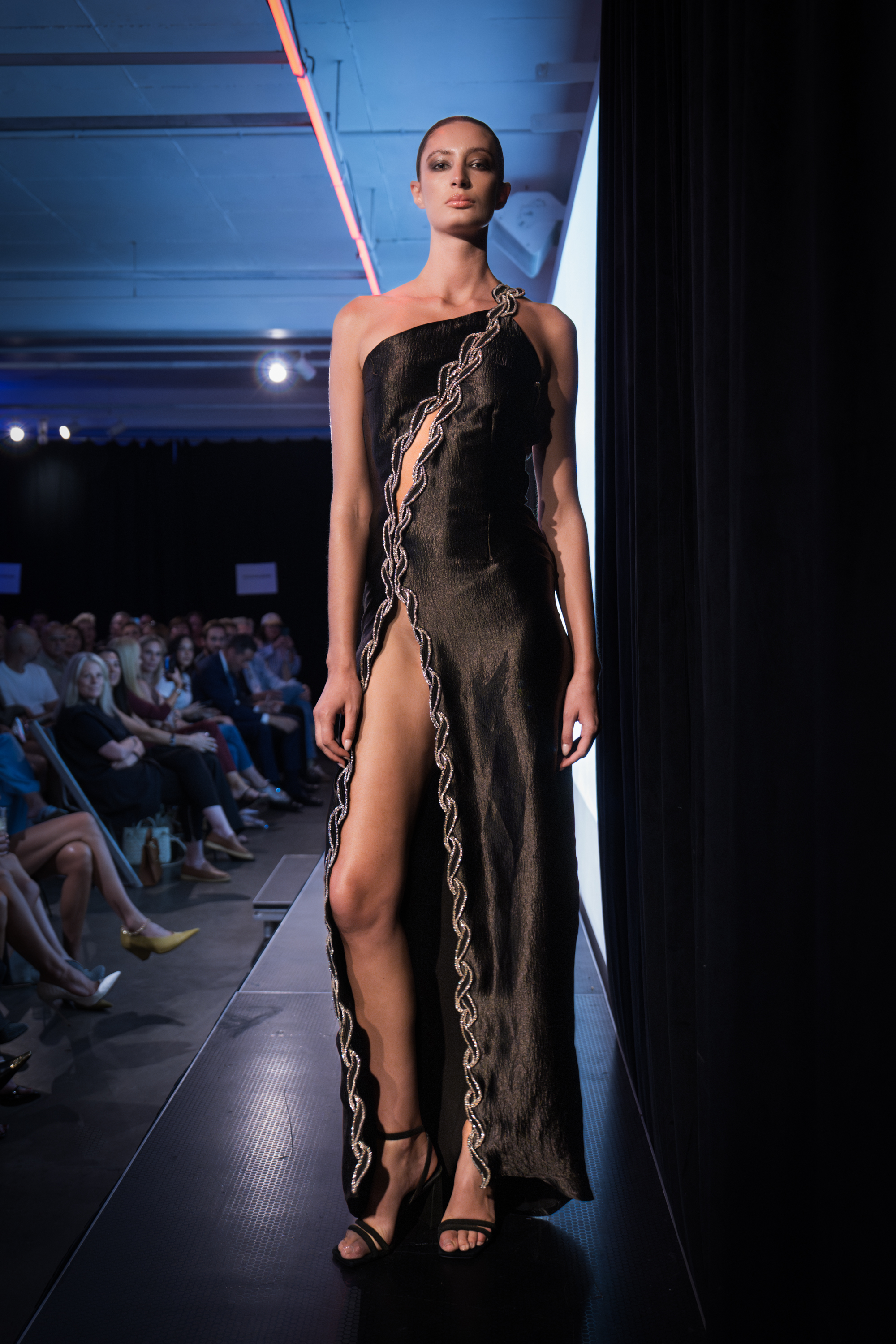
Rocky Rafaela was built on a renegade approach to design. (Supplied)
“I turned pain into power and have never been one to follow trends. My fashion has always been about a lived experience,” she says.
Gregory, who got sober two and a half years ago, says sobriety has also helped her remain focused on her wellbeing.
“My mental health journey was really up and down because when I wasn’t Rocky Rafaela, I struggled with who I was,” she says.
“The brand gave me purpose, power and I was having huge successes, but I was still ending up in rehab because I hadn’t healed a huge part of Rochelle Gregory,” she says.
“Rocky Rafaela was this powerful boss lady who just got herself in the most craziest of places, from the Hadid’s house to billboards, but I had to work on my own foundations,” she says.
Making a short film about her life, with the help of director Nick Kozakis, has been part of the healing process.
Loading…
It’s one she hopes can inspire others going through similar pain to find a way to navigate the depths of theirs.
“I wanted to take people on a journey of my life and show them that while my life started out quite dark, I have transformed it into light and who I am today,” she says.
In the short film, Gregory adjusts the final touches on a dress she is designing.
There’s an emphatic line charged with defiance when a journalist says “what a success story”, to which Gregory replies: “I am just getting started.”