
Welcome back to Diagnosis, a vertical focused on the intersection of healthcare policy and politics.
___
— Sprinkles, Part I —
The Senate’s supplemental funding lists millions for a broad mix of autism services, behavioral health programs and specialty-care initiatives, but the headliner is a nearly $50 million pot of cash to boost nursing home reimbursement rates.
The largest health-related item in either chamber’s supplemental “sprinkle list” was a $49.9 million Nursing Home Reimbursement Rate Adjustment tied to Florida’s Quality Incentive Payment Program, or QIP.
 Senate health sprinkles would boost nursing home payments, autism services and specialty-care programs.
According to the implementing bill language attached to the proposal, the plan would increase the QIP pool from 10% to 18.137% of September 2016 non-property funds while also raising the quality score threshold providers must meet to qualify for payments.
Under the current scoring system, providers must earn at least 20% of all available quality points to qualify for payments from the program’s 10% incentive pool; under the Senate’s language, that minimum threshold would rise to 33%.
Beyond the nursing home allocation, Senate leaders steered millions toward disability and autism-related programs.
The list includes $2 million for Easterseals Better Together autism and disability services, $1.5 million for the Family Initiative Autism Community Center and another $1.5 million for the Els for Autism Specialized Autism Recreation Complex.
Cancer and stroke initiatives also landed sizable allocations.
Moffitt Cancer Center is slated to receive $2.2 million for a digital pathology expansion project. Meanwhile, UF Health projects aimed at expanding stroke treatment infrastructure received a combined $3 million-plus through separate allocations for a comprehensive stroke center and a mobile stroke treatment unit network.
Other major health-related items include $3.6 million for Nova Southeastern University Veterans Health, $1 million for Department of Health digitization and workflow modernization efforts and $1.55 million for Valerie’s House for Grieving Children.
— Sprinkles, Part II —
House leaders are steering millions in supplemental funding toward behavioral health programs, specialty-care initiatives and medical research projects as budget negotiations near the finish line.
A newly released House supplemental funding list includes a $10 million allocation for the APD Waiver Program, which helps people with disabilities cover the costs of residential, behavioral, and therapeutic services. The allotment, $4 million of which is recurring general revenue, is by far the largest health-related item in the chamber’s discretionary spending package.
 House health sprinkles would fund disability services, behavioral health programs and medical research.
The House also teed up several multimillion-dollar investments tied to cancer research and specialized medical treatment, including $3 million for the FSU Institute for Pediatric Rare Diseases and $2.5 million for operational support at the Jackson Health System Miami Transplant Institute.
Cancer-related projects also fared well in the supplemental “sprinkle list,” with lawmakers proposing $1.5 million for Moffitt Cancer Center’s pathology digitization initiative and another $1.5 million for the Sylvester Firefighter Cancer Initiative.
Also in the mix: behavioral health.
The House proposal includes $1.34 million for a central receiving facility operated by Life Management Center of Northwest Florida, $1 million for Citrus Health Network crisis stabilization and emergency services, $1 million for Tampa Bay Thrives youth mental wellness support and $1 million for DCF’s extended-release injectable naltrexone, or Vivitrol, program.
A handful of $1 million-plus sprinkles round out the list: the Department of Health is in line for $1 million for workflow modernization, while another $1 million would go to the Florida Stroke Registry. Likewise, the House is shipping $1.2 million to Flagler Hospital’s BRAVE initiative, which helps young people in Florida with mental health struggles to access resources.
The House supplemental funding is added to the budget at the end of negotiations. Gov. Ron DeSantis can still veto money on the sprinkle list.
— From the Start —
Florida health officials are continuing a statewide push to improve maternal and infant outcomes through the “From the Start” initiative, a Medicaid-focused effort to expand prenatal and postpartum support services.
The Agency for Health Care Administration last week convened providers, insurers and local health leaders at Broward Health Medical Center to discuss the program, which includes expanded benefits for women enrolled in Florida Medicaid, such as unlimited doula services, remote monitoring for high-risk pregnancies and incentives tied to prenatal and postpartum care milestones.
 Florida’s From the Start initiative aims to improve prenatal and postpartum care through Medicaid.
“A healthy beginning is essential to creating a stronger future for families and communities, and our goal is to ensure access to quality healthcare, support, and resources from pregnancy through postpartum,” AHCA Secretary Shevaun Harris said.
The initiative also drew backing from major players in Florida’s healthcare industry, including the Florida Hospital Association and Broward Health.
“Pregnancy and childbirth can become more complex in just a short matter of time, which is why expanding access to care, identifying risks and intervening proactively are vitally important to improve maternal health outcomes,” FHA President and CEO Mary Mayhew said. “Florida’s hospitals are committed to delivering high-quality maternal healthcare services and connecting patients and their families to community-based services.”
Broward Health President and CEO Shane Strum added, “From the Start seamlessly aligns with initiatives and programs already in place at Broward Health to enhance maternal-fetal patient outcomes in South Florida. We are proud that our efforts mirror the statewide priorities being set by Secretary Harris to ensure every expectant mother has access to exceptional prenatal care, and we thank the payers who are enabling us to deliver strong outcomes for mothers and their children.”
Also praising the initiative were Bill Hinsdale, the Plan President at Molina Healthcare, Community Care Plan CEO Jessica Lerner and Sunshine Health CEO Charlene Zein, who said From the Start “provides critical support for mothers and babies and removes barriers to improving health outcomes across the system of care.”
The state says the initiative is designed to increase early prenatal engagement, strengthen care coordination and reduce adverse outcomes such as pre-term births and low birth weight. The program also aims to standardize maternal support services across all Medicaid managed care plans, including expanded access to doulas, behavioral health screenings and remote monitoring tools for high-risk pregnancies.
— National Child Protection —
The Northwest Florida Health Network, along with the Jack Brewer Foundation, recently held a National Child Protection Faith Summit featuring Florida gubernatorial candidate and U.S. Rep. Byron Donalds.
The event was held at the Museum of the Bible in Washington, D.C. and drew lawmakers, clergy, policy experts and representatives of advocacy organizations from across the country. It focused on protecting vulnerable children and strengthening families through faith-based solutions amid strains on the U.S. child welfare system.
“America’s children are under attack spiritually, culturally, and physically, and we cannot continue outsourcing the responsibility of protecting them,” said Jack Brewer, former NFL star and founder of the nonprofit foundation in his name, which is faith-based.
 Byron Donalds speaks at the National Child Protection Faith Summit. Image via Byron Donalds LinkedIn account.
“Faith communities must once again become the front lines of foster care, adoption, mentorship, and child protection. The Church has always been called to care for the orphan, defend the vulnerable, and strengthen the family, and now is the time for bold action.”
Brewer’s organization has raised an estimated $70 million to support medical aid and additional support for more than 35 orphan centers.
Many of those attending the event offered prayers for Naples Republican Donalds as he races to become the GOP nominee for Governor in the Aug. 18 Primary Election.
Donalds called the event humbling and said child protection efforts need to be expanded in Florida.
“There is no greater measure of a nation than how it treats its children — especially the vulnerable, the forgotten, the abused, the trafficked, and the abandoned,” Donalds said in a post on LinkedIn.
— FSU Health —
A new mobile clinic designed to expand speech and hearing services through Florida State University’s School of Communication Science and Disorders will soon be cruising through portions of the state.
The FSU College of Communication and Information is launching the Health Mobile Speech and Hearing Clinic this Summer. The clinic will provide screenings, evaluations and therapy services to underserved communities in North Florida and the Panhandle.
 Florida State University’s mobile clinic will expand speech and hearing services across North Florida.
The mobile clinic will also provide hands-on experience and clinical training for students in FSU programs.
Becky Greenhill, a speech-language pathologist and clinical instructor, is the director of the mobile clinic program. She said the FSU’s Speech and Hearing Clinic, which serves children and adults with communication disorders, is at the forefront of the effort.
“We want to serve the underserved. In Tallahassee, many people have access to services. But I know that’s not the case for many outside of our city limits — and some inside our city limits as well,” Greenhill said. “We want to be able to reach North Florida and the Panhandle. We’ve outlined from Pensacola to Lake City, but really trying to get in touch with those rural areas that don’t have ready access to services.”
She added that once the mobile clinic gets rolling through North Florida, it will be considered more of a social service provider with health benefits. She said it will be considered a “secondary site” filling in for traditional healthcare settings such as hospitals and stationary clinics.

— Surrounded —
Hospitals are feeling the heat from all sides of the healthcare industry as policymakers make efforts to bring down costs for everyday Americans.
Drugmakers and insurers are seizing on Washington’s affordability focus to redirect scrutiny toward hospitals, arguing that lawmakers should direct their regulatory fire there rather than on pharmaceutical companies or insurance giants.
The pressure campaign is already underway. As reported by POLITICO’s Amanda Chu, PhRMA recently launched a seven-figure ad campaign accusing hospitals of abusing the federal 340B drug discount program, while Hospital Watch — an insurer-backed coalition — has been hammering hospital consolidation as a driver of rising costs.
 Hospitals face mounting pressure from drugmakers, insurers and policymakers over healthcare costs.
The pile-on comes as hospitals are already bracing for major financial headwinds following enactment of nearly $1 trillion in Medicaid cuts tied to President Donald Trump’s “One Big Beautiful Bill Act,” along with the looming expiration of enhanced Affordable Care Act subsidies. At the same time, federal policymakers are weighing additional Medicare payment reductions, tougher merger oversight and changes to hospital drug discount programs.
Hospital leaders increasingly fear they’re losing ground to more unified lobbying operations like PhRMA and AHIP, particularly as Republicans and the Trump administration continue reshaping federal health policy.
“The entire environment right now for hospitals is not a great one,” American Hospital Association executive Lisa Kidder Hrobsky said. “We do feel like we are sort of in constant attack from others outside of the hospital industry.”
— Older Americans Month —
The U.S. Senate is once again using May to spotlight older Americans — and this year’s resolution sailed through unanimously.
Senators approved a bipartisan measure designating May 2026 as “Older Americans Month,” led by Aging Committee Chair Rick Scott and U.S. Sen. Mark Kelly. The resolution recognizes the role older Americans play in communities nationwide while reaffirming support for programs like Social Security, Medicare, Medicaid and the Older Americans Act.
 Rick Scott and Mark Kelly led a unanimous Senate resolution honoring older Americans.
“Our older Americans are the heart of our families and communities, offering wisdom, experience, and service that betters our country,” Scott said in a statement. “From reauthorizing the Older Americans Act to ensuring access to Social Security, Medicare, and Medicaid, this Committee and I are dedicated to protecting the financial security and well-being of older Americans from coast to coast.”
The resolution drew support from both parties, including Aging Committee Ranking Member Kirsten Gillibrand, as well as Sens. Jim Justice, Andy Kim, Tommy Tuberville, Dave McCormick, Ashley Moody, Elizabeth Warren and Susan Collins.
The resolution notes that Americans 65 and older now account for nearly 19% of the nation’s population — a dramatic shift from 1963, when President John F. Kennedy first designated “Senior Citizens Month” — with another 11,467 Americans turning 65 each day.
Read the full resolution Scott submitted here.
— $280 million of hope —
Two bills on medical research carried by U.S. Rep. Gus Bilirakis sailed through the House Energy & Commerce Health Subcommittee.
“While there is still much work ahead, continuing to support research innovation and access to promising therapies offers hope to patients and families confronting these devastating diseases every day,” the Palm Harbor Republican said in Committee.
Both the Stem Cell Therapeutic and Research Reauthorization Act (HR 5160) and Accelerating Access to Critical Therapies for ALS Reauthorization Act (HR 8205) cleared the Committee unanimously.
 Gus Bilirakis-backed medical research bills advance with support for stem cell and ALS therapies.
The stem cell bill will move forward as part of the reauthorization of the C.W. “Bill” Young Cell Transplantation Program, legislation named for longtime U.S. Rep. C.W. “Bill” Young, a Tampa Bay Republican who died in 2013. Bilirakis led that bill with GOP U.S. Reps. Chris Smith of New Jersey and Claudia Tenney of New York, along with Democratic U.S. Reps. Doris Matsui of California, Chellie Pingree of Maine and Kweisi Mfume of Maryland.
“Every year, thousands of Americans are diagnosed with devastating diseases such as leukemia, lymphoma, sickle cell disease and other inherited immune system disorders,” Bilirakis said.
“For many of these patients, a bone marrow or cord blood transplant can provide a critical treatment option and, in some cases, a path toward long-term recovery. Finding a compatible donor, however, is often incredibly difficult, particularly for those who do not have a matching donor within their own family.”
The bill reauthorizes more than $280 million over five years for national cord blood and bone marrow transplant programs.
The ALS bill addresses the needs of those with Lou Gehrig’s disease.
“ALS is a devastating disease that gradually takes away a person’s ability to move, speak, eat and breathe, and today, there is still no cure,” Bilirakis said.
“For many families, time is the greatest challenge. Patients living with ALS cannot afford to wait through years of slow research and regulatory timelines. Congress recognized the reality when it passed the ACT for ALS in 2021. The goal was to accelerate research, improve coordination and expand access to promising investigational therapies. Since then, the program has helped strengthen collaboration between researchers, regulators, manufacturers and patient advocates working to better understand and treat ALS.”
He said the bill would ensure critical research and access efforts continue without interruption, while also bolstering oversight of spending by requiring action plans from the Food and Drug Administration and review of drug and treatment trials.
— Guardrails —
Rep. Vern Buchanan wants to see guardrails protecting the integrity of Medicare.
The Longboat Key Republican, in his capacity as House Ways and Means Health Subcommittee Chair, sent a letter to Centers for Medicare & Medicaid Services (CMS) Administrator Dr. Mehmet Oz. The message, sent jointly with House Energy and Commerce Health Subcommittee Chair Morgan Griffith, praised Oz for an initiative to flush out waste, fraud and abuse.
“We appreciate CMS’s leadership and its ongoing commitment to protecting the Medicare program while advancing innovative models of care,” wrote Buchanan and Griffith. “We look forward to continued collaboration to ensure that program integrity efforts and accountable care initiatives work in tandem to strengthen Medicare for beneficiaries, providers and taxpayers alike.”
 Vern Buchanan presses Medicare officials for guardrails on waste, fraud and payment benchmarks.
The lawmakers encouraged Oz to explore targeted protections for accountable care organizations affected by high-spending categories and to establish guardrails that limit the impact of inaccurate trend calculations on payment benchmarks.
“These considerations are particularly important for primary care providers and other clinicians who rely on stable benchmarks to sustain investments in care coordination, patient outreach, and other services that improve outcomes but are not traditionally reimbursed under fee-for-service Medicare,” the letter reads.
“Maintaining a predictable and accurate benchmarking environment will help preserve these investments and support continued participation in accountable care models.”

— LOBBYISTS —
Travis Blanton, Stefan Grow, Johnson & Blanton: White-Wilson Medical Center, P.A.
Monte Stevens, The Southern Group: Compass Health Systems
Amanda Stewart, Johnston & Stewart Government Strategies: Knoa Pharma
Alan Suskey, Shumaker Advisors Florida: Ennoble Care
— ICYMI —
“Short naps, long hours: How autism clinics squeeze Medicaid dollars out of preschoolers” via Sarah Kliff and Margot Sanger-Katz, with visuals by Erin Schaff and Asmaa Elkeurti of The New York Times — Across the United States, where treatment for autistic children was once fairly rare, thousands of clinics have sprung up, turning a once obscure therapy into a multibillion-dollar industry. The growth has been fueled by rising autism diagnoses, state insurance mandates and a federal requirement that Medicaid cover the therapy. Private equity investors have rushed into the business, buying up chains and opening new clinics. This rapid expansion has played out with little regulatory oversight and brought allegations of children being harmed by profit-motivated practices. In interviews, dozens of current and former clinic workers described how clinics frequently overprescribe hours, even recommending that some families remove children from school so they can receive more therapy.
“RFK Jr. taps Stephanie Haridopolos as temporary Surgeon General” via Jessica Nix and Rachel Cohrs Zhang of Bloomberg News — Health Secretary Robert F. Kennedy Jr. enlisted Stephanie Haridopolos — a Satellite Beach physician married to U.S. Rep. Mike Haridopolos, the former Senate President — to temporarily take on some of the responsibilities of the U.S. Surgeon General, he said in an email. Before her federal move, Haridopolos led the 2023 push to expand Florida KidCare eligibility and was heavily involved in lobbying for the state’s pill mill law. The Trump administration has not had a confirmed Surgeon General because two nominees for the role were pulled before confirmation votes in the Senate. In her new role, she will promote public-health actions, advisories and guidance until the new nominee is confirmed.
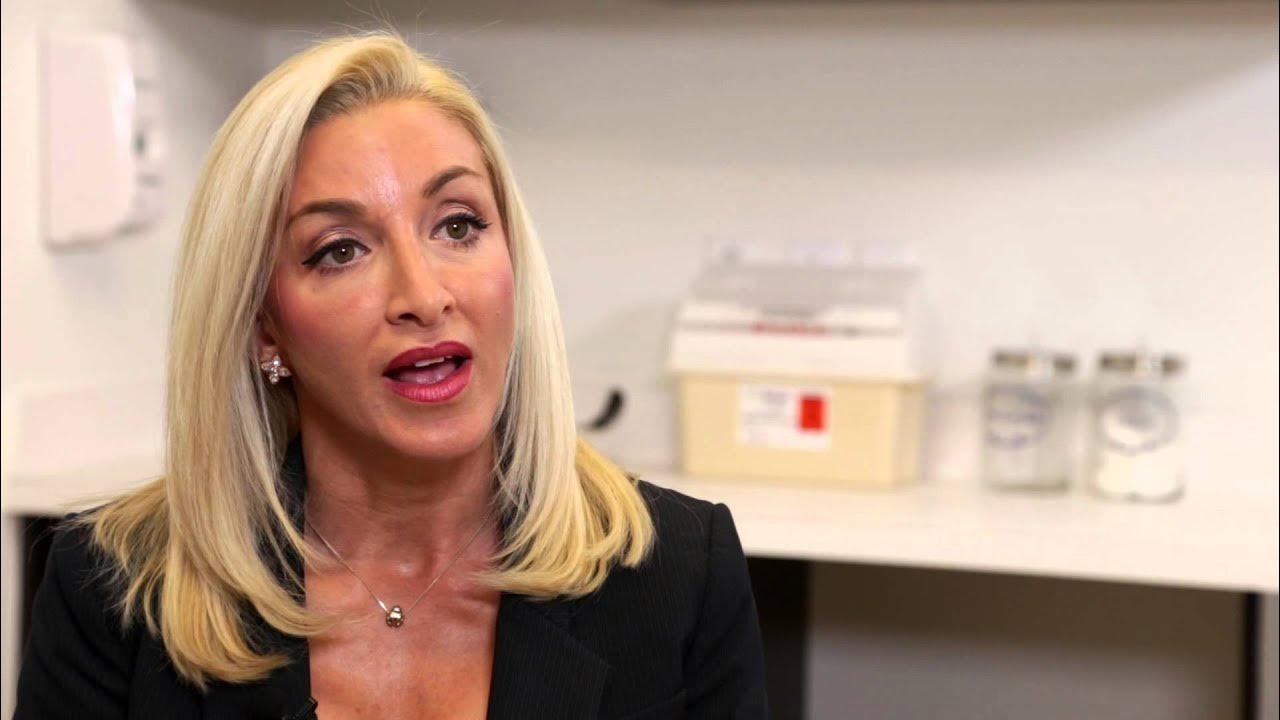 Dr. Stephanie Haridopolos was appointed as a temporary U.S. Surgeon General.
“How Zyn became all the rage inside Trump World — including with RFK Jr.” via Liz Essley Whyte, Josh Dawsey and C. Ryan Barber of The Wall Street Journal — Nicotine pouches are gaining growing attention inside the Trump administration as federal regulators loosen oversight and the products expand rapidly in the tobacco and nicotine market. A recent White House meeting between Trump and tobacco executives reportedly highlighted interest in pouches, followed by an FDA policy shift allowing more nicotine and vaping products to remain on shelves while awaiting scientific review. Supporters argue that pouches offer a lower-risk alternative to cigarettes and vaping, particularly for adult smokers seeking to quit. Public-health experts, however, warn that they still carry cardiovascular risks, addiction concerns and potential harm to youth. Popular products such as Zyn, VELO and on! have surged in sales and visibility, especially among conservative circles and administration officials. The debate reflects broader tensions among harm reduction, regulation and public-health safeguards.

— RULES —
The Department of Health’s final rule (64-4.216) regarding MMTC Authorization Procedures goes into effect on May 21. More here.
The Department of Health’s final rules (64-4.300–64-4.314) regarding CMTL On-Site Inspections go into effect on May 28. More here.
The Board of Opticianry’s final rule (64B12-9.001) regarding Examination for Licensure goes into effect on May 31. More here.
The Agency for Health Care Administration Health Facility and Agency Licensing’s final rule (59A-35.115) regarding Patient Safety Surveys goes into effect on May 31. More here.
The Agency for Health Care Administration Health Facility and Agency Licensing’s final rule (59A-4.167) regarding Consumer Satisfaction Survey goes into effect on May 31. More here.
The Agency for Health Care Administration Health Facility and Agency Licensing’s final rule (59A-8.0095) regarding personnel goes into effect on May 31. More here.
The Agency for Health Care Administration Health Facility and Agency Licensing’s final rule (59A-8.0099) regarding Minimum Training Requirements for Home Health Aides for Medically Fragile Children goes into effect on May 31. More here.
The Agency for Health Care Administration Medicaid’s final rule (59G-4.072) regarding Durable Medical Equipment and Medical Supply Services: Specialized goes into effect on May 31. More here.
The Agency for Health Care Administration final rule (59G-4.073) regarding Durable Medical Equipment and Medical Supply Services: Orthotic and Prosthetic goes into effect on May 31. More here.
The Agency for Health Care Administration final rule (59G-4.074) regarding Durable Medical Equipment and Medical Supply Services: Respiratory goes into effect on May 31. More here.
The Agency for Health Care Administration’s final rule (59G-4.075) regarding Durable Medical Equipment and Medical Supply Services: Wheelchairs, Hospital Beds, and Ambulatory Aids goes into effect on May 31. More here.
The Agency for Health Care Administration’s final rule (59G-4.076) regarding Durable Medical Equipment and Medical Supply Services: Continence, Ostomy, and Wound Care goes into effect on May 31. More here.
The Agency for Health Care Administration’s final rule (59G-4.077) regarding Durable Medical Equipment and Medical Supply Services: Enteral and Parenteral Nutrition goes into effect on May 31. More here.
The Agency for Health Care Administration’s final rule (59G-4.085) regarding Early Intervention Services goes into effect on May 31. More here.
The Agency for Health Care Administration’s final rule (59G-4.140) regarding Hospice Services goes into effect on May 31. More here.
The Board of Pharmacy’s final rule (64B16-26.200) regarding Examination Requirements; Passing Scores goes into effect on June 1. More here.
The Board of Dentistry’s final rule (64B5-2.013) regarding dental examination goes into effect on June 1. More here.
The Board of Dentistry’s final rule (64B5-2.0135) regarding Dental Hygiene Examination goes into effect on June 1. More here.
The Board of Dentistry’s final rule (64B5-2.014) regarding Licensure Requirements for Applicants from Accredited Schools or Colleges goes into effect on June 1. More here.
The Board of Dentistry’s final rule (64B5-2.0150) regarding American Dental Licensing Exam Scores from Other Jurisdiction: Full-time Practice Requirements goes into effect on June 1. More here.
The Department of Health’s final rule (64-4.315) regarding CMTL fines, suspension, and revocation goes into effect on June 2. More here.
— PENCIL IT IN —
May 23
Happy birthday to Sen. Ana Maria Rodriguez!
May 29
Happy birthday to Reps. Daryl Campbell and Kim Berfield!
May 30
Happy birthday to Rep. Kaylee Tuck!
May 31
Happy birthday to Rep. Nathan Boyles!
June 1
Happy birthday to Sen. Danny Burgess!
June 2
Happy birthday to Reps. Marie Woodson and Susan Plasencia!
June 5
Happy birthday to Rep. Yvette Benarroch!
July 11
Remote Area Medical is seeking volunteers to help provide free dental, vision, and medical services in Gainesville and surrounding communities on July 11-12. The clinic will be held at Eastside High School, 1201 S.E. 43rd St. Volunteers should visit https://www.ramusa.org/volunteer or call 865-579-1530 for more information.