
Opening another inpatient psychiatric treatment unit for teens was critical to John Bigger, Cape Fear Valley Health’s corporate director of psychological services.
The same day the health system held its ribbon-cutting for a new unit in Lillington, Bigger said there were “probably two or three kids” waiting for treatment at Central Harnett Hospital’s emergency department. He said the same number likely sat in the emergency departments at the health system’s Betsy Johnson Hospital in Dunn and Cape Fear Medical Center in Fayetteville.
“We’ve been working on this for over five years now,” Bigger told the crowd of health care workers and legislators gathered for the unveiling of the Cape Fear Valley Dorothea Dix Adolescent Care–Lillington facility on May 22. “We saw the high number of adolescent patients in our emergency departments, and just throughout the community, and the means we’ve got to help take care of these children.”
North Carolina doesn’t have enough pediatric inpatient psychiatric beds to serve children experiencing behavioral health crises. Many children have to wait hours or days in emergency departments for spots to open up. Cape Fear Valley Health’s Lillington unit is the 17th pediatric inpatient psychiatric facility serving more than 2.3 million children in North Carolina. The unit’s 16 new beds bring the state’s total to about 388.
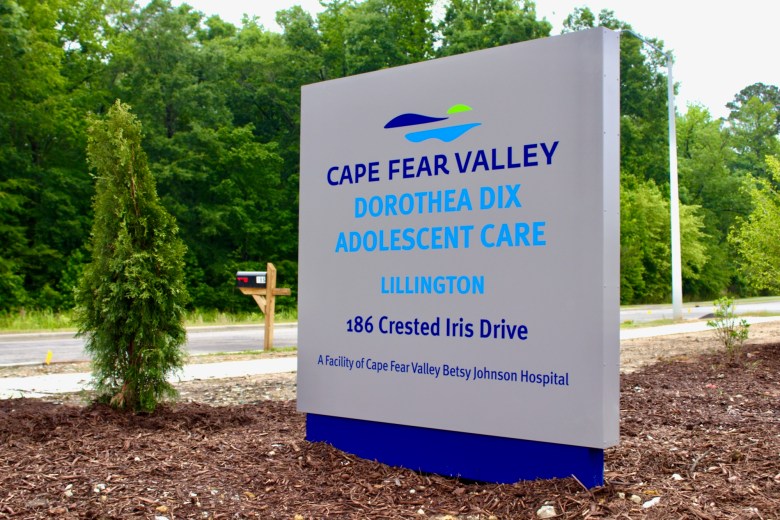 The new Cape Fear Valley Dorothea Dix Adolescent Care–Lillington features 16 beds to care for children aged 12 to 17 in mental health crises. Credit: Morgan Casey / CityView
Cape Fear Valley Health built the unit in Harnett because of the county’s growing population, Bigger said. The number of residents increased by 2.5% between 2024 and 2025, according to the U.S. Census Bureau.
The facility, located at 186 Crested Iris Drive, is set to open in early summer. During a typical stay of between three and five days, about 27 health care providers will be identifying a child’s “underlying issues and providing evidence-based recommendations to guide future treatment,” according to a press release from Cape Fear Valley Health.
“If you can continue to add positives into a child or a teenager’s life, maybe those positives lead to the next step that leads them to a better future,” said Dr. Amir Gassemi, the unit’s director and psychiatrist.
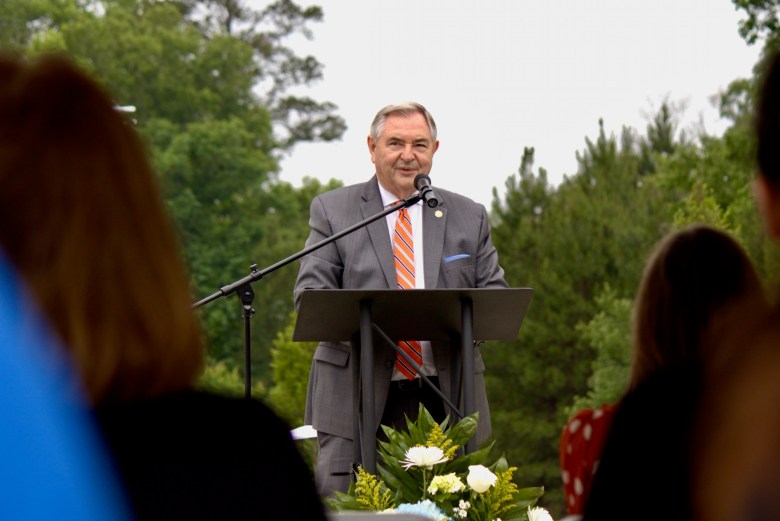 State Sen. Jim Burgin tells attendees of the ribbon-cutting ceremony for Cape Fear Valley Dorothea Dix Adolescent Care–Lillington about the cost of involuntary commitment to the state on Friday, May 22, 2026. Credit: Morgan Casey / CityView
Increasing Need
The Lillington facility is the second adolescent inpatient psychiatric unit under Cape Fear Valley Health; the first, another 16-bed unit, opened in Fayetteville in 2022. The new unit under Cape Fear Valley Health’s subsidiary, Harnett Healthcare, will primarily serve Harnett County and surrounding communities in Fayetteville, Raleigh, and Fort Bragg, according to health system officials.
However, the state’s limited number of psychiatric facilities serving children will likely mean the service area is a lot larger. North Carolina runs three psychiatric hospitals in Burke, Granville, and Wayne counties.
Most pediatric inpatient beds are located in the central and eastern parts of the state, according to an analysis by researchers from Appalachian State University.
“You’ll have children being transported from Asheville to Fayetteville to receive treatment,” Dr. Ken Fleishman, Cape Fear Valley Health’s chief of psychiatry, said during the ribbon-cutting ceremony. “Their families can’t be an integral part of treatment.”
 Cape Fear Valley Dorothea Dix Adolescent Care–Lillington is expected to serve 12- to 17-year-olds in mental health crisis from Harnett County and surrounding communities in Fayetteville, Raleigh, and Fort Bragg. Credit: Morgan Casey / CityView
More children in North Carolina are reported to have at least one mental, emotional, developmental, or behavioral health problem since 2018, when the National Survey of Children’s Health started asking the question. The figure jumped from 22.6% that year to 25.4% in 2024, according to the most recent data released.
Bigger said some of the increase in mental health disorders in North Carolina’s youth ties back to the coronavirus pandemic, which forced students home and onto their devices. He said the state is now dealing with the ramifications of children’s lack of social development during that time.
Mental health care facilities haven’t kept up with the increased need, Cape Fear Valley Health officials and physicians said at the ribbon-cutting event. Staffing shortages, particularly among nurses, are leaving over 300 beds in the state’s psychiatric facilities empty, according to state Sen. Jim Burgin, a Republican whose District 12 represents Harnett, Lee, and Sampson counties.
In 2019, over 72% of children in North Carolina did not receive needed treatment or counseling from a mental health professional, according to research published in the peer-reviewed journal JAMA Pediatrics. It was the highest rate in the country.
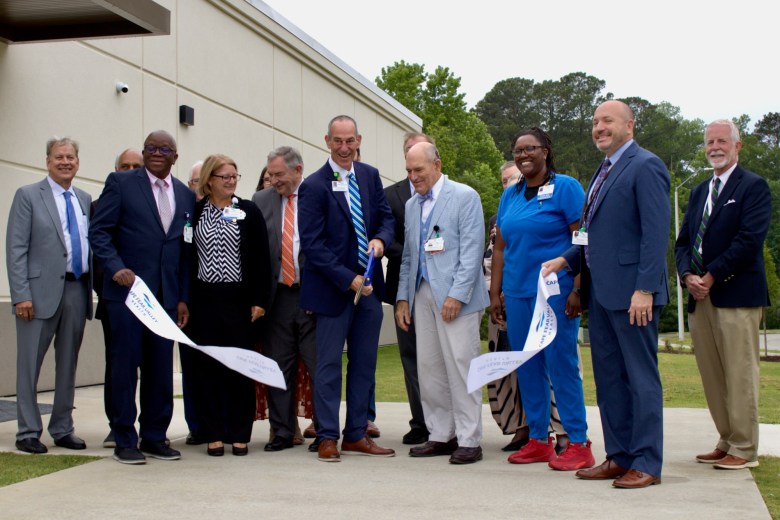 Officials and physicians from Cape Fear Valley Health, state Sen. Jim Burgin, and representatives of Harnett Health Foundation cut a ribbon to open the new Cape Fear Valley Dorothea Dix Adolescent Care–Lillington on Friday, May 22, 2026. Credit: Morgan Casey / CityView
Involuntary Commitments
Thousands of North Carolinian children ages 5 to 17 and insured through Medicaid turn to emergency departments for behavioral health care every year, according to data from the N.C. Department of Health and Human Services. An increasing number of those children are deemed a danger to themselves or others by emergency physicians and involuntarily committed, according to a 2025 report by Disability Rights North Carolina.
North Carolina’s involuntary commitment rules can limit parents’ ability to determine their child’s treatment, as was the case for a friend of Burgin’s.
The friend was struggling to bring home his 14-year-old daughter, who was involuntarily committed in an Atrium Health hospital in Charlotte for eight days, Burgin said. He worked with Devdutta Sangvai, secretary of the N.C. Department of Health and Human Services, to move the girl to a facility in Raleigh.
“It should not take a senator and the secretary of DHHS to be involved to take care of children,” Burgin told the crowd.
Burgin helped get $8 million in one-time state funding to construct the new adolescent inpatient psychiatric unit in Lillington. He told Border Belt Independent he plans to request $10 million more from the state to double its size.
“We still have all these kids that are involuntarily committed,” Burgin said. “This is a great alternative. Much cheaper. Local. We won’t be sending kids all over the state.”
Burgin estimated the state would save about $600 million a year if people who were involuntarily committed were admitted to facilities like the one in Lillington or the state’s psychiatric hospitals instead of being kept in emergency rooms.
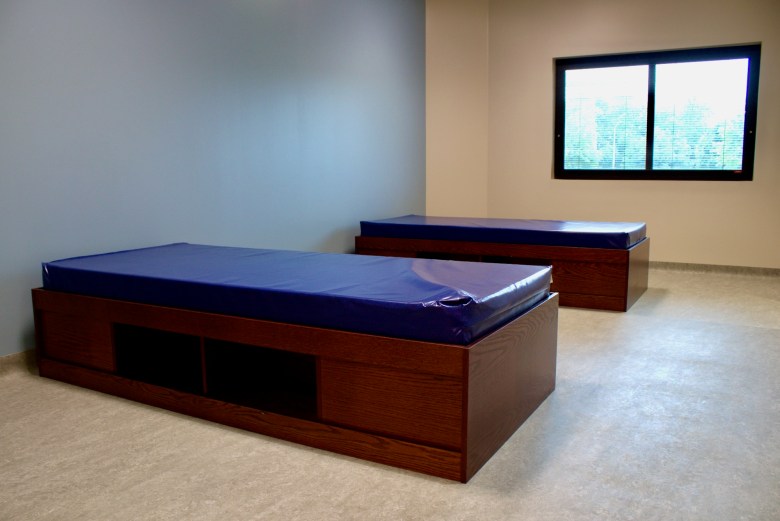 Cape Fear Valley Dorothea Dix Adolescent Care–Lillington has 16 inpatient psychiatric beds for children aged 12 to 17, bringing North Carolina’s total pediatric inpatient psychiatric beds to 388. Credit: Morgan Casey / CityView
The state health department is investing in other avenues to keep children and adults with mental health disorders out of emergency rooms. In March, the department gave $1.5 million to Trillium Health Resources to improve its mobile crisis team’s response.
Mobile crisis teams can be especially crucial in rural communities. Twenty-nine counties in the state don’t have any psychologists, according to 2024 figures from the North Carolina Health Professions Data System. Thirty-two don’t have any psychiatrists, who can prescribe medications for behavioral health disorders.
The state health department also used $2.2 million to support the construction or expansion of 13 behavioral health urgent care facilities across the state. One opened in Robeson County earlier this month and can serve kids as young as 4 years old.
“These are all bipartisan issues,” Burgin said. “It doesn’t matter if you’re Republican or Democrat; nobody wants a kid to suffer. Nobody wants a kid in an emergency room if they don’t need to be there.”
Gassemi, the psychiatrist leading the Lillington unit, acknowledged that the new facility is a “drop in the bucket” to address the need for more inpatient beds for North Carolina’s youth.
“We try to help as many people as we can,” Gassemi said. “Just try to do the best that we can with what we have, while also realizing that, as of now, our reach isn’t wide enough to help everybody.”