
One Thanksgiving, while most families gathered around dinner tables, Janina Estrada cruised the neighborhoods of Orange, California, searching for her 42-year-old son Jimmy Barela in the rain. For nearly two decades, he had cycled through schizophrenia, addiction, diabetes, homelessness and psychiatric crises. She knew his usual sleeping spot: behind the dumpster at Jack in the Box. Sometimes he would run from her.
But in October 2023, Estrada believed she finally had a different option: California had just launched the Community Assistance, Recovery and Empowerment (CARE) Court, a new program designed for people with severe psychotic disorders. Less a traditional court than a structured intervention, CARE aims to connect people with housing, medication and treatment before they spiral into jail, conservatorship or death.
“These are the forgotten people,” Estrada says. “They were left behind. I was not about to leave my son out there.”
She filled out the six-page petition herself. Within days, two Orange County behavioral clinicians, Juan Banda and Chauncey Bowie, were assigned to Jimmy’s case. “If it wasn’t for Juan and Chauncey,” Estrada says, “my son wouldn’t be here anymore.”
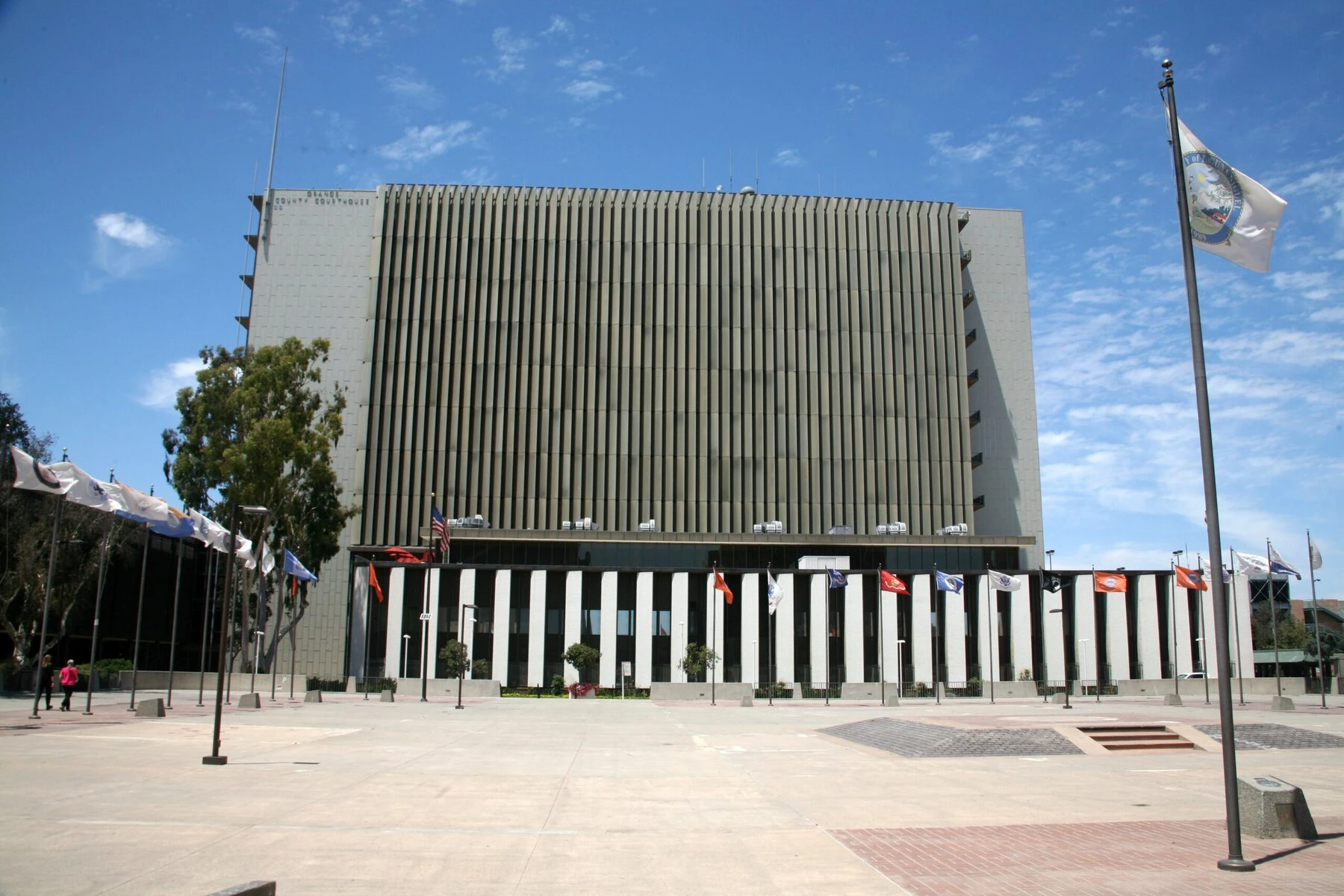 The Orange County Courthouse in Santa Ana, California. Credit: Mike Ledray / Shutterstock
They work at one of the most challenging intersections in American mental health care: With their calm, grounded demeanor, they approach people with schizophrenia and other severe psychotic disorders who do not know they are sick, distrust institutions or experience paranoia so acute that even a greeting can feel like a threat.
Before schizophrenia overtook Jimmy Barela’s life, he had worked as a dental assistant and truck driver, married and raised two children. Over the years, he drifted through shelters, hospitals, jail and conservatorships that never lasted. Police and crisis teams often refused to intervene unless he became violent.
Before CARE, Estrada would call 911 or Orange County’s Mobile Crisis Assessment Team (CAT), “always talking to a different person, always starting over.” Estrada recalls a particularly harrowing incident when her son was running into oncoming traffic during a psychotic episode and she called police. “They came and gave him a traffic ticket! A traffic ticket!” she repeats, shaking her head at the absurdity, noting that she then had to resolve the tickets for her son. “People like him,” Estrada says, “you can keep him in a clinic, but eventually they have to come out.”
CARE provided reliable, steady outreach in Banda and Bowie, which made a crucial difference for the family.
Weighed down by negative news?
Our smart, bright, weekly newsletter is the uplift you’ve been looking for.
HOPE HAPPENS HERE, oversized block letters declare on the fence outside the Hub Resource Center in Orange. Behind the fence, a young woman in a wheelchair rolls toward a picnic table for a meal. A man drags his laundry toward the washer. A small group gathers for Bible study. Banda often brings clients like Jimmy Barela here first so they can take a shower, get a free meal and wash their clothes. “It’s all about building trust,“ he says. “You don’t start by telling someone they have to come to court with you. You start by offering them food and asking them what they need. The client leads the conversation.“
That philosophy, supported by research, has shaped Orange County’s version of CARE. While the state law allows judges to order treatment in limited circumstances, Orange County has largely chosen another route: an intensely voluntary model built around relentless outreach, repeated visits — and a willingness to keep showing up even after a person says no or relapses. “Don’t give up” is Banda’s most important motto: “We’ll try as often as we can.”
Veronica Kelley, director of the Orange County Health Care Agency, is unequivocal about the philosophy behind it. “Coercion does not work if we want to change things long-term,” she says. The work begins, she argues, not with a summons or a bench appearance, but with a question: “What do you need?”
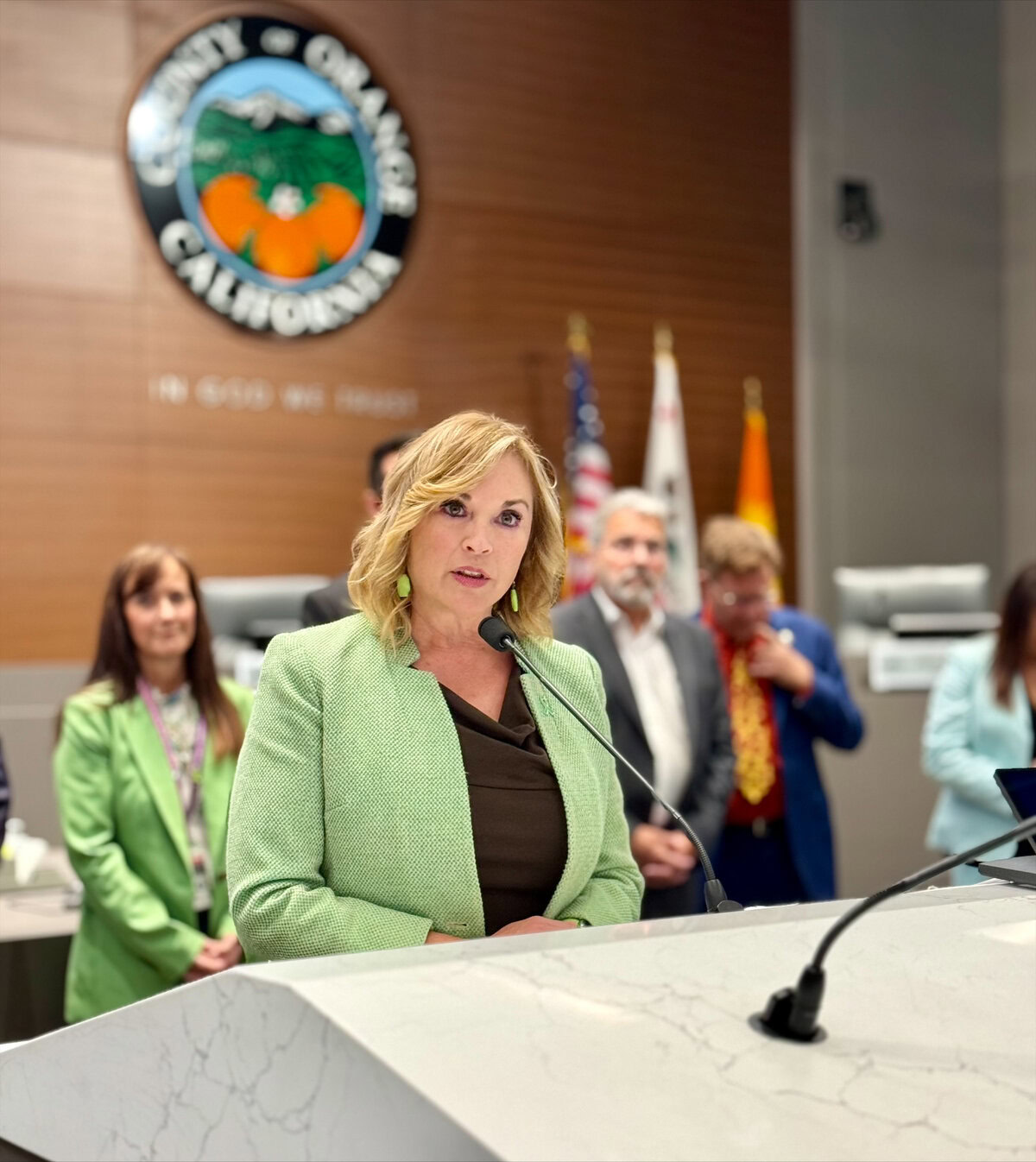 For Veronica Kelley, the work begins with a question: “What do you need?” Courtesy of OC Health Care Agency
Kelley, who was driven to work in mental health due to addiction in her family, says she learned this lesson long before CARE existed. If a person is housed, it could take about 20 visits before trust forms; if unhoused, nearly 40. But once the relationship is established, Kelley says, 90 percent enter voluntary treatment.
Banda spends his days driving between San Clemente and La Habra looking to connect with one of his 26 clients, checking psychiatric wards and visiting the almost invisible spaces where crisis lives: makeshift shelters behind a dumpster, tents under a bridge, jail cells or family homes where relatives have spent years bracing for the next breakdown. Every CARE client is offered housing alongside treatment. “Programs like CARE Court are needed because this population gets overlooked,” says Banda. “The program has given attention to this diagnosis of severe psychotic disorders.”
Orange County’s first CARE Court graduate — a woman with a history of substance use who had never completed treatment before — has become a symbol of what the program can achieve. She was initially too disoriented to understand why anyone was approaching her but gradually accepted help after repeated visits. With time and patience, she moved into transitional housing and eventually improved enough to begin seeing the possibility of a life beyond addiction.
Jimmy Barela’s example illustrates both the promise and peril of the program. When Banda and Bowie first encountered him at an Arco gas station, he was so unstable they immediately hospitalized him. “That’s not how we usually do it,” Banda says with a rueful smile, “but it was necessary. After that, he didn’t speak to us for a month.” Barela, sitting next to him, quietly nods.
Over the following six months, they slowly built trust and offered him various housing options, including a motel, a shelter and a halfway house. But Barela missed curfews, relapsed and drifted away. Only after months on antipsychotic medication did his thinking begin to stabilize. “It took us four months before he signed the care agreement,” Banda recalls.
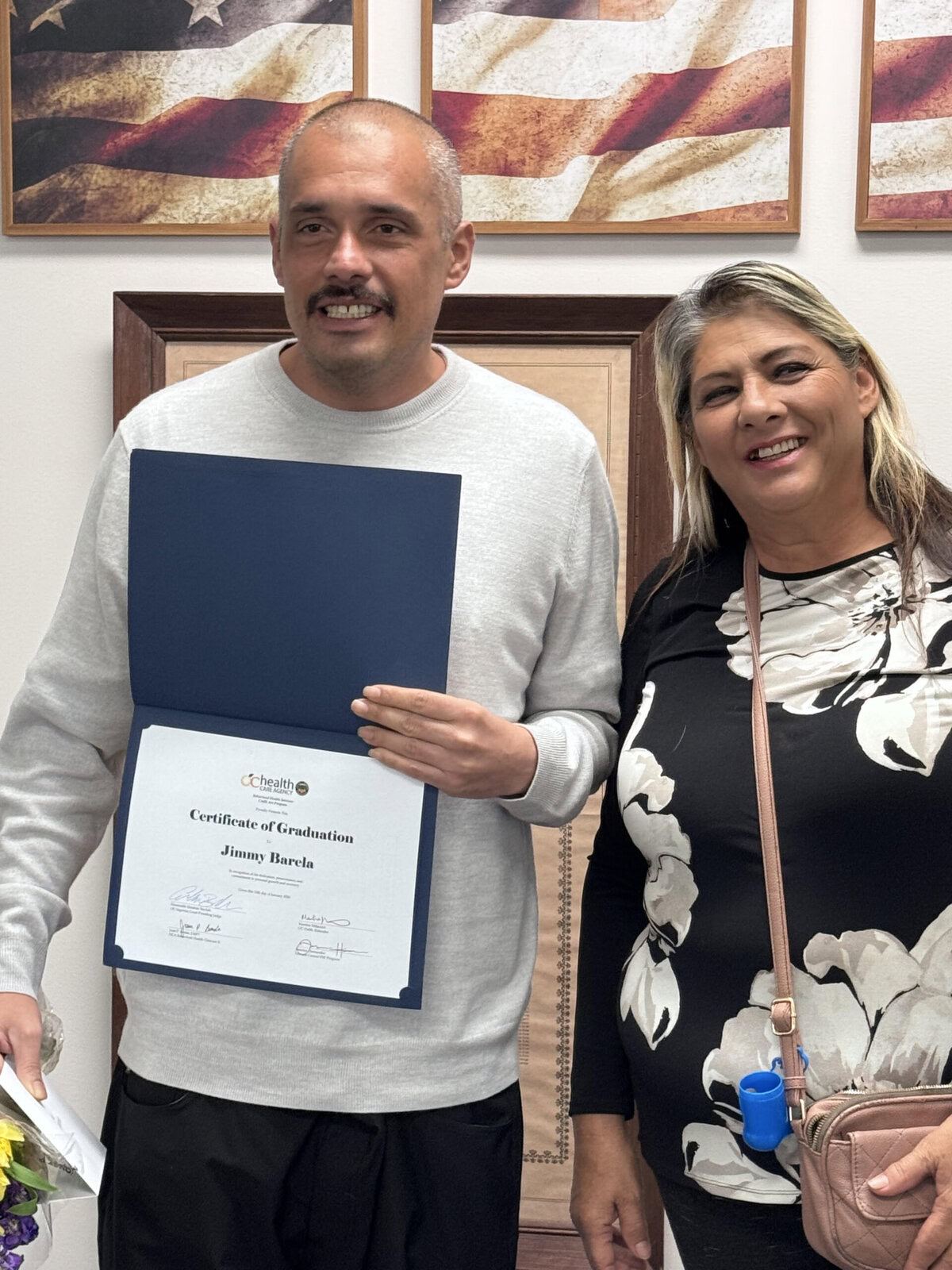 Jimmy Barela (pictured with his mother, Janina Estrada) became Orange County’s second CARE Court graduate in January 2026. Courtesy of Janina Estrada
But eventually Barela started seeing a nurse, a doctor and a substance abuse counselor regularly. He now lives in a halfway house, where he enjoys outings to the beach and baseball games. “I like it there,” he says with a smile.
In January 2026, he became Orange County’s second CARE Court graduate. A picture shows him with his certificate and a cake. “He wouldn’t be here without CARE Court,” Estrada says, patting her son’s back.
CARE also functions as an alternative to incarceration and conservatorship. “If someone commits a crime due to mental illness, CARE Court can get involved to provide treatment,” Banda explains. “If there is no program like us in place, they have to stay in prison. We’re intervening.”
Still, the system’s contradictions remain unresolved. Critics argue that a court-based model is never fully voluntary when it unfolds under judicial authority and the shadow of more restrictive options. Families, meanwhile, often voice the opposite concern: that CARE moves too slowly to save people in immediate danger.
California’s struggle over how to treat severe mental illness has swung for decades between competing impulses: institutionalization, deinstitutionalization, coercion and neglect. Since the 1950s, when it was far too easy to lock away mentally ill patients, California has steadily narrowed the criteria for involuntary psychiatric treatment. The consequences are visible in encampments across most major California cities, though homelessness dropped last year by roughly nine percent.
After he took office in 2019, Governor Gavin Newsom promised to address the intertwined homelessness and mental health crises as a state priority. He championed CARE but has recently criticized its slow adoption, including in Orange County.
Kelley understands that frustration, but she resists the premise that force is the answer. Her larger complaint is structural. Orange County can offer services, but it cannot easily fix the housing shortage, the funding gaps or the fragmentation between public and private care. She describes CARE court as an “unfunded mandate,” with one-time state funding that could not be used for staffing. She estimates the county spends about $4 million a year to run the program, pulling staff from its existing assisted outpatient treatment operation to make CARE work. That arrangement has kept the system afloat. But it also exposes a deep truth: the law may have created a new pathway, yet the county still has to build and maintain the road.
The county’s own figures show how labor-intensive the model is. One of the biggest criticisms of the CARE model is that it doesn’t reach as many people as hoped. Since its inception less than three years ago, Orange County has received 231 petitions from family members, first responders or health care providers. Of those, 79 clients are currently active, 27 have entered care agreements and six have completed the program. Dozens more remain in outreach, people not yet ready or not yet found.
Statewide, the gap between ambition and reality is even clearer. As of early 2026, more than 3,800 CARE petitions had been filed, resulting in 893 voluntary agreements and 32 court-ordered treatment plans. Those figures fall far short of early projections that estimated 7,000 to 12,000 participants annually.
Banda defends the county’s record by explaining the pace reflects the reality of the work. For supporters, that patience is the point. For critics, it reveals the limits of the system. For families like the Estradas, it is at least an attempt to answer a question that has haunted California for years: How do you help someone who does not believe they need help?
The strain on families can be immense. Over years of trying to help her son, 62-year-old Janina Estrada lost her housing because neighbors and landlords complained about Jimmy’s behavior during psychotic episodes. While she and her husband Florencio are on the waitlist for family housing, they live in a white transport van that they regularly pull up in front of Barela’s halfway house to make sure he has eaten and taken his medication.

Wait, you’re not a member yet?
Join the Reasons to be Cheerful community by supporting our nonprofit publication and giving what you can.
The family measures success differently now. For Jimmy, the turning point was being welcomed back into his son’s family. A smile unfolds over his face as he recalls holding his granddaughter, seven-month-old Adeline.
What Orange County has built is not a cure, and its leaders do not claim otherwise. The success, Kelley says, is not in hitting a target number of petitions. It lies in saving one life at a time, in helping one person accept treatment, in keeping one family from being abandoned by every system that should have helped sooner.
In Banda’s outreach car, we pass a blue van parked at a Chevron station in Garden Grove with the label “Be Well,” a city initiative to provide medical care on the street. It features the same slogan as the Hub in Orange: Hope happens here.