
Pasco, Wash.
Franklin County leaders continued to push back on signing a contract to help pay for uninsured residents in need of mental health and addiction treatment.
The Columbia Valley Center for Recovery still hasn’t opened, but Benton County leaders are hopeful it will be able to soon.
Franklin County leaders still don’t have a contract in place with Comprehensive Healthcare and are claiming they’re being unfairly pressured, they said in a news release on Wednesday.
It comes a week after commissioners approved the second half of a previously committed payment for quality of life improvements at the center.
They went 50-50 with Benton County on $11 million in “betterments” such as a commercial kitchen and family room. Each county agreed to pay $5.4 million, but Franklin froze the second half of its payment earlier this year until it received answers from Comprehensive Healthcare on operations.
 Matt Rasmussen, Benton County deputy administrator, stands in a family room of the Columbia Valley Recovery Center in downtown Kennewick discussing the construction progress of the facility. Bob Brawdy bbrawdy@tricityherald.com How is the center being paid for?
Right now, Benton County is covering the cost for the center’s staff under a start-up agreement with Comprehensive Healthcare. The agreement allows the healthcare provider to get the facility up and running before switching to a standard operating contract once insurance and Medicaid reimbursements are being processed.
Leaders in both counties approved a 0.1% sales tax for mental health and recovery services. Franklin County commissioners acknowledged that while it does help pay for things like therapeutic courts, they passed it with the intention of helping pay for the recovery center.
In Franklin County, that sales tax brings in more than $3 million a year, according to recent discussions. They have about $8 million left in the fund after the betterments payment.
Initially the two counties discussed evenly splitting the cost of operations at the center, but Benton County shifted their approach after Franklin County began pulling out of key bi-county agreements last year, putting jobs and regional services at risk.
Now other counties are being given the opportunity to contract directly with Comprehensive Healthcare to help pay for their uninsured residents. Benton County believes this will give other counties more control over their spending and the terms of the agreements.
About 80 percent of Franklin County’s population is in Pasco, but the city council can’t direct how that special-use county sales tax is used. The council recently asked city staff to send a letter to Franklin County asking for more information about its plans.
Franklin County commissioners continue to claim that a contract won’t impact whether their residents will be served or if law enforcement can drop patients off. Those claims leave out what the actual concerns are surrounding uninsured patients.
They also claimed Benton County is being hypocritical because they don’t have their own contract in place, and said they are the victims of a coordinated pressure campaign after a group of stakeholders they appointed to the bi-county Behavioral Health Advisory Committee spoke at a recent meeting.
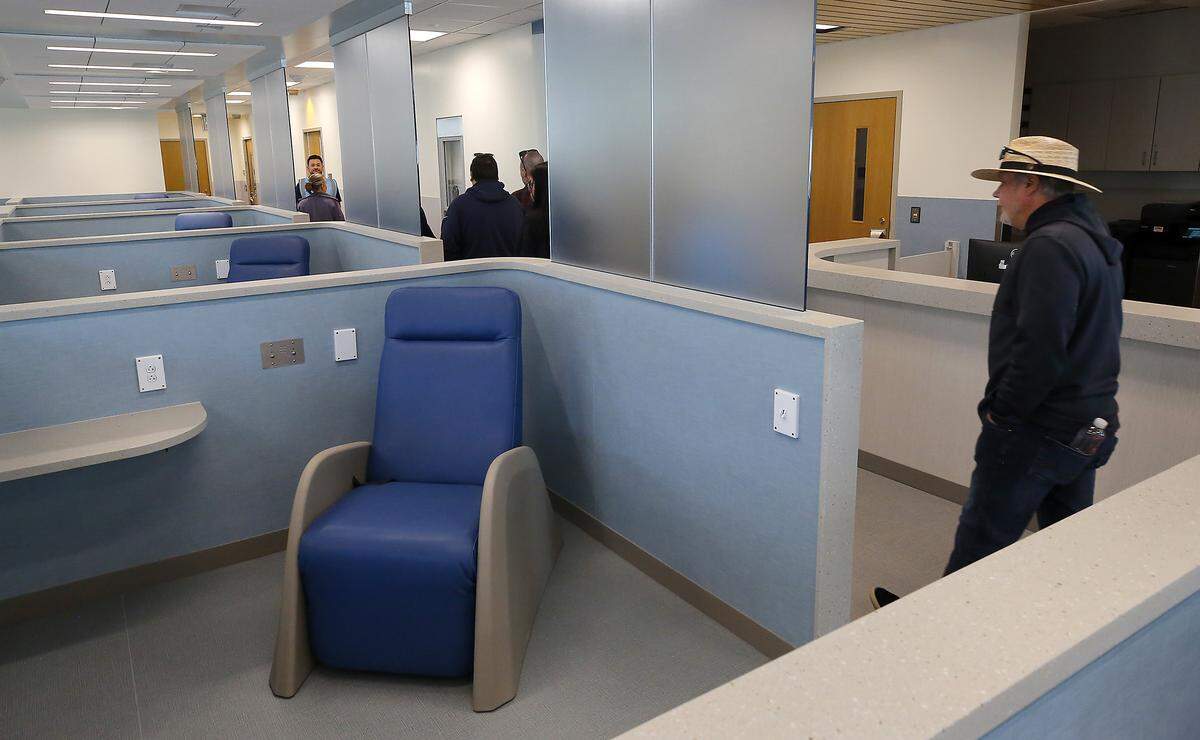 Community members take a tour through the Columbia Valley Center for Recovery in downtown Kennewick following a grand opening and ribbon cutting ceremony. Bob Brawdy bbrawdy@tricityherald.com Does Benton County have a contract?
“Benton County itself does not hold a direct operational contract with Comprehensive Healthcare for these services,” Franklin County Administrator Brian Dansel wrote on Wednesday. “This revelation fundamentally shifts the landscape of the discussion and exposes a glaring contradiction in the narrative being pushed onto Franklin County taxpayers.”
 Brian Dansel Washington Secretary of State
The commissioners wrote that they have been ”subjected to an aggressive, synchronized public relations campaign telling us that a failure to immediately sign a contract with Comprehensive Healthcare is a threat to regional safety and an abdication of our duties.”
“Yet, come to find out, our neighbors in Benton County do not even have a contract with this provider. This raises an obvious, common-sense question: If entering into an agreement with Comprehensive Healthcare is an urgent, non-negotiable necessity for Franklin County, why has Benton County not done the same already, as the center is located in Benton County?”
Benton County does have a contract. They’re likely to approve another within weeks.
The start-up agreement runs through July 1, and then the county will switch over to a “last payer” system with a fund of about $800,000 to cover uninsured residents after all other options are exhausted.
They also own the facility and are responsible for adjusting operating agreements in the event Comprehensive Healthcare is not breaking even.
Benton County Deputy Administrator Matt Rasmussen said he has discussed their approach with Franklin County leaders recently.
“Anticipating that the majority of costs will be covered by outside payors, the payment model for the operating agreement is significantly different than what is in the start-up agreement,” Rasmussen said.
“We intentionally structured it this way so that we had clarity about what the county would be covering and for how long. Mr. Dansel either doesn’t understand or did not take the time to fully vet what is happening with the agreements before his press release even though we’ve openly discussed the status in public meetings many times.”
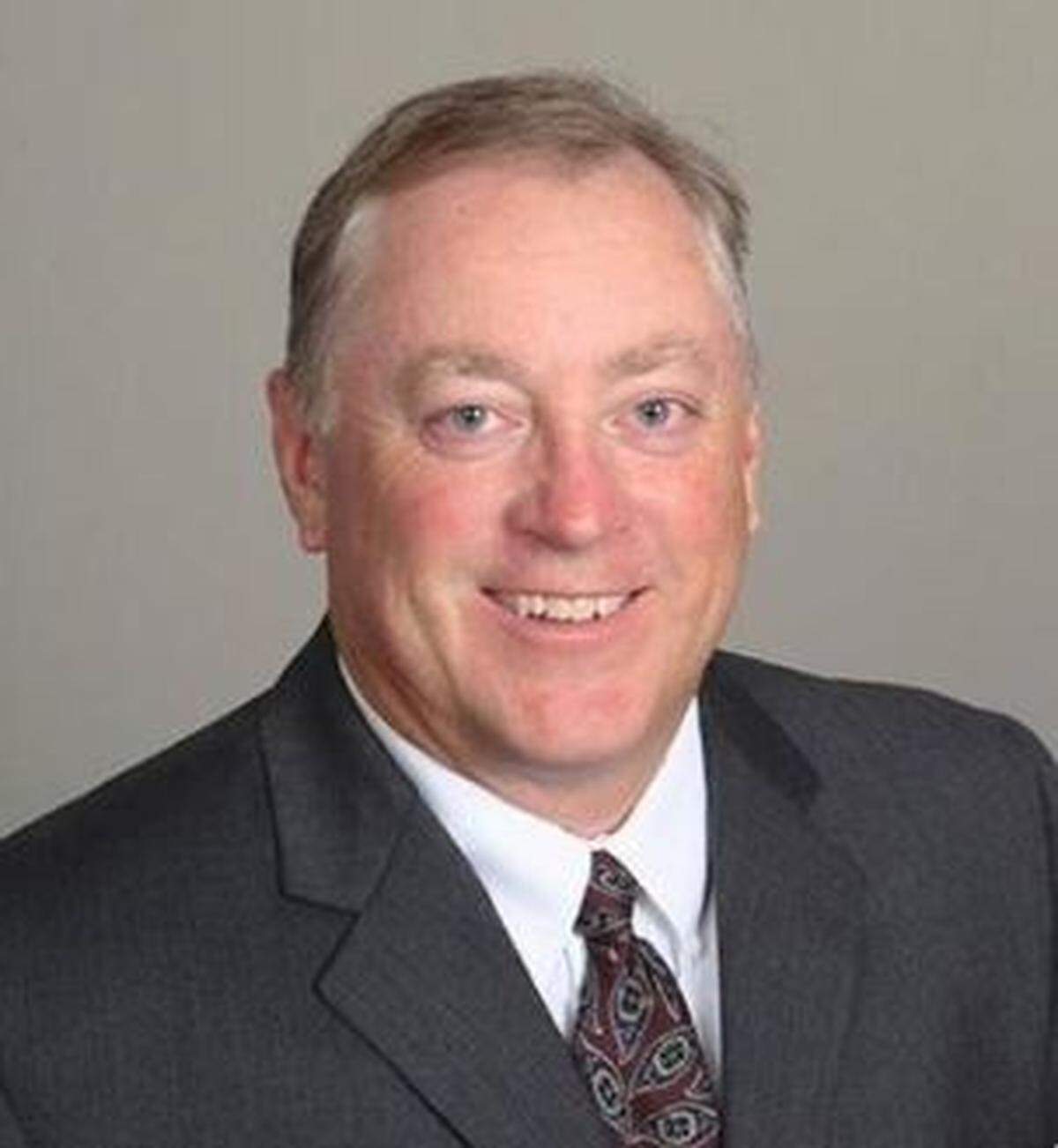 Rocky Mullen
Franklin County Commission Chairman Rocky Mullen even acknowledged during Wednesday’s meeting that he had talked to Rasmussen about Benton County’s draft operating contract, noting that they could go with a similar version at an estimate of about $300,000 annually.
Can police drop off patients?
Franklin County is correct that law enforcement can still drop off patients, but that is not what local agencies are concerned about.
They are concerned about the time it takes to drop patients off, which can tie officers and other first responders up for hours.
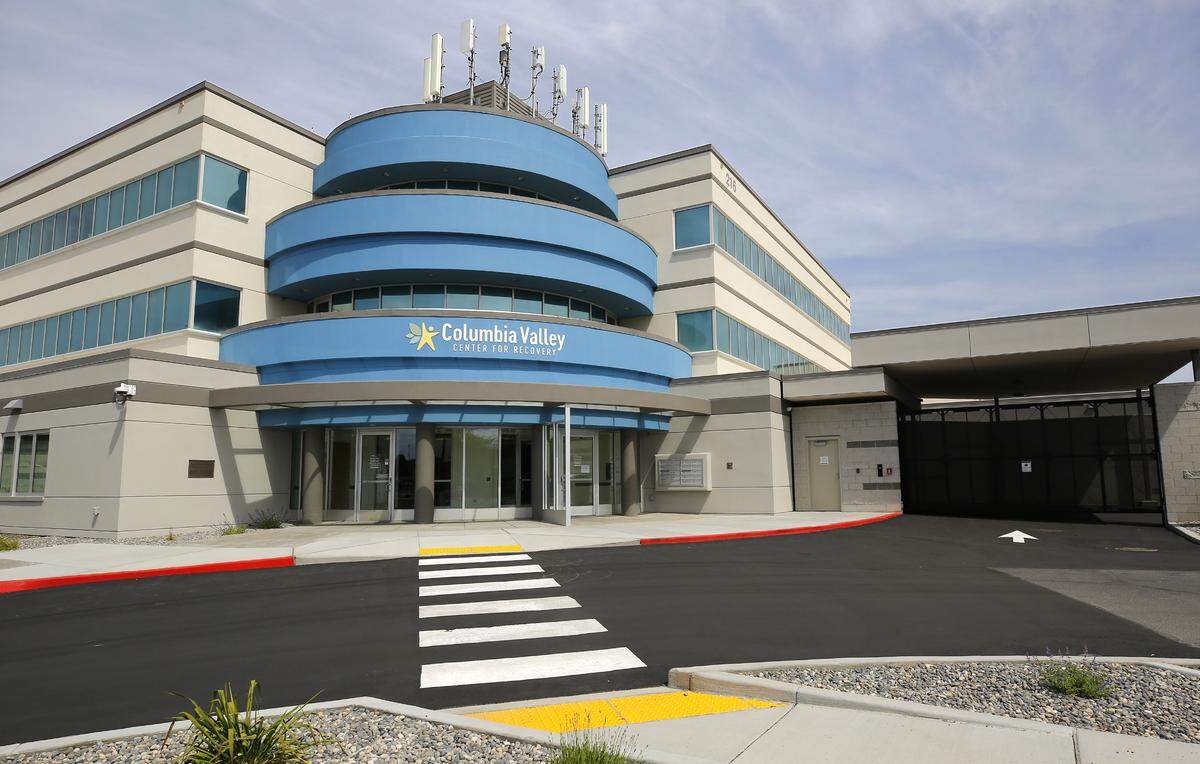 The Columbia Valley Center for Recovery is a $50 million comprehensive treatment facility for substance abuse and behavioral health at 216 W. 10th Ave. in downtown Kennewick. Bob Brawdy bbrawdy@tricityherald.com
With an agreement in place, Comprehensive Healthcare can offer a 10-minute drop-off window for first responders. That’s because it guarantees a payer of last resort is already in place.
Without an agreement, officers will have to wait with the patient while recovery center staff works to determine if they have insurance, Medicaid or are eligible for charity care.
Will any patients be turned away?
Franklin leaders also believe that no one will be turned away, whether an agreement exists or not. That’s only partially true, and it would likely stick other taxpayers with the bill.
Uninsured patients from counties without an agreement will still be taken care of for crisis stabilization and sobering care. But, without an ability to pay, the center cannot guarantee treatment for more intensive care which often includes a longer stay.
Those treatment options include residential co-occurring treatment for patients who need care for both mental health and addiction, as well as the detox unit, which offers medical care for patients suffering from withdrawals.
The pool of funds for non-payers will also likely need to cover other items that aren’t billable, such as transportation costs and on-site medical care, Rasmussen said.
They might also be referred to another provider where charity care funds might be available.
It could also impact insured residents. Patients whose insurance won’t fully cover a five-day stay may be released early.
The more uninsured patients from counties without agreements that Comprehensive Healthcare treats, the more likely it is they will need to exhaust charity care funds and eventually end up running a deficit.
That will leave Benton County having to step in to help cover the costs of keeping the center open.
 Community members take a tour through the Columbia Valley Center for Recovery in downtown Kennewick following a grand opening and ribbon cutting ceremony. Bob Brawdy bbrawdy@tricityherald.com Is there a deadline to sign a contract?
While Franklin County has expressed concern about deadlines to sign a contract, there is no actual deadline for it.
They can enter an agreement at any time. They are being asked by their own community members, many of whom they trusted to represent them in guiding the center’s creation, to make good on the commitments they previously made to the residents of Pasco and Franklin County.
If the county would like to take a wait-and-see approach, to determine just how many residents on average will need help paying, they can do so.
The longer they wait though, the more likely it is that law enforcement is slowed down, patients are turned away from critical recovery services and other taxpayers have to help supplement their residents.
“The physical rehabilitation of the Columbia Valley Center for Recovery represents a substantial regional investment, with Franklin County stepping up to split millions in facility improvement costs. Investing in building infrastructure, however, is entirely distinct from entering into multi-million-dollar operational service agreements with a specific private provider,” Dansel wrote.
If Mullen’s estimate, based on 30% of Benton County’s population, is correct, it would actually be even lower, landing at around $250,000 to Benton County’s estimate of $800,000 to $850,000.
It is unclear whether they have actually entered into any kind of talks or negotiations with Comprehensive Healthcare.
At a recent presentation from the company and bi-county advisory committee, there was no indication they had any conversations outside of public meetings or with Commissioner Stephen Bauman seeking more information on various issues.
Benton County Commissioner Michael Alvarez compared the situation to opening a restaurant with a business partner who contributed to the costs of tables, chairs and forks, but then refused to help pay for staff or operations.
 Michael Alvarez Courtesy Michael Alvarez
“Franklin County has not yet, from what I’m hearing, entered in or even entertained working with Comprehensive (Healthcare) on the operational side,” he said Tuesday. “So right now that lays on the feet of the taxpayers of Benton County. I hope they go ahead and do their homework, talk to Comprehensive and get into an operational agreement.”
He said the question now is whether Franklin County will step up and do the right thing.
“That’s one of the things I’m losing a little patience on. Get it done,” Alvarez said. “Those are services that are going to be provided for both sides of the river.”
Franklin leaders say they also want more of a say in who can be treated, often asking for ways to deny care to patients from outside the Tri-Cities.
Comprehensive Healthcare has been clear they cannot legally reserve beds for one specific county or deny patients from other areas.
“Franklin County leadership has maintained a consistent posture regarding the utilization of local tax revenues, specifically those collected via the local mental health sales tax,” Dansel wrote. “The board remains fully committed to funding robust, accessible, and accountable behavioral health services for its residents and first responders. However, the commissioners refuse to act as a mere ‘rubber stamp’ for lopsided administrative frameworks that demand Franklin County dollars while denying the county equal voting equity, robust auditing mechanisms, or operational safeguards.”
With an operating agreement, Franklin County can dictate the terms of how their dollars will be used, within the law. They can ask for those auditing mechanisms and safeguards, as long as they are not an attempt to deny care to others.
They are not likely to get any sort of “voting equity” because Benton County owns the facility and is responsible for a far greater level of contribution.
Benton County has invested and secured state and federal funding at a level nearly 10 times that of Franklin’s betterments contribution.
That is especially apparent at the moment with Benton County entering a second month of covering 100-plus members of staff without reimbursements coming in. Franklin County will not have to help cover those costs.
 Jose Lopez of Comprehensive Healthcare leads Sen. Patty Murray, D-Wash, on a tour of the new Columbia Valley Center for Recovery. Bob Brawdy bbrawdy@tricityherald.com
Franklin has a seat on the bi-county advisory committee, though it has not often participated. Law enforcement, fire and EMS agencies from across Franklin County have been active members of that board since its inception.
Aside from ongoing disputes with Benton County, it is the constituents that Franklin officials appointed to the board that have been coming to weekly meetings, asking commissioners to keep their promise.
It doesn’t seem to have swayed the board, though.
“Moving forward, the Franklin County Board of Commissioners will continue to welcome collaborative, transparent dialogue with Benton County, regional health authorities, and service providers,” Dansel wrote. “However, the board will not be bullied by artificial deadlines or political rhetoric into signing contracts that bypass standard regulatory due diligence. The taxpayers of Franklin County expect fiscal responsibility, structural equity, and transparent governance—and the Board intends to deliver exactly that.”
Related Stories from Tri-City Herald

Tri-City Herald
Cory is an award-winning investigative reporter. He joined the Tri-City Herald in Dec. 2021 as an Editor/Reporter covering social accountability issues. His past work can be found in the Tyler Morning Telegraph and other Texas newspapers. He was a 2019-20 Education Writers Association Fellow, and has been featured on The Murder Tapes, Grave Mysteries and Crime Watch Daily with Chris Hansen.