
We exercise and eat nutritious foods to maintain a healthy weight, retain strength and mobility as we age and to feel more confident in our bodies.
But at the end of the day, what motivates most people to commit to a health routine is living a happier life. We all want to feel good — joyful, content, energized — and diet and exercise are two powerful tools that can help us get there.
In honor of Mental Health Awareness Month, we are focusing on movements and foods that support our emotional wellbeing. From boosting mood and energy to helping decrease stress and anxiety, this 31-day plan is designed entirely with your mental health in mind.
Can you really expect to see a difference in your mental health in just one month? Personal trainer and TODAY Fitness Contributor Stephanie Mansour says yes! Some of the shifts you can expect to feel include “reduced stress, anxiety, depression, and negative thinking and increased happiness, positive thinking, and relaxation,” says Mansour.
When it comes to committing to an exercise routine, our mindset makes all the difference. Mansour has a small trick she uses to keep herself motivated and feeling positive about exercise. “I love tying movement or exercise goals to emotions,” she says. “So, associating a walk with reducing your stress, associating strength training with feeling strong and pumping yourself up, or associating recovery days with filling up your tank and feeling proud of yourself for all of the movement you’ve done.”
For the full 31-day plan with unique routines sent to your phone daily – plus healthy recipes and access to twice a month live coaching calls with our experts — download the Start TODAY app!
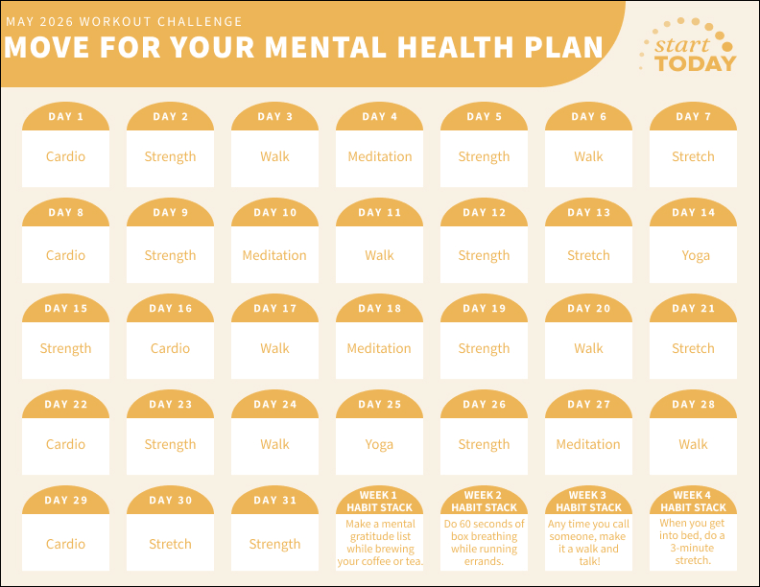
>>Download the 31-day calendar here!
31-Day Workout Plan to Improve Your Mental Health
The exercise modalities you will be doing this month are all science-backed ways to boost mental health. Cardio, strength training, stretching, and yoga are all movements that improve the mind-body connection, reduce cortisol, release endorphins that boost mood and help calm your nervous system to combat stress.
We’re also using the “habit stacking” technique to encourage you to focus on adding one small habit to your routine each week to improve your mental health. Habit stacking is a proven way to consistently incorporate healthy habits into your routine. The premise is simple: Take an action you already do on a daily basis (making coffee, commuting to work, calling a family member) and tack on a small healthy habit.
By the end of the month, you will have committed to four new healthy habits that will improve your mental health — that require absolutely no extra motivation or time.
Week 1: Making tea or coffee:Make a mental gratitude list — think of 3 things you’re grateful for today.Week 2: Commuting to work or running errands: Add a few minutes of box breathing. Listen to this 3-minute guided breathing exercise when you’re on the go.Week 3: Phone calls: Make it a walk and talk by taking a leisurely stroll around the neighborhood, on a treadmill or around the house during the call.Week 4: Bedtime routine: When you get into bed, do a 3-minute stretch.How Does Exercise Improve Your Mental Health?
“Cardio, and specifically walking, can provide a very quick release of endorphins which helps you to feel more positive!” says Mansour. “Walking and cardio also helps to bring more oxygen to the brain, which helps to improve focus and productivity.”
She also says that because it’s such an accessible activity, it is a great way to establish a positive feedback loop of setting a fitness goal and hitting it.
“I look at it as an instant mood enhancer because you start to feel more relaxed, less anxious, and less ‘in your head’ within the first few steps,” she says. “Walking also improves confidence because you can easily say ‘I’m going to go for a walk’ and then actually do it. You build trust within yourself because when you say you’re going to walk and then you actually go, you’re proving to yourself that you follow through on things you say you’re going to do for yourself.”
Mansour says that strength training can be considered a form of meditation, since it requires focus on your form. “Your mind fully pays attention to your body and your muscles while strength training,” she says. “Building muscle and feeling stronger in your body can boost your self-confidence and positive feelings about yourself.”
Active recovery days including stretching and yoga are also incorporated consistently throughout the month.
“I like to look at recovery and rest as a form of meditation,” says Mansour. “Whether you are doing yoga and stretching that syncs your breath with your movement or you’re foam rolling, looking at this as the TLC that your body needs and deserves, as well as an opportunity for you to deepen your connection to yourself, helps you to feel more relaxed and also increases your self-confidence.”
On recovery days, try this 10-Minute Foam Roll Release or a 5-Minute Yoga Flow Stretch to calm your body and release muscle tension.
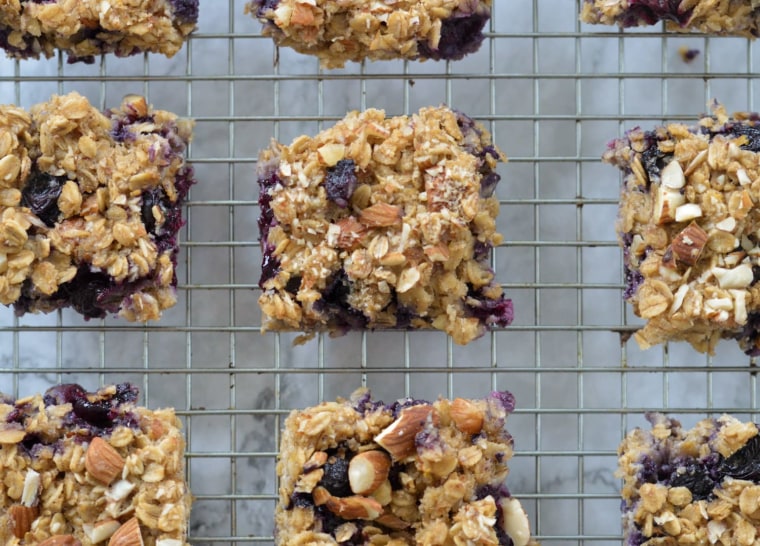 These Blueberry Lemon Oat Bars from the Start TODAY app have all of the comfort-food flavor of your favorite baked good, with whole grains and fruit for a nutritious twist.Eating for Mental Health: Foods That Boost Energy and Mood
What we put on our plate also has an effect on our mental health. Start TODAY dietitian Natalie Rizzo shares some simple strategies for eating to increase energy and mood — plus some healthier options for when you need a little comfort food:
Eat for energy: Taking care of yourself means fueling your body before you crash, not after. Instead of skipping meals or trying to “earn” foods, aim to eat every 3–4 hours with a mix of carbs, protein, and healthy fats. Add a balanced snack to your day, like apple with peanut butter, yogurt with berries or hummus with crackers, and notice your afternoon energy.Eat for mood: Research shows that following a Mediterranean-style diet that’s rich in fruits, vegetables, legumes, nuts, seeds, and healthy fats is linked to a lower risk of depression. These foods help reduce inflammation in the brain, which plays a role in mood. Certain foods, like walnuts, chia seeds, pumpkin seeds, blueberries, fermented foods and turmeric, have been shown to boost mood, regular stress, support memory and reduce anxiety.Upgrade your comfort food: Instead of eliminating comfort foods, make them more nourishing so they actually leave you feeling good. Take a favorite comfort meal and add a nutritional boost, like veggies on pizza, black beans in tacos or greens in pasta. Or upgrade your baked goods with whole grains and fruit, like these Blueberry Lemon Oat Bars from the Start TODAY app.
Download the Start TODAY app for more healthy recipes to boost your energy and mood, plus dietitian-designed meal plans to help fuel your mental health.