
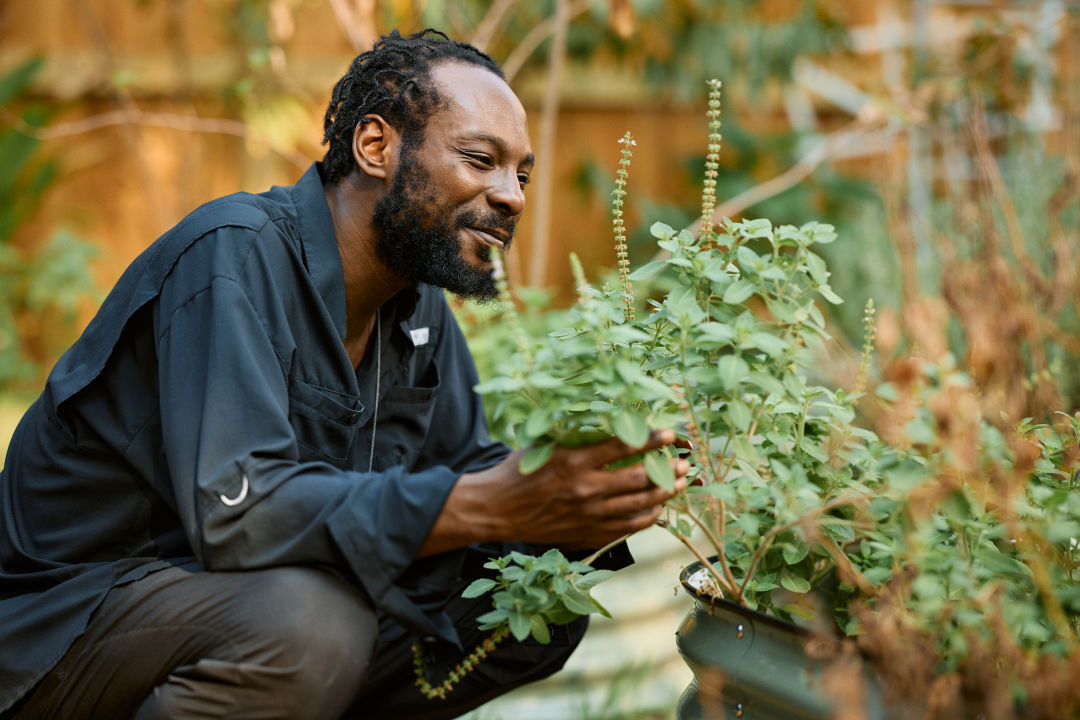
“Garden Marcus” Bridgewater provides the growing green cure for a social media ecosystem gone to rot.
I was caught in a doomscroll on Facebook Reels. Extremist politics, swipe. Unhinged rant, swipe. And then, like the calming music of a safe room in a survival horror video game, came the soft yet enthusiastic voice of “Garden Marcus” Bridgewater.
“Remember to stop and appreciate the trees when you go out into nature,” the Houstonian said while standing outside in his garden. “Trees start off as small seeds. So, when you see a tree, remember it took it a long time to grow from this big to being that big.” He demonstrated the size difference, holding his fingers a quarter inch apart, then pointing to a tall oak. “Growth takes time, so be kind to yourself, and take care of yourself so you can grow big and tall just like this tree.”
I went outside and looked at the pine tree in my backyard. The heat seemed less oppressive, as I imagined the sunlight flowing through the tree, strengthening it as I sat in the shade beneath the branches. Bridgewater’s simple joy landed like a drink of ice water in the middle of the algorithmic parade of anxiety my Facebook Reels usually served up.
“Gardening teaches valuable lessons that extend beyond our backyards, such as patience, persistence, and resilience. When things feel chaotic, walking into a place where plants are growing and birds are singing can bring comfort and peace,” he says.
It’s no secret that American mental health has taken a nosedive. A recent West Health-Gallup survey found that only 30 percent of Americans rate their mental health as excellent, down from 43 percent a year prior. Doomscrolling—where a user compulsively thumbs through negative content—isn’t helping. Dr. Laurel Williams, a professor in the Menninger Department of Psychiatry and Behavioral Sciences at Baylor, says doomscrolling on social media contributes to feelings of helplessness and hopelessness.
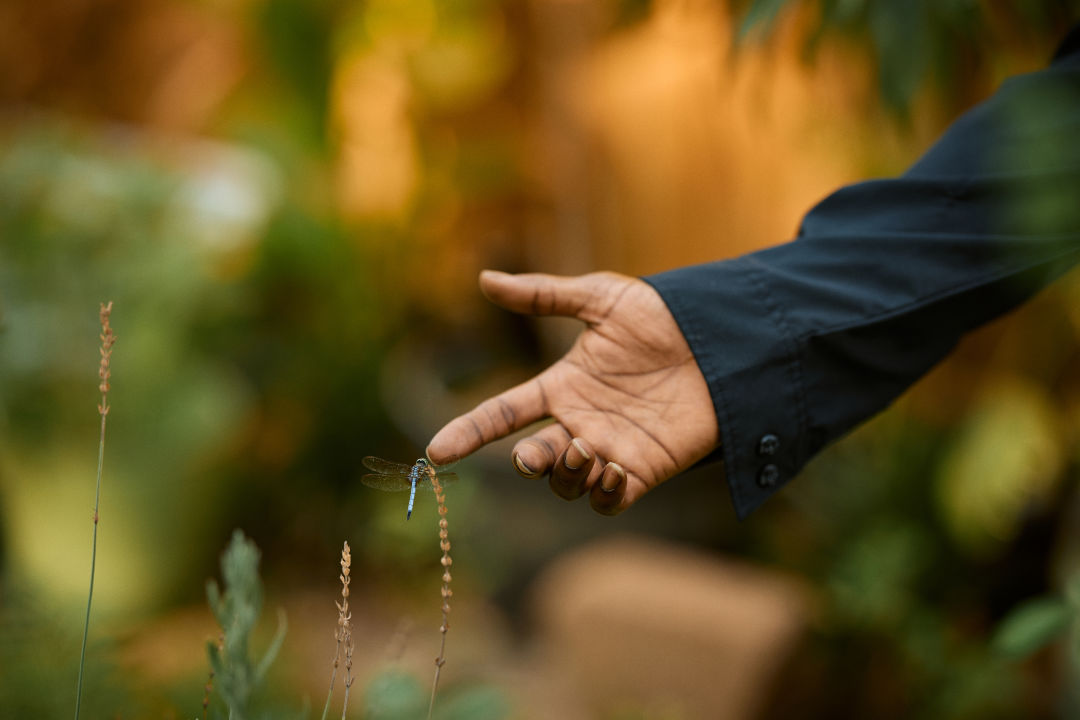
Touching grass (and dragonflies) is more than just internet advice. There’s actual science behind nature’s benefits to your mental health.
Bridgewater is a welcome respite from the poisoned well. The 38-year-old content creator and author moved to Houston from Zellwood, Florida, in 2014 when the John Cooper School hired him as technical director for the Glenn Performing Arts Center. He’d grown up wandering the woods behind his grandmother’s house and picking oranges off trees.
The pressures of school took him away from nature for a while until a family friend closed her nursery and gifted Bridgewater exotic plants for his new home in Houston. He killed about half of them, but this only made him want to try harder.
“I started paying closer attention by taking notes and trying new techniques,” he tells me via email. “In the minimal time I had away from work, I bought all the dying and discounted plants I could find.” It forced him to learn how to nurse them back to vibrancy. “I loved watching things grow and thrive, and found parallels between plant care and teaching,” he says. “I became a better teacher as a result.”
Bridgewater has amassed more than 430,000 followers since he started releasing videos in 2019. From tasty ice cream beans to stinky valerian, used to make relaxing tea, He approaches gardening with a sense of natural wonder, explaining backyard plants that can be grown in Houston’s climate, their benefit to the local ecosystem, and their culinary uses. His demeanor is that of an upbeat teacher—an engaging cross between Mister Rogers and DJ Lance Rock.
His encouragement and mental health allegories tend to hit home the most, with plants and gardening serving as a vehicle to remind people to take care of themselves, to grow and be strong—that surviving itself is impressive. To Bridgewater, gardening is not just a science. It’s a form of shared therapy—a gentle, non-denominational, botanical ministry.
In one video, Bridgewater calls attention to a small plant growing through the holes in his compost bin. Rather than trimming it, he uses it to illustrate the potential for personal growth.“This reminds me that the life inside us yearns to grow,” he says. “Even when we’re faced with obstacles and surrounded by barriers, if we learn lessons and focus, we can persevere and grow through them.”
The connection between mental health and gardening has been well established. Dr. Joseph R. Novak, a faculty lecturer in biosciences and the director of the Betty and Jacob Friedman Holistic Garden at Rice University, says people can use gardening for everything from simple peace of mind to treatment of obsessive-compulsive disorder. Studies show that gardening is linked to increases in life satisfaction, quality of life, and self-esteem, and that extended time in green spaces has psychotherapeutic qualities.
“We know that nature is restorative, that our contact with nature helps us relax [and] calms our sympathetic nervous system and stimulates our parasympathetic nervous system,” he says. “We evolved in nature, so when our parasympathetic nervous system is dominant, we are in a relaxed state. We are digesting food. We’re building energy in our bodies.”
Novak points to forest therapy, popularized in Japan, as one example. Numerous studies have shown that “forest bathing”—immersing oneself in nature—can stimulate the immune system, reduce anxiety, and even decrease blood pressure. Gardening can have the same effect and has been linked to longer life spans. “It used to be, for example, that doctors in Japan, Scotland, Denmark, and so forth could prescribe getting out in a garden or nature for various ailments,” he says. “Now, finally, as I understand it, doctors in the United States can legally prescribe this as well.”
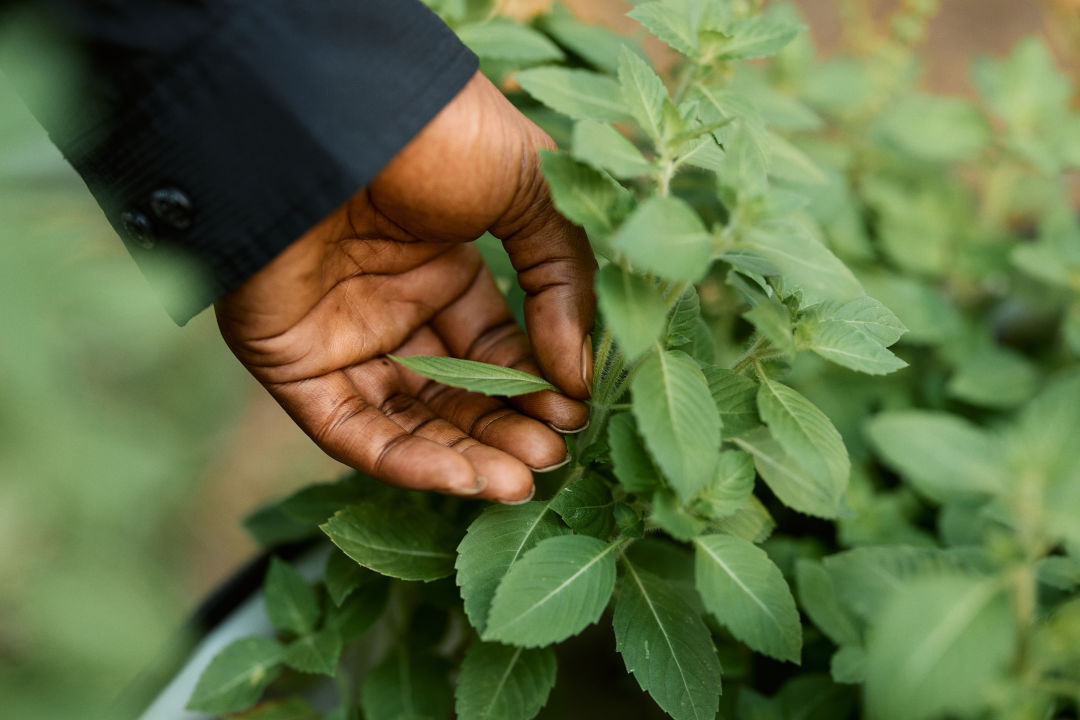
Even those who don’t want to garden themselves can still benefit from Garden Marcus’s soothing brand of internet positivity.
You could hardly find a better introduction to gardening in Houston than Bridgewater. His videos—short, accessible, and easy to understand—offer practical advice for both adults and children (he even uses some of his teaching tools to help his own son). “Because my videos are less about technical gardening and more about how the wisdom of plants can help us grow, people get to learn both valuable life lessons as well as about botany,” he says.
Viewers often send him encouraging messages about how his videos have helped them focus on positivity and a better world. Anecdotally, Bridgewater says that gardening has improved his own mental health immensely. Spending time in the dirt with plants helps him focus on growth rather than doom.
“Being in my garden reminds me that I’m not alone, and like my plants, I’m doing my best to grow,” he says. “When we watch our plants grow and see wildlife thrive, we’re reminded that we can be part of solutions. We can foster growth. We can cultivate beauty.”