
Just days after President Donald Trump signed an executive order to fast-track research on certain psychedelic drugs, including ibogaine, Tennessee lawmakers are following suit. The state is joining 18 others that are also considering legislation regarding ibogaine.
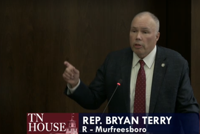
House Bill 2075, also known as the Helping Open Pathways to Effective (HOPE) Act, passed in the state’s House Finance, Ways, and Means Subcommittee in April. The bill is backed by State Representative Bryan Terry (R, Murfreesboro) and will clear the way for the state to participate in clinical trials involving ibogaine.
“Tennessee ranks number 1 in the nation for opioid use disorder diagnosis rate, and we are triple the national average. Tennessee is home to 400,000 veterans, we rank 7 in veteran overdose rates, and Tennessee’s veteran suicide rate is significantly higher than both the national veteran suicide rate and the national general population suicide rate,” said Rep. Terry. “We don’t need more statistics; we need solutions, and ibogaine is one possible solution.”

Ibogaine is a naturally occurring psychoactive compound derived from a plant in West Africa. According to HB2075, the drug is known to treat a wide range of mental health and neurological conditions, including opioid use disorder, post-traumatic stress disorder (PTSD), traumatic brain injury, depression, anxiety, and multiple sclerosis. Ibogaine is classified as a Schedule 1 drug, the same drug classification as LSD.
“In recent decades, it has gained attention for its potential role in addiction treatment, opioid and alcohol use disorder, stimulant addiction, such as cocaine and amphetamine, methamphetamine. Some interest also is in depression and PTSD, which there was a trial, think that just came out on veterans and using it for PTSD for them,” said Michelle Paolucci, facility director at Restoration Recovery.
A local treatment center says they were excited to hear the news regarding ibogaine and are always looking for alternative treatment and care.
“We were excited as a clinic, you know, we are always looking for alternative options for a patient, and that would be a good option for us,” said Michelle Paolucci, facility director at Restoration Recovery.
Under the new law, Tennessee will be able to participate in the Food and Drug Administration-approved clinical trials. A cohort will be established, made up of one or more of a drug developer, hospital, research institution, or university.
Deputy Speaker Representative Jason Zachary asked Rep. Terry for more details as to how President Trump’s executive order and HB2075 will complement each other. Rep. Terry described the president’s acceleration of research on the drug.
“In order to do this, Ibogaine is a Schedule 1, but you need to have what’s called an investigational new drug classification so you can study it. And so, his executive order is allowing for that. Secondly, he’s putting $50 million towards these research initiatives,” said Rep. Terry. “So, by us authorizing our research institutions to do that and putting those protections in, potentially we’ll be able to have our veterans and our other Tennesseans participating in these trials without having to go to Mexico or wherever.”
This law does not make ibogaine legal outside of FDA-approved clinical trials.
The department will begin accepting applications from interested institutions and hospitals by September 1, 2026.