
MAYVILLE, N.Y. (WKBW) — Rural communities, specifically those working in agriculture, face many struggles in their day-to-day lives. However, one struggle that many don’t talk about is one that deals with mental health.
“We have to get to the point where we’re talking openly about mental illness and substance abuse disorder,” Jeff Winton, CEO and founder of Rural Minds, said. “Because if people will feel comfortable at least talking to one person about it, even though we have constrained resources in rural America, they do exist, but you have to admit that you need help, and that’s where the journey begins.”
Winton’s journey began when he experienced a personal loss.
“My nephew, who was a farmer, died by suicide,” Winton said. “It came as quite a shock to our family because he appeared to be very happy, very gregarious, very outgoing, but clearly he was suffering in silence.”
Winton, who is a farmer and comes from a long line of farmers, says stigma around mental health stems back generations.
WATCH: Mayville non-profit hopes to address growing mental health crisis in rural communities
Mayville non-profit hopes to address growing mental health crisis in rural communities
“We just cannot get comfortable being uncomfortable and talking about a topic that has been considered taboo up until recently, and that’s why, when my nephew died, my mother, who helped raise him, said we have to start talking about this. It’s the only way we’re going to tackle that.”
While Winton’s mother would not live to see the creation of Rural Minds, he owes its inception to her.
The non-profit organization is meant to serve as the informed voice for mental health in rural America and to provide mental health information and resources.

Bo Evans
Approximately one-fifth of the US population lives in a rural area, and about one-fifth of those living in rural areas, or about 6.5 million individuals, have a mental illness. However, it is estimated that 65% of rural counties lack psychiatrists, and over 60% of rural Americans live in shortage areas for mental health care.
Winton says that political factors and events have only exacerbated the negative impacts on rural mental health.
“Farmers in particular are 3.5 times more likely to die by suicide than any other profession,” Winton said. “We are in a very difficult time right now for people in the agricultural industry, and being a farmer, I see this on a daily basis: the tariffs, the trade war, the issue now with Iran, and the fertilizer shortage.”
“The fact remains 70% of farmers in this country will have no access to fertilizer, and we’re in the middle of planting season here in Western New York,” Winton said.

Razieh Poudat/AP
A man stands in the water, appearing to fish, as bulk carriers, cargo ships, and service vessels line the horizon in the Strait of Hormuz off Bandar Abbas, Iran, Monday, April 27, 2026.
Prior to the US war with Iran, approximately 20–30 percent of global fertilizer exports transited the Strait of Hormuz. Based on April pricing compared to the six months prior to the conflict, costs have increased by more than $20 per acre.
The U.S. Department of Agriculture (USDA) estimates that approximately 25 percent of farmers have not yet purchased the fertilizer they need for the 2026 spring planting season.
“We’ve got a problem because the farmers are obviously the people raising our food, growing our wool and our cotton for our clothing, now raising the corn that’s being used in ethanol, which is more important than ever because of the issue again we have with Iran, but we will not have another generation of farmers if we don’t turn the corner on this dilemma that’s facing American agriculture.”
WKBW
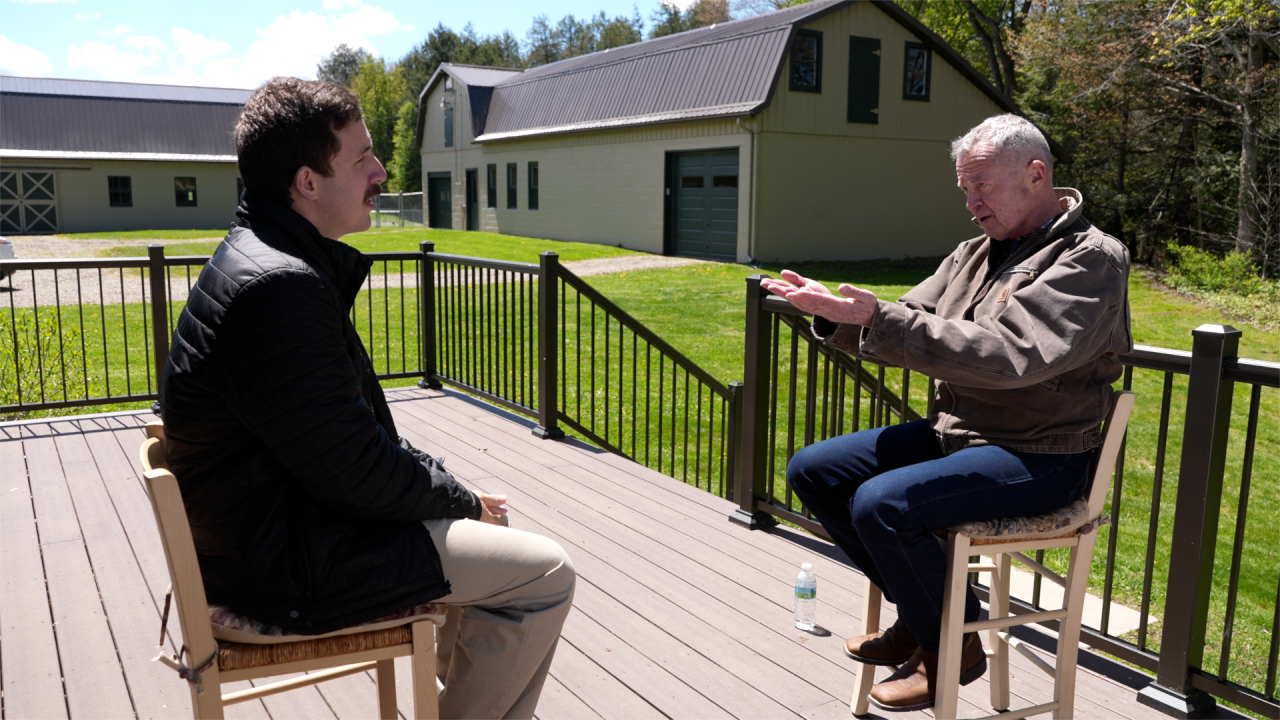
WKBW’s Adam Beam sits down with Rural Minds founder Jeff Winton.
When it comes to mental health resources, even if they are limited in your area, Winton emphasizes that the very first step a person can take is the most important. Find a trusted individual in your community, in your family, in your circle of friends.” Winton continued, “I would hope that everyone has at least one person they can go to and confide in because that’s all it takes is getting one person to help you find the resources that you may need.”
If you or someone you know may be struggling, you can also call, text, or chat 988, which is available 24/7.