
In 1992, Australia moved to ban tobacco advertising in sporting events, as the nation’s leaders clued onto the widespread harms caused to society by smoking.
By 1996, it was all but phased out, including the huge cash cow of cricket sponsorship.
This week, 30 years later, Prime Minister Anthony Albanese faced what anti-gambling advocate Mark Kempster described as “100 per cent his Big Tobacco moment”.
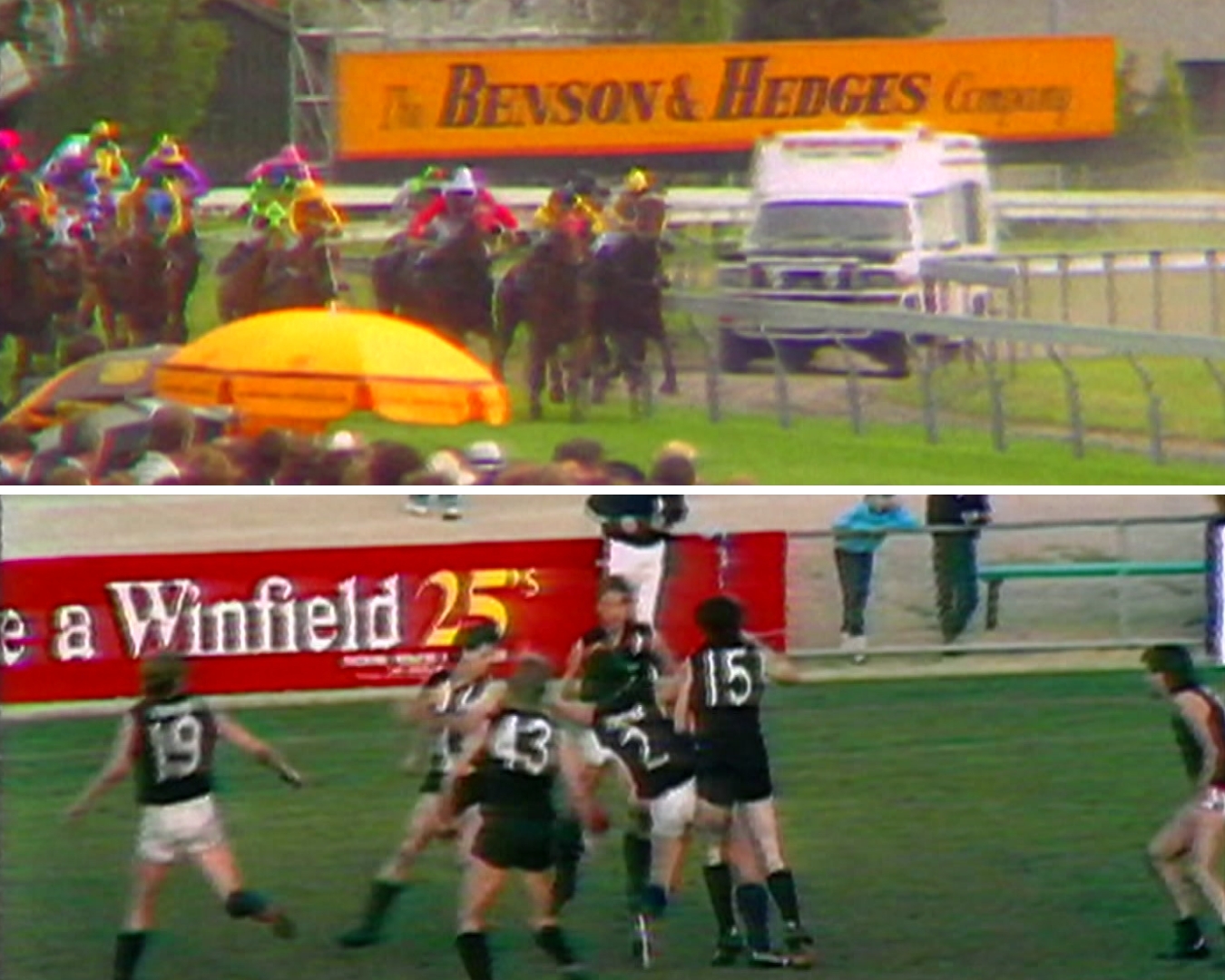
Australia banned tobacco advertising in sport in the 1990s. (File photos)
“And he has failed miserably,” Mr Kempster said.
The Albanese government released its long-awaited formal response to the Peta Murphy gambling inquiry, which called for a total ban on gambling advertising in sport and the establishment of a national gambling regulator, to try to help stem the nation’s huge gambling losses.
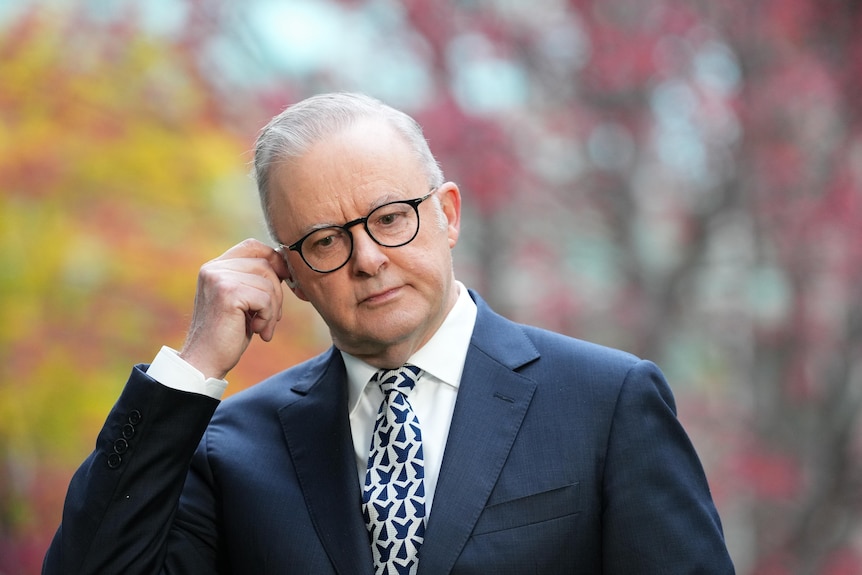
Anthony Albanese has been criticised for his government’s response to a gambling inquiry. (ABC News: Matt Roberts)
Released under the cover of federal budget day, critics were quick to accuse Mr Albanese of trying to bury a document that ignored key recommendations and watered down others.
Independent MP Andrew Wilkie described it as a “grim day” for Australia.
“Made all the more grim by the way the government can act so cynically and try and bury it and hope that no-one notices,” he said.
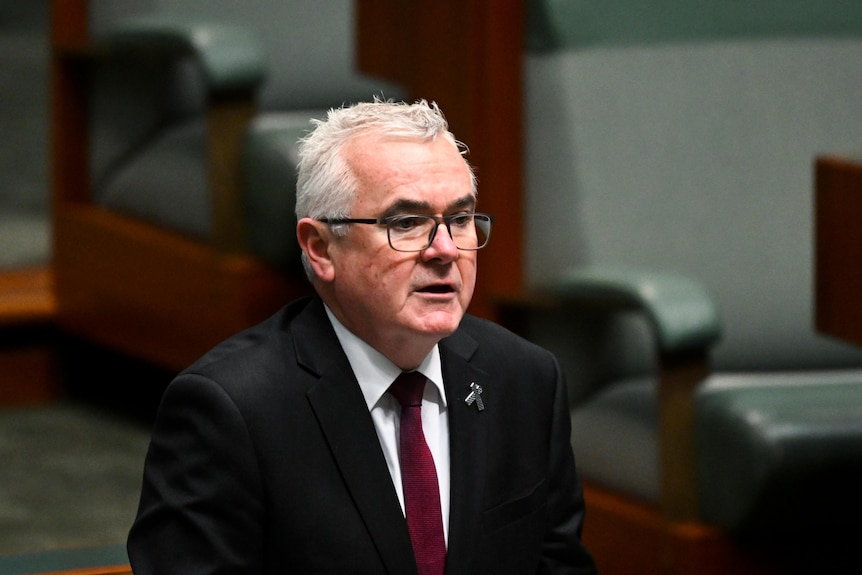
Andrew Wilkie criticised the government for “burying” its response to the Peta Murphy gambling inquiry. (AAP: Luka Coch)
The Commonwealth did take some action — its reforms will ban gambling advertising on player jerseys, in stadiums, and gambling ads will not be allowed to air during the daytime.
Mr Albanese said the reforms “get the balance right … so children don’t grow up thinking sport and gambling are inextricably linked, but letting adults have a punt if they want to”.
Alliance for Gambling Reform advocate Tim Costello said the government didn’t go nearly far enough.

Tim Costello says the government ignored a key recommendation to set up a national regulator. (ABC News: Brendan Mounter)
“What the prime minister’s recommended is only a half-measure, a timid response; it doesn’t solve the problem of protecting kids,” he said.
The Commonwealth has ignored a key recommendation to set up a national regulator, and will instead continue to rely on the controversial part-time regulator that exists in the Northern Territory.
So what has stood in the way of Mr Albanese enacting all of the changes recommended by his own MP, the late Ms Murphy, and backed by anti-gambling advocates across the board?
Mr Costello believed it came down to what he described as a group of “big gorillas”.
“The AFL and NRL … and free-to-air TV,” he said.
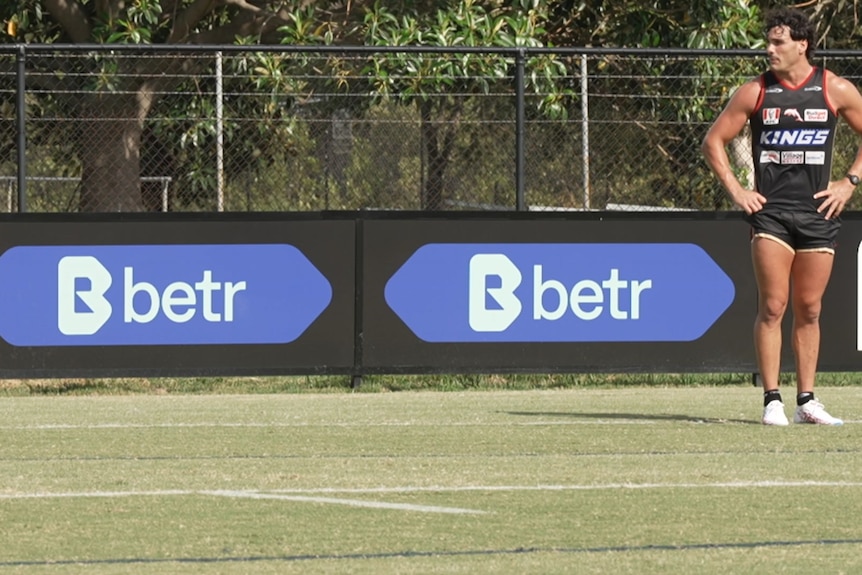
The NRL is one of many sporting codes that rely on gambling sponsorships and advertising. (ABC News)
The argument being that the sporting codes would have to cut junior sport programs if they were forced to do away with lucrative gambling sponsorships and advertising, and free-to-air television would go bust, limiting access to broadcast sport for millions of Australians.
He also said sports betting firms were “massive in their lobbying and their influence”.
Bookmaker in club dressing room
The Alliance for Gambling Reform has raised concerns that the AFL and NRL have become so interlinked with the gambling industry that it’s not only on their jerseys, it may even be infiltrating some club dressing rooms.
AFL team, the Gold Coast Suns, had been facing an integrity unit probe after it was revealed that their team manager, Mark Opie, is a co-founder of bookmaker Okebet.
Mr Opie was cleared of any wrongdoing late yesterday.
When questioned about the matter by the ABC, Suns coach Damien Hardwick turned the spotlight onto the AFL more broadly, and the conflicts he said “are prevalent” in the sport.
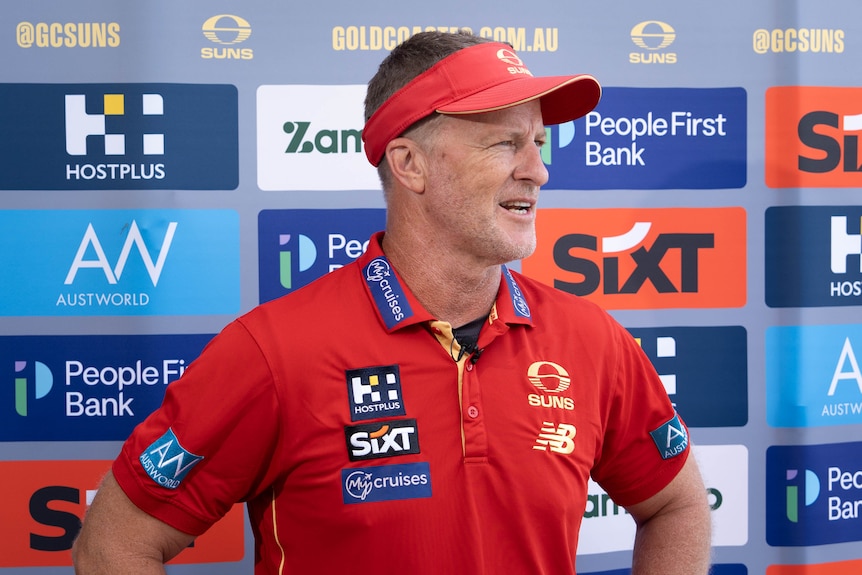
Suns coach Damien Hardwick faced questions about the team’s links with the gambling industry. (ABC: Marcus Kennedy)
“At the end of the day, is it a good look for the AFL to be sponsored by Sportsbet, all these sorts of organisations?” he said.
So the question becomes, how can such a close-knit partnership between sporting codes and sports betting companies ever be untangled, without adequate government reform?
According to research, Australians collectively lose more than $25 billion annually on gambling — the largest per capita loss in the world.
Mr Kempster believed the Albanese government’s reforms would not turn that around.
“There is no national regulator, no ban on inducements and a partial ban on advertising is a free kick to the gambling industry to keep them preying on Australians when they can,” he said.No national regulator, but NT makes moves to tidy up
The establishment of a national regulator would have taken the responsibility away from the Northern Territory Racing and Wagering Commission.
With 52 online bookmakers licensed in the territory for tax reasons, the part-time commission will remain as Australia’s de facto online gambling regulator for the foreseeable future.
Its members have previously been accused of being too close to industry, for accepting hospitality gifts and owning racehorses, among other links.
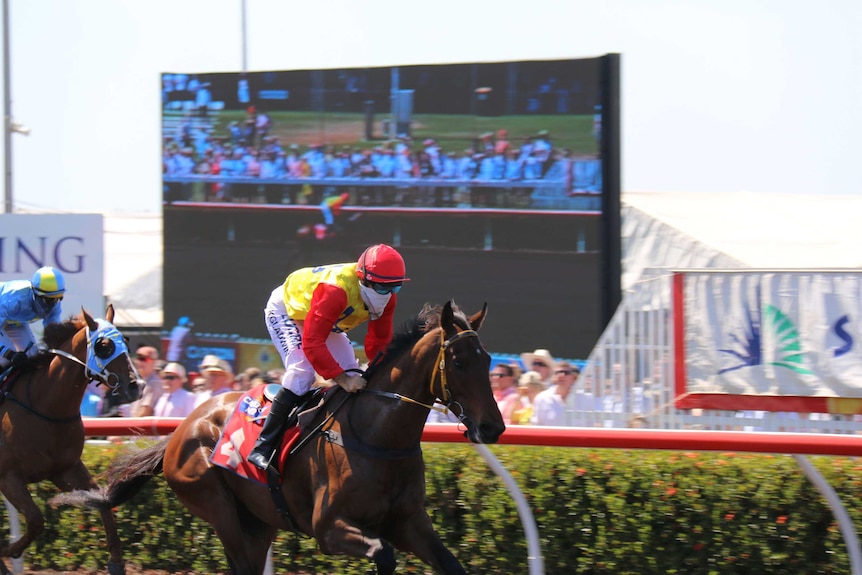
Under new NT legislation, gambling commissioners can no longer own racehorses or have betting accounts. (ABC News: James Purtill)
In an attempt to toughen its processes and restore faith, the NT government has this week banned gambling commissioners from owning betting accounts and racehorses.
On the same day the Commonwealth’s Murphy Review response was being handed down, the NT parliament passed legislation strengthening conflict-of-interest rules at the commission.
But while it continues to meet just once a month and operate with no full-time staff, some believe the regulator’s reputation as “a chocolate teapot” is unlikely to be repaired.
Independent politician Justine Davis told NT parliament the bill was a missed opportunity to properly reform the commission.
The same has been argued about Mr Albanese’s national response.