
The tragedy of losing a student to suicide is heartbreaking and, unfortunately, all too familiar, says Joanna Fellows, a theater arts teacher at Seneca High School in Germantown, Maryland. “It’s really difficult as an educator to know how to be a rock for students in those times because we, too, are human beings and we, too, are impacted and affected by these tragedies.”
It’s also hard to find ways to reach students in a personal, meaningful way on topics like suicide, depression, and mental health. But a recent play performed at the high school did just that.
Ghosted, a touring production written by Los Angeles playwright June Carryl, follows the story of four students struggling with the recent suicide of a classmate. As they navigate stress, depression, and relationship issues, they learn how to lean on one another and come to understand that, although their experiences may be different, they are not alone.
“What I hope is that young people will see themselves in someone on that stage,” says Carryl. “If you can see yourself in somebody else, if you can recognize your struggle in something that’s happening to someone on stage, then at least you feel seen. And feeling seen and heard, I think, is a step in the journey toward healing.”
The aim is for students to connect with relatable characters and real-life challenges in a safe, fictional setting, sparking conversations about mental health and how to seek support. Following the show, students participate in a guided workshop to reflect on key themes and explore support resources available within their school and community. There is also a comprehensive learning guide for educators.
Suicide Still Leading Cause of Death Among Teens
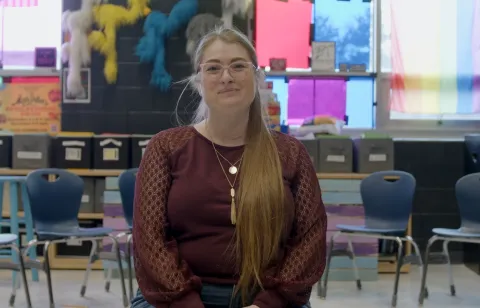
Joanna Fellows
“As someone who has lived through it on the educator side before, it felt really validating to hear people voice the kind of things that I had seen and I had felt,” says Fellows. “I think the messaging was clear without being overbearing. The students understood that there are resources available to them. They understood that there are some signs and some things we might want to watch out for to see if anybody is struggling. And I think presenting it theatrically allows it to hit in a different area of the brain.”
From 2014 to 2024, over half a million lives (516,790) were lost to suicide, with 2022 marking the highest annual total on record, according to the KFF health policy organization. However, the significant changes to Medicaid and other health programs are projected by the Congressional Budget Office to reduce federal Medicaid spending by $1 trillion dollars, resulting in 11.8 million people losing health coverage over the next 10 years. KFF warns that mental health access could be disrupted and create ripple effects across the broader mental health system.
Suicide is still the leading cause of death among teens, and offering school-based programs like Ghosted can help raise awareness about how to handle and recognize suicidal thoughts.
Jaden, a student at Seneca High School, appreciated the realism of the production and how it relates to her own life.
“Seeing Ghosted made it easier to digest and process the grief of losing some of my own friends to similar circumstances. It’s a heavy topic and nobody wants to talk about it,” she admits. “It made me feel I’m not alone — there’s support out there and there are ways to get help.”
Production Highlights Resources Teens Can Turn To
The play highlights 988, the Suicide and Crisis Lifeline[GU1] that anyone can call, text, or chat to connect with a counselor for help during difficult moments. The 988 line launched in July 2022, replacing the prior 10-digit number with an easier to remember, three-digit option that connects people in distress to counselors at 200+ local crisis call centers and, when needed, other crisis services.
“Sometimes you just need to talk to someone, and you feel like you have no one,” Jaden says. “You just need someone safe to go to and to know that they’re there and they’re listening and they care.”
Anya, another Seneca student, wasn’t sure what to expect when she sat down to watch Ghosted, but she says the impact was real.
“My expectation was that it would be kind of the basic information we get at school, but I think Ghosted was a lot deeper than that,” she says. “It offered a more realistic view of how students would deal with losses in their community and negative thoughts about self. I think there were valuable lessons…there are a lot more conversations happening about each other and what is going on after watching the show.”
That, to Fellows, is part of the power of theater.
“I think having it in this theatrical setting allows you, as theater does, to distance yourself just enough, because you’re like, ‘oh I’m watching a show,’” she explains. “It allows you to distance yourself just enough that you’re allowing yourself to get comfortable with it.”
Ghosted is a program of Educational Theatre, a[GU2] joint project of Maryland’s Imagination Stageand Kaiser Permanente’s Thriving Schools initiative. They joined forces to use the power of live theater to deliver critical health messages to students and educators, where audiences see themselves represented onstage in its culturally and ethnically diverse casts, allowing them to connect with the narrative and educational messages in a meaningful way.
“Imagination Stage and Kaiser Permanente are fully aligned in our long-term commitment to arts-based learning as a way to support the wellness and mental health of young people,” says Joanne Lamparter, Imagination Stage’s Chief Artistic Programming Officer. “Ghosted uses the power of storytelling to open conversations that can be difficult but are critically important. This play impacts students in a very different way than a classroom discussion about mental health or suicide prevention might. When students see themselves in the fictional characters in Ghosted, they realize that they are not alone and feel empowered to reach out for support, for themselves or for a friend.”
Educators can reach out to Imagination Stage to schedule bookings for the 2026-2027 school year.