
— Becky Schmitz wants to normalize talking about mental health.
And by mental health, the executive director of
Vikingland Community Support Program
doesn’t mean some “condition” with a diagnosis and a fancy write-up in the
.
“We all feel a certain way 100 different times throughout the day. It doesn’t necessarily mean it’s your ‘mental health’ all the time, right?” she asks. “These are life problems or situational things and stressors, and that’s what I think is most important.”
And by normalize, she means hanging with that friend whose goofy sense of humor makes serious topics easier to talk about.
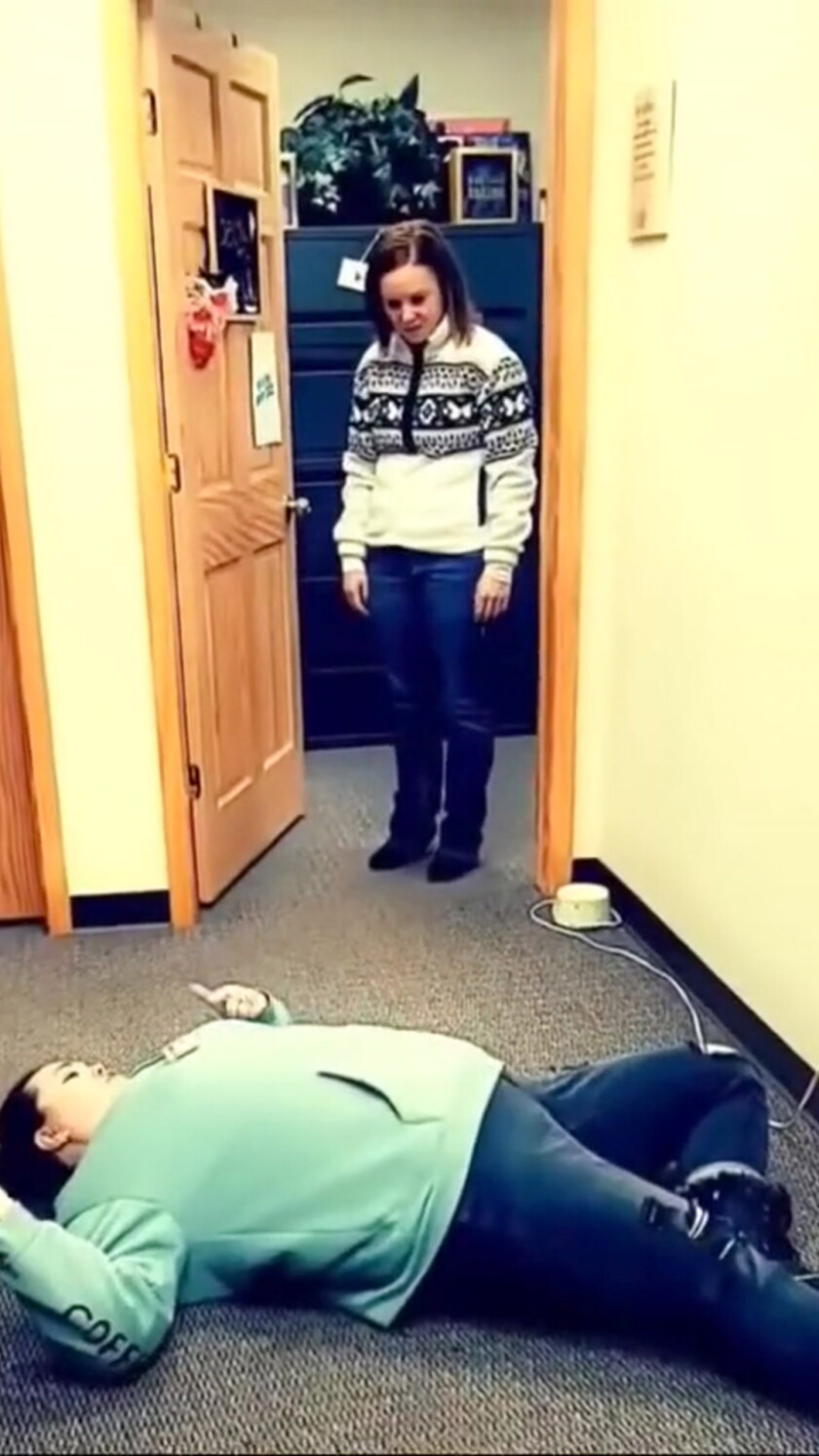
Carmen Hudson (on the floor) and Becky Schmitz address those days when you just need to take a vacation.
Folks who’ve stumbled across Vikingland Community Support Program’s
have been enjoying Schmitz’s short videos on the social media platform for about six years now, ever since COVID shut them down for a while in 2020.
“At the time, we didn’t know for how long,” she says. “We were only shut down for two weeks, [but] it felt like a long time. We provide community-based mental health supports, so when we got taken out of people’s homes, we were like, ‘OK, how do we help people stay connected?’”
But even after the shutdown ended, Schmitz saw an opportunity to reach out to more people in the community.
“I want them to have a familiar face. I want to keep talking about skills. I want them to feel comfortable in some way,” she says. “Hopefully, if they can see me every day, that helps ease some of the anxiety behind what’s going on in the world and the uncertainty.”
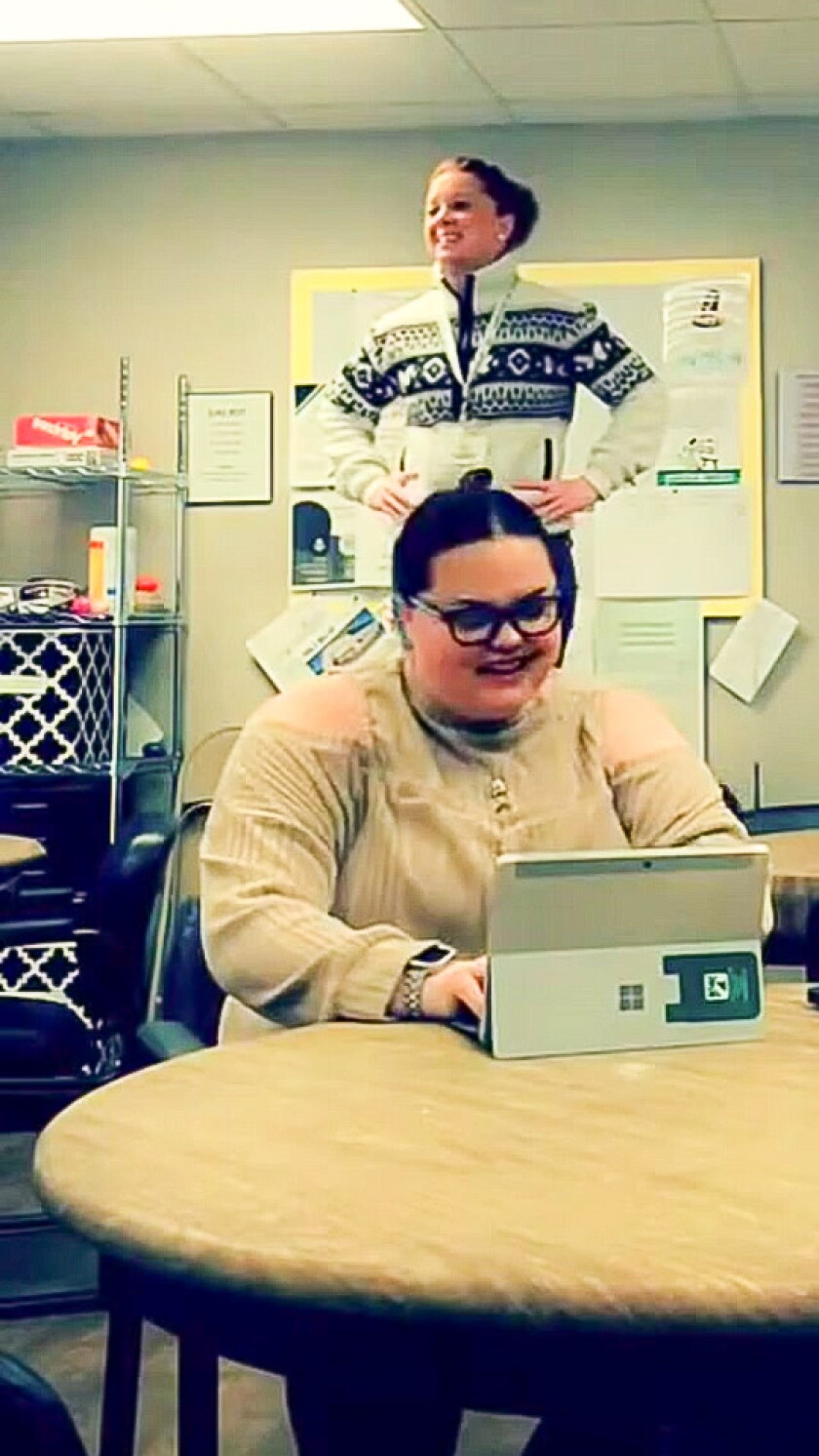
Carmen Hudson gets back to work at the Vikingland Community Support Program, after Becky Schmitz agrees to provide background music.
But the social media reels are also just …entertaining.
“At first they kind of started out just funny,” says Schmitz. “I tried to keep them lighthearted. I did jokes, and I would find some little things on the internet to to review and then, as I felt more and more comfortable, it just kind of progressed into talking about coping skills.
“And it’s really progressed from there, not just for Vikingland, but in my own personal life. Once I started doing these videos, I was asked to start writing for a blog, called
. At first I was like, ‘I am not a writer; never wanted to be a writer’, but it sounded like some way to occupy my time, at the very least. So on my own personal time, that’s when I started to develop the
. When you listen to a lot of my videos. I talk a lot about tools. I’ll talk about the hammer and the screwdriver and the saw. And so over the past five years now, I actually got it trademarked.”
Schmitz says the experience has been transformative.
“I’ve been writing about the mental health toolbox and traveling and public speaking. So these videos not only continue to be important in our community and through Vikingland, but have really transformed my own personal life and the work that I do with others all over Minnesota. I’ve been to Wisconsin, North Dakota. I’ve really gotten to travel and talk about mental health with as many people as I could possibly reach. So it’s been quite the experience, to say the very least. And, I’m just grateful, I guess.”
Surprisingly, Schmitz has had no trouble enlisting help for her videos from her traditionally shy, reticent, west-central-Minnesota co-workers. She hasn’t had to pull rank or even strong-arm staff into joining her.
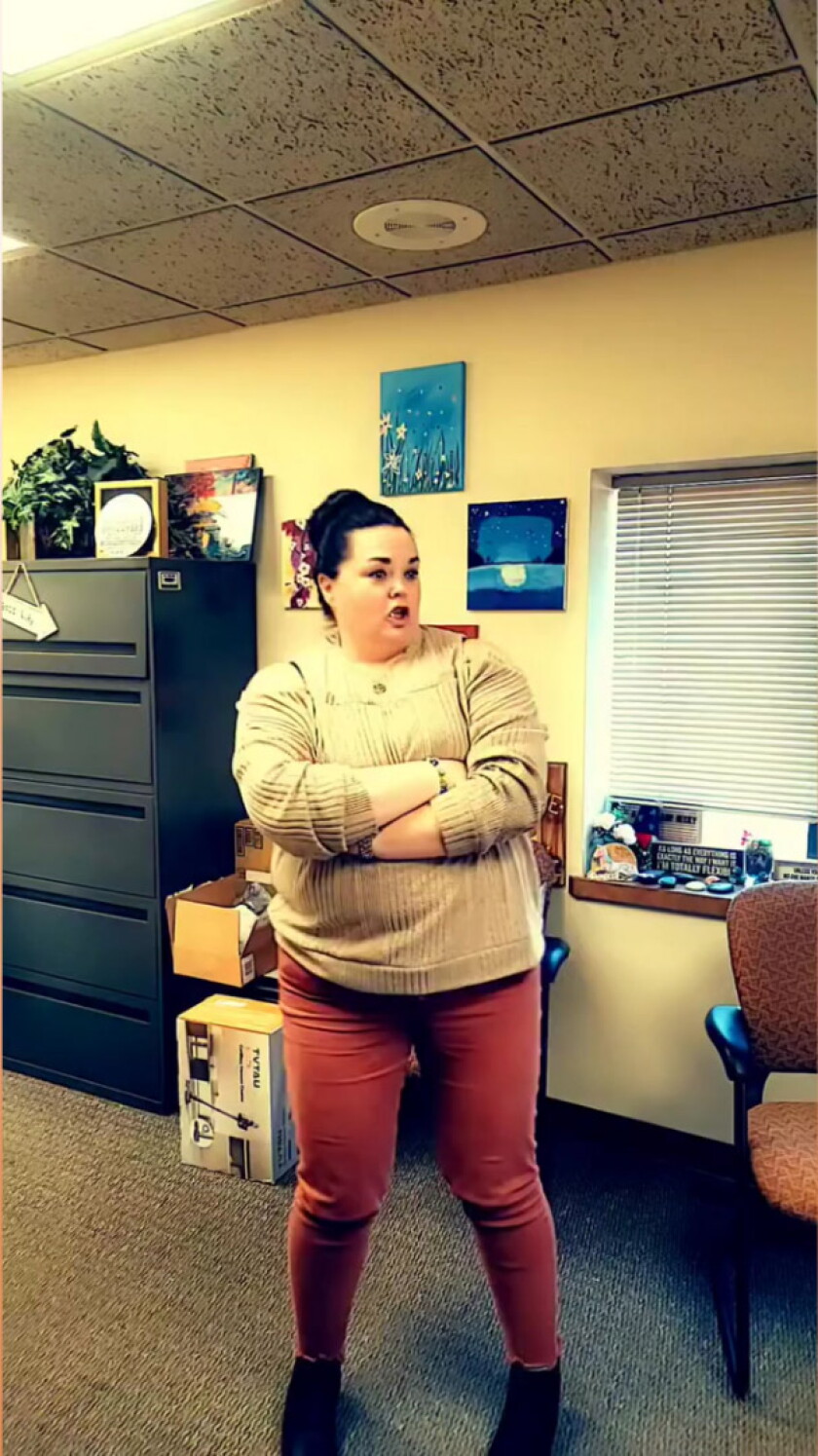
Carmen Hudson gets extremely sassy in one of Vikingland Community Support Programs short reels.
“If I’m going to be truly honest with you, it’s sort of the other way around. I mean, it’s not that I’m not animated and that I don’t love videos – at first I was sort of like, ‘Nobody’s going to care. Nobody’s going to care and we’re just going to look silly.’”
But Schmitz says coworker Carmen Hudson became “the encourager” behind the short videos. “It’s one of the main reasons why I feel [the funny videos] are important.” Schmitz says sometimes it’s hard for people to learn mental health skills, reach out to services, come to the drop-in center.
“For me, I want to normalize who we are as people, and I want to normalize this space,” she says. “So in the event that somebody needs help, maybe they saw that and they say, ‘Well, you know, Becky, she seems pretty laid back and funny. I don’t think I would have a problem going to talk to her.’ So it’s been a way for us to break down walls — if people felt anxious or uncomfortable coming here, just making it look like an atmosphere that was inviting — just hopefully normalizing us as people and being kind of silly so they feel comfortable to walk through the door and get the help that they need.”
And it’s working. “I know for a fact that we’ve had people reach out to us because they’ve seen the videos. They feel like they know us and that we’re familiar to them,” she says. “That’s huge.”
But Schmitz says she hopes that the videos, beyond people who are referred to them, can reach folks who might want help but don’t know where to start or even what resources might be available.
Schmitz says her video topics are grounded in things that are important to her or the people around her. “Every single thing that I talk about either comes from something that I’m feeling in life or something that maybe I’ve heard my staff talk about, or maybe my clients have talked about. They all come from something that somebody said that really stuck in my brain and I feel compelled to talk about further.
“This morning’s topic truly was from my own personal feelings,” she says, referring to a reel she posted on May 19. “I just felt like I’ve been so stressed out and overwhelmed lately that I’ve been wishing my days away, and shame on me because I should be grateful for every day I get. It’s a gift, and I know that. But it’s hard when we get into that mindset of survival mode. Most videos, especially when I’m out walking, I’ll just simply say, ‘I’m going to be on my soapbox today, and here’s what I’m going to talk about.’
“I always have to talk about something that I’m feeling passionate about in that moment. It allows me to talk more freely. I feel like my best videos are videos that really come from a place of wanting to address [something] in that moment because it’s either bothering me or I’ve heard it from people around me. And I think that we all need to talk about it. I’m an analyzer. I analyze stuff to the max, and so I just think it’s good that we just talk about this out loud.”
One of the things Schmitz absolutely does not want to do, though, is be detached, or sound like a lecturer. And while she knows that there are many serious mental health disorders out there, most people’s mental health issues are about more run-of-the-mill stuff.
“I want to normalize it,” she says. “I don’t want to categorize every life situation. These are life problems, or situational things, and stressors. So what do we do about it? Rather than allowing it to consume us, which could turn into more issues leading to some mental health concerns, let’s just deem it as a problem right now that we’re going to work through before we allow it to get to a place that’s more difficult to manage.
“I just want to normalize things so that we can talk more about how you’re feeling. You’re just kind of down — ‘Oh, what’s going on? Let’s talk through that. Let’s come up with a plan. Is there something going on?’ I always wanted my videos to be ‘let’s just talk and have a conversation. And I’m going to tell you what I think.’ And, you know, be respectful. I think that’s what makes them more relatable.
“Sometimes I feel upon being given a diagnosis, people make that their identity. If you’re a diabetic, you don’t walk around saying, ‘I’m a diabetic.’ I mean, you might let people know that information just in case something were to happen, but it doesn’t make you who you are — it’s a part of who you are.
“And so my thing with the videos is that you are not bipolar, you are not depression. You are you. These are a part of you. But let’s talk about what other things are happening and what we can work through that might ease some of those things or make your life happier or easier.”