
“I think the most valuable thing is the people. I’ve made new friends with whom I can talk, laugh and not feel lonely. I’ve come to realize that I’m not alone with my worries.”
Valentyna Blazhchuk, 76, is taking part in a project to deliver comprehensive mental health, psychosocial, healthy ageing and mobility support to older Ukrainian refugees across 5 regions of Czechia.
The initiative is led by WHO with the financial support of the Government of Japan. Over 12 months, it has delivered therapy sessions, community-based activities and workshops, and assistive mobility devices to over 1000 people.
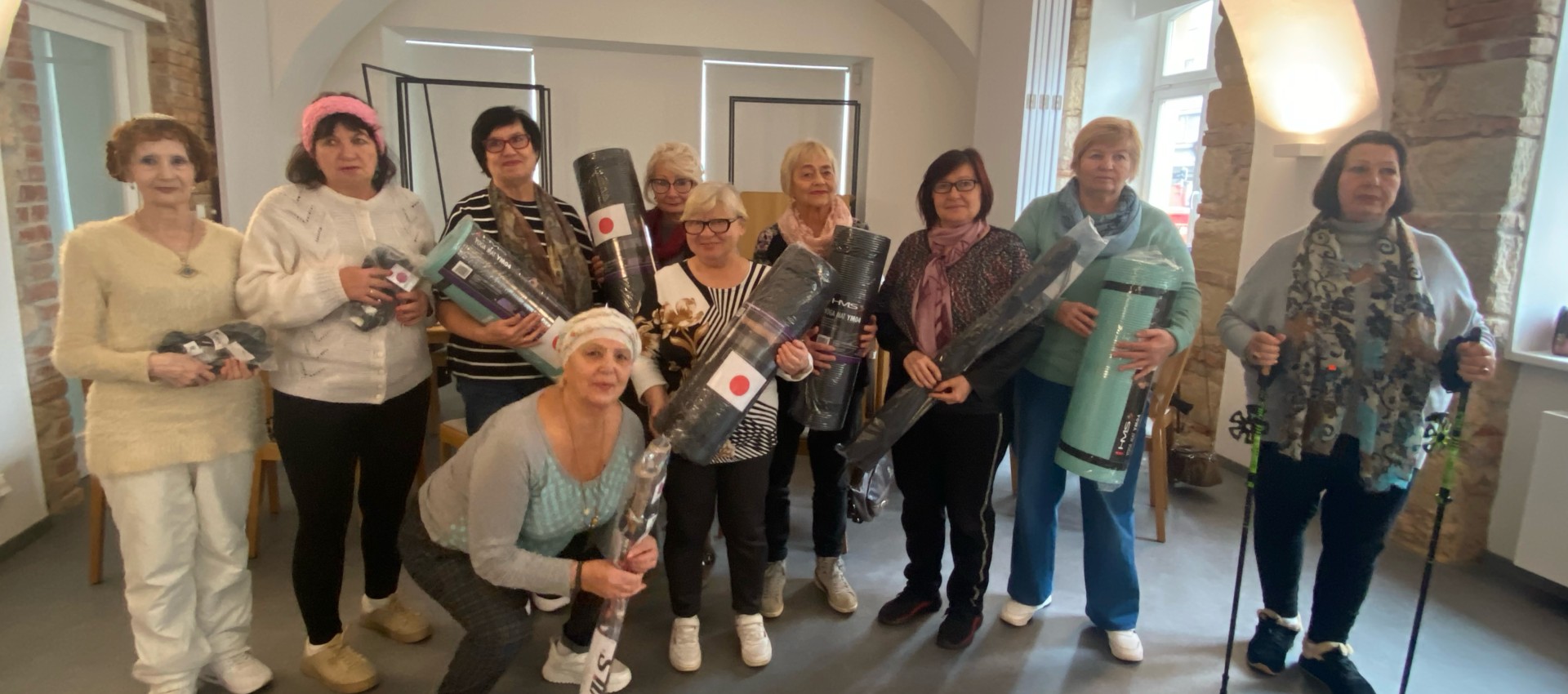
Valentyna has been living in Czechia for almost 3 years. She had never been to therapy before she attended these meetings, but she says she is grateful for the difference they have made to her well-being:
“I’ve become calmer and more confident and I was surprised by how easy it is to open up even to strangers. I think it will be easier for me now to communicate with people and not keep everything bottled up inside.”
Trauma, displacement and social isolation
As of 2024, more than 16 000 older Ukrainian refugees had sought protection in Czechia as a result of the ongoing war, facing compounded vulnerabilities related to trauma, displacement and social isolation.
Many experienced anxiety, depression and war-related stress, with data indicating that a third of older refugee households reported depression.
At the same time, physical health needs were substantial: 77% of households with older refugees included individuals with serious health conditions, often linked to chronic diseases such as cardiovascular disorders, diabetes and arthritis, alongside mobility limitations. Access to care was further hindered by language barriers affecting 71% of those asked, long waiting times for specialized services, and financial constraints.
These intersecting challenges underscored the need for targeted mental health and psychosocial support, improved access to health services, and initiatives promoting social connection and healthy ageing, both to safeguard the well-being of older refugees and to support social cohesion and health system resilience in Czechia, in line with WHO priorities and the Sustainable Development Goals.
“This type of support is especially important for older people because it helps alleviate feelings of isolation, promotes mental and emotional well-being, and creates a space for safe communication. The feeling of uncertainty in a foreign country has a very strong impact on one’s inner state and peace of mind, especially among older people. They have many concerns, primarily about what lies ahead,” psychologist, Oksana Pavlova, who worked on the project, explains.
For Valentyna, the experience of receiving holistic support has been uplifting.
“I liked the atmosphere the most. It was so warm and calm. Everyone listens to each other. And it was also nice that you could just speak from the heart.”
Background
The project was implemented through strong coordination at local, regional and national levels, building on well-established networks of the Alliance of Mental Health Centres and community mental health centres. These networks have long-standing partnerships with municipalities, state institutions, nongovernmental organizations, local service providers and international partners – ensuring effective referrals, mutual trust and smooth coordination in identifying and supporting vulnerable older Ukrainian refugees.
In addition to established partners such as the Czech-Ukrainian Centre Rozmluva, the Czech Red Cross, and Člověk v tísni (People in Need), new partnerships were created with Centrum pro cizince Jihomoravského kraje (Centre for Foreigners of the South Moravian Region in Brno), with Středisko sociální prevence Olomouc, p. o. (Coordination Team for the Integration of Ukrainian Refugees in the Olomouc Region), and with the Community Centre Mozaika in Prostějov, operated by Žebřík z.s, Krizová pomoc (Crisis Assistance) and Charita Olomouc (Caritas Olomouc).
The project also actively engages Ukrainian professionals with relevant qualifications. Ukrainian therapists and psychologists are involved in the delivery of services, enabling culturally and linguistically appropriate support to beneficiaries.