
The noise never stops at Barcelona.
There is always another match, another crisis. Another teenager becoming a star, another trophy to chase. The machine moves too quickly to wait for anyone and no-one dares ask for it to slow.
Ronald Araujo tried to keep moving with it. He trained. He played. He captained Barcelona. He smiled. He carried on.
All the while, something was breaking beneath the surface.
By December, the 27-year-old defender had reached a point where he could no longer pretend everything was fine. Anxiety had followed him for a year and a half, and his family was receiving death threats at a particularly challenging time of the season.
Eventually, it led to him suffering from depression. He came to a conclusion: he needed help.
It was agreed with Barca that he would take a leave of absence. The club did not specify the reasons why, and nor did they put a time on when he would be back. Araujo was the first to address the situation publicly after returning to the pitch again in January.
Just before he left Barca to join up with Uruguay’s World Cup squad in late May, The Athletic met with Araujo at the Spanish club’s training ground for this interview.
He looked different; more relaxed, more confident, happier.
“I’m going to tell you something that might come as a surprise,” he says. “Even though I haven’t played that many minutes, this has been the season I’ve learnt the most.
“I’ve grown a lot mentally. I’ve learnt to be a better husband, a better father, to see things differently, to put things into perspective. People think that because we’re footballers and earn a lot of money, we don’t have any worries, but we do. A lot of things happen in the world of football, and they build up, causing you stress.
“You can play on a Wednesday and be the best in the world, while on Saturday you lose and you’re the worst.
“As some people couldn’t mess with me directly because I don’t look at social media, they looked for other ways. They wrote to my wife, threatening my daughters. You try and try to figure out how to deal with that. I understand it’s part of my job, but there are things we shouldn’t tolerate or take for granted.”
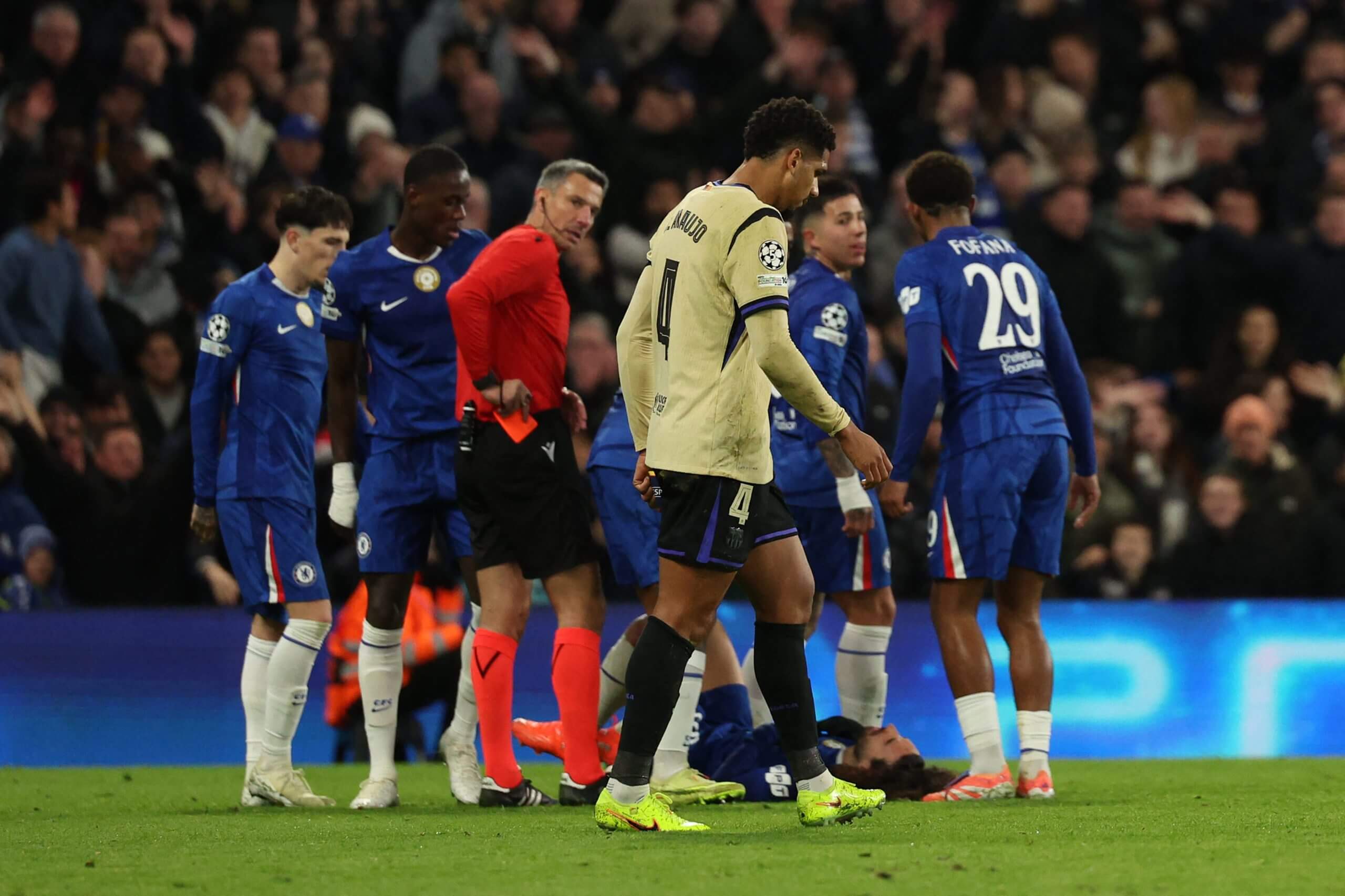
Araujo was sent off after being shown two yellow cards before half-time in a Champions League game at Chelsea (Adrian Dennis / AFP via Getty Images)
Araujo knows exactly when the turning point came. It was on November 25.
Barcelona were 1-0 behind in a Champions League match against Chelsea at Stamford Bridge. Soon it would be half-time, a chance to regroup. But a minute before the break, Araujo, who was on a yellow card, made a poorly-timed challenge on Marc Cucurella. The referee, Slavko Vincic, showed him another yellow, then a red.
“Going in like that, knowing I’d already been booked… I knew something wasn’t right,” Araujo says.
“But I found it really hard to let it out. Even with my wife, who’s closest to me, it was very difficult to talk about it. I struggled to speak. I always kept everything to myself.
“After that moment, I said: ‘That’s it. I need to talk about what’s happening to me.’
“I made the decision (to step away) because I really wasn’t feeling well. I wasn’t being myself as a player. I know what I’m capable of. I know my potential. I hadn’t been feeling well off the pitch for a long time, and that had an impact on my performance.
“Sometimes things pile up. Not just about football, but things you might have experienced in childhood that build up and cause a lot of problems. I needed help from professionals, to have the tools to find myself again.”
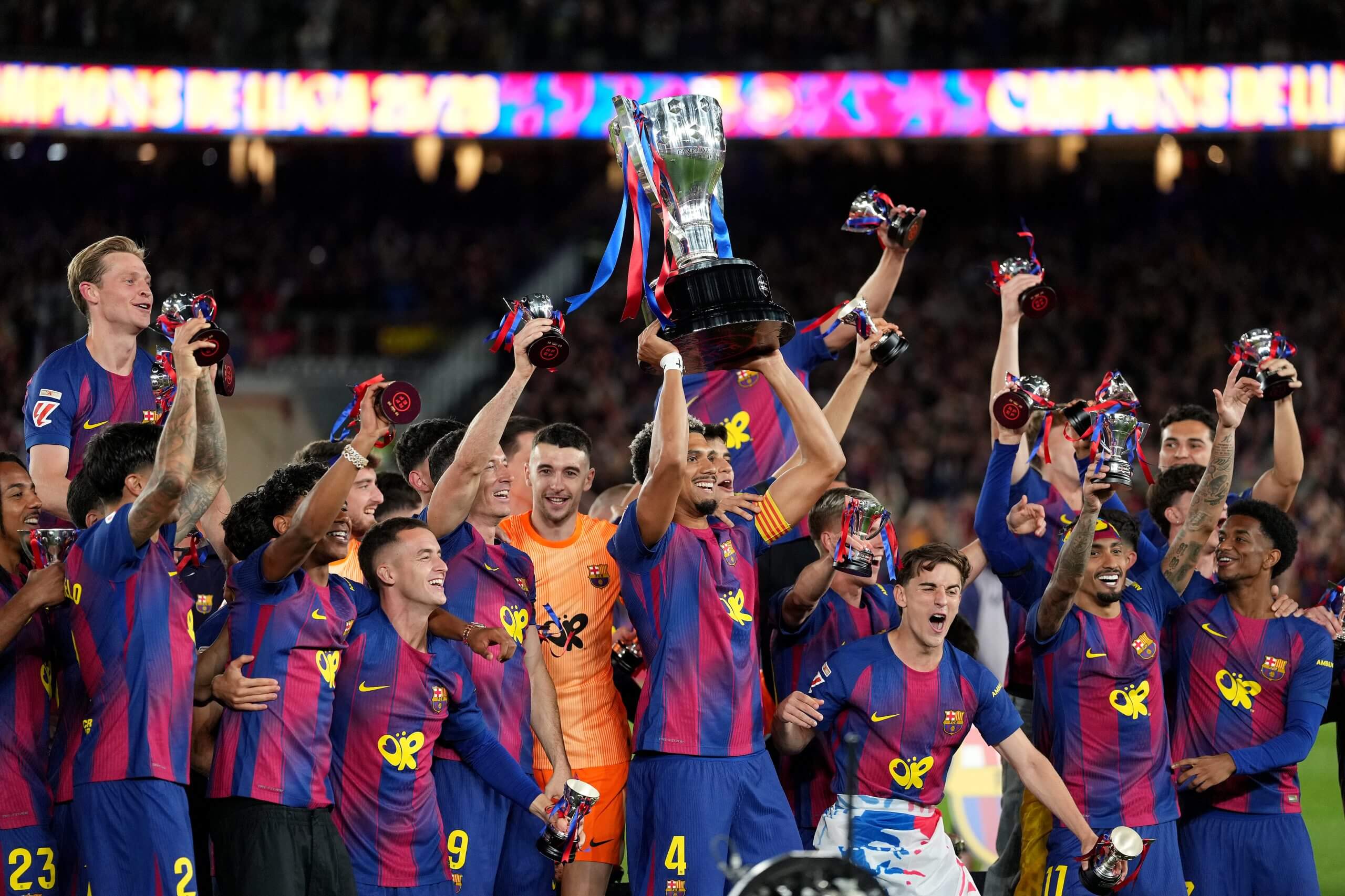
Victory over Real Madrid sealed Barcelona’s successful La Liga title defence in May (Alex Caparros/Getty Images)
There have been previous instances of players speaking out about anxiety and depression. Barcelona fans were familiar with the cases of Andres Iniesta and Bojan Krkic. But neither had taken time off work to deal with it. Araujo was setting a precedent.
“It’s not easy to tell a club like Barca: ‘Look, this is happening, I need help, I need to stop’,” he says. “I did it without any fear, without any hesitation. I wasn’t afraid because I realised I needed help; I didn’t mind facing whatever I had to face.
“I’m grateful because they took it very seriously and helped me a great deal. (Sporting director) Deco, Alejandro (Echevarria, an advisor close to president Joan Laporta), everyone on the club’s board, the president, my team-mates, they all took it very well and helped me.
“We should try to normalise what happened a bit more, because there are a lot of taboos surrounding footballers, and it happens in society in general.
“My faith has been key. Reconnecting with my true self, reconnecting with God. That has been fundamental, along with the help of professionals. But connecting on a spiritual level has been the key to everything. It gave me life.”
Manager Hansi Flick stayed in regular contact with Araujo, a devout Christian, as he travelled to the Middle East to visit holy sites in Bethlehem and Jerusalem over that month. The German coach helped ensure he made a gradual return to action when he was ready to come back, which he did on December 29.
It was at Barca’s open training session they hold each year over the Christmas period. The crowd rallied behind him, chanting “Uruguayan, Uruguayan”, as they often do to celebrate him.
After that Chelsea game, Araujo had come in for a large share of criticism from the Barcelona fanbase online. That December day, hearing those supporters’ reaction was another turning point.
“It really moved me to hear them all chanting,” Araujo says. “Since I’ve been here (Araujo joined Barca in 2018), I’ve always given my all for this club, and the fans have always appreciated it. But when I stopped playing I also disconnected from everything, so I didn’t know how they would react.
“I realised there are two worlds. There’s the world of social media, which is madness, and then there’s the real world. It’s all about being able to distinguish what’s truly real and what isn’t.”
After helping Barcelona successfully defend their La Liga title, Araujo’s focus will now be fully on the World Cup. On Monday, Uruguay play their Group H opener against Saudi Arabia.
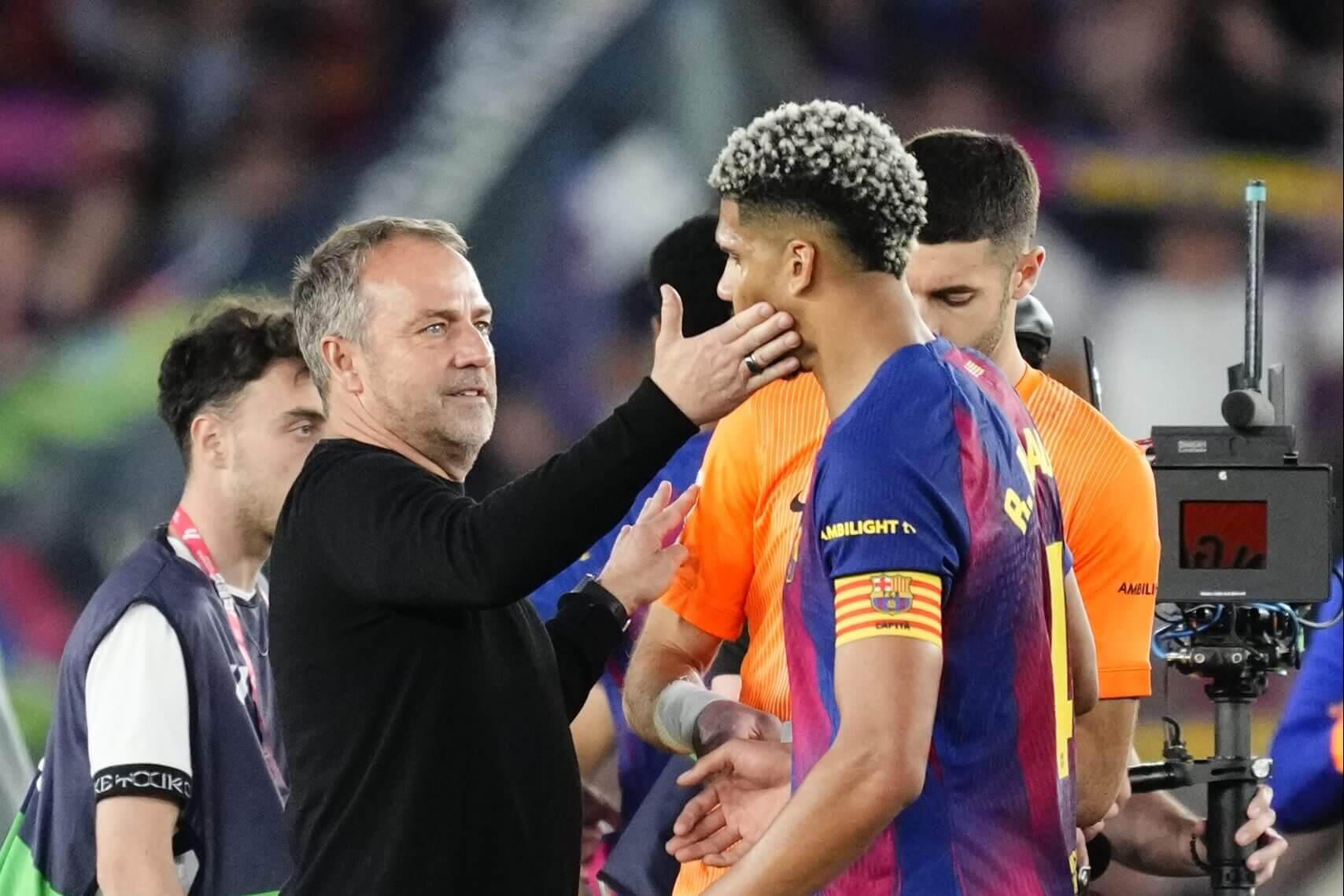
Hansi Flick fully supported Araujo throughout his absence (Jose Breton/Pics Action/NurPhoto via Getty Images)
Araujo missed all of Uruguay’s matches at the 2022 World Cup with injury. Having been named in the squad in case he could return in the knockout stage, the team just missed out on a place in the last 16.
There is a slight question mark against his fitness for his country’s first game, but there are no worries about him finally making his tournament debut.
He describes Uruguay coach Marceloa Bielsa as “a brilliant manager” who “brings out the best in you” and believes they “have a real chance of competing for the title”.
Also in Uruguay’s group are Spain and Cape Verde. Eight of Spain’s 26-strong squad are Araujo’s club-mates.
“We’ve had a lot of fun about that in the Barca dressing room,” Araujo says. “It’s going to be a great match. We’re two of the top national teams; they’ve got a great side coming off the back of winning the European Championship. We’re really, really keen to take them on.”
As for his future, he is under contract with Barcelona until 2031. Despite having lost his starting place this term, he has no doubts about where he wants to be.
“I feel really good in Barcelona, I’m very happy here,” he says. “I’m not afraid of whoever I have to face (for a starting spot) because I have a lot of confidence in myself and in what lies ahead.
“I believe the best years are yet to come and I’ll approach them with a new-found maturity. I’ll see the benefits in the coming seasons thanks to what I’ve learnt.”
If you would like to talk to someone after reading this article, please try Samaritans in the U.S. or the UK. You can call 116 123 for free from any phone.