
A pioneering figure in perinatal mental health care in the UK for decades, Maddalena Miele shares how support for pregnant women and mothers can improve.
Maddalena Miele has, for more than 20 years, helped mothers struggling with mental illness not only through one-to-one care as a consultant psychiatrist but by driving change on a systematic level.
Having established and led the perinatal mental health service at St Mary’s Hospital in London, she now provides training, mentoring and clinical supervision, drawing on her years of experience.
Here, she talks to Healthcare Today about the ‘scandalous’ fragmentation of care, how to reduce the stigma around mental illness and how women fall through the gaps in the NHS.
What practical steps do you think can be taken to make sure that pregnant women and new mothers are getting the help they need as quickly as possible?
The first thing I like to highlight is that perinatal mental illness presents some very specific challenges. Very often, the symptoms of normal adaptation to motherhood overlap with the early signs and symptoms of a perinatal mental illness, and I think that sometimes people underestimate this.
The first step is to ensure that all the frontline staff, and by this I mean the GPs, the health visitors and the midwives, are properly trained and educated, and that has to be repeated, because the turnover of midwives and health visitors is very high.
The second point is the importance of integrating services. When I started, there was much more integration between mental health services and maternity services. But we’re fragmenting the services. All the premises have been stripped, there is less and less clinic space, less and less office space, so there is no place where teams can actually meet physically. A lot of learning occurs through osmosis. That has been lost.
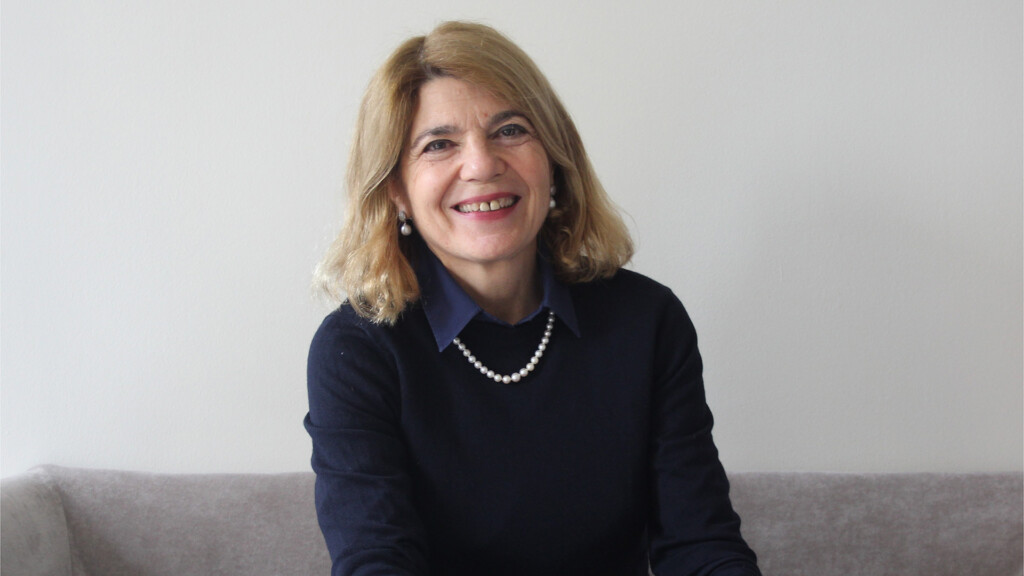 Maddalena Miele
There has recently been a rise in online help resources for new mums who are struggling. What do you think of this, and what role can these tools play?
Perinatal mental illness is a wide umbrella. There are different types, such as anxiety and depression, and each illness has a mild, moderate and severe degree. Because you have this wide range of illnesses, you can’t expect one intervention or one approach to fit everything. Online health tools do have a place when either the illness is very mild or in the step-down model.
Maybe when your illness becomes less intense, and you’re discharged to the community back to your primary care, a little bit of self-help and online tools could help, because you need to consolidate your recovery, or you need to think about relapse prevention.
That’s the other thing that is missing in the healthcare system. As with a physical health condition, people need time to consolidate their recovery, and they need to be discharged to primary care with the tools to think about relapse prevention and sustain their recovery.
“The more information and knowledge you pass to parents, the more comfortable and confident they become.”
Where do you think in the perinatal journey women tend to fall through the cracks in terms of their care?
There are two points. The first is when they are in primary care. Sometimes the healthcare professionals are not skilled enough, or they don’t have rapid access to peer-to-peer consultation to understand that the women are becoming more unwell, that the symptoms have intensified, and that they need to escalate the care.
This is particularly tricky because with some perinatal mental illnesses, people deteriorate very quickly. A classic example, although it’s a rare condition, is postpartum psychosis. Because the illness is fluctuating, these women might appear well for a couple of hours, and then they become incredibly unwell. If you don’t meet somebody who is really knowledgeable, those women are missed.
Part of the problem is that services have become fragmented. In my experience, women have to fend for themselves and navigate this complex system at a time when they’re vulnerable.
The second point is that sometimes women are discharged too quickly from the service. If you have an episode of depression or anxiety during pregnancy, you’re more likely to develop that later in life, particularly in the menopause period. So, this needs to be part of the package. There is a lot of emphasis on detection, and it’s fine treating at the point of acute illness, but we need to think about convalescence.
We also need to think holistically about the family, because there isn’t just a baby, there is a baby and a mother, and then there is a partner. There’s been a lot of progress on this, but not enough for partners. There are some services that offer excellent provision, but it’s very patchy.
Another of my passions is infant mental health – the emotional development of the infant. This is important for both parents, but it is something that men could benefit from learning about, because most of the time, they don’t know what to do. Knowledge is power. The more information and knowledge you pass to parents, the more comfortable and confident they become.
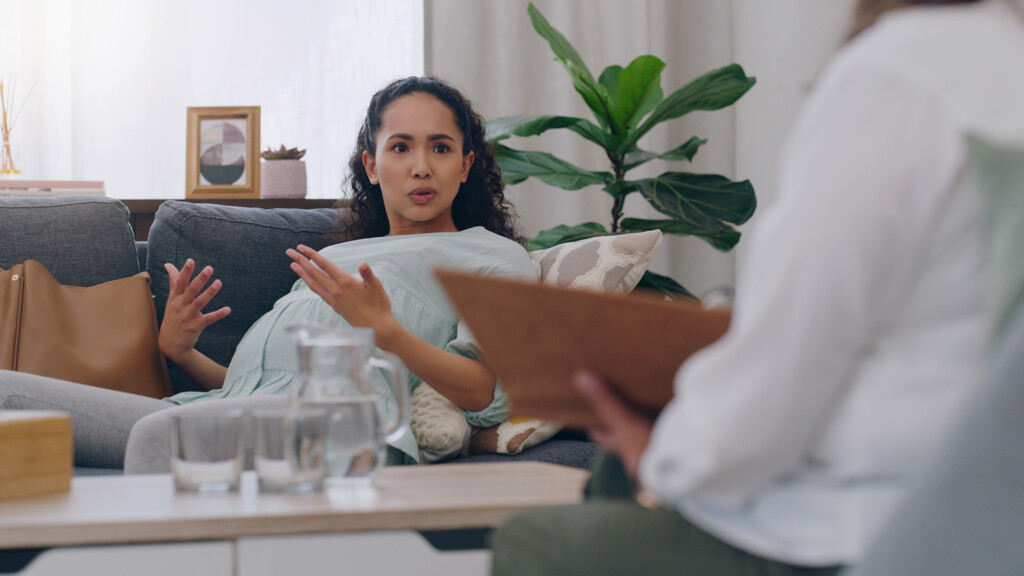
New mothers can be scared to tell healthcare professionals how they feel and about the negative thoughts they’re having. How can that relationship be improved and trust fostered?
With good intentions, we have tried to diminish the stigma by normalising mental illness, but in doing so, we have diluted the concept a bit. For example, people talk about mental health issues or mental health, but our mental health is very different from mental illness.
People are no longer scared to talk about HIV or cancer, but we are still very wary of mental illness. We need to talk about mental illness as mental illness.
If you train parents and healthcare professionals on infant mental health, you know that even if you’re a bit inadequate as parents, for whatever reason, things can improve. There are things that can make you feel more confident and comfortable, and people will realise that even if you have a mental illness, you can be an excellent parent.
If you have diabetes, nobody questions your parenting skills. Why should it be different from mental illness? If you have a little bit of depression or anxiety, people panic because of the fear that the baby is going to be taken away. Absolutely not. We will identify the illness, make a proper diagnosis and a good assessment. Then you receive the right package of care. Even if you don’t recover fully, you can still have a very fulfilling life and be an excellent parent.
“Integration is key, and it doesn’t require huge changes. With a small investment, you can reap lots of benefits.”
We know outcomes are worse for some groups, particularly women from ethnic minority backgrounds. What are the biggest drivers of that gap in perinatal mental health?
There are three big research projects that have looked at this, and one of the problems, they concluded, is access to services. In some ethnic groups, people are less aware of psychiatric symptoms, and we also have to understand that in certain ethnic groups, they don’t have terms for depression.
We need to think about that, and that comes with involving champions from their community and thinking about education, but on their own terms. There is a way, but we need to be led by their champions, because otherwise it’s not going to work.
The second point is that we don’t perhaps have interventions which are tailored and culturally sensitive. Many psychiatric conditions require not only medication, but also need to be complemented by psychological intervention, whether with individuals or in groups. But women often say that they can’t relate to their psychologist because they don’t understand their culture.
If you had one policy lever to pull and make one change, what do you think would be the most effective to improve outcomes for women going through this journey?
Integration is key, and it doesn’t require huge changes. With a small investment, you can reap lots of benefits. To have a co-location is absolutely huge. In practical terms, I could have in my clinic a student midwife sitting with me, student health visitors, trainee psychologists, trainee counsellors or an obstetric registrar. Can you see the cascade of knowledge? It is much more effective. We need to work towards that.